
A Valentine for València
May 2023
València—es la tierra de las flores, de la luz y del amor.
— José Padilla 1
(Valencia is the land of flowers, of light and of love.)
This is a love letter to Valencia2, Spain’s third largest city. Those of us who like to eat value Valencia for its sweet and succulent oranges, or as the home of paella and the soothing beverage horchata3. Overall, however, the city is often overlooked by international tourists drawn by flashier allure, such as the majesty of Madrid, the brilliance of Barcelona, the splendor of Sevilla or the grandeur of Granada. Valencia’s more discreet charms are perhaps best evaluated as an understated cluster of pearls rather than a dazzling gemstone. We’ll examine —through a botanical lens— a few of these lustrous orbs in today’s column.
But first, a little background: The happy convergence of Valencia’s benign Mediterranean climate, abundant sunshine and rich alluvial soils have made it a mecca of plant production, especially for food crops, for more than a millennium, after development of complex irrigation networks by the Arabic cultures that dominated the region for 500 years beginning in the 8th century. Located just north, west and south of the city proper, this diverse and sustainable farming zone, called the Horta (Garden) of Valencia, was recently designated a Globally Important Agricultural Heritage System by the United Nations.
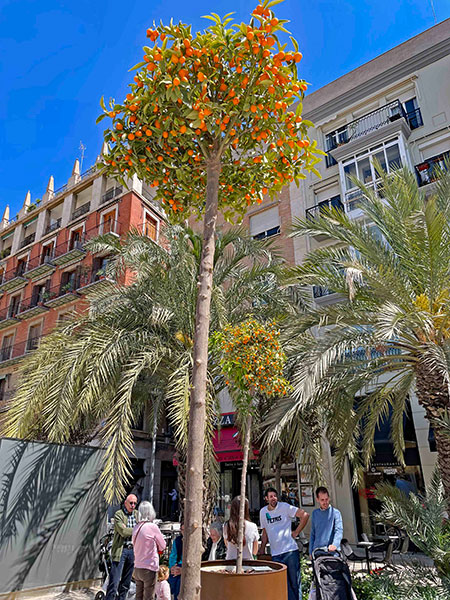
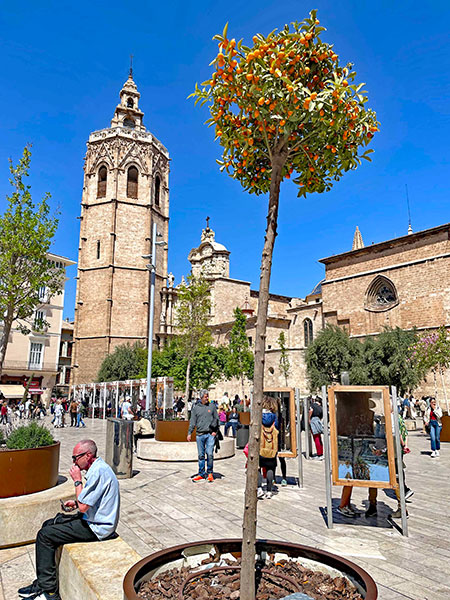
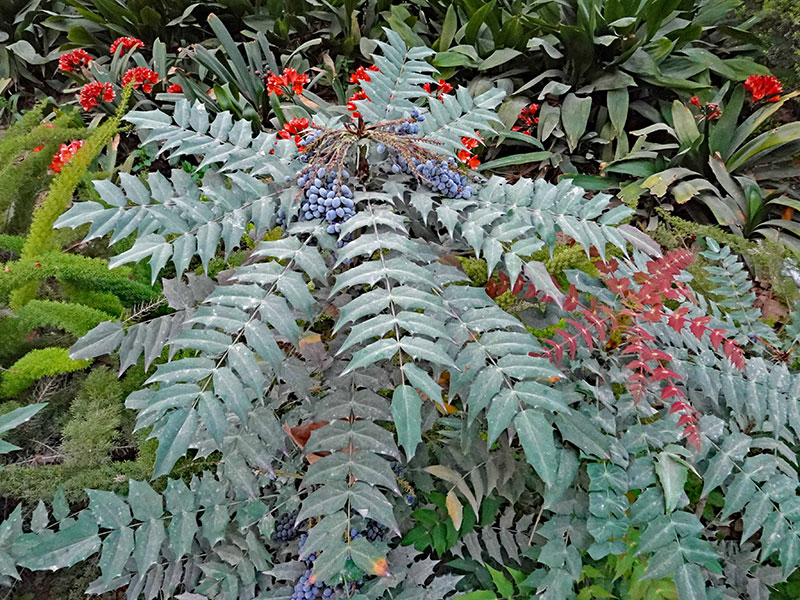
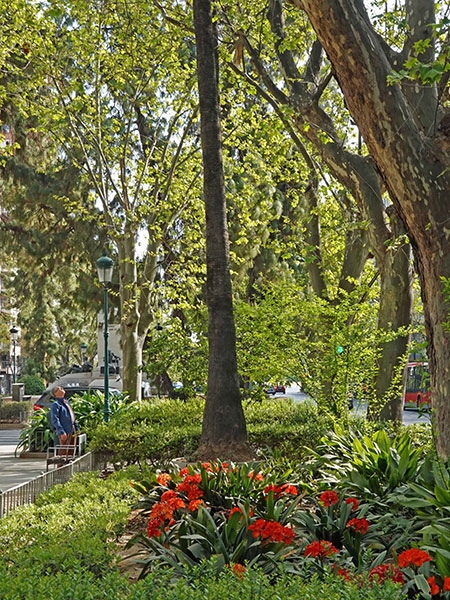
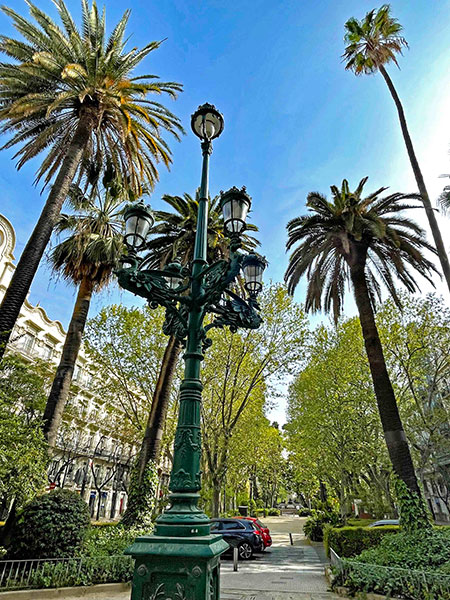
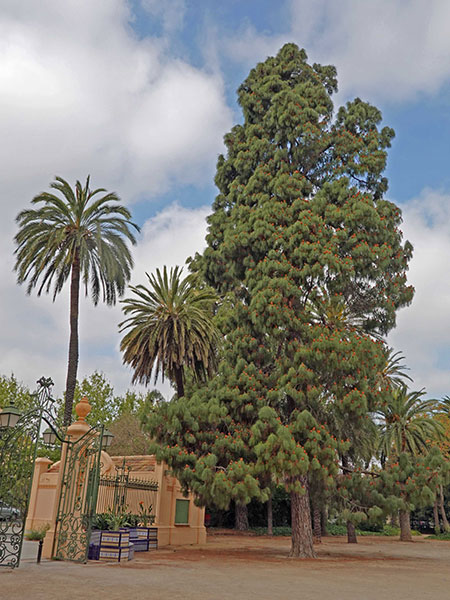
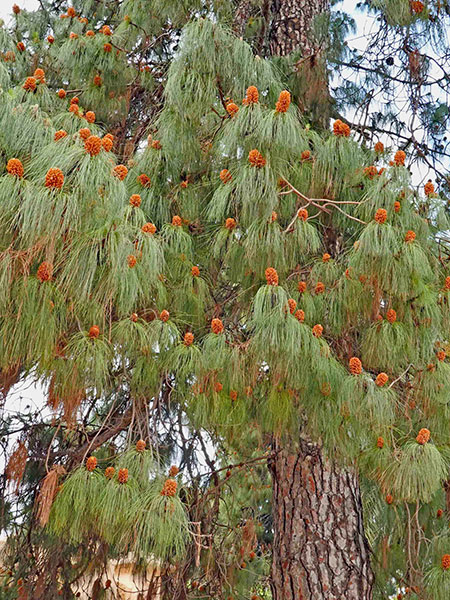
The 21st century city is replete with plazas and pocket parks peppered with a spicy array of trees, from mammoth specimens of Pinus canariensis (Canary Island pine) to kumquat trees whimsically grafted onto beanpole standards whose heavy load of fruit not even a giraffe could reach. In the wide park-like medians of several of the city’s grand boulevards —created along the footprint where city walls once stood— abound bonanzas of swoon-inducing ornamental beds brimming over with unlikely but winning combinations of clivia, mahonia, strelitzia and asparagus fern, all flourishing in dappled light of towering Washingtonia and Phoenix palms. Of exceptional merit is the stretch along the Gran Vía del Marqués del Túria.
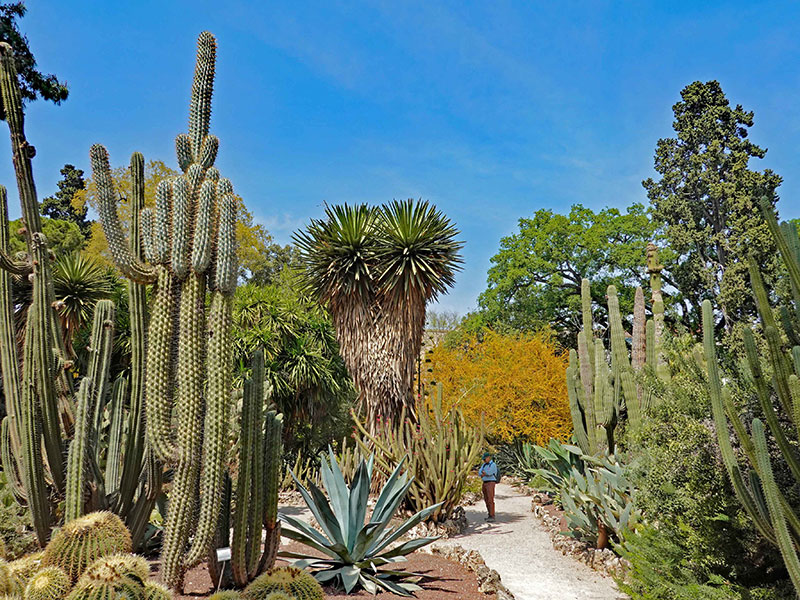
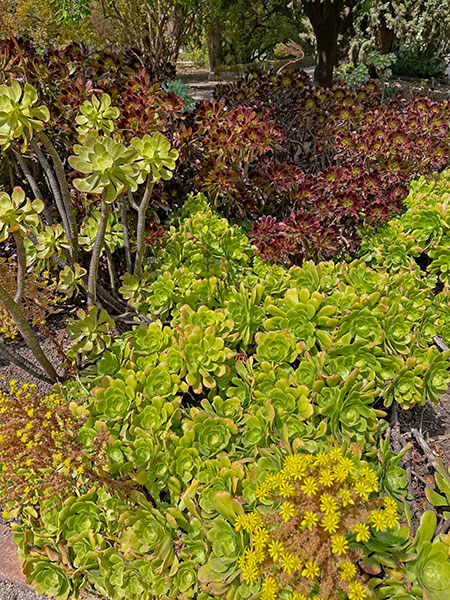
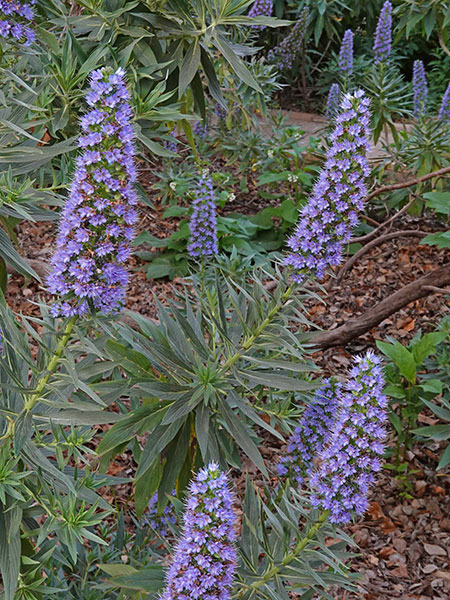
Jardí Botànic (Botanical Garden of the University of Valencia), established in 1567, is among the oldest teaching gardens in southern Europe. The compact 10-acre site, in its present location since 1803, boasts mature plantings of more than 3000 taxa, including one of Europe’s most diverse palm collections, an eye-popping array of enormous cacti and succulents, an extensive medicinal plant section, a hefty area devoted to flora of the Canary Islands (with dozens of species of Aeonium and Echium), and a beautifully restored, 123-year-old shade house with a semi-cylindrical iron roof 40-feet high at its center.
Widely considered the city’s most iconic park,Jardins del Real (Royal and Viveros Gardens) encompasses a verdant 45-acre rectangle near the heart of the city. Established as palace grounds by the Moorish (Islamic) royalty 1000 years ago, the Spanish rulers who followed maintained the space for pleasure as well as practicality: Locals still call the park “Los Viveros” (The Nurseries) in reflection of its use (starting in 1560) to grow orange and lemon trees later sent to the main Spanish palace in Aranjuez near Madrid. Turned over to the public in 1903, the park today hosts the city’s oldest and largest collection of monumental trees of 167 cosmopolitan species.
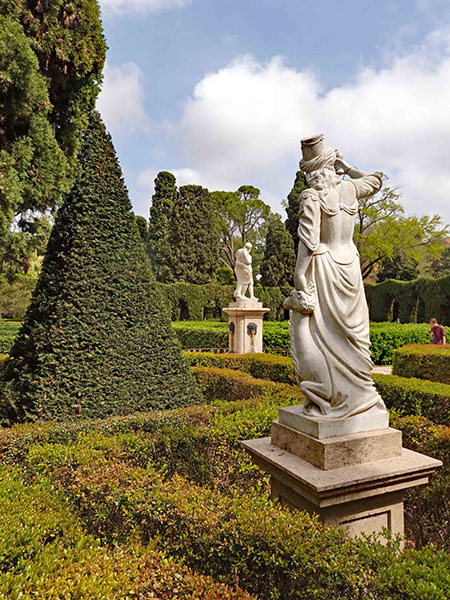
A three-minute stroll from the southeast corner of Los Viveros, the jewel-box Jardí de Montfort (Monforte Garden) is one of Spain’s loveliest formal, neoclassical gardens. Established on the 3-acre site of an orchard outside the city walls, the Marquis of San Juan contracted Valencian architect Sebastián Monleón in 1849 to build a retreat and pleasure garden with classical marble statuary and fountains, along with ponds, pavilions, pergolas and parterres. Today the latter are nothing if not diverse, brimming over with unexpected plant choices: Zantedeschia aethiopica here, Monstera deliciosa there.
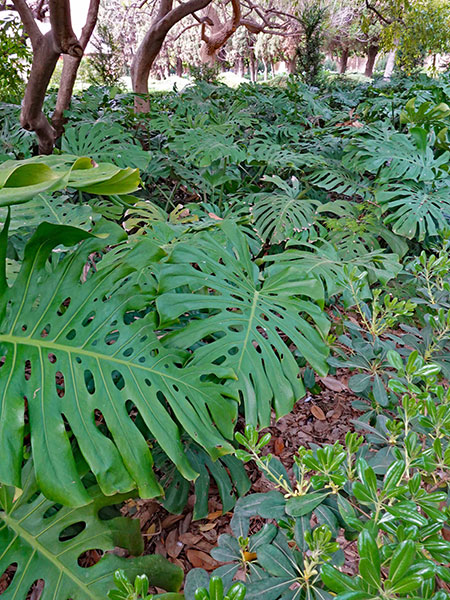
Certainly the longest urban garden in Spain, Jardí del Túria (Turia Gardens) runs for 10 kilometers in a lazy arc around the city center. Walkers, joggers, cyclists, picnickers and gob-smacked tourists alike meander along its shaded pathways unimpeded by motor traffic —which crosses above the 500-foot-wide green swath on 17 bridges. Sound weirdly improbable? This one-of-a-kind linear park was inaugurated in 1986 in the former bed of the Turia River, whose course was rerouted after a series of devastating floods in 1957. The government’s first impulse was to replace it with a highway, but Franco-era economic malaise resulted in inertia, long enough for a grassroots movement to arise in the 1970s demanding a park. Their winning slogan? “The river is ours, and we want it green!”
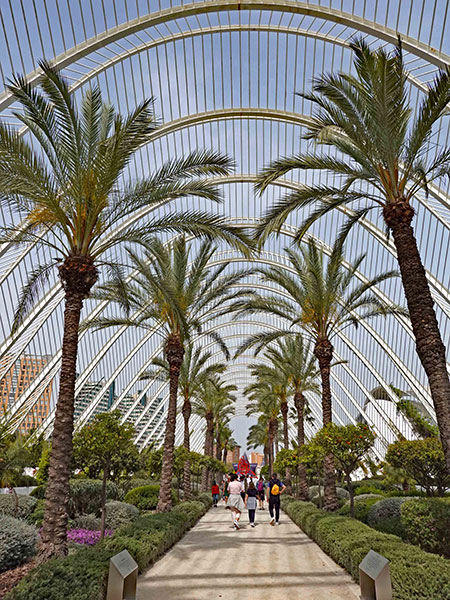
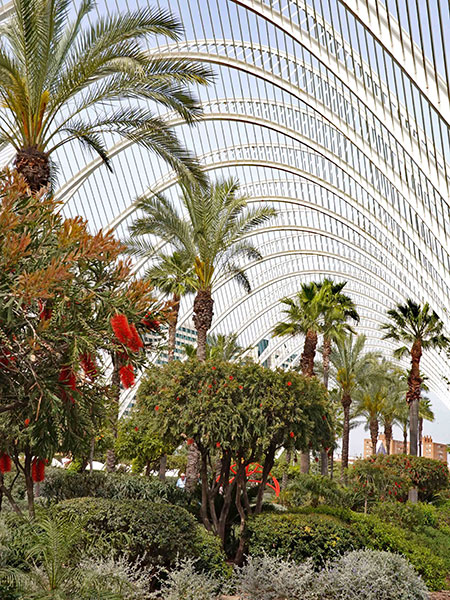
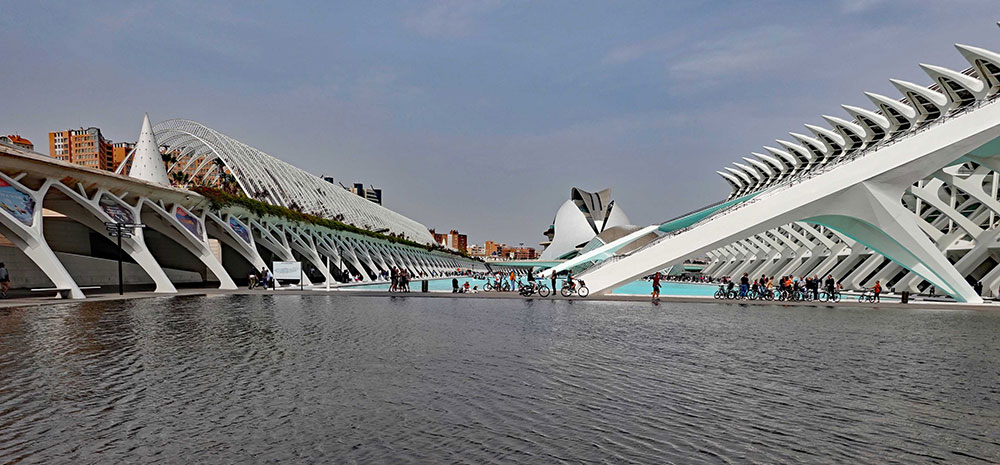
The final stretch of Turia Gardens is its most otherworldly, occupied since the dawn of this millennium by several oversized escapees from a sci-fi film. La Ciutat de les Arts i les Ciències (The City of Arts and Sciences), designed by native son Santiago Calatrava, includes a major attraction for plant lovers, L’Umbracle. This massive shade house formed by 55 gleaming white arches (1000 feet long, 200 feet wide, 60 feet high) holds dozens of palms and orange trees along with an assortment of native shrubs and aromatics, including cistus, lantana, rosemary and lavender along with exotics like callistemon and sand-verbena.
Valencia’s shyness may be coming to an end. It was recently named best city in the world (for expats) in which to work abroad, and was chosen as World Design Capital for 2022. Let’s trust they’ll maintain their green mantle.
Horticulturally yours,
Daniel
- José Padilla’s pasodoble-style song “València”, which debuted in Paris at the Olympia in 1925, was one of the biggest international hits of the 1920s.
- Founded as Valentia (“City of the Valiant”) 2200 years ago by Rome to house its veterans, today the region has two official languages, Spanish and Valencian. I employ the latter in this article.
- Horchata (“orxata” in Valencian) is traditionally made with tiger nuts, tubers of Cyperus esculentus (yellow nutsedge) that are soaked, ground and sweetened.