

Requiem & Relief in the Wake of the Reaper
June, 2022
Many adventurous gardeners along the Salish Sea feared the worst this spring in the aftermath of a triple whammy of protracted, unusually frigid weather in December, February and April. As if to compound the uncertainty and agony, due to this spring’s unrelenting meteorological gloom and chill, the Pacific Northwest adage of waiting until June before giving up on the return of a treasured but apparently moribund plant may have to be extended into July. However, as we have just crossed the threshold of the summer solstice, it’s time to squelch the urge to keep whistling past the graveyard and face reality with cool-headed assessment. What did the Grim Reaper remove, and what remains with us, at least for another season?

But first, a slight tangent. In our last session (on the possum-playing genus Pseudopanax), I publicly shamed a Peter-Pan-like specimen of P. ferox that had refused to show a scintilla of growth in six years. Either out of spite in wanting to prove me wrong, or shame at having been exposed, the “petulant piker,” as I dubbed it, began pushing an impressive spurt of apical growth (see photo above) immediately after the episode’s publication. Its larger P. ferox siblings also boast healthy new development. The 24-foot tall, mature P. crassifolius, on the other hand, lost its maturing fruit and half its foliage to winter’s insults. It, too, is now on the road to recovery, about to sprout a round of flower buds.
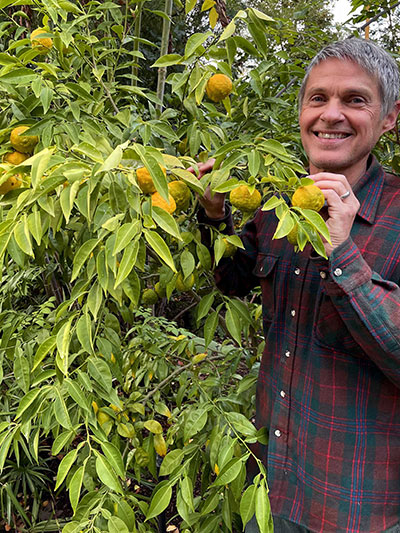
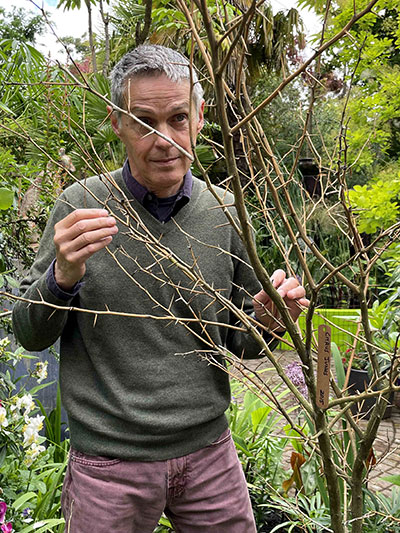
On to our postmortem: The saddest tidings surround the demise of my beloved yuzu, Citrus junos, about which I raved in the “Savoring Citrus in Pugetopolis” segment of Horticulturally Yours last November. It seemed to have survived the first brutal arctic onslaught in December, pulling through with about 1/3 of leaves intact. The snowy late-February blast did further damage, but the coup-de-(dis)grace came with the pair of April frosts just as feeble new growth was commencing. So much for claims of hardiness to near 0o Fahrenheit: It failed to cope with a cumulative two weeks in the low 20s.
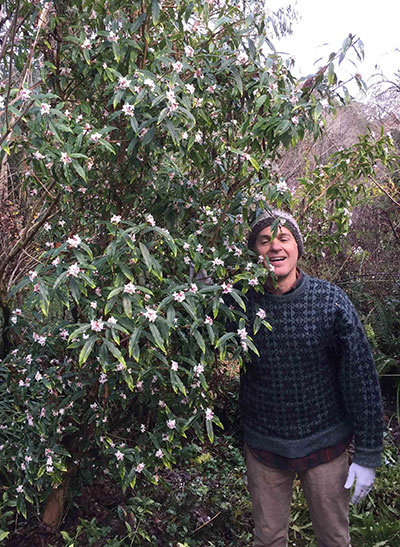
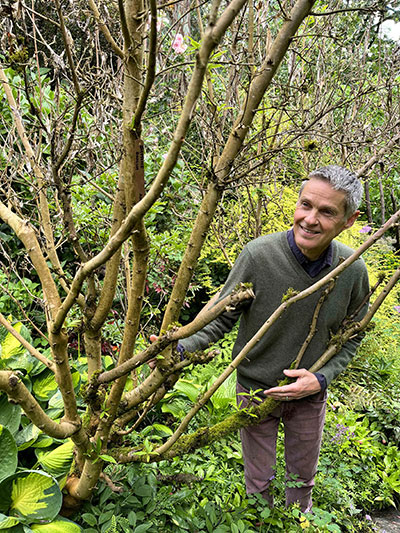
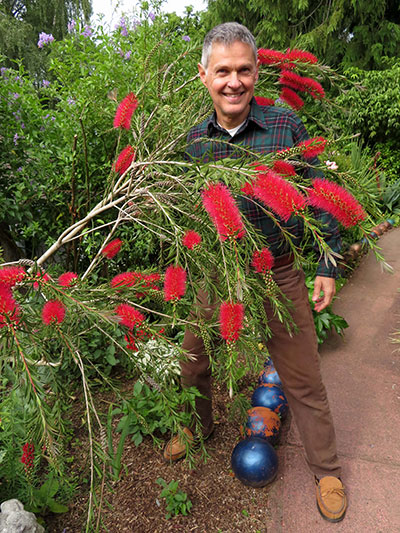
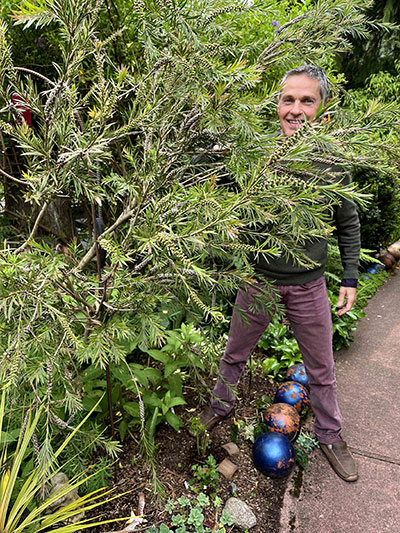
I feared the worst when our 21-year-old, 10-foot Daphne bholua —in full fragrant flower (and leaf) when December’s death knell fell— completely defoliated. But in early May it began to resprout all along the main branches. The same holds true for our half dozen scarlet bottlebrush specimens of Callistemon, which despite widespread tip dieback are now sporting new growth and copious buds —although normally they are at their floral peak in mid-June.
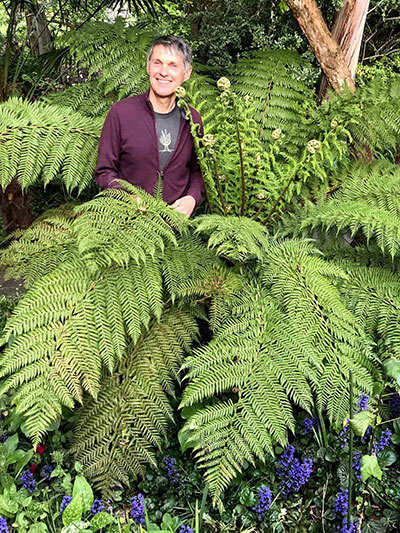
The fate of a slew of other southern hemisphere evergreen beauties bears out the prudence of planting multiples of choice items in various garden locations, if space allows. Let’s consider a few examples: We protected our three Tasmanian tree ferns (Dicksonia antarctica) by swaddling them in several layers of burlap, a tried-and-true method up to this year. Nevertheless, all their fronds froze out. At present, one —the youngest— has rebounded with four new, robust croziers; the second —the largest— has managed to push out a couple, but the oldest, a double-crowned titan, still shows no signs of life. Also on the Australian front, two of my three grevilleas (G. victoriae and G. rosmarinifolia) sailed through unscathed, while the more tender, silky leaved G. robusta is now a desiccated skeleton. In like fashion, my pretty-in-pink cordylines and phormiums were all knocked to the ground, although many are now feebly raising their heads to face another year. To round out the Down Under scene, my trio of standard Tasmanian pepper bushes, Tasmannia (Drimys) lanceolata, showed only minor leaf damage and are now growing like gangbusters, while their more delicate variegated sibling, the cute cultivar called ‘Suzette’, shriveled up, seemingly succumbing to the deep freeze. In the last month, however, it has flushed new foliage along the inner 2/3 of its branches.
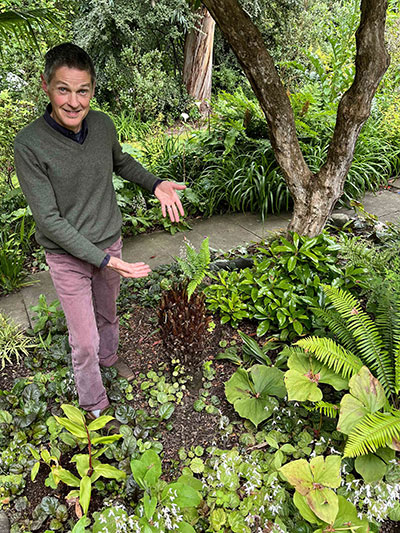
On to the South American natives: My couple of dozen hybrid abutilon seedlings display a similar distribution. Some have died outright while others are in various stages of recuperation. In like fashion, about half of my towering, swaggering salvias (‘Amistad’ and the like) are awakening, while the rest have crumbled to dust. The so-called hardy fuchsias are at long last growing apace, although the onset of blooms will be delayed by a couple of months from their customary commencement. The most unexpected, dare I say delightful, recovery came with my discovery last week that several cuttings of the velvety soft and purple-tinged Roldana petasitis var. cristobalensis (a tender, Mesoamerican groundsel formerly called Senecio cristobalensis) that I had plunked into a shady bed last summer have —against all odds— popped their heads above the mulch in defiance of the harsh elements.
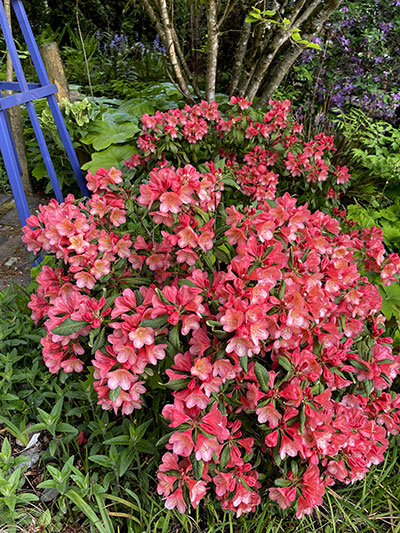
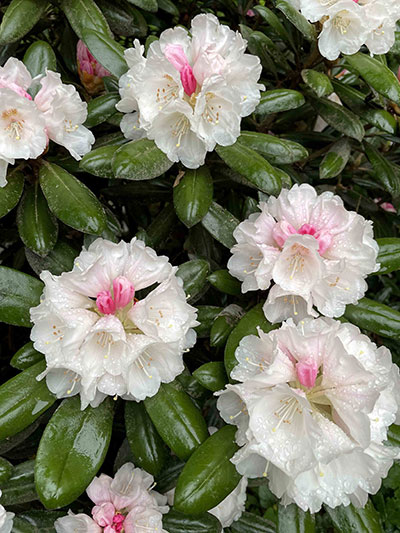
Many traditional Northwest garden stalwarts sailed through the winter with nary a shiver. Rhododendrons, for example, suffered moderate to severe leaf burn in last June’s heat dome, but bloomed more beautifully than ever this spring.
As we contemplate garden conditions at the dawn of summer, let’s embrace the paradox that change is the only constant: The preceding twelve months have walloped us with historical extremes of heat and cold. On the other hand, we’ve been blessed with ample moisture (despite the tedium of seemingly relentless rainy days) while much of the west is suffering from the consequences of unprecedented drought. Our task is to persevere with the greening of our communities in the face of these climatological challenges. I often fall back on the signature sign-off of broadcaster Casey Kasem, whose weekly American Top 40 show I surreptitiously listened to on my transistor radio at night as a kid in Arkansas: “Keep your feet on the ground, and keep reaching for the stars.”
With that, we’ll wrap up this second cycle of Horticulturally Yours. In case you’d like to peruse past issues or share them with friends, you can access them on the Northwest Horticultural Society website by clicking here.
See you in September for Season Three!
Horticulturally yours,
Daniel