

Gladiatorial Groundcovers: A Perennial Problem
May 2024
Who hasn’t bent with her wounds
—Kari Gunter-Seymour1
to a mutinous patch, weeds
shooting up like false rhubarb
every wisp, stem and sodden pith
a testament? Who hasn’t scratched
at the question of what it means to be here?
It’s triage time in the garden. No sooner have I finished mourning the dearly departed victims of January’s deep freeze than I’m harangued by a multitude of cries for assistance. “Feed me!” my botanical babies shout. “Gimme shelter!” scream others, along with “Let me out of this tiny pot!”, “Can’t you show me some sun?” and “I’m withering away over here”. Most alarming is an increasingly urgent plea from multiple corners: “Help! The bully next door is smothering me!” These plaintive petitions paired with lengthening daylight hours nudge me outside, prodding me to address these duties even as waxing sunshine shoves photosynthesis into overdrive. Seemingly overnight, a cabal of gladiatorial groundcovers have surged beyond allotted space to claim wide swaths of the garden’s surface. Is it my imagination, or have these rapacious rapscallions been particularly egregious this year in assaulting their defenseless neighbors?
The hooligans we’ll discuss today have been marauding about my garden for upwards of a quarter century, and in most cases I’m to blame for having invited them in. Of the “Dirty Dozen” in the list that follows, only one arrived unbidden. The others I purchased at local nurseries or in a couple of cases accepted as gifts from fellow gardeners. Call me naïve, or even doltish for not having done due diligence on their true nature. The outcome is right there in the name: They quite literally cover the ground. Some accomplish this via aggressive phalanxes of stolons or rhizomes, others through copious self-sowing reinforced by bunkers of clustered, entrenched bulbs or tenacious roots. Their menacing nature is most apparent in spring as they inhibit or outright prevent smaller herbaceous or ephemeral plants from emerging.
Here’s my Hall of Shame for Spring 2024: Ficaria verna*2, Hyacinthoides hispanica, Oxalis oregana, Aegopodium podagraria3, Allium triquetrum, Arum italicum*, Euphorbia amygdaloides, Geranium nodosum, Houttuynia cordata, Lamium galeobdolon*, Persicaria (several species), and Vinca minor. As cited in the footnotes, a few are designated noxious weeds. Let’s consider in more detail the first trio of the list, which I dub my Unholy Trinity.
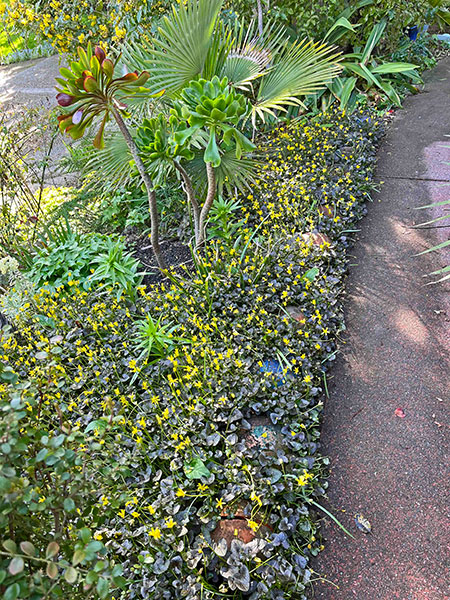
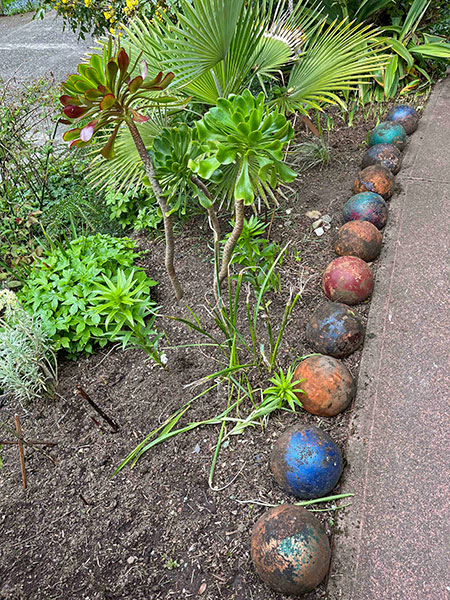
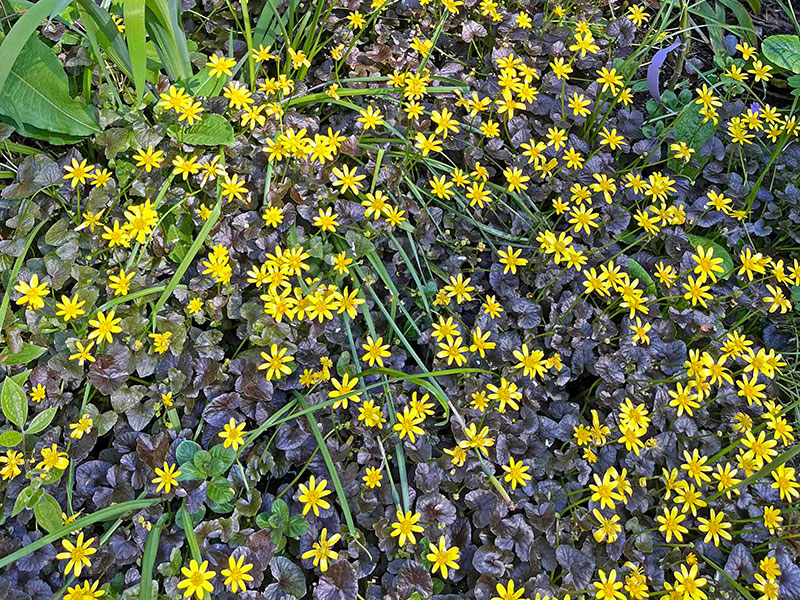
Ficaria verna (still called by its former name, Ranunculus ficaria, by many gardeners), has two common monikers: fig buttercup and the posh-sounding “lesser celandine”. In fact, the brash bronze-leaved version I bought at Heronswood in 1996 has an illustrious pedigree, having been dubbed ‘Brazen Hussy’ and introduced to cultivation by the exalted Christopher Lloyd. At first thought to be sterile, or nearly so, it has proven to be as profligate as its cultivar name suggests. Last month I spent dozens of hours grubbing out hundreds of the glitzy-glossy tuberous clumps that have infested half a dozen zones in my garden. Without doubt, it will be back next spring: Controlling it is a multiyear project.
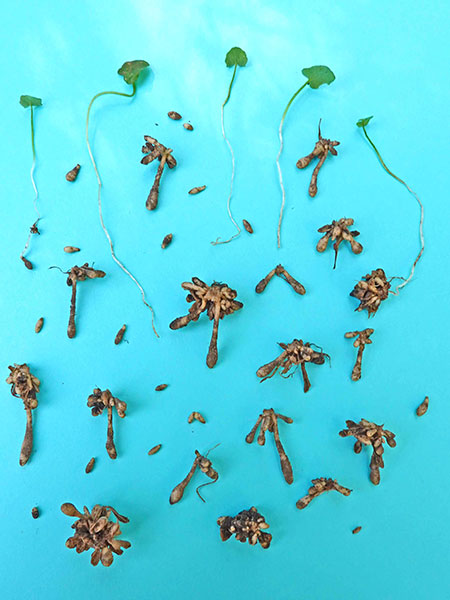
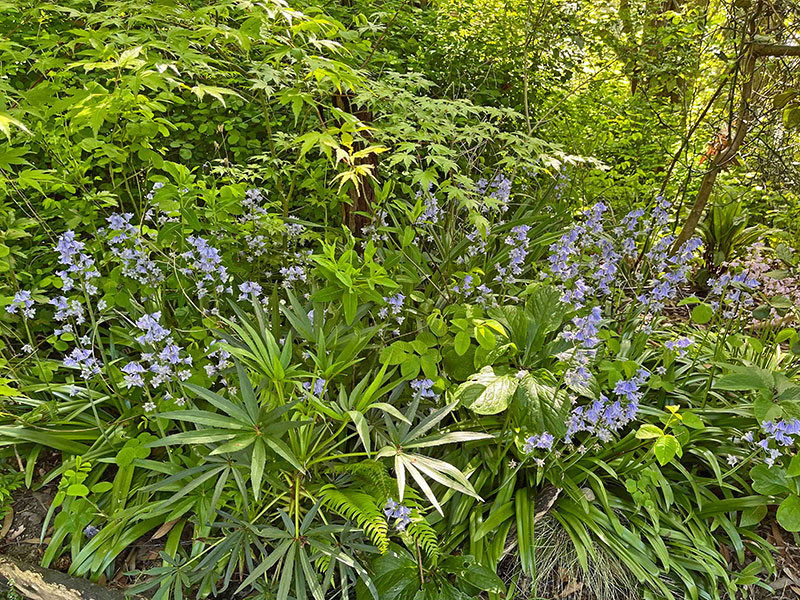
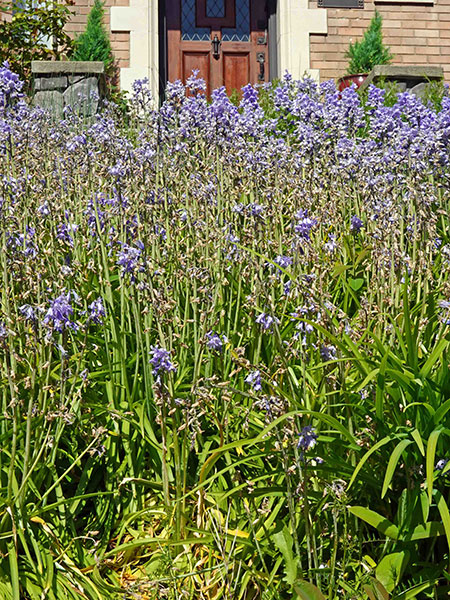
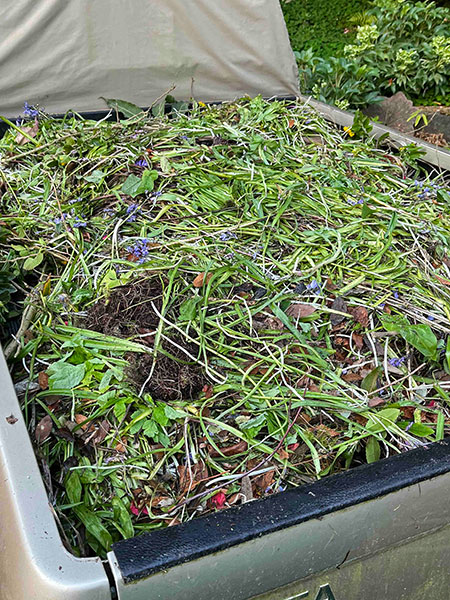
Hyacinthoides hispanica4 invaded my neighborhood from who-knows-where several years ago and now occupies large swaths of real estate all over town. Often called Spanish bluebell (although flowers may also be lavender, pink or white), this plant is pretty for a few days but turns decidedly shabby past its peak. A major bully, it claims more and more space via seeds, rhizomes and proliferation of white, spherical bulbs, which after a few years may cluster in the dozens to form a mass nearly as large as a soccer ball. Declared invasive in the UK, it’s increasingly seen as such in western Washington and Oregon. According to WSU Clark County Extension, “This plant should be used with caution as it can take over a landscape. Dig it out by the roots. […] All parts of this plant are poisonous.” Nuff said? Puzzling that many of this country’s most prominent purveyors of bulbs still market it in glowing terms.
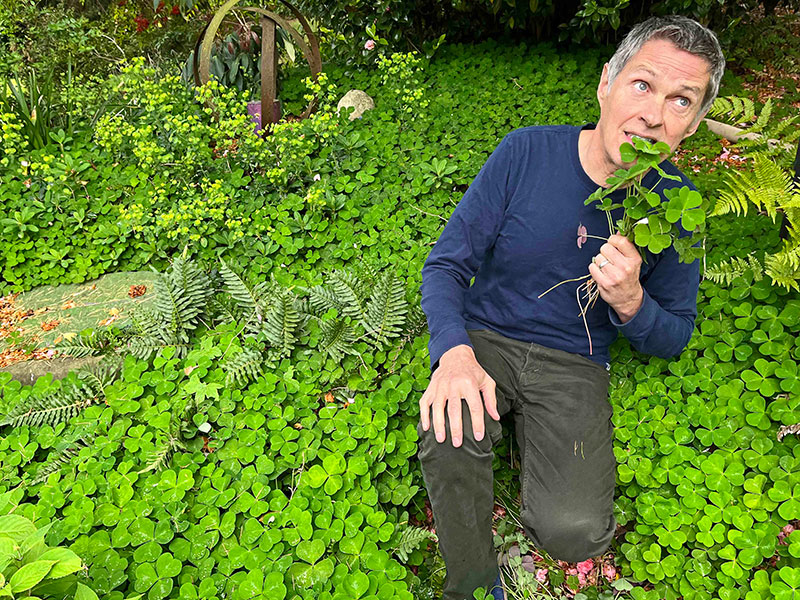
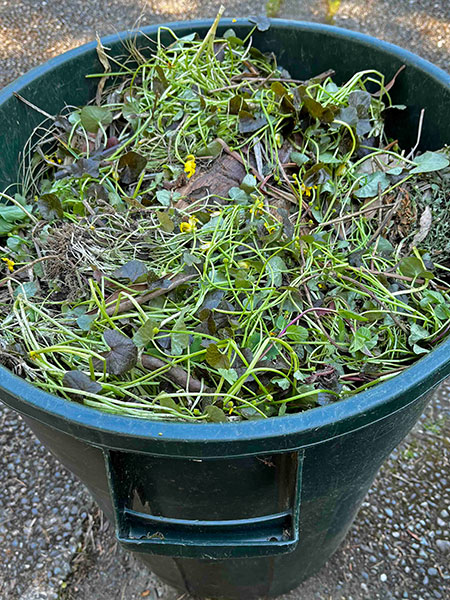
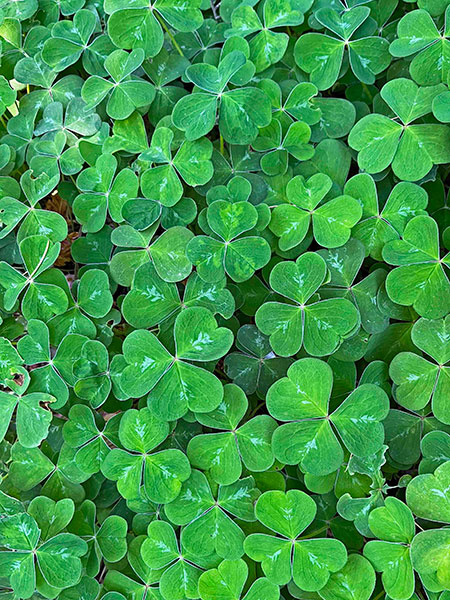
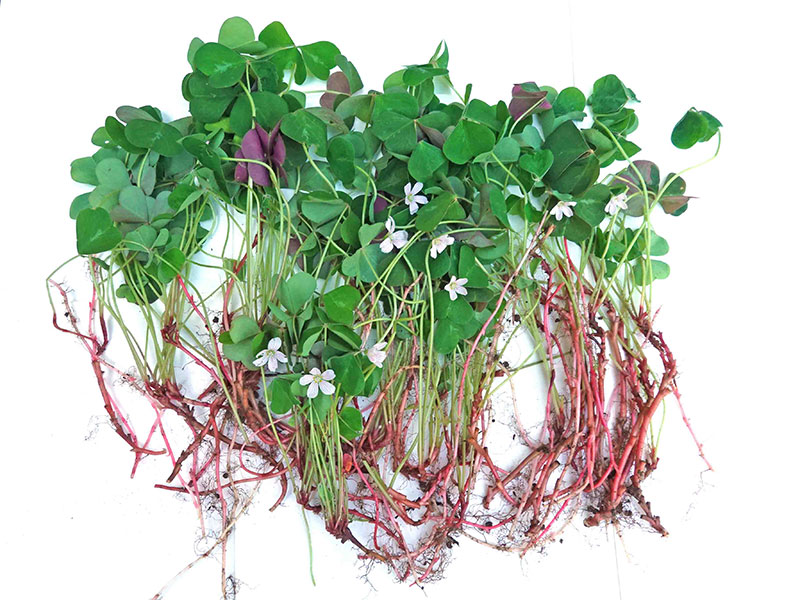
Oxalis oregana, commonly called redwood sorrel, differs from its fellow baddies in that it’s a PNW native plant, found in moist areas from the central California coast to British Columbia, but mostly in western Oregon and Washington. Its cloverlike leaves, which have a pleasantly tangy taste, were on the menu of the Cowlitz, Quileute and Quinault peoples, although they’re potentially harmful if eaten in quantity due to their high oxalic acid content. The lush foliage, propelled by a prodigious network of scaly pink rhizomes, forms a dense carpet, which looks lovely until it forces its way into beds of delicate ornamental woodland treasures such as Hepatica, Hosta, Paris, Trillium and small ferns, and proceeds to strangle them.
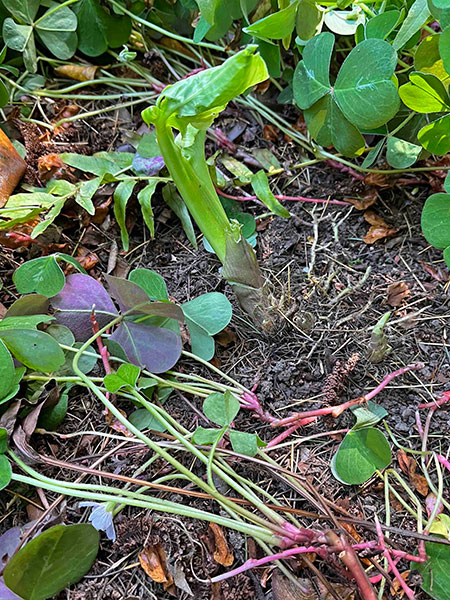
Some sources state this oxalis is easy to control. Ha! I purchased and planted a couple of 4-inch pots in 1994. About five years later I recoiled in alarm as it began to run roughshod over ever larger swaths of landscape. Alas, eradication has proven nearly impossible due to the dastardly rhizomes’ friability (a Darwinian triumph, I suppose): Elusive strands that break off and lurk in the soil after my futile attempts to grub them all out succeed in regenerating the mass within a couple of years, whereupon it resumes its green tsunami of doom and the cycle continues.
Resigned to this path of struggle, I urge you all (as you plant shop this spring) to avoid my folly by embracing today’s essential Latin binomial: Caveat emptor, let the buyer beware.
Horticulturally yours,
Daniel
- Closing lines of “The Weeds in This Garden,” first published in Still: The Journal, Fall 2018 issue. Gunter-Seymour is Poet Laureate of Ohio.
- The three species marked by an asterisk are on the Washington State Noxious Weed list.
- Listed as an invasive “Weed of Concern” in Seattle and King County.
- Botanical synonyms are Scilla campanulata, Scilla hispanica and Endymion hispanicus.