

Basking in Midwinter Blue(s)
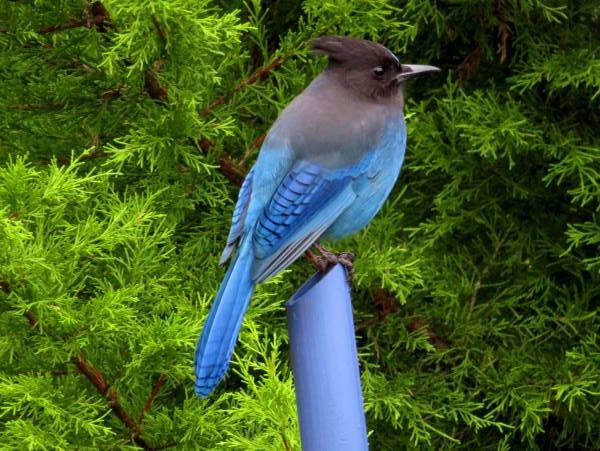
January 2023
If I were blue, a pale Picasso blue
—Patricia Barber1
as beauty is to sorrow, let me cover you in sleep
and in your melancholy, I would give you peace
if I were blue
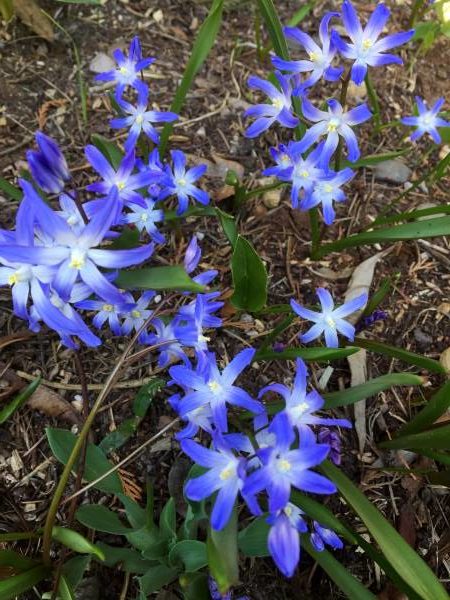
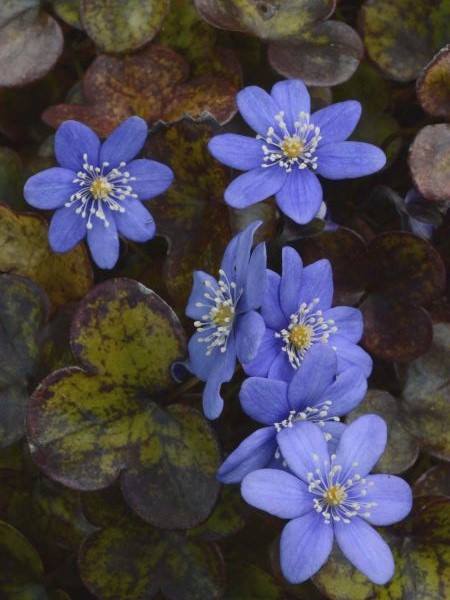
Tempting though it is to slip into slumber in the seemingly endless months of the “Big Dark” in the Pacific Northwest, once we shake off our drowsiness and gaze closely at the quiescent garden, a gray day need not be dreary. Even though azure skies are as rare as roses these days, and pale-blue hepaticas and chionodoxas (aka “glory of the snow”) are still a few weeks shy of blooming, a host of hardy evergreen shrubs shimmer in soft silver and glaucous tints that bend –some subtly, others showily– toward the blue.
Yes, embracing a composed case of the blues can yield calm but copious rewards for the midwinter gardener. Lately I’ve let Miles Davis be my guide as I gear up to tackle a task or two outside. His indispensable album Kind of Blue gets me in the proper frame of mind, that of close inspection as well as introspection. After absorbing the essence of the track “All Blues” I bask for a while in the revelation conveyed by Davis’s “Blue in Green”. Indeed, chlorophyll’s hue results from the interplay of the primary colors blue and yellow. Let’s explore a few exemplary plants (mostly shrubs or small trees, all thriving in my garden with no protection from winter’s indignities) whose foliage or bark favor the cooler aspects of the green-cyan-indigo portion of the visible spectrum, especially under overcast conditions.
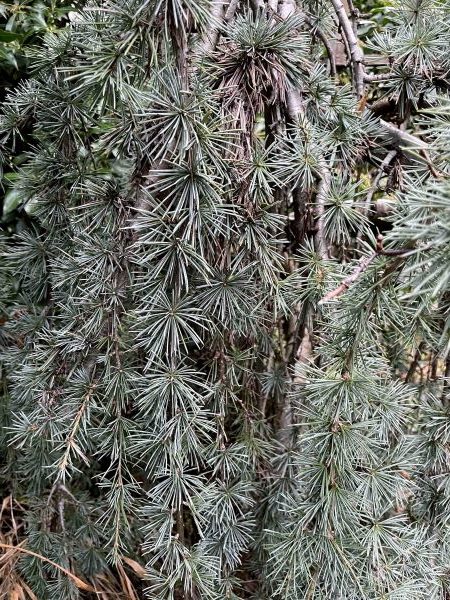
A few of today’s subjects we’ve explored (for their flowers and fruit) in earlier segments of Horticulturally Yours. These include the Mediterranean strawberry tree, Arbutus unedo, whose pink petioles and lustrous leaves brighten even a gloomy January day; the Chilean myrtle, Luma apiculata, whose indigo fruit and glossy leaves persist through winter; and the Tasmanian pepper bush, Tasmannia (formerly Drimys) lanceolata, which combines the pink petioles of Arbutus and the dark fruit of Luma along with deep green foliage that sports a glaucous finish. Click here to see them in “Autumn’s Oddball Edibles”. Another pair of Mediterranean natives worth noting for their bluish foliage include the silvery dwarf, contorted form of Atlas cedar, Cedrus atlantica ‘Glauca Pendula’, and the culinary olive, Olea europea ‘Arbequina’.
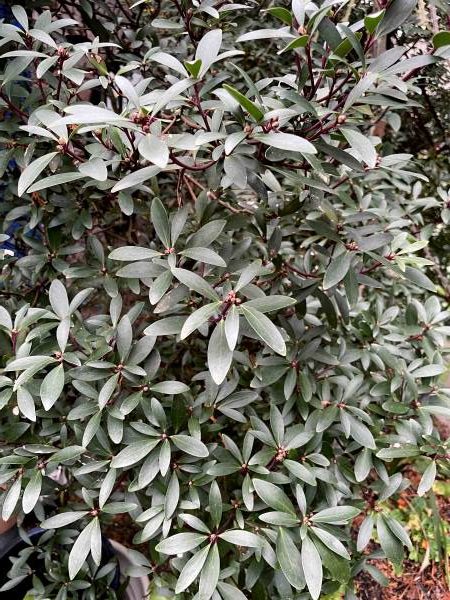
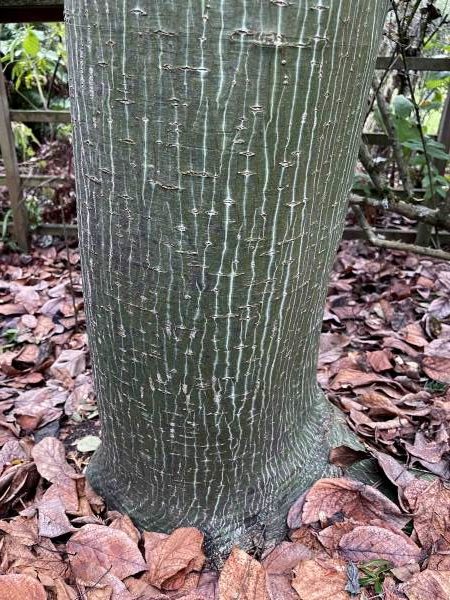
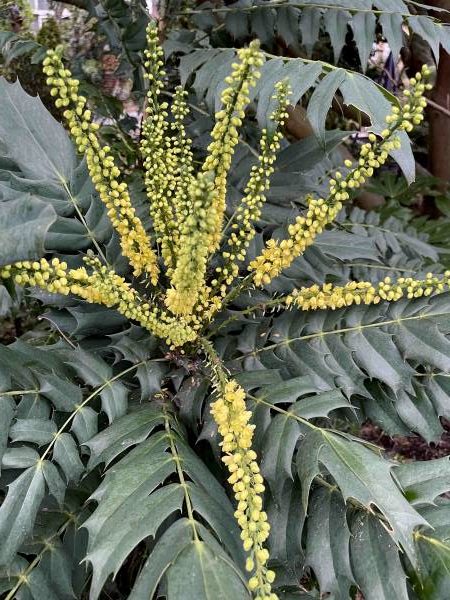
East Asia has graced us with a large coterie of blue-blooded worthies: Although deciduous, the trunk of some selections of Pere David’s maple, Acer davidii, sport snake-bark patterns whose veins nearly pulsate with pewter. It’s the bluish evergreen foliage that stands out in many mahonias (Although the genus Mahonia has been folded into Berberis by some taxonomists, I’ll refer to them here by the “classical” term.) Among my winter favorites are the leatherleaf mahonia, M. bealei, the alluring, diminutive Mahonia gracilipes, whose oblong leaves hide a brilliant, chalky white underside, and one particularly bluish-leaf seedling of the spiny but stately M. × media ‘Charity’, now in full, January bloom.
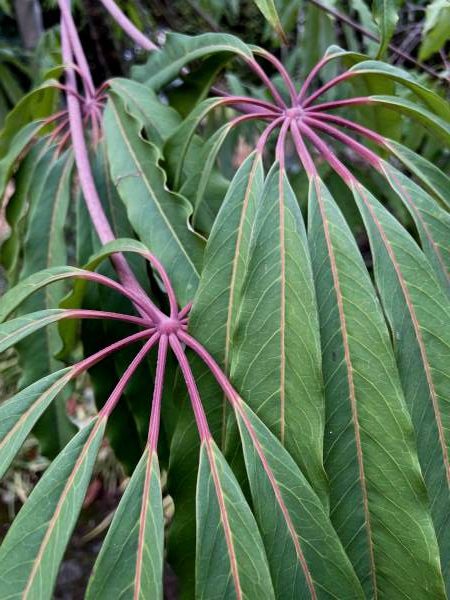
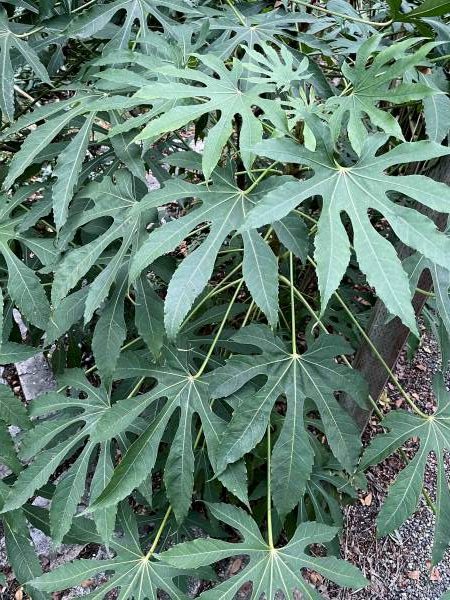
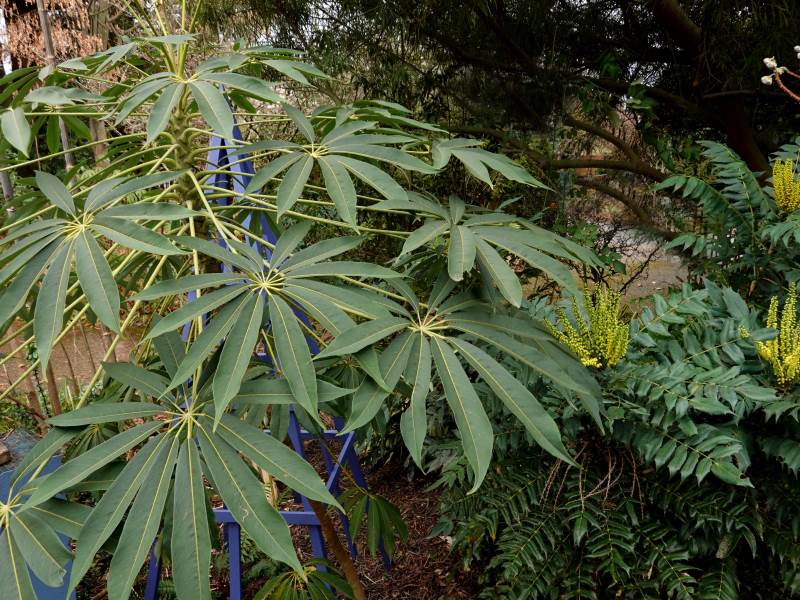
Also of merit are the hardy scheffleras (now reassigned by many taxonomists –although this is likewise disputed– to the genus Heptapleurum). In addition to the large-leaved Schefflera delavayi are the fascinatingly diverse seedlings of S. taiwaniana: one of my clones sports bright pink petioles and veins, while another boasts leaves of deep glaucous green. The closely related genus Fatsia is best known for the reliable, shade-loving F. japonica, but it can’t hold a proverbial candle to the intricate, delicate foliage of its somewhat more tender Taiwan-born cousin, Fatsia polycarpa2.
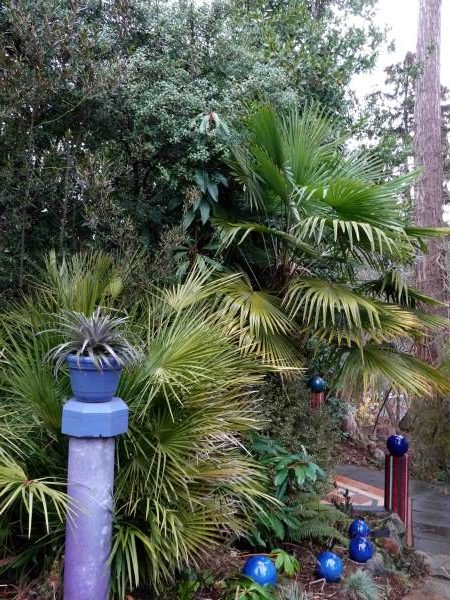
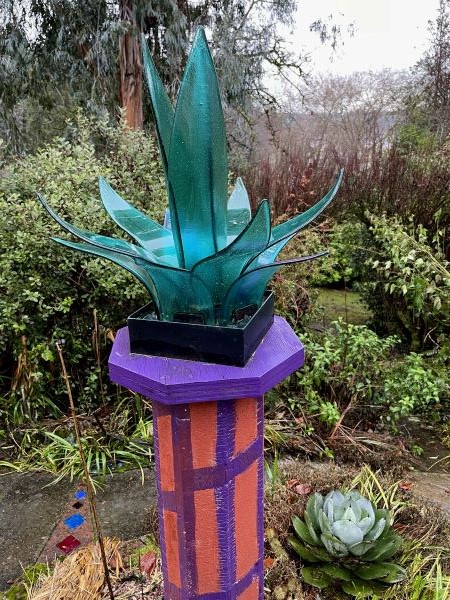
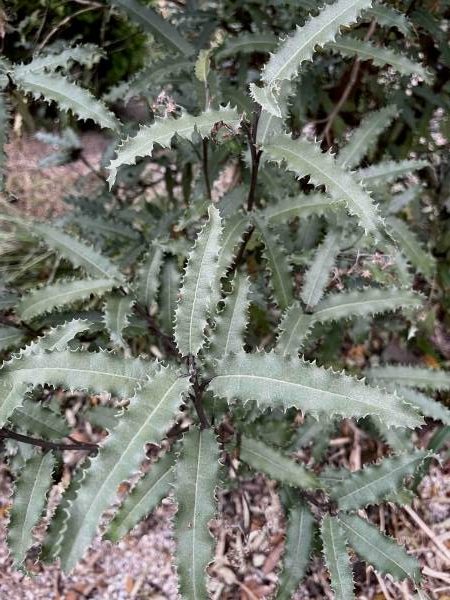
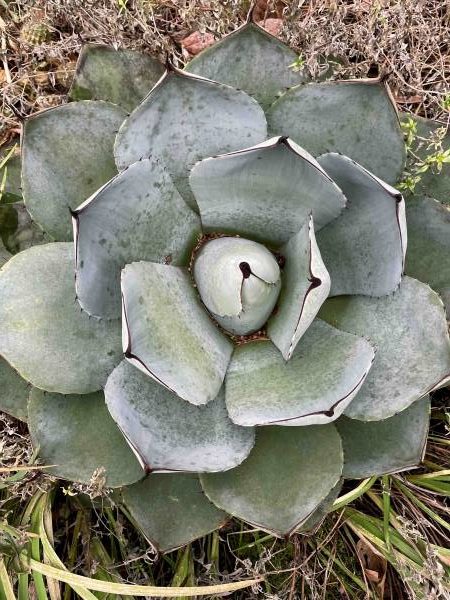
Far to the south, the oceanic antipodes of Australia and New Zealand brim over with blue-gray beauts. In my garden they are represented by the silvery foliage of Eucalyptus neglecta (best coppiced every couple of years, not only to control its aggressiveness but also to perpetuate the rotund, juvenile foliage) and by its towering sibling, E. glaucescens (whose very Latin name means “somewhat bluish-green”). From kiwi-land comes the rock-hardy New Zealand mountain holly, Olearia ilicifolia, whose undulating, coarsely serrated glaucous leaves are assertive but won’t shred the hapless gardener’s hands. We’ll circle back much closer to home with today’s sole non-woody dazzler: the blue-gray rosette formed by Agave parryi var. truncata, sometimes called “artichoke agave”. I grow a lot of agaves, mostly in pots, with a few large ones in the ground, although sheltered by a brick wall and wide eaves. The artichoke agave, along with a couple of pups from the equally hardy A. havardiana are the only ones I grow out in the open with no sort of protection other than sharp drainage.
When we meet again in a fortnight, we’ll recap the year just ended, ruminating on lessons learned in 2022. In the meantime, if you’re up for further musical inspiration on the beauty of the blue, close your eyes and succumb to the song “Azul provinciano”3 as interpreted by Argentine icon Mercedes Sosa. It’s an ethereal, three-minute flight of pure bliss.
Horticulturally yours,
Daniel
- Final portion of the song “If I Were Blue,” from the 2002 Blue Note album Verse, by Patricia Barber, recipient of a 2003 Guggenheim Fellowship in musical composition.
- My specimen of F. polycarpa has sailed through six winters, with only minimal damage (from which it recovered quickly) sustained in the brutal cold snap of December 2021. I grow it as an understory shrub beneath a towering cedar and a tall eucryphia.
- Usually referred to by its first line, “Ay, este azul” (Oh! This blue!), the song “Azul provinciano” was written by Argentine artist Pancho Cabral (born 1944). Mercedes Sosa, widely hailed as “The Voice of Latin America” and winner of six Grammy Awards, died in 2009.