
A Second Swing Through Singapore
September 2024
It is still here, the beautiful unspeaking
—Alvin Pang
that we wove out of this air.1
Today we’ll take another admiring gander at Singapore’s botanical bonanza, which we began last month. But first, as it’s been a while since we’ve juggled a Latin phrase, here’s one that’s both apt and pithy: Mater artium necessitas, or “Necessity is the mother of invention”. Singapore is a prime example of creativity arising from scarcity, continually having to shore itself up given its paucity of land and natural resources. Restricted in territory to a few low-lying islands in a shallow sea, Singapore has expanded its living space by around 25% in recent decades through the controversial process of land reclamation. In this and several other respects, Singapore resembles the Netherlands: It’s a small country of industrious people, in constant give and take with the sea, that punches well above its weight on the world scene. Another logical connection between the two, and the sweet spot for us garden lovers, is their mutual embrace and promotion of plantlife.
At the time of my first visit in 1989, Singapore was in the initial phases of its rebranding as “Garden City”. They were about to open Marina City Park on 65 acres of land newly reclaimed from old port facilities near the city center. This new park offered welcome green space for flying kites, playing ball and hosting open-air events, but civic leaders soon realized it had exponentially greater potential as the core of a grander concept: Gardens by the Bay (GBTB), a visionary, 260-acre botanical Eden that would cement Singapore’s next stages of metamorphosis, first as “City in a Garden”, and since 2020 as “City in Nature”.2
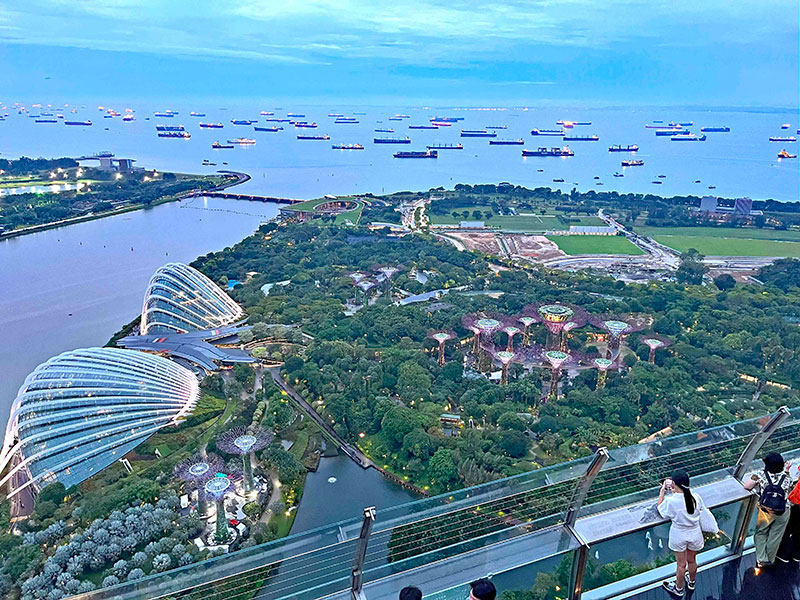
Scarcely 25-years-old, Marina City Park was cocooned in 2007 only to emerge from its chrysalis five years later as GBTB, a comprehensive, over-the-top nature park that exhausted my list of superlatives when I basked in its bounty upon my return to Singapore earlier this year after 35 years of absence. I’m not alone: This year Tripadvisor’s Travelers’ Choice Awards named it #8 among the world’s top attractions, just behind the Louvre in Paris and ahead of the Duomo in Milan. Its eminence emanates from exceptional engineering that embraces these elements: environmental sustainability, ecological education on the essential role of plants, and entertainment of the most salubrious sort for residents and tourists alike. It excels in each of these endeavors. Let’s explore its finest facets: a triad of eclectic exterior gardens, gargantuan glass conservatories and a forest of soaring “Supertrees”.
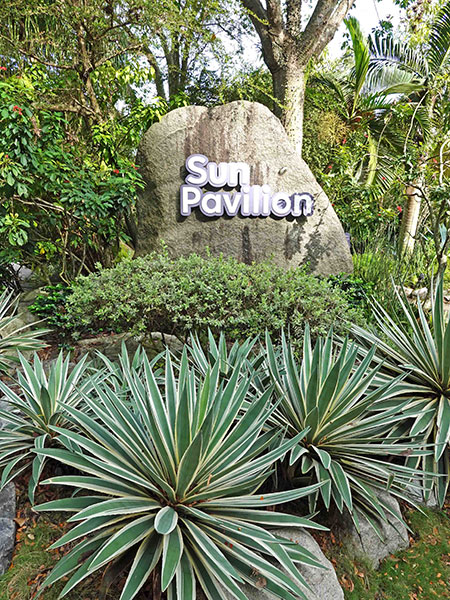
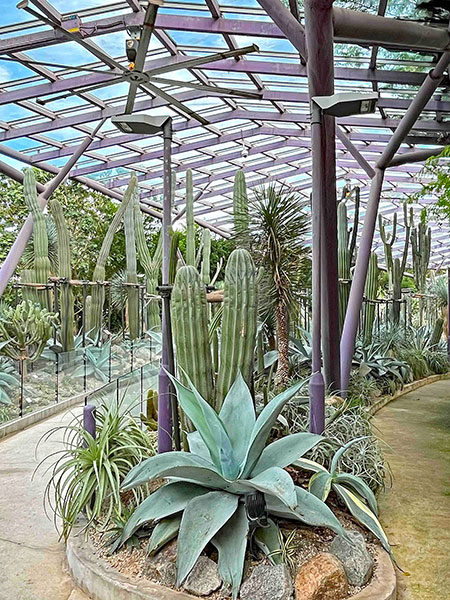
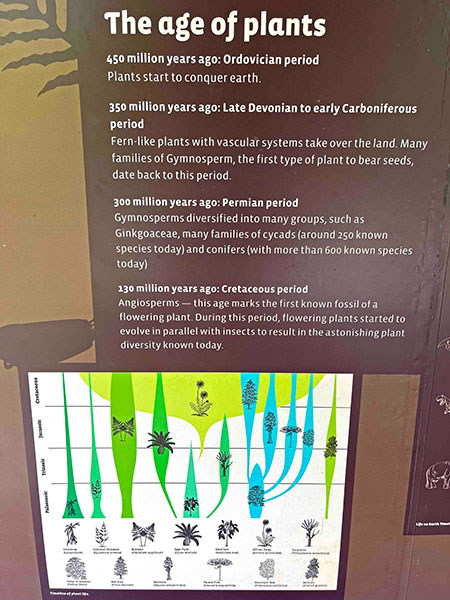
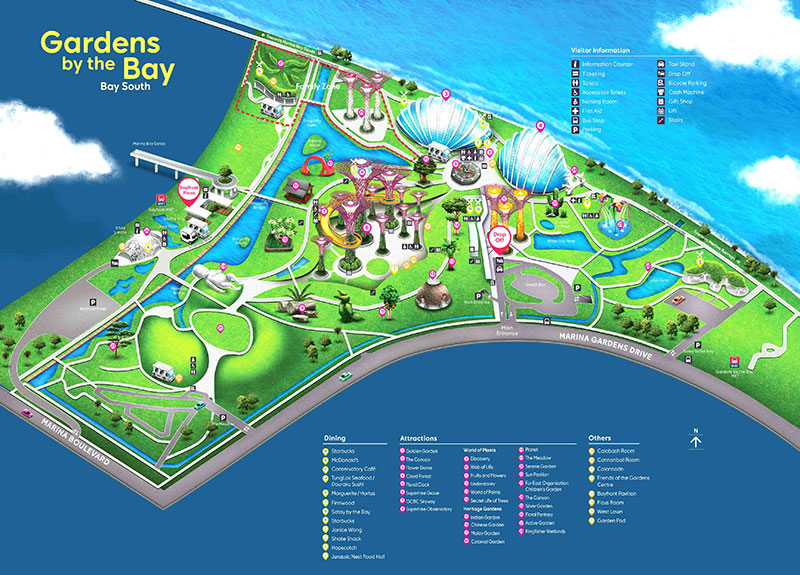
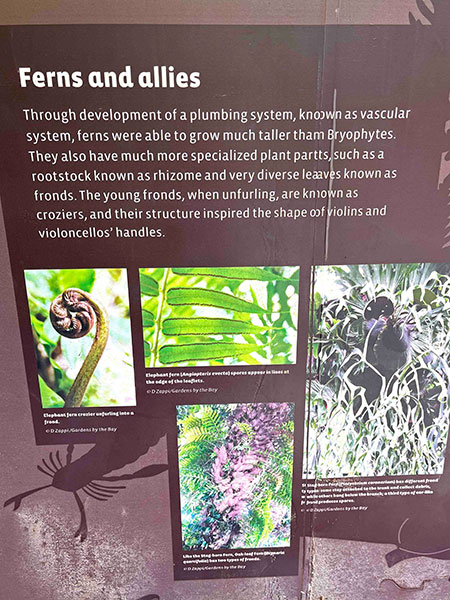
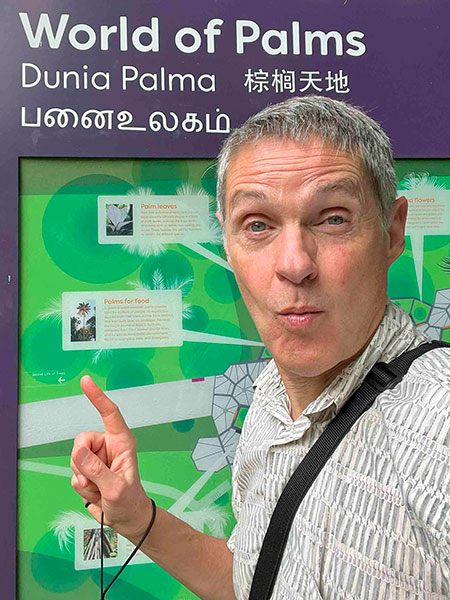
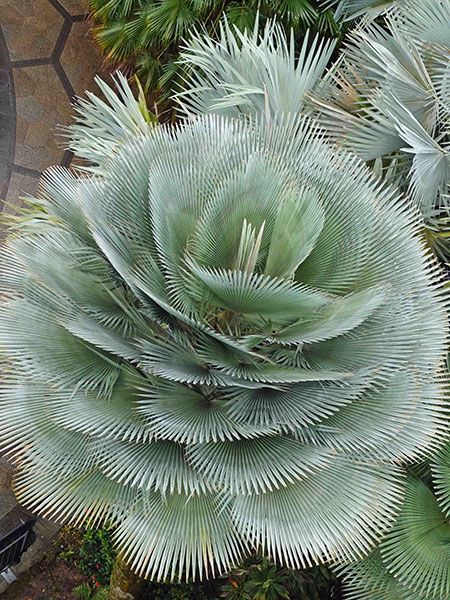
The expansive grounds encompass a dizzying number of specialty zones. Among them are the Heritage Gardens (four themed areas representing Singapore’s Chinese, Malay, Indian and Colonial cultures); the Sun Pavilion, an open-air xeriscape collection protected from Singapore’s copious rainfall by a wide glass roof; The Canyon, a ¼-mile-long dragon-shaped trail that winds through the world’s largest collection of sculptural rock formations, which in turn shelter a winning assortment of arid-climate plants; and my personal favorite, World of Plants, which sports six themed gardens that illuminate fruits and flowers, the world of palms, the secret life of trees, the forest understory, the web of life, and a whirlwind history of plant evolution. All of these are open to the public year-round, day and night, with no admission charge.
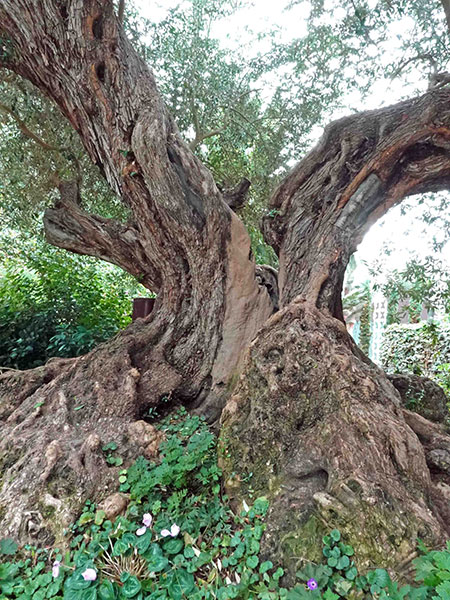
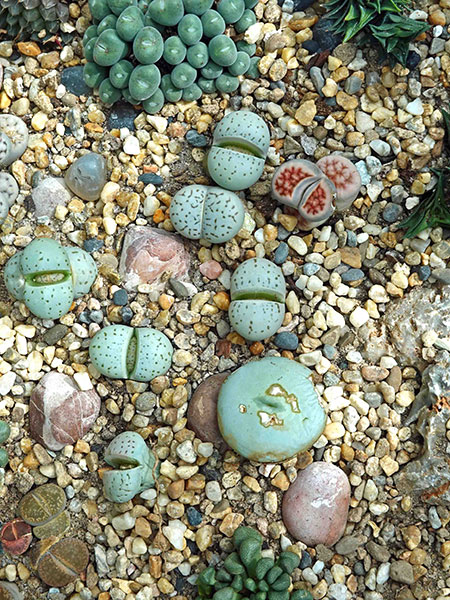
Gleaming sleek and silvery at water’s edge like enormous cyborg armadillos, a pair of massive glasshouses, dubbed Flower Dome and Cloud Forest, seem at once primordial and futuristic. The former (certified in 2015 as the world’s largest glass greenhouse, its column-free interior covering more than three acres) provides cool comfort to succulents of six continents, including a dazzling array of tiny living stones (Lithops species) and other plants that require low humidity. Inside, I ogled in awe at a grove of massive African baobabs and another of multi-centenarian olive trees, marveling at the engineering and artistry as I shuffled through specialty zones that showcase flora of the Mediterranean, South Africa and Madagascar, Australia, South America and California. Of these, only the clumsy, conventional California cluster extracted a “why bother” from me. The others were exquisite.
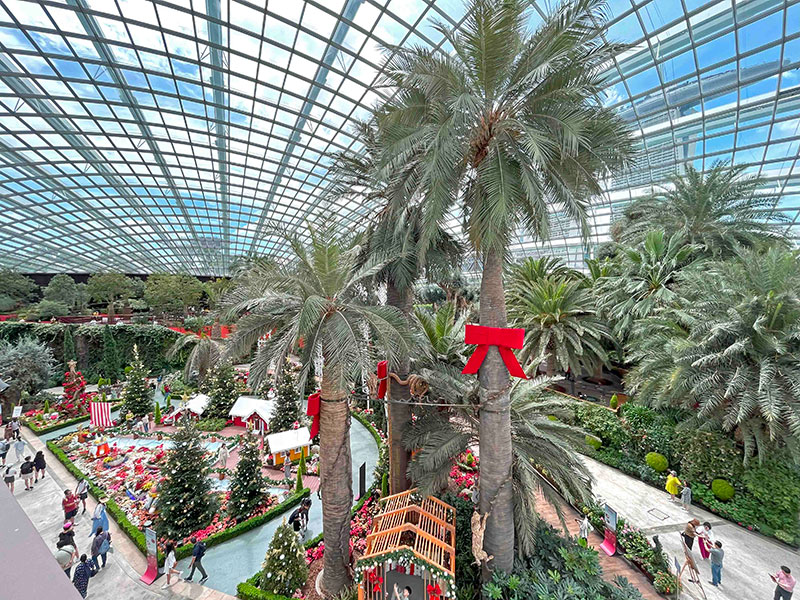
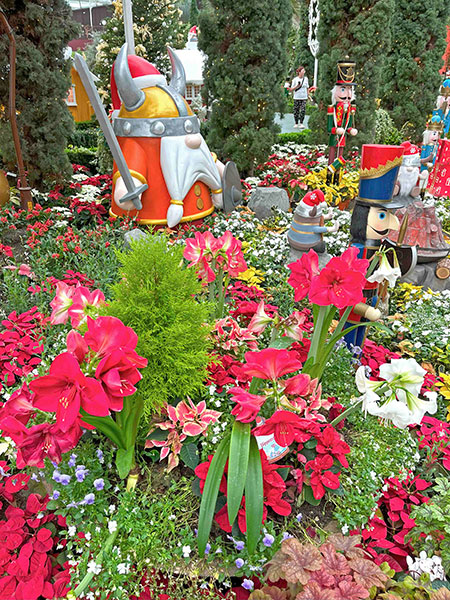
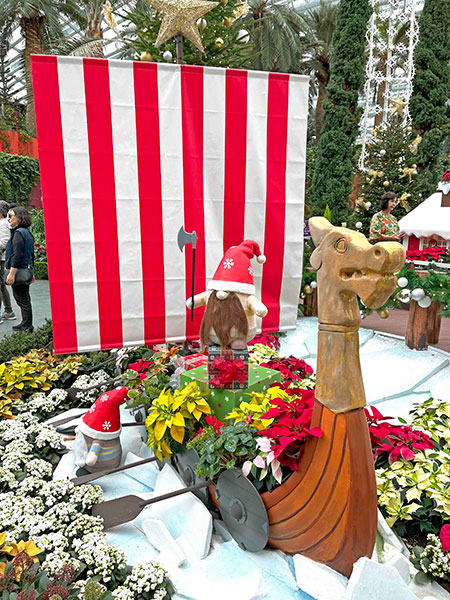
Of greatest interest to hometown (i.e., Singaporean) visitors is the rotating, seasonal Flower Field that holds court in the central floor of the climate-controlled Flower Dome, where swaths of tulips give way to Japanese flowering cherries, which in turn yield to dahlias, and so on as the months progress. During my January visit, a Yuletide-themed Nordic display (cosponsored by embassies of Denmark, Finland, Norway and Sweden) had been extended by popular demand. What could be more exotic in torrid, equatorial Singapore than a poinsettia and amaryllis-studded fishing village of lilliputian Vikings and trolls? The locals couldn’t get enough of it!
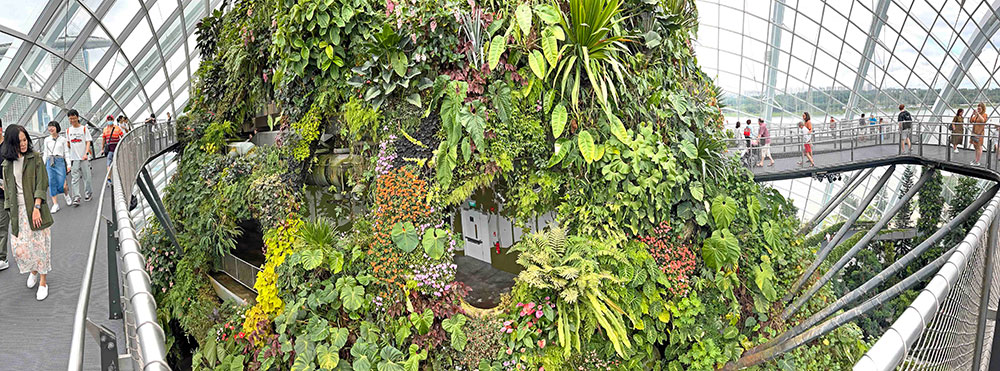
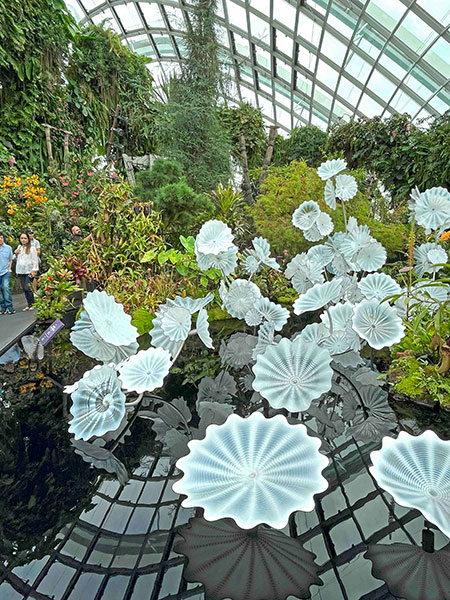
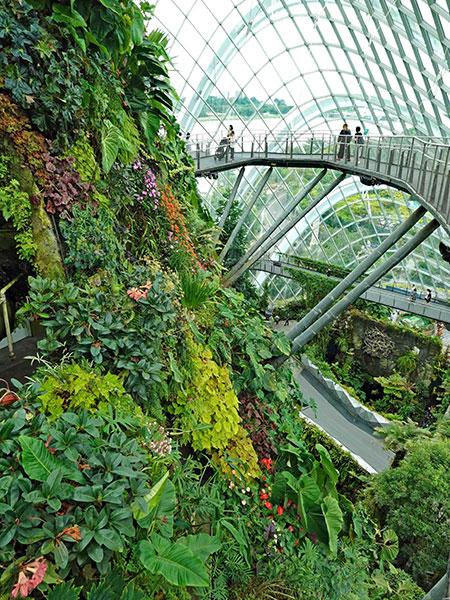
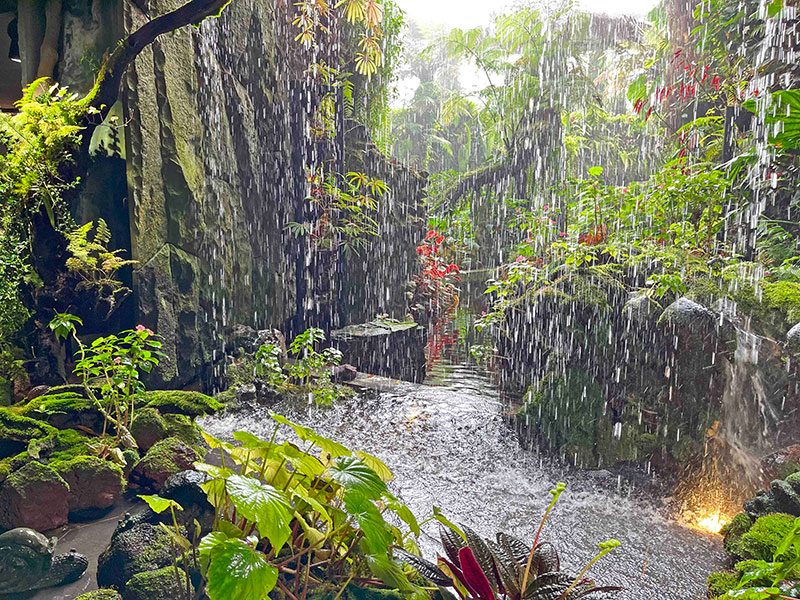
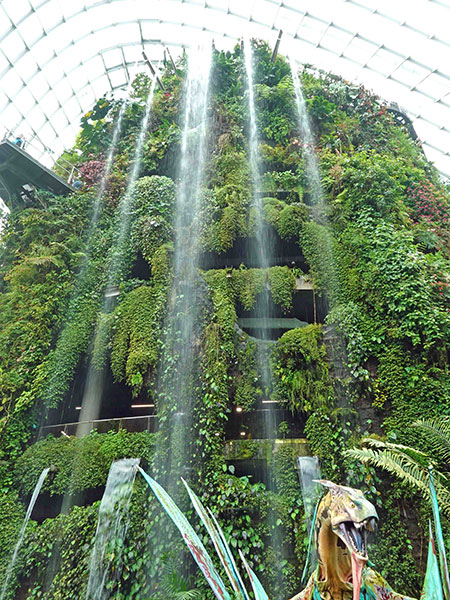
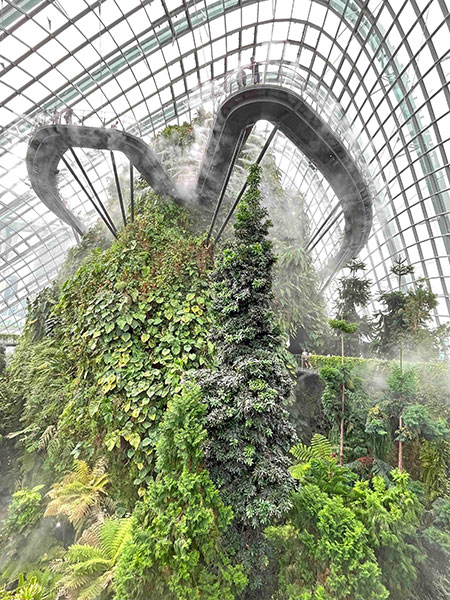
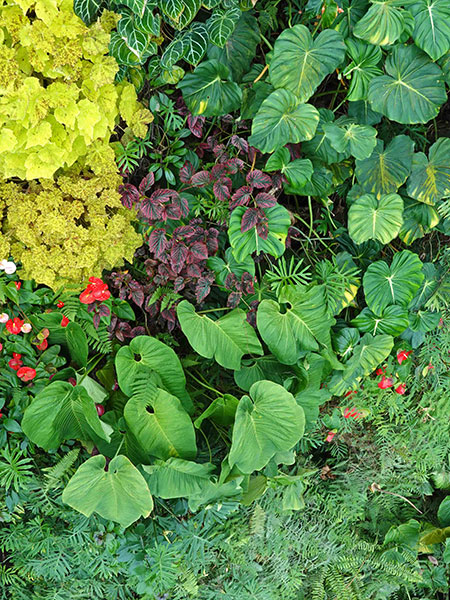
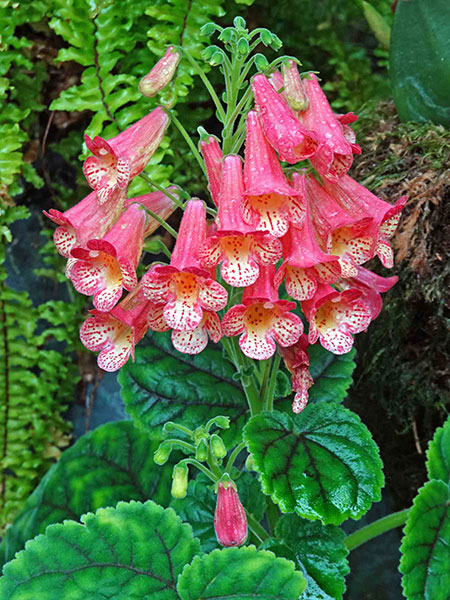
Next door, the notably taller (but with a considerably smaller footprint than its larger Flower Dome sibling) Cloud Forest biome recreates humid tropical montane conditions prevalent at altitudes between 1,000 and 3,000 meters (roughly 3,300 to 10,000 feet) above sea level. An enthralled visitor first faces the refreshing roar and mist generated by a multi-streamed 35-meter (115 feet) waterfall3 before ascending by elevator to the top of conical, 138-foot-tall Cloud Mountain, which is festooned with endless epiphytes: anthuriums, begonias, bromeliads, ferns and orchids. Emerging at top into the Lost World Plateau —which features a Seattle connection in Dale Chihuly’s 2022 sculptural glass ensemble “Ethereal White Persians”— one descends via soaring curvilinear ramps that afford intimate observation of the fabulous flora as well as sweeping vistas of the marina and harbor. The downward slope traverses several more wonder-inducing zones with evocative names: The Cavern, Crystal Mountain, Treetop Walk and Orchid Haven, culminating at the bottom with a watery, stalagmite-studded Secret Garden.
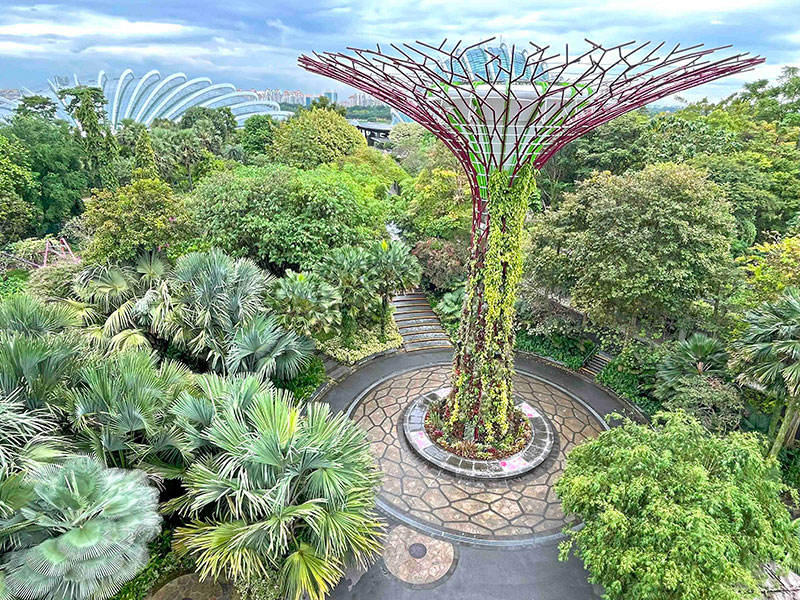
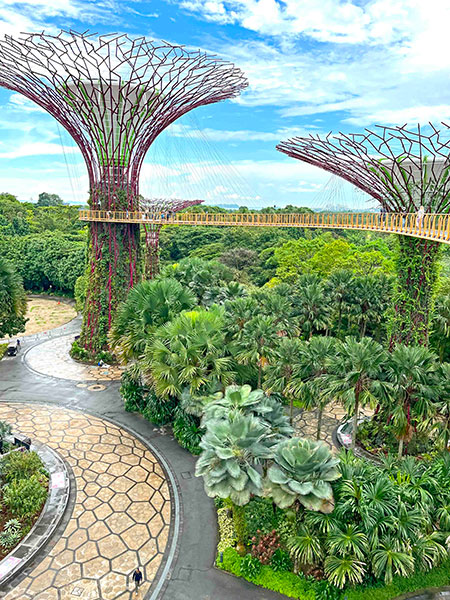
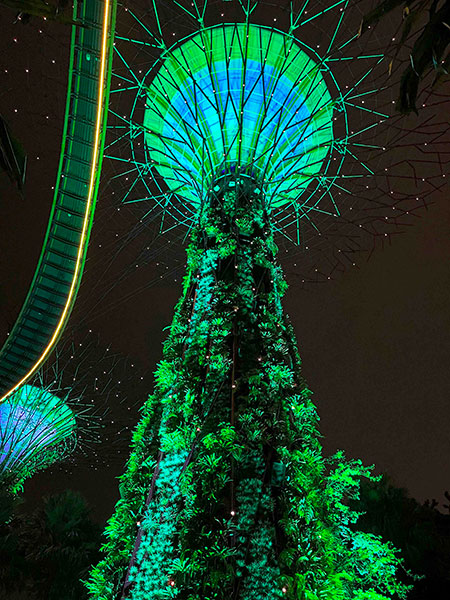
Back outside, a forest of “Supertrees” stands guard. Instant icons, 18 towering funnel-shaped green sentinels have become the new symbol of the city. Ranging from 80 to 160 feet in height, these vertical gardens host thousands of bromeliads, orchids and vines that almost completely cloak their concrete and steel structures, many of them serving vital roles in sustaining the two domed glasshouse biomes by producing solar energy, collecting rainwater and venting underground biomass boilers. The tallest “tree” features an observatory that offers an unobstructed panorama of the gardens and city center. Twice each night, visitors can take in the free Garden Rhapsody sound and light show that swathes the grove in garish colors and familiar show tunes.
Alas, space won’t allow my stated intention to spotlight a few other Singaporean botanical hotspots, such as the 22-acre HortPark in the Southern Ridges district or the Mandai Wildlife Reserve, which runs the acclaimed Singapore Zoo and the spectacular new, 42-acre Bird Paradise aviary, but you can visit them virtually by engaging the hyperlinks. We’ll meet again on the other side of the equinox.
Horticulturally yours,
Daniel
- From “Token Strings”, published in What Happened: Poems 1997-2017, by Alvin Pang (b. 1972), one of Singapore’s most acclaimed poets.
- “The importance of nature and green spaces for physical, emotional and mental wellbeing cannot be understated, particularly in a land-scarce country like Singapore.” —Kenneth Er, Chief Executive Officer of Singapore’s National Parks Board, in his essay, “Transforming Singapore into a City in Nature”.
- When opened in 2012, this was the world’s tallest indoor waterfall. In 2019 it slipped into second place when nearby Changi Airport’s Rain Vortex, which is five meters higher, assumed the title.