
Singapore's Singular Song
August 2024
I’m green and it’ll do fine
—Kermit the Frog
It’s beautiful, and I think it’s what
I want to be.1
Nearing the end of yet another dry summer in the Emerald City, as I schlep watering cans and drag hoses around my parched garden, I can relate to Kermit the Frog’s conflicted, initial thoughts about his leaf-colored hue: “It’s not easy bein’ green”. After this brief bout of doubt, his tune turns to embrace the beauty of his verdant tone. Writ large, Kermit’s melodic journey of self-acceptance could have been sung by the equatorial city-state of Singapore, which in recent decades has emerged from its drab cocoon of gloom to gleam today as one of the world’s eco-superstars in which nearly half (around 47%) of the city’s landmass2 is green space.
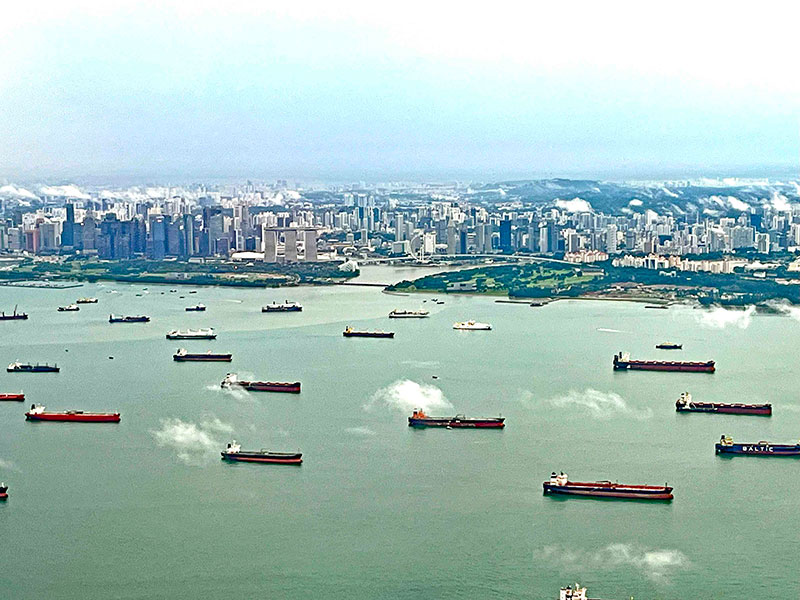

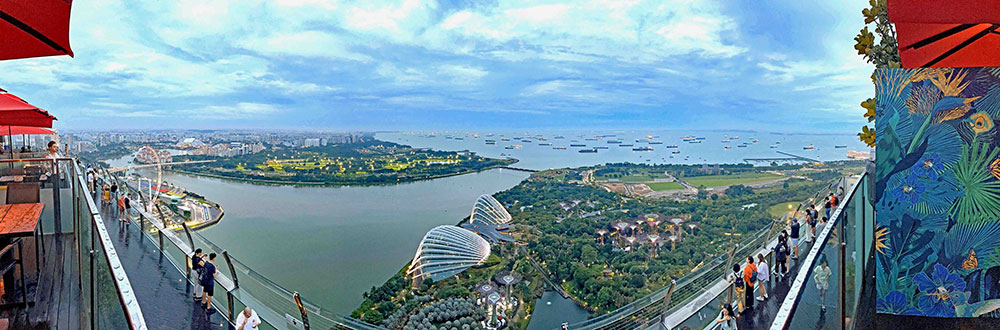
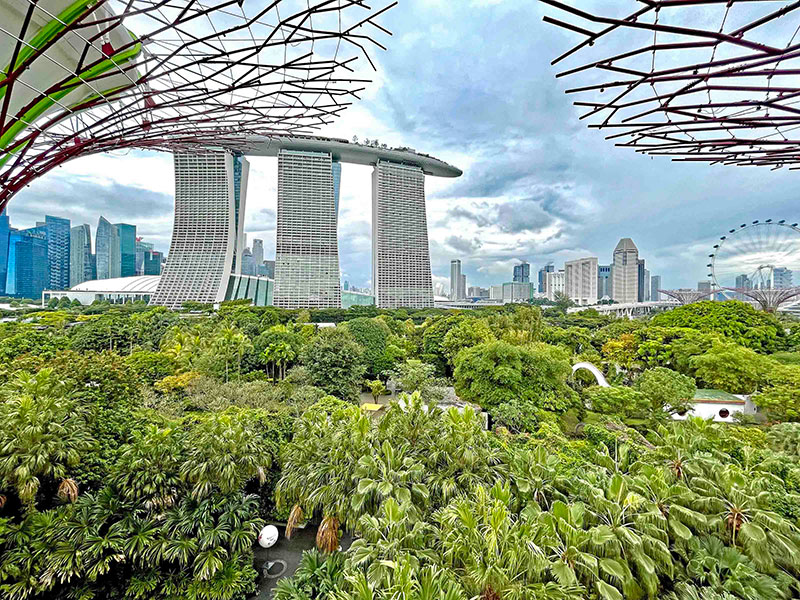
It hasn’t always been this way. Next year Singapore celebrates 60 years as an independent country. In 1965, the newly born nation’s green aura would have consisted largely of algae blooming on the sewage-clogged Singapore River and in surrounding squalid, garbage-strewn slums and squatter settlements. It’s beyond the scope of this column to clarify the causes of its breathtaking transformation, but today Singapore (whose motto City in a Garden was recently refined to City in Nature) is recognized as not only among the greenest, but also the cleanest and most sustainable of the world’s cities3. By 2030 all residents (which currently number 5.9 million) will live within a 10-minute walk of a formal park, and the city’s Park Connector Network (trails and paths swathed with intensively planted trees and ornamentals) now stretches 380 km (236 miles). Vertical and rooftop gardens (dubbed “skyrise greenery”) cloak 383 acres of the city’s buildings.
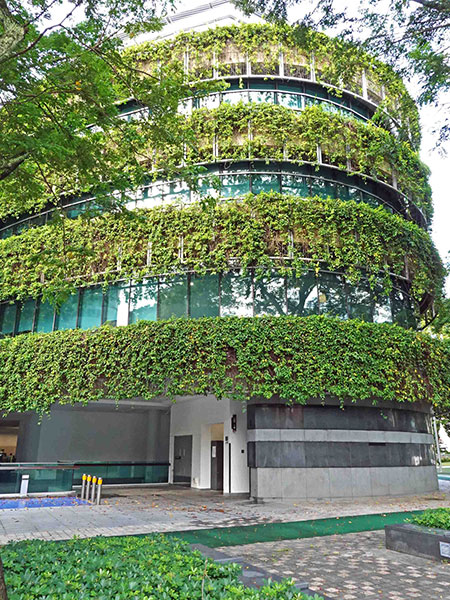
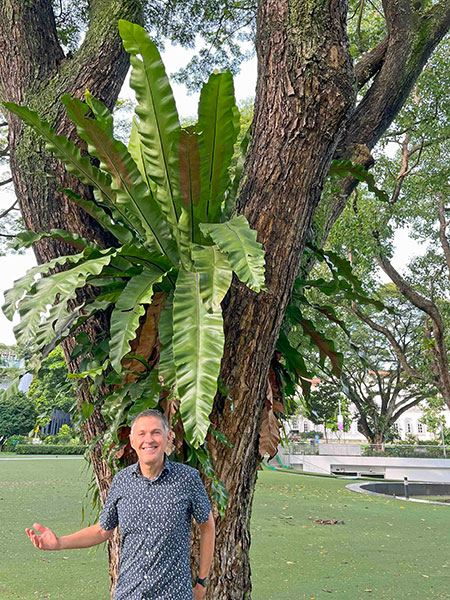
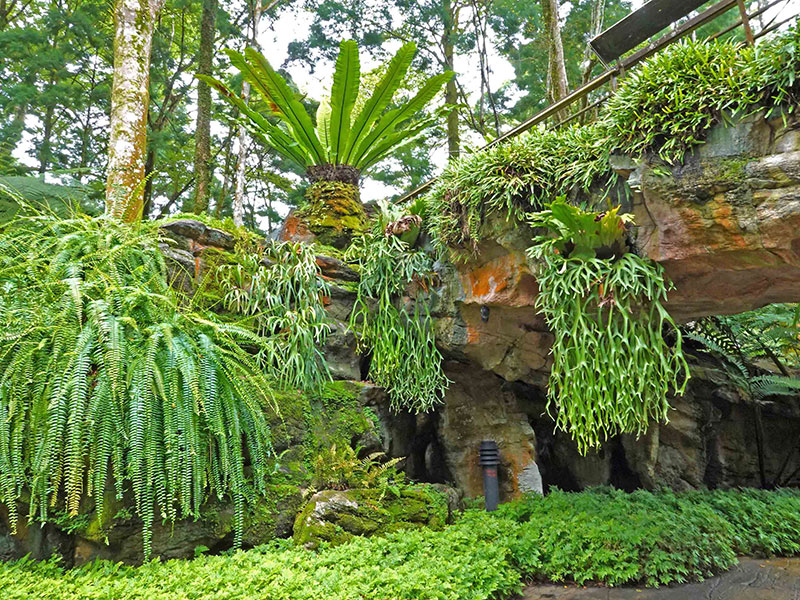
Given these accolades and accomplishments, it’s clear that Singapore should be considered a plant lover’s paradise if not a hort-head’s heaven. Would this be enough to warrant a 17-hour flight from Seattle? Speaking from recent experience, I’ll answer resoundingly in the affirmative. In early January, having done due diligence in triaging our home garden in advance of a looming arctic blast, my long-suffering husband Jeffrey and I shuffled off to Singapore for an eight-day stay, thinking that would prove sufficient for visiting its chief plant-centric attractions. We were wrong.
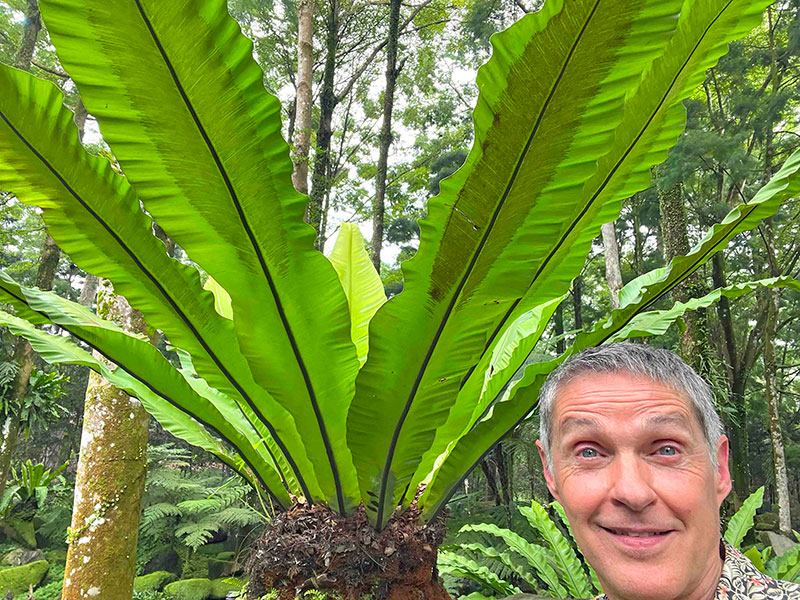
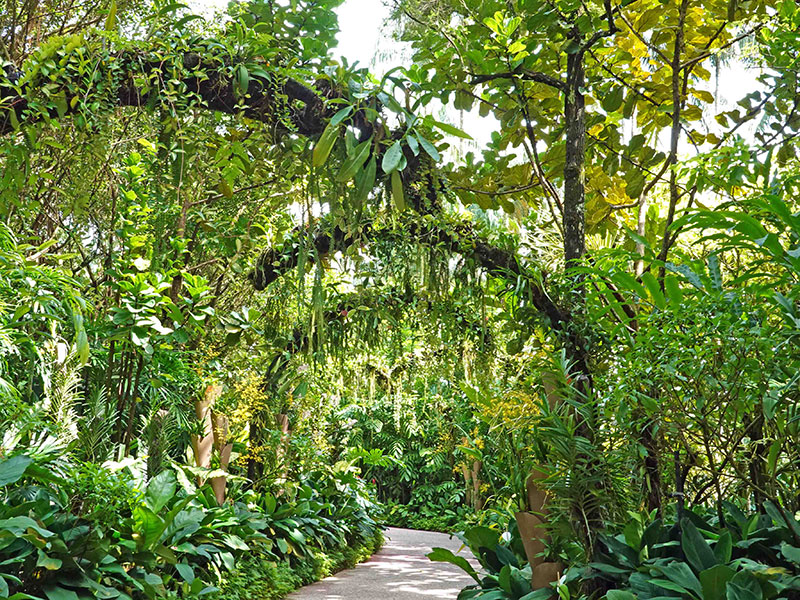
In addition to the astonishingly attractive and diverse streetside plantings all over town, the city’s horticultural come-hithers can be grouped within five destinations: a panoply of gardens inside Changi Airport; the stellar, 165-year-old Singapore Botanic Garden (which envelops the stunning National Orchid Garden); the futuristic Gardens by the Bay, with its mammoth Cloud Forest and Flower Dome glasshouses and otherworldly Supertree Observatory; the sui generis, educational HortPark, which spans 22 acres in the city’s Southern Ridges district; and the extensive ornamental and native vegetation areas within Mandai Wildlife Reserve (operator of the renowned Singapore Zoo and the new, 42-acre Bird Paradise aviary). We’ll explore the first few today and sing the praises of the final trio next month.
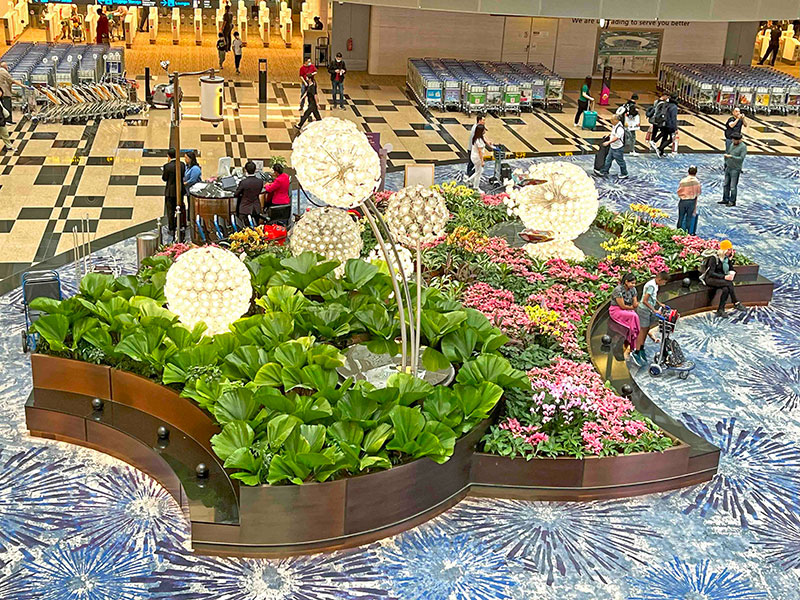
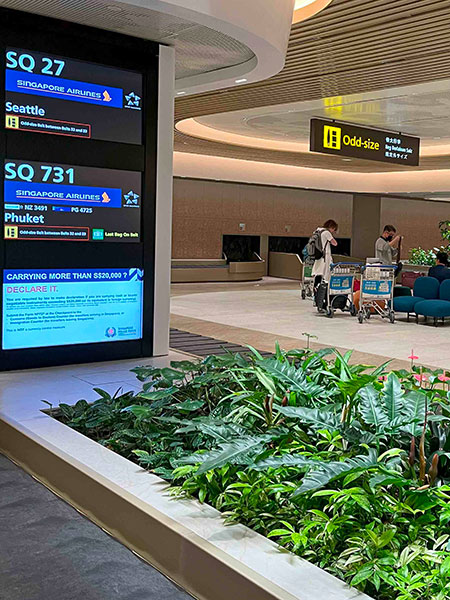
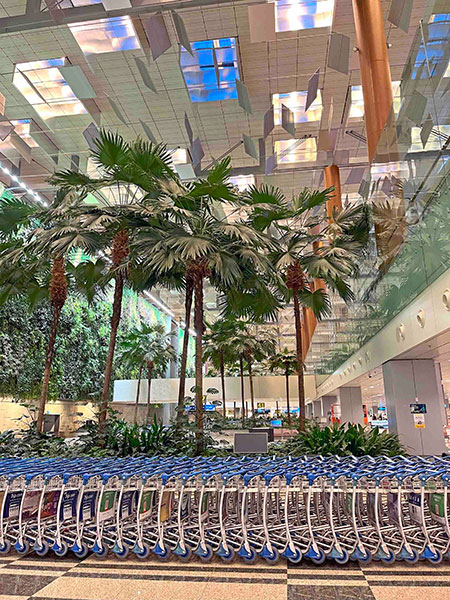
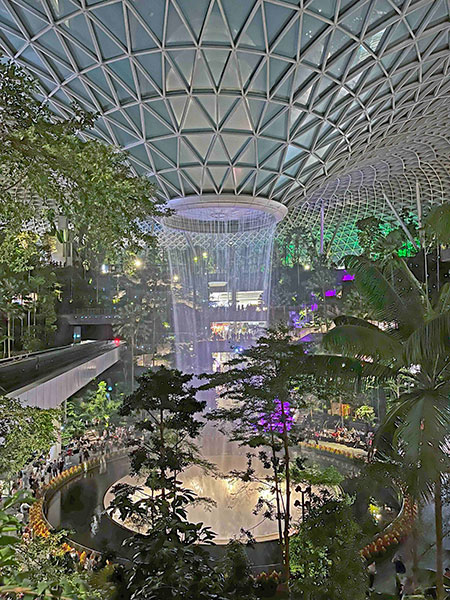
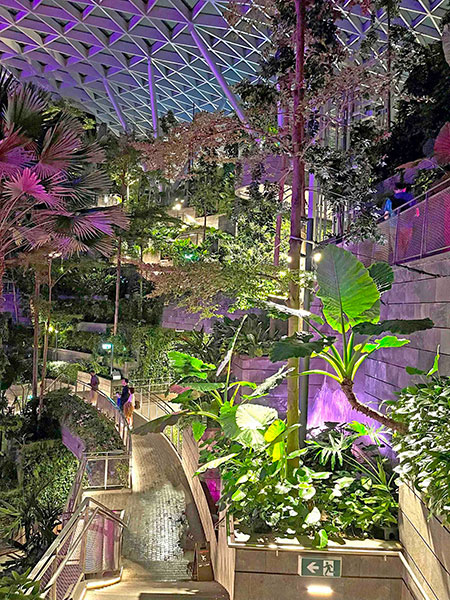
Changi Airport—Singapore’s international airport is perennially ranked among the world’s best4 due to its efficiency, sleek design and creature comforts. But Changi distinguishes itself even more in the breadth and depth of its interior garden spaces, which range from welcoming and comforting to eye-popping and jaw-dropping. The airport has more than a dozen professional horticulturalists on staff and a 7.5 acre nursery for propagation of the 600,000 plants living in the airport. Each of its four terminals boasts themed gardens including a hedge maze, cactus garden, orchid garden, sunflower garden, tropical rainforest vivarium, butterfly garden and an eclectic “Enchanted Garden”. However, the veritable showstopper is the 2019 Moshe Safdie-designed Jewel, whose centerpiece, the Rain Vortex (the world’s tallest indoor waterfall), sends a perpetual ring of recirculating rain water into 130-foot freefall, culminating in the center of the Shiseido Forest Valley, a five-story terraced interior garden of 900 trees and 60,000 shrubs of 120 species native to subtropical and high-altitude tropical forests. How’s that for Plunging into Plantlife?
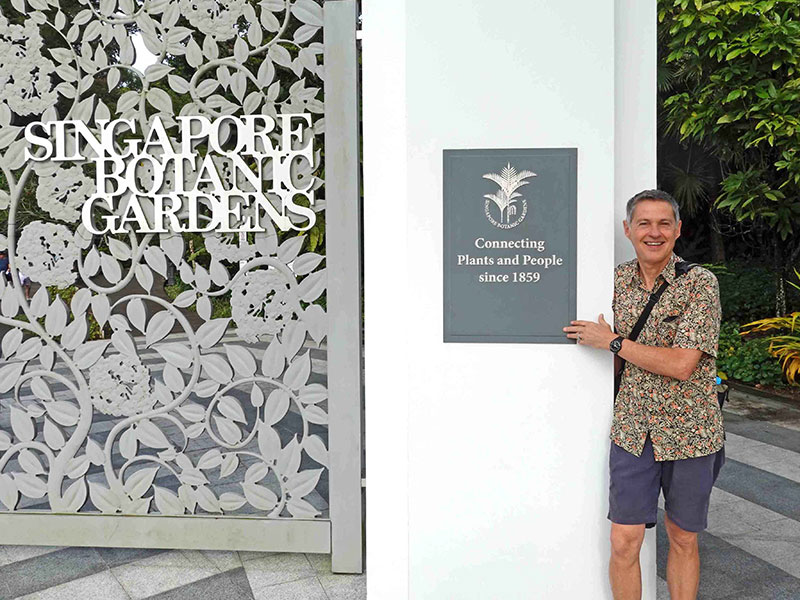
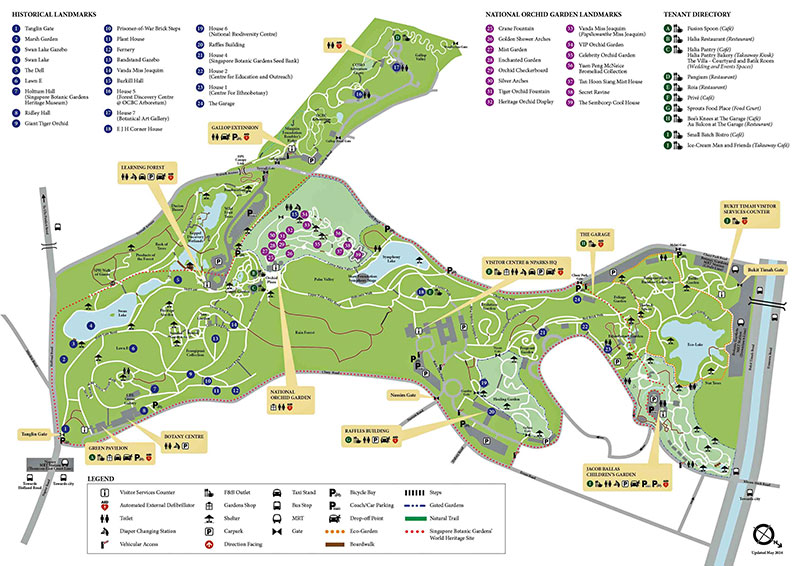
Singapore Botanic Gardens—Accessible, Beautiful, Consequential. Simply stated, this is one of our planet’s essential Edens. One of only three botanical gardens recognized as a UNESCO World Heritage Site (alongside Kew in the UK and Padua in Italy), SBG shelters more than 10,000 varieties of flora in its 200 acres, extending its verdant umbrella more than 1.5 miles through the heart of the city. Established in 1859 as a pleasure garden, the SBG quickly developed an economic purpose, first with experimentation on rubber trees (pirated from the Brazilian Amazon) and later in hybridization of orchids. Today it continues in the vanguard of botanical research even as it preserves rainforest and educates the public on evolution, conservation, climate change and the fundamental value of plants.
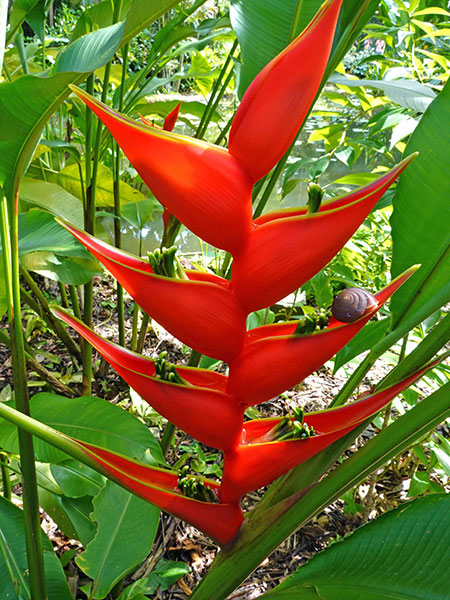
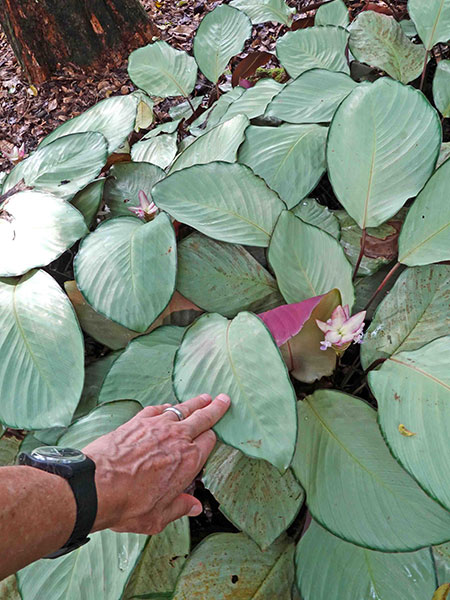
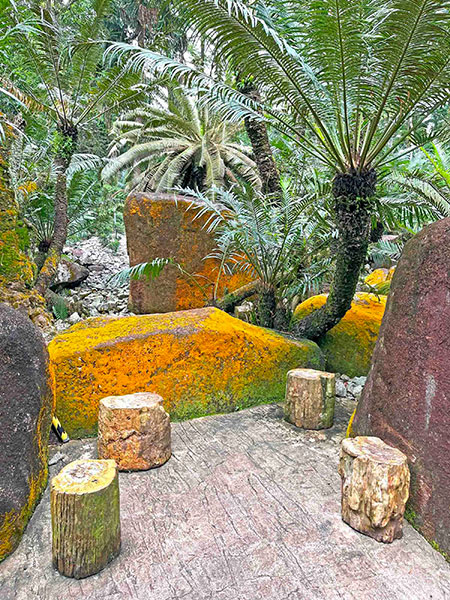
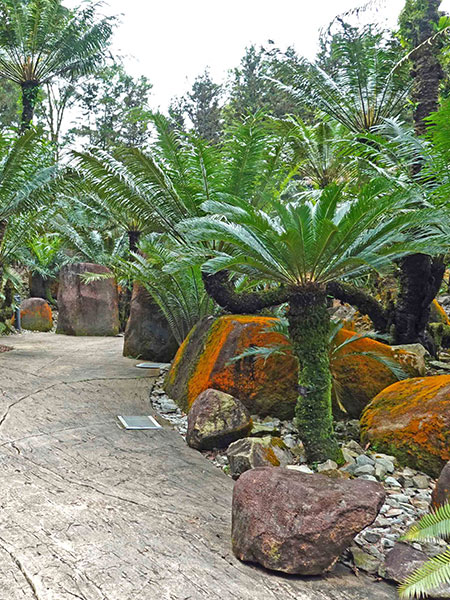
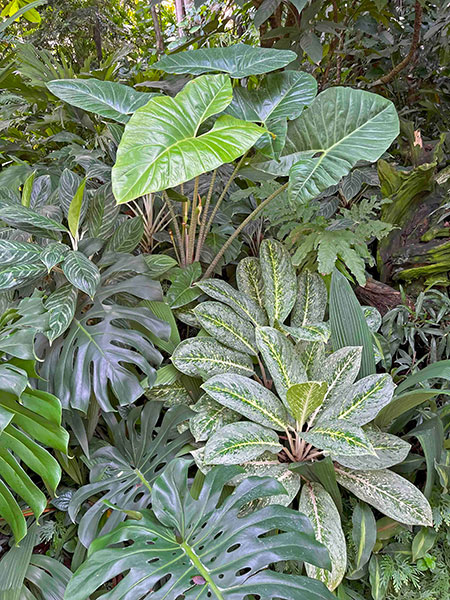
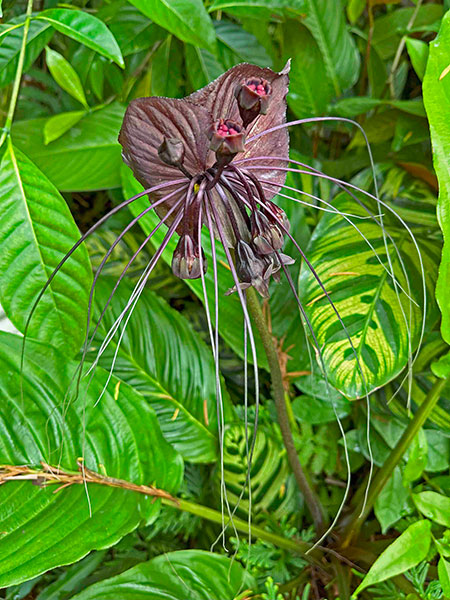
In addition to stimulation for the brain, comfort for the soul seeps in through the garden’s sheer operatic exuberance. Of SBG’s many specialty zones, most melodious for me are a zingy tribute to the botanical order Zingiberales in the Ginger Garden and the extended Wagnerian fern-and-cycad-frenzied aria of the Evolution Garden. SBG also provides nourishment for human tummies in six on-site cafes, four restaurants and a food court. On a personal note, visions of this garden have danced in my head ever since my first visit in 1989. Upon my return in 2024, I found it even more gorgeous than in my dreams. It is one of my three all-time happy places (among botanical gardens) along with Kirstenbosch near Cape Town and the Royal Botanic Gardens in Melbourne.
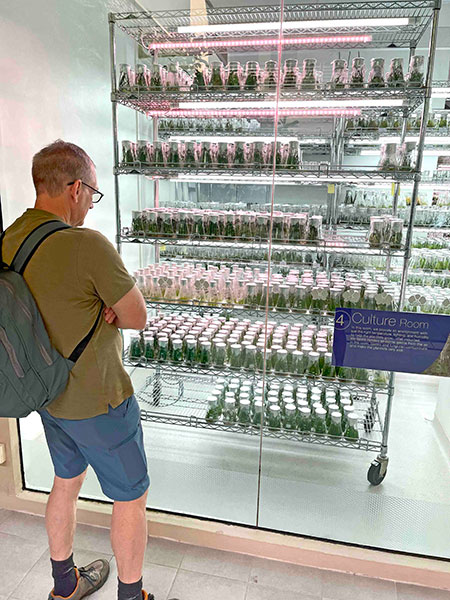
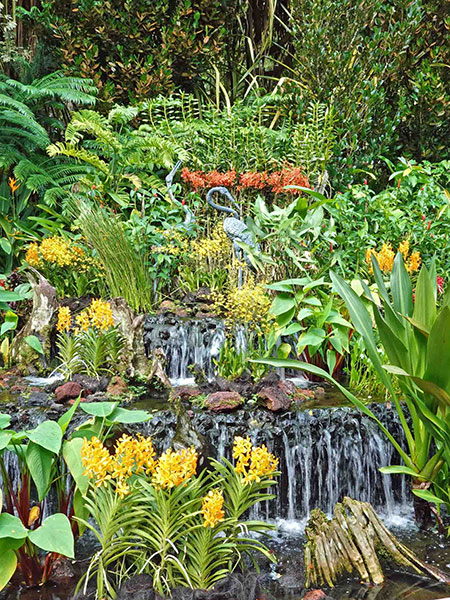
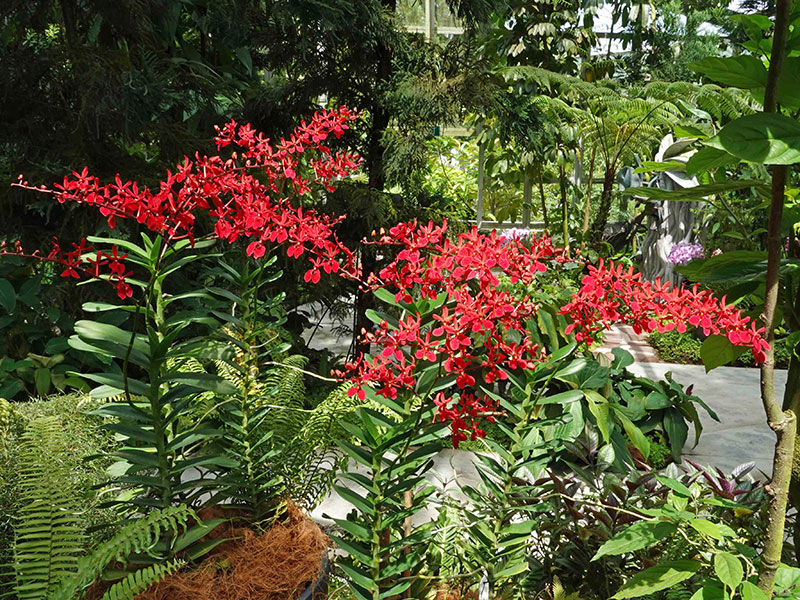
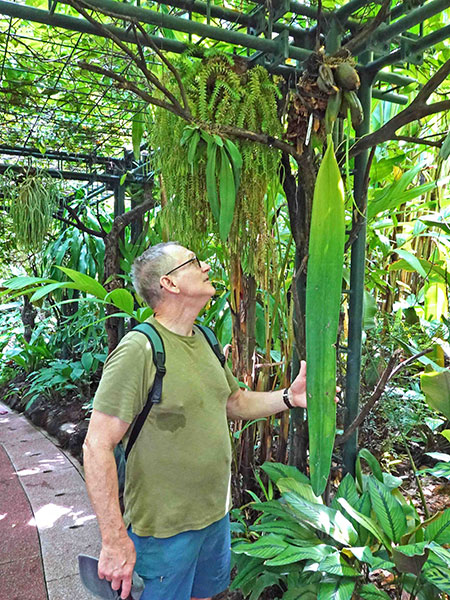
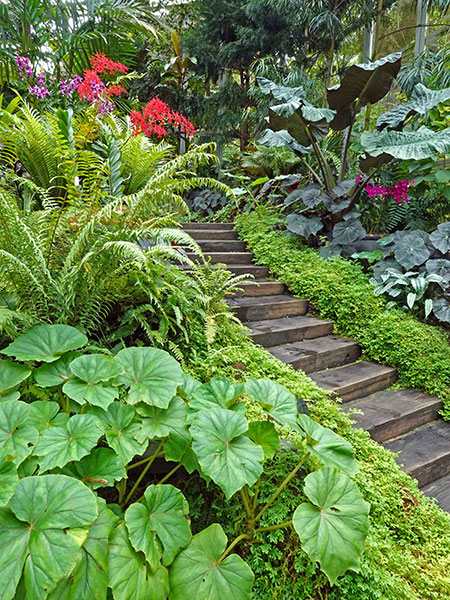
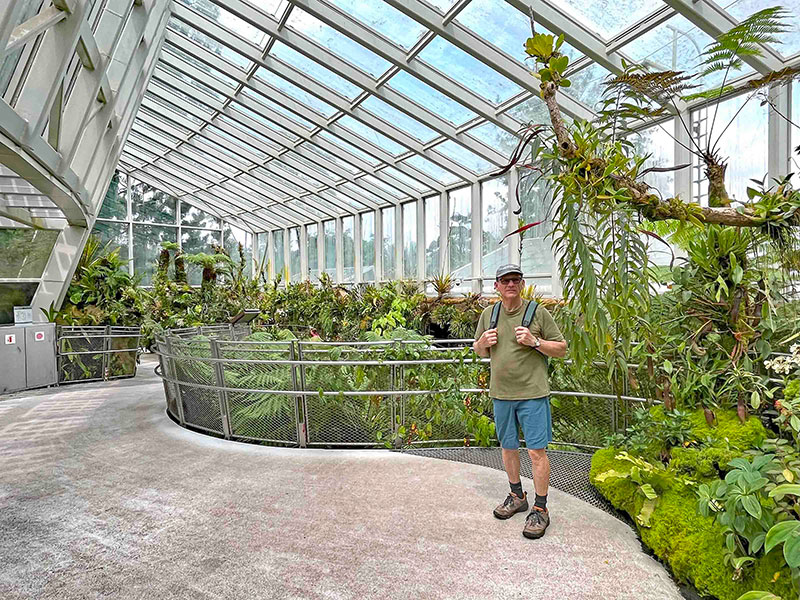
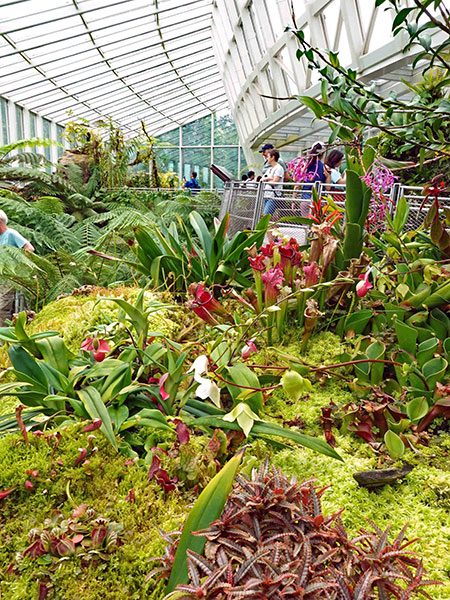
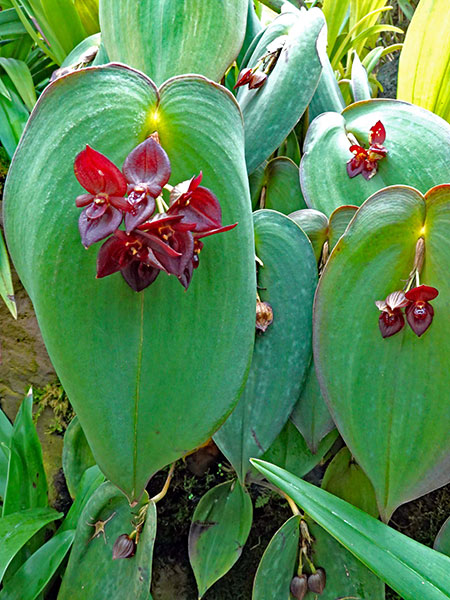
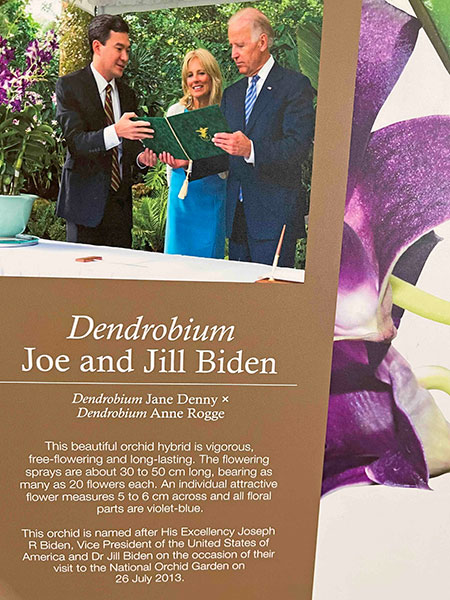
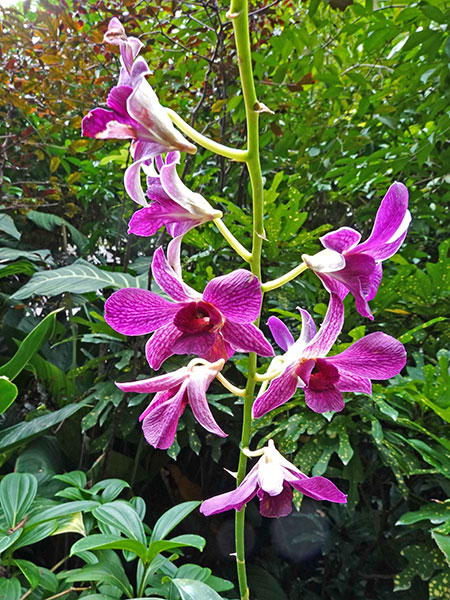
National Orchid Garden—Nestled within the SBG, the NOG became its own entity in 1995 with the opening of a dedicated, fully enclosed 7.5-acre site to house the broader botanical garden’s burgeoning collection, which now comprises 150,000 plants representing 1000 orchid species and 2000 hybrids. In addition to the mind-blowing color-themed outdoor displays, the NOG’s newly designated Tropical Montane Orchidetum features three indoor structures: an 8200-square-feet mist house, a 6400-sq-ft bromeliad house, and a recently expanded multilevel 12,000-sq-ft cool house that shelters hundreds of species native to high-altitude tropical regions. These structures serve double duty in providing refuge for human visitors who seek momentary escape from Singapore’s equatorial heat and the city’s 100 annual inches of rainfall. Since 1956 the garden’s VIP orchid program has named new hybrids for international celebrities, dignitaries and political officials. Curiously, for the U.S. it is vice-presidents whom Singapore honors.
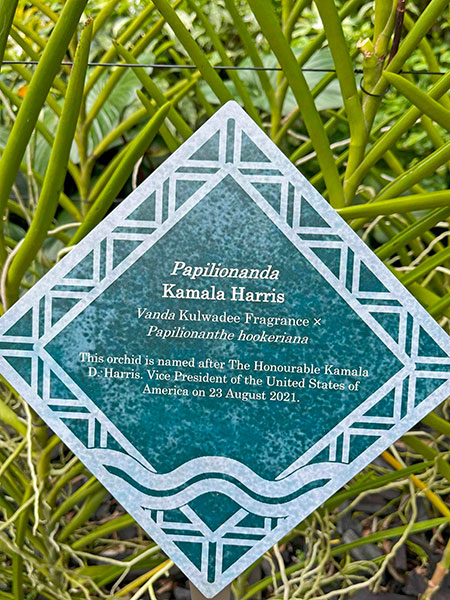
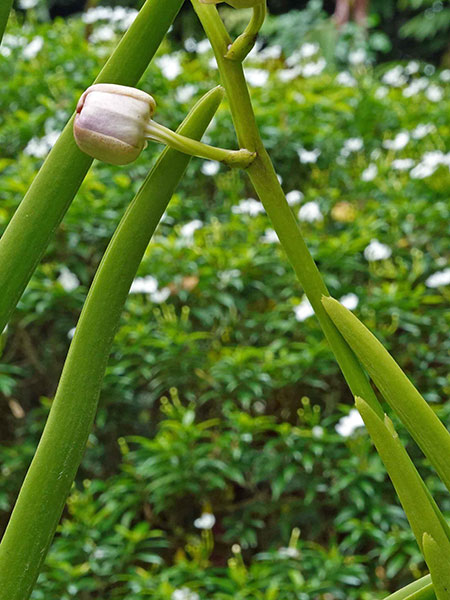
On that high note we’ll rest our vocal chords a bit and belt out a second verse next month.
Horticulturally yours,
Daniel
- Closing lines of “Bein’ Green”, written by Joe Raposo and performed by Kermit the Frog puppeteer Jim Henson in 1970 for the PBS series Sesame Street’s first season.
- Singapore’s landmass of 284 square miles (a hair smaller than New York City) is concentrated on its main diamond-shaped island measuring 34 x 17 miles. It’s just off the southern tip of the Malay Peninsula.
- See the Aug. 2023 PBS Terra segment, “Singapore: Designing a Megacity in Harmony with Nature”.
- Skytrax rankings have designated Singapore Changi as World’s Best Airport 10 of the past 15 years (in the other five it ranked either second or third).