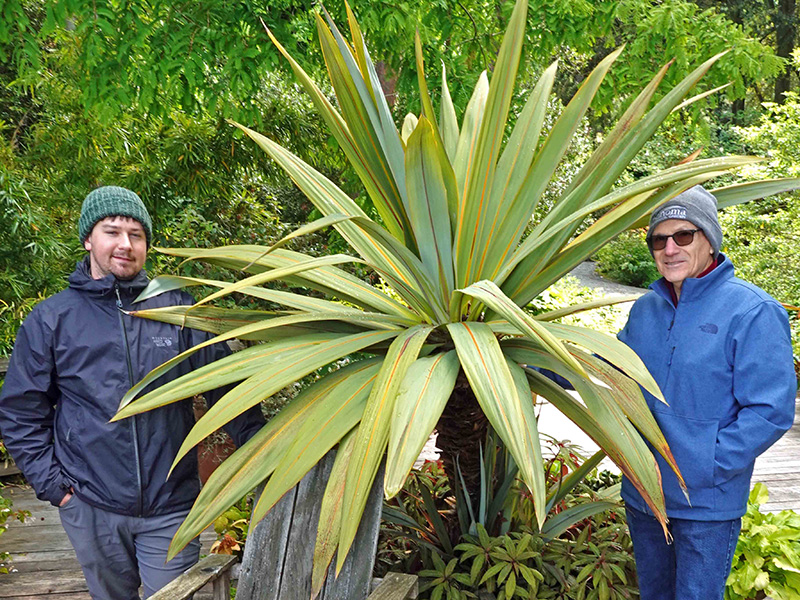

Kudos to Kiwiland: NZ Plants for PNW Gardens (Part I)
February 2025
Kia mauriora te whenua me tōna taiao
—Māori proverb1
(May the life-force of the land be strong)
As we stagger around our gardens near the end of another winter of anguish engendered by prolonged spells of freezing weather, once again I shake my fist at our misbegotten “elevation” to USDA Plant Hardiness Zone 9a. Having schlepped plant containers by the hundreds under cover and swaddled dozens of other earth-bound darlings in burlap, my long-suffering husband Jeffrey and I decamped for the antipodes for the first three weeks of February with the aim of warming our weary (and increasingly rickety) bones. I’ll share highlights of our circuit of the North Island of Aotearoa New Zealand 2 in future episodes of HY.
While trekking (or in ANZ parlance, tramping) through that region’s bountiful gardens, parks and forest reserves, I marveled at seeing dazzling mature specimens and lush stands of at least 20 genera of foliar friends I have both nurtured and neglected over the last third of a century in my Garden of Exuberant Refuge in Seattle. These included perennials (Astelia, Carex, Clianthus, Fuchsia, Libertia, Phormium, Uncinia), ferns (Doodia and Blechnum), shrubs (Coprosma, Cordyline, Corokia, Hoheria, Leptospermum, Olearia, Pittosporum, Veronica), and trees (Dacrycarpus, Podocarpus, Pseudopanax).
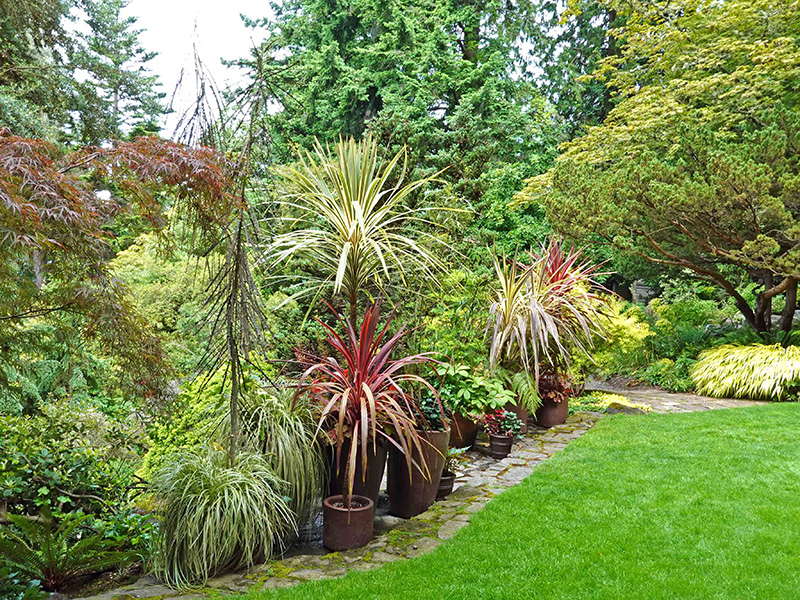
A whopping 82% of plant species in ANZ are endemic (occurring naturally only there). Virtually all are evergreen and most are —like Kiwi people themselves— “unique, adaptable and a little quirky” 3. Having evolved in a similarly moist temperate maritime biome, many make suitable if not exemplary plants in our Pacific Northwest gardens, although with a few exceptions (as noted below) they are prone to being slain now and then by the vagaries of deep freezes in our increasingly erratic winters. Prompted by our recent trip, I’ve been reviewing my own successes and failures in cultivating Kiwiland plants on the shores of Lake Washington. Here’s an assessment of a quintet of shrubs and trees. Next month we’ll do the same for a set of perennials and ferns.
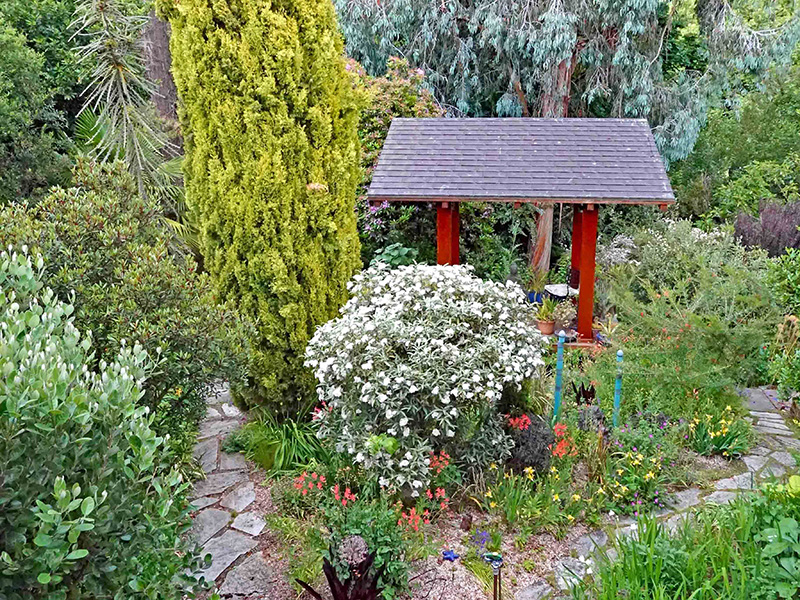
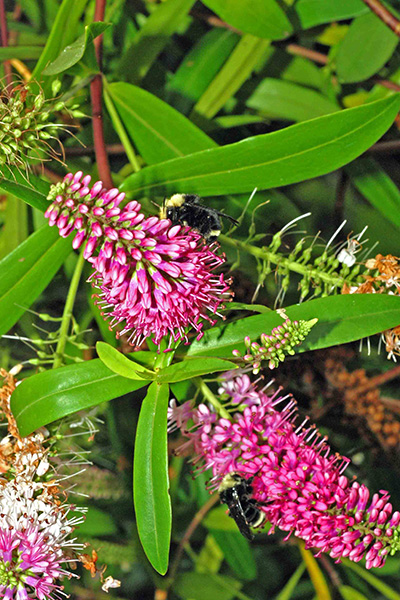
Hebe—Although this erstwhile genus has been folded into Veronica, we’ll continue to use “hebe” as a common name. These tidy shrubs, along with phormiums, were all the rage at the turn of the millennium. Except for the curiously attractive whipcord types, they boast neat, glossy oval foliage and a bounty of diminutive white, pink or purple flower cones. I’ve tried 34 varieties over as many years –and not a one remains. In fits and starts they went off to the Great Compost Heap in the Sky over a succession of harsh winters, or due to old age, or to my impatience at their annoying tendency to sprawl –if they hadn’t managed to die, inexplicably and suddenly– of their own accord. My favorites were ‘Great Orme’, with larger than life purplish-pink blossoms much beloved of bees, and the ‘Sutherlandii’ selection of V. pinguifolia, a supposed dwarf noted for its elegant gray foliage that drapes like a tablecloth over its woody frame.
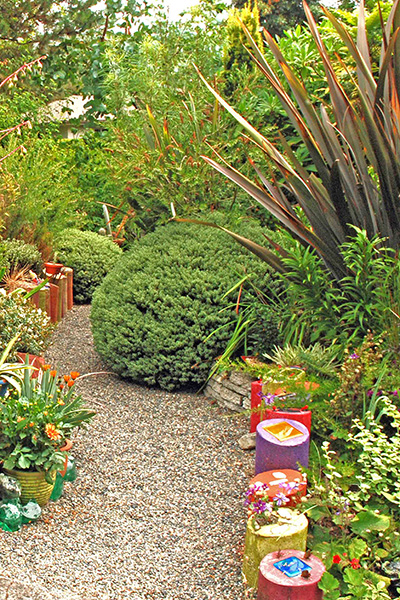
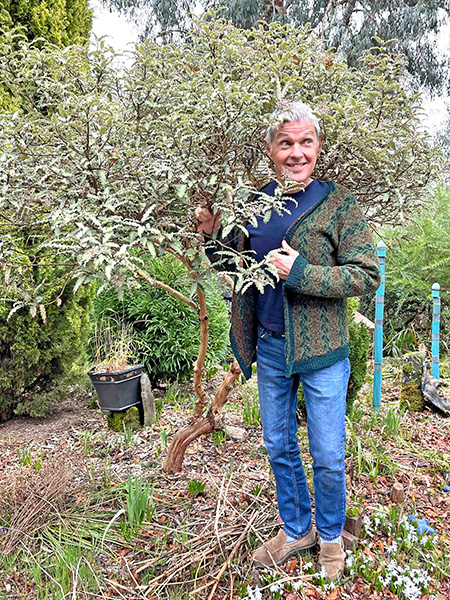
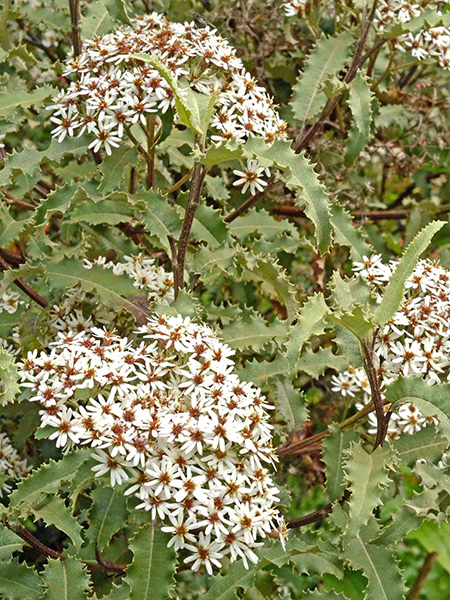
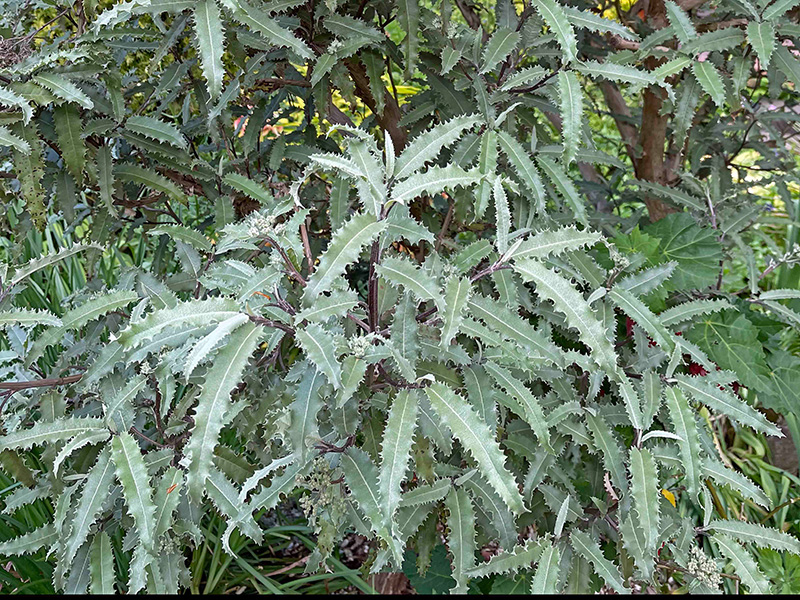
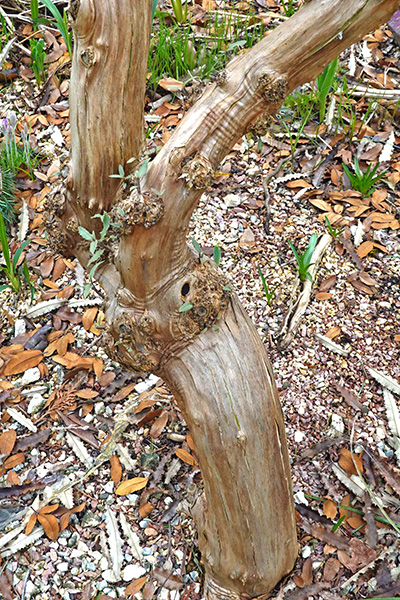
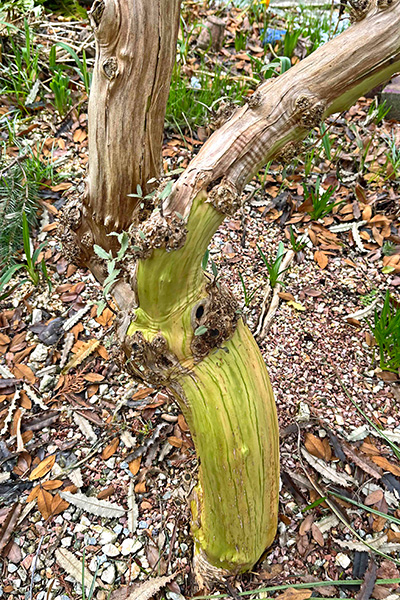
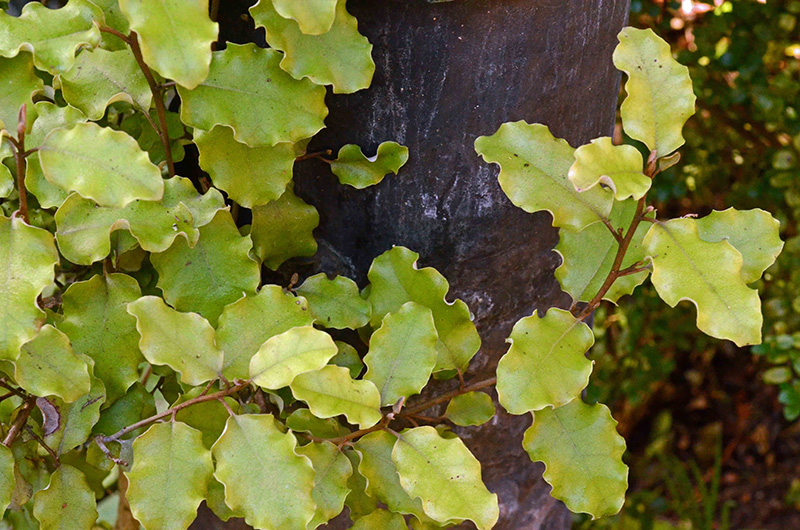
Olearia—Of the 11 taxa of “bush daisies” that have had the (mis)fortune of duty in my garden, only two remain, but what a fetching pair they are! The team captain is O. ilicifolia, sometimes called “mountain holly”, who counts among my most cherished chlorophyll-based friends. Slow growing, roughly handsome and totally cold hardy, my 25-year-old specimen/pal, which I’ve dubbed Buddy Holly (ilicifolia = holly leaf), is now 7 feet tall, and each June sports a cunning chapeau covered in clusters of tiny white daisies. I’ve limbed him up to show off the smooth undersurface of the exfoliating trunk. The toothed edges of his narrow, silvery leaves tickle visitors without maiming them. As to the more delicate of the surviving duo of bush daisies, O. paniculata boasts swoon-worthy, crenulated metallic gold-green leaves with silver undersides. In theory it should produce panicles of small white flowers, but I count my blessings that mine has never bloomed. Why mess with perfection? (I confess that over the 22 years I have grown it, I’ve renewed it via easy-to-root cuttings every six years or so as the successive mother plants have succumbed to harsh freezes.)
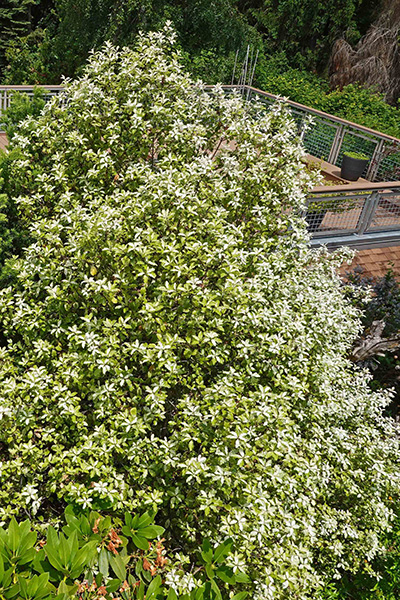
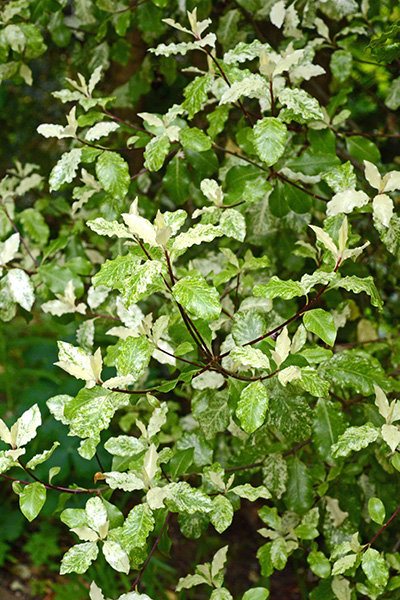
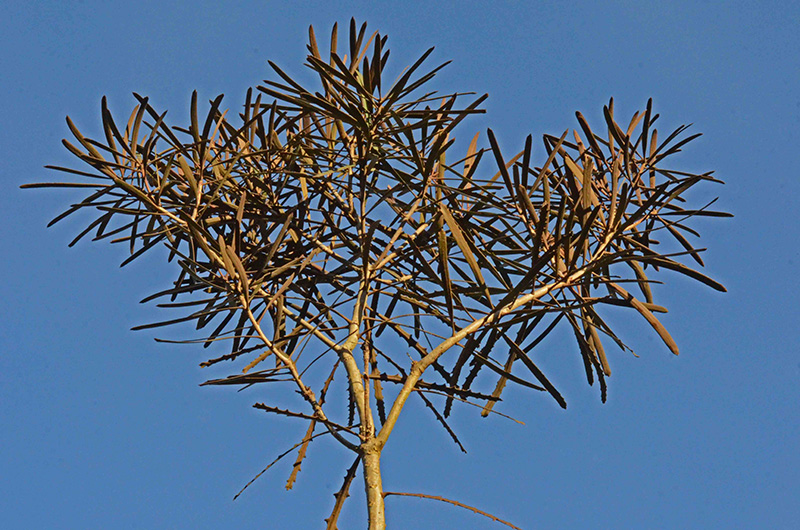
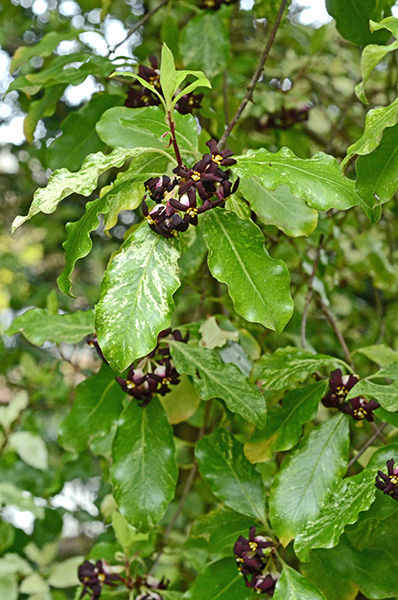
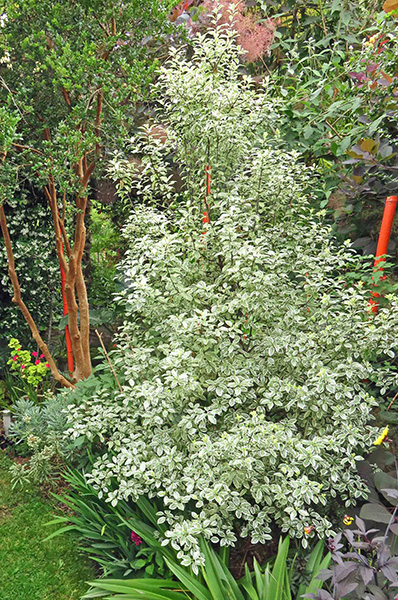
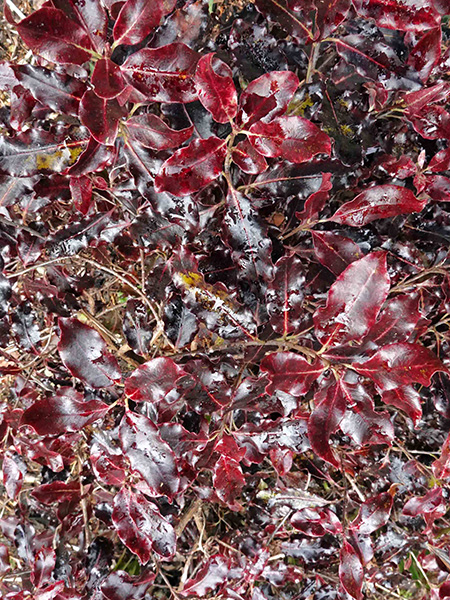
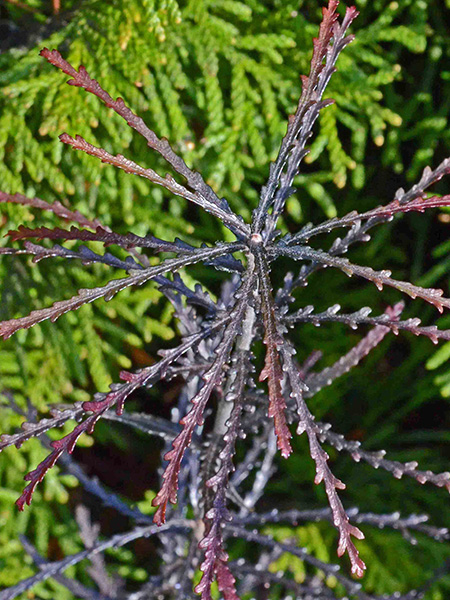
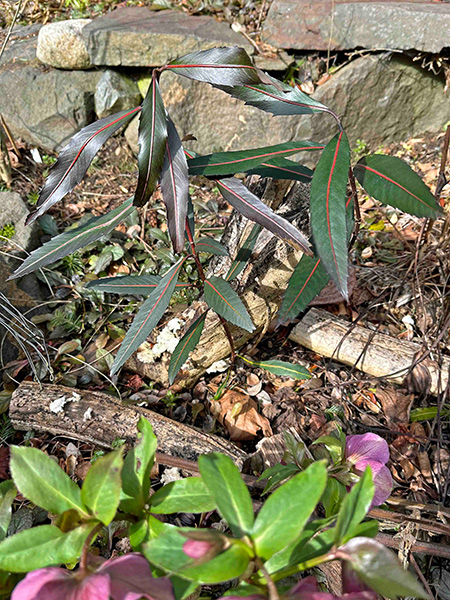
Pittosporum—This cosmopolitan genus is also found in abundance in Africa, East Asia and Australia. I’ve grown 15 varieties of Kiwi natives, mostly cultivars of P. tenuifolium, commonly called kōhūhū in ANZ. This stalwart species bears clusters of small, fragrant, nearly black flowers in May. Only a couple of specimens are still with me: the ivory-edged ‘Irene Paterson’ and the multi-trunked ‘Mrs. Gorman’. Both are now approaching 24 years old and have reached almost as many feet in height. For 15 years they enjoyed the company of the dreamy, creamy-leaved beauty ‘Marjorie Channon’, but she’s gone into what I fear is a permanent pout after I coppiced her a couple of years ago. The adorably rotund and squat, dark-foliaged ‘County Park Dwarf’, supposedly the hardiest cultivar of all, succumbed to the insults of January 2024 freezes. —News flash! The weirdest wonder of all the pittosporums in my collection nearly escaped the orbit of my awareness: P. patulum, so bizarre it belongs in a Victorian-era cabinet of curiosities. My rail-thin specimen, now 12-feet-tall and as many years old, seems determined not to show its spidery face. Hiding behind a glamorous star-anise tree, P. patulum’s tiny gothic wisps of glossy purple, leathery foliage bob atop a bare trunk only an inch in diameter. So far it has demonstrated remarkable cold hardiness. As the gangly stork of a specimen refuses to pose for the camera, pictured here is a 3-year-old seedling.
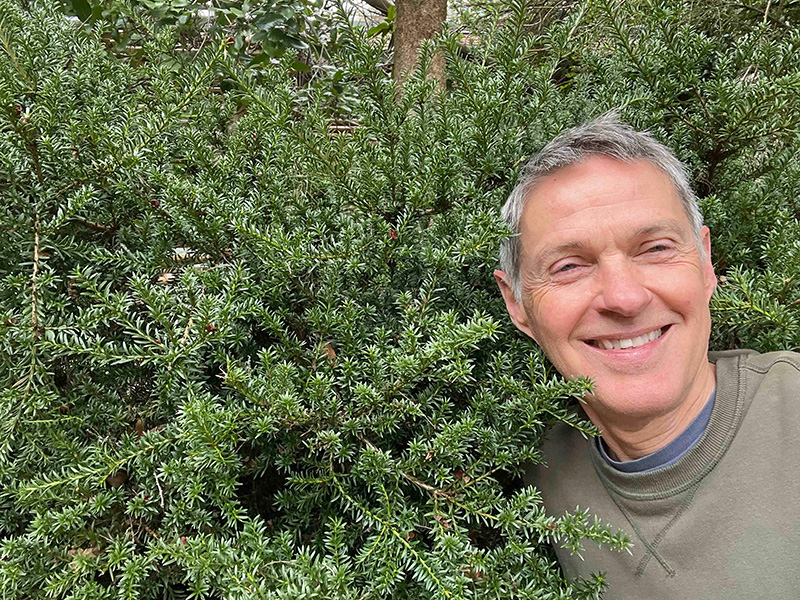
Podocarpus—Widely distributed across the southern hemisphere, most podocarps are tall, stately conifers. But my sole specimen, P. nivalis, is a delightfully compact alpine with spirally arranged, short and tidy dark green leaves. Over the 24 years adorning my garden it has displayed the most gracious of manners, holding steady in its space at roughly 3 feet in all three dimensions regardless of heat, cold, rain or drought. (Its specific epithet, nivalis, means “growing near snow”.) It seems to be an ideal candidate for topiary and would make a refined yet unfussy low hedge. Mine has never flowered, but who cares?
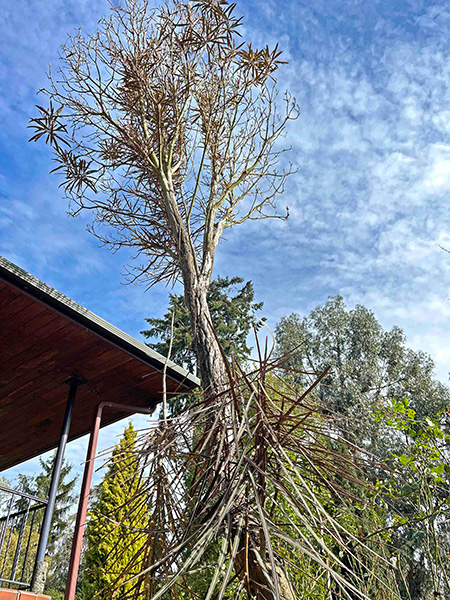
Pseudopanax—As we’ve already featured this exemplary exponent of leaf heteroblasty in previous segments of Hort Yours, most notably in “Playing Possum” and again in “Requiem and Relief” I’ll limit comments to an update. January of last year killed all seven 3-foot-tall seedlings of P. crassifolius that I had planted out in various corners of the garden, and it very nearly murdered their 20-foot-tall, 23-year-old mother tree. She hangs onto life, sprouting new tangles of 18-inch-long sawtooth juvenile leaves from lower portions of her trunk, although the crown seems mostly dead. Oddly, all three specimens of the supposedly much more tender P. ferox (each planted in the ground and left unprotected due to their unwieldy size) whistled past the indignities of 2024 and 2025 winters with no apparent damage. The hybrid P. ‘Sabre’, felled by 2024’s freeze, is slowly resprouting from the base.
On that note, I think I’ll head out into the mild late-February haze to check up on my Kiwi natives. We’ll meet again on the equinox to ponder antipodean perennials and ferns.
Horticulturally yours,
Daniel
- This phrase is part of the mission statement of Manaaki Whenua/Landcare Research, New Zealand’s publicly-owned research institute focused on environmental issues.
- “Aotearoa”, which in the indigenous Māori language means “long bright world” or “long white cloud”, is increasingly included as an integral part of the country’s name by New Zealanders of all stripes.
- From “New Zealand People” on newzealand.com. This article also explains the moniker “Kiwi” and discusses the centrality of Māori culture and language to the country.