
Lessons from Kamakura's Temple Gardens
November 2024
The proud do not endure,
—from The Tale of the Heike1
they are like a dream on a spring night;
the mighty fall at last,
they are as dust before the wind.
For this November missive I had intended to muse on something benign and beautiful (“Beguiling Begonias!”) but relegated that bucolic bouillabaisse of a topic to the back burner in light of the five-alarm blaze that besieged my brain after the recent general election. Finding myself in Japan for the first half of this momentous month, I stumbled through Kyoto, Nara, Hakone and Tokyo in the company of a couple dozen fellow garden aficionados, in my mind grappling with the maelstrom of current events while attempting to reconcile hazy memories of my extended sojourn in Japan 45 years ago with present realities. It wasn’t until after the tour ended and my long-suffering husband Jeffrey and I struck out on our own for four days of repose, reflection and meditation in the gardens of Kamakura that assurances, if not answers, fell into place.
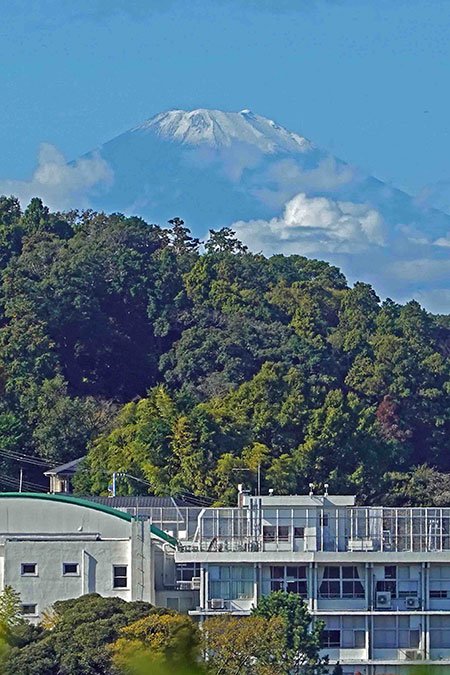
Only an hour by train from the megalopolis of Tokyo, Kamakura is a leafy and prosperous small city guarded on three sides by forested mountains and open to the warm waters of the Pacific on the south. It boasts an outsized role in Japan’s history: For nearly 150 years in the late 12th to early 14th centuries it served as the de facto national capital during the country’s first shogunate. During this era several of the country’s most significant Buddhist temples and Shinto shrines were erected or expanded. When the seat of government moved back to Kyoto in the 1330s Kamakura’s importance withered as it reverted to the fishing village it had been prior to its sudden elevation nearly a thousand years ago. Although secular structures crumbled or were destroyed, many of the temples and their gardens remained, although reduced in size, their buildings reconstructed time and again in the wake of calamity —having been razed by earthquakes, tsunamis, typhoons, wars and associated conflagrations.
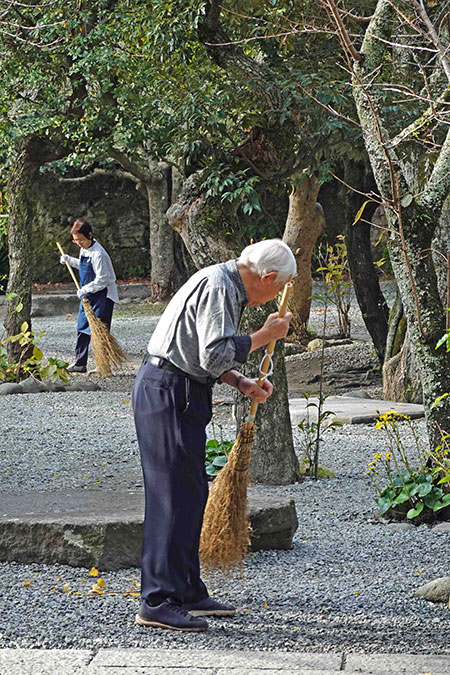
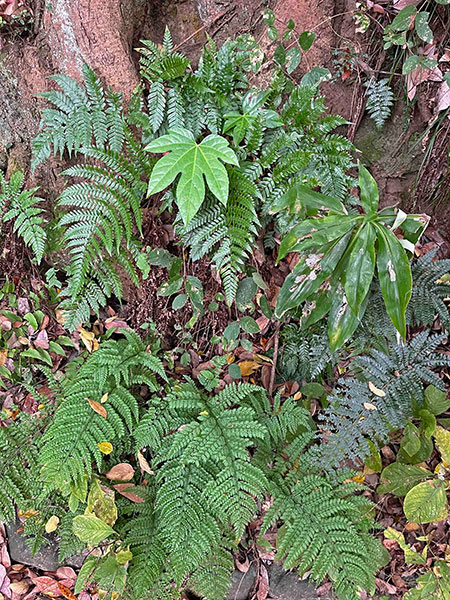
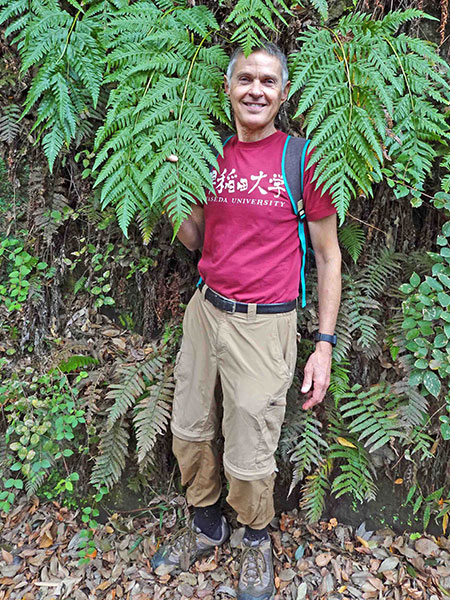
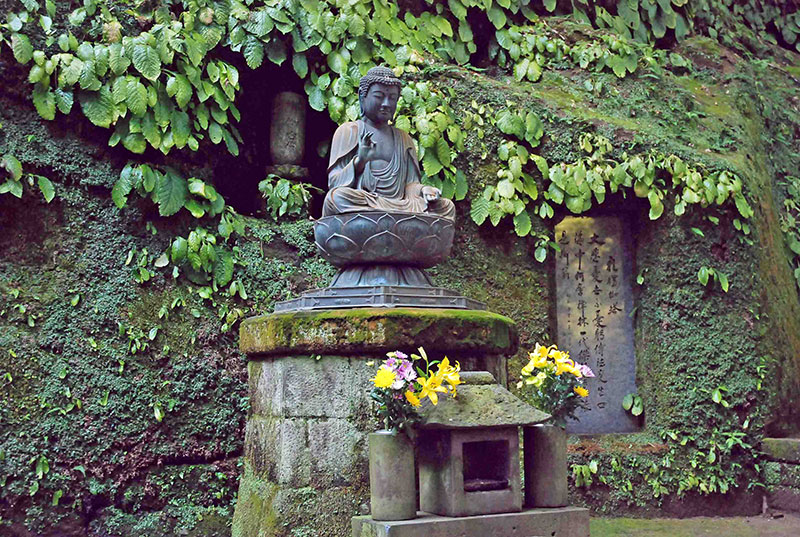
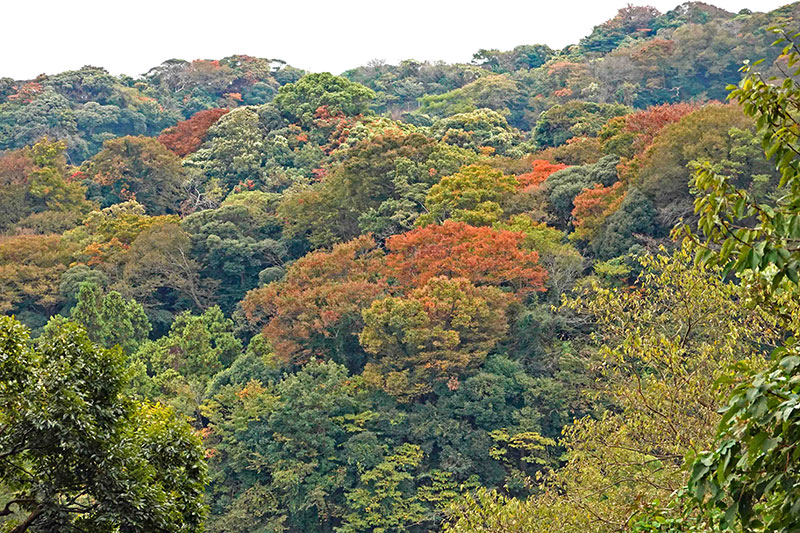
In Kamakura’s temple gardens the interplay of impermanence and resilience, decay and growth, tradition and innovation offered an elixir that drew me out of my maudlin mood. On this trip (my previous visits were in 1980 and 2008), I was struck by the abundance of verdure so late in the season2. Hoping for a blaze of color from the eponymous Japanese maples, instead I found ferns and fatsias in peak green, with many herbaceous perennials and shrubs still in full flower and fruit. Soaring overhead were sentinels of centuries old, world-wise and wondrously majestic trees: juniper and cryptomeria, ginkgo and pine, oak and more than a few maples, which were just beginning to color up. Following are a few verbal and visual snapshots of scenes I found to be most therapeutic.
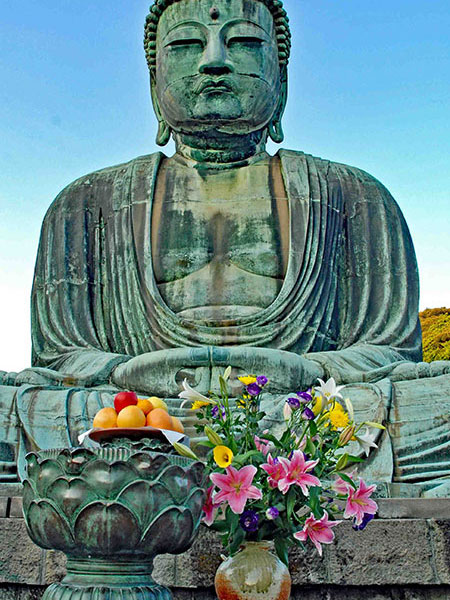
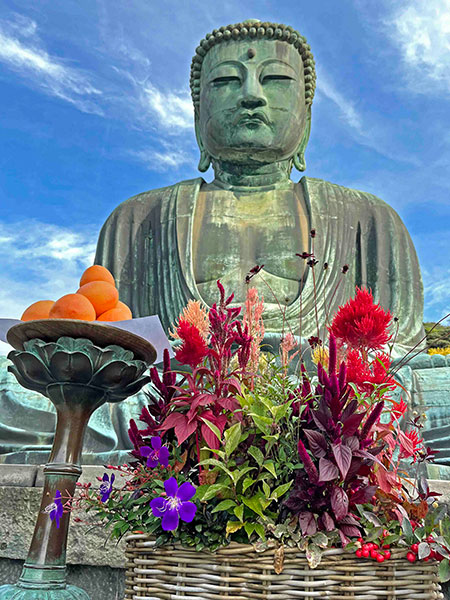
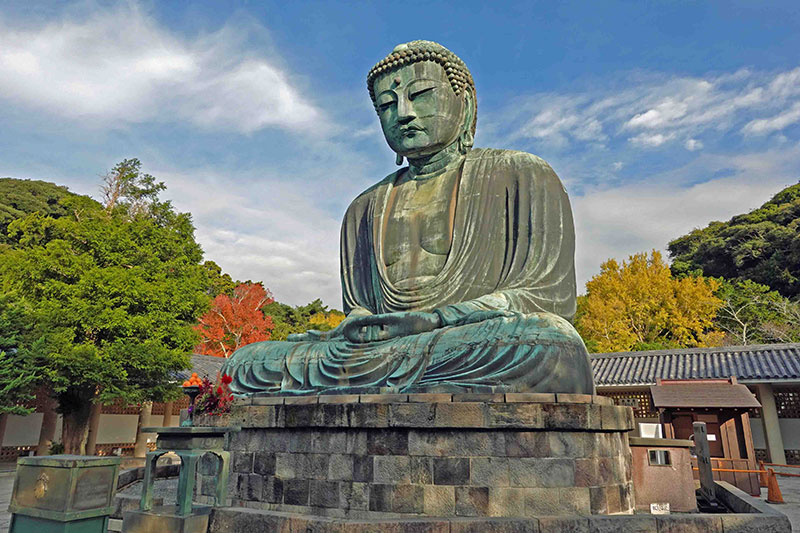
Among the most iconic images of Japan is the Daibutsu, or Great Buddha, the 36-foot-tall, outdoor bronze sculpture that has held center court at Kōtoku-in Temple for about 770 years. Originally covered in gold leaf and housed inside a massive wooden hall, this Buddha shrugged off misguided attempts to adorn and protect it from the elements, shedding both its gilded veneer and the roof over its head. After two halls were destroyed by typhoons in the 1300s and a third washed away by a tsunami in 1498, the message was clear. For the last 500 years the Daibutsu has meditated al fresco surrounded by nature, backed by lush forest with smooth stone pavement in front. Each morning elderly volunteers sweep the grounds while attendant monks place fresh fruit and flowers in urns and baskets at the statue’s feet. This year’s arrangement struck me in its cosmopolitan composition: Most prominent were several types of celosia native to the American and African tropics, along with Brazilian purple glory bush (Tibouchina or Pleroma) and the fragrant Mexican chocolate cosmos (Cosmos atrosanguineus). The one native in evidence was the clustered, ruby-red fruit of Skimmia japonica.
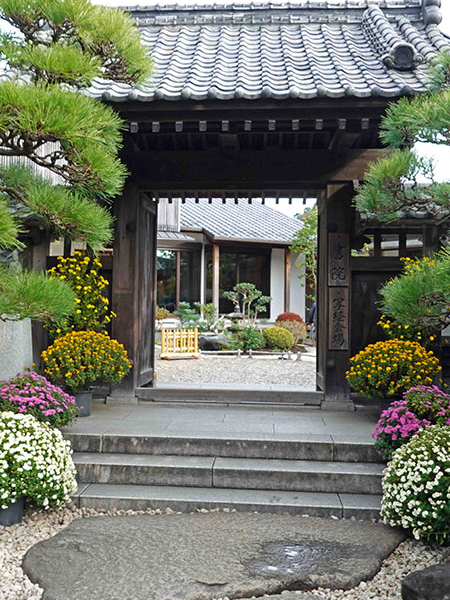
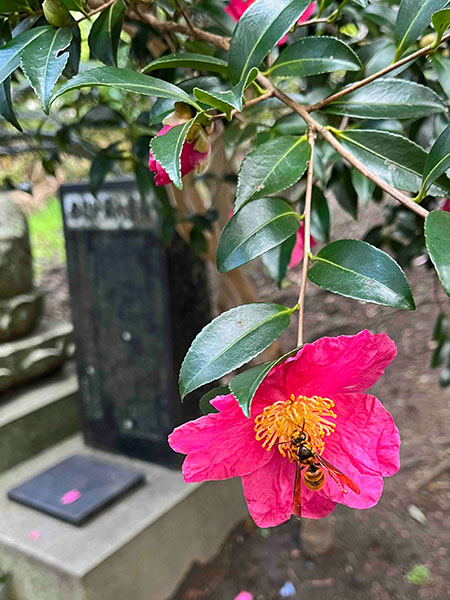
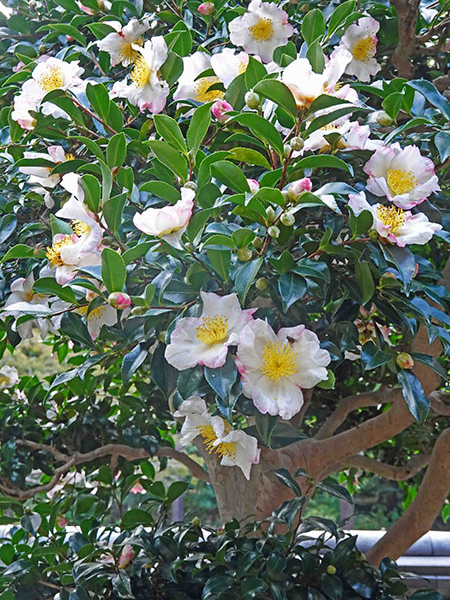
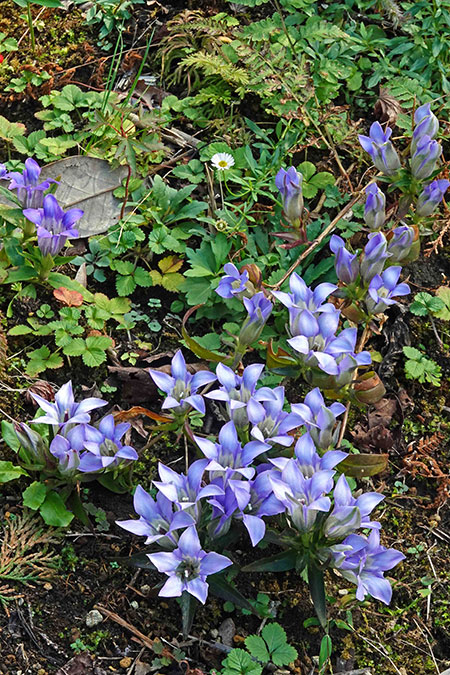
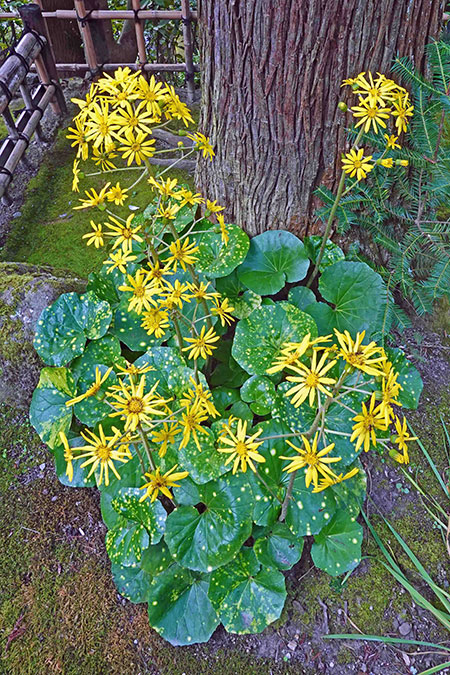
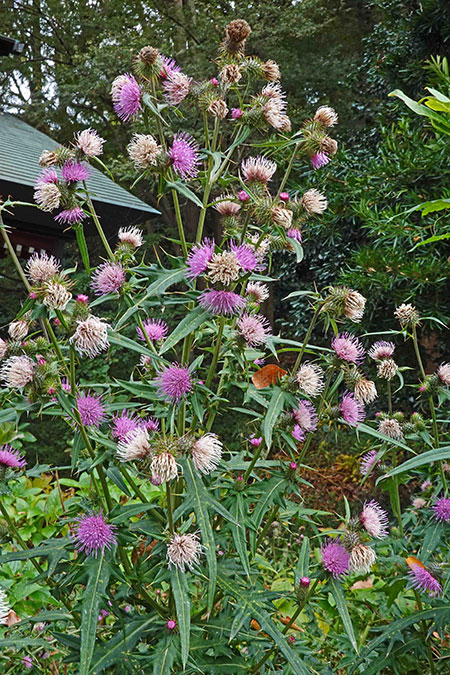
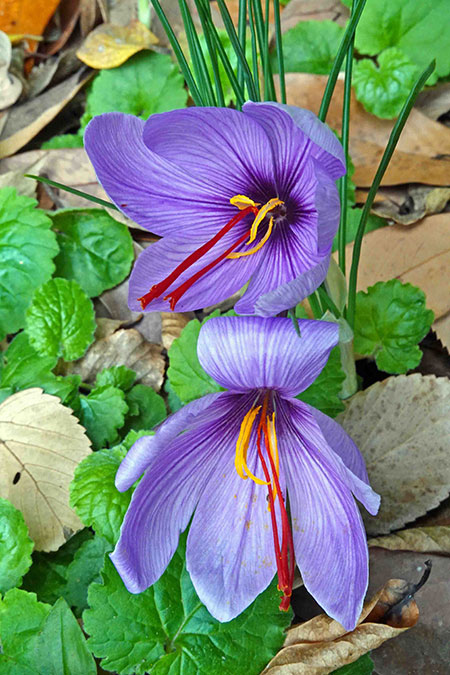
As to seasonal indigenous flowers, I had expected to encounter scads of chrysanthemums and camellias (which I did, in abundance), but I was unprepared for the bonanza of other blooms that awaited me: loads of late-blooming toad lilies (Tricyrtis spp.), great gobs of ground-hugging sky-blue gentian (Gentiana scabra is the official symbol of Kamakura) and cheerful mounds of leopard plant (Farfugium japonicum) with their lemony blooms and luscious, lustrous leaves. A native I was initially startled to see in the mostly mossy garden of Myōhō-ji was a lusty, 6-foot-tall, blossom-filled mound of plumeless thistle (Carduus acanthoides). Considered an invasive noxious weed in much of North America, in this Buddhist retreat its in-your-face sass seemed somehow spot-on. Of the few exotics I spied, most charming were smatterings of saffron crocus (Crocus sativus) in the sumptuous hillside garden of Hasedera.
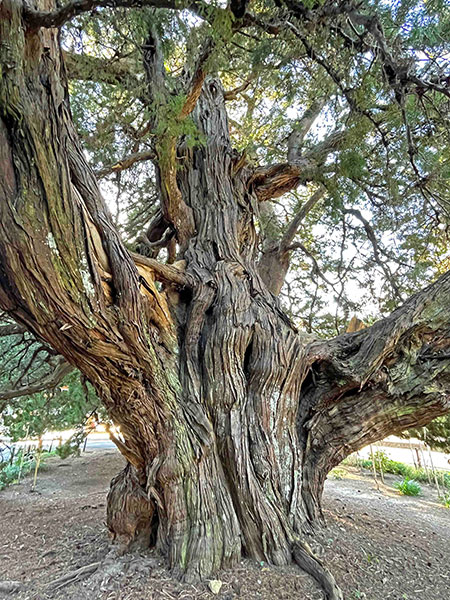
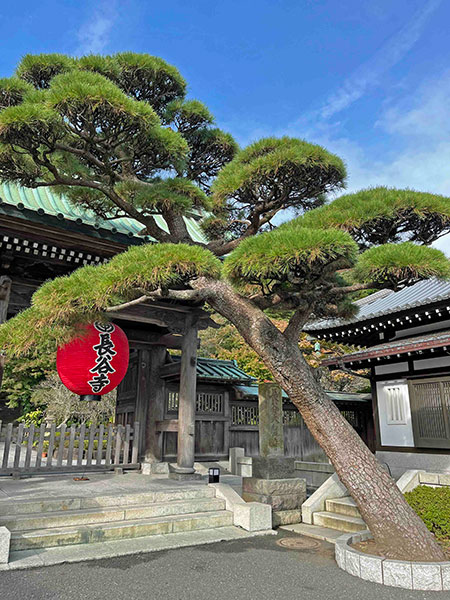
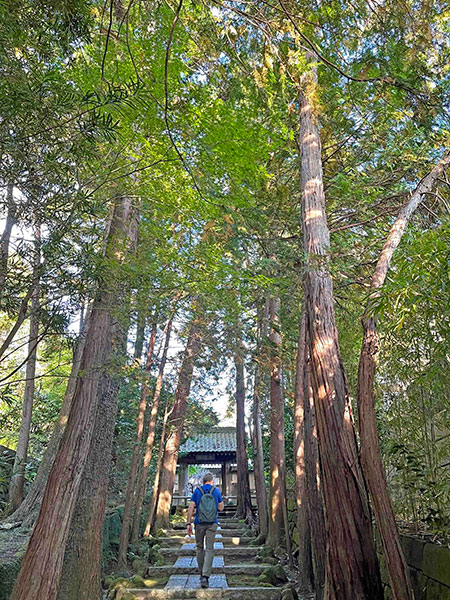
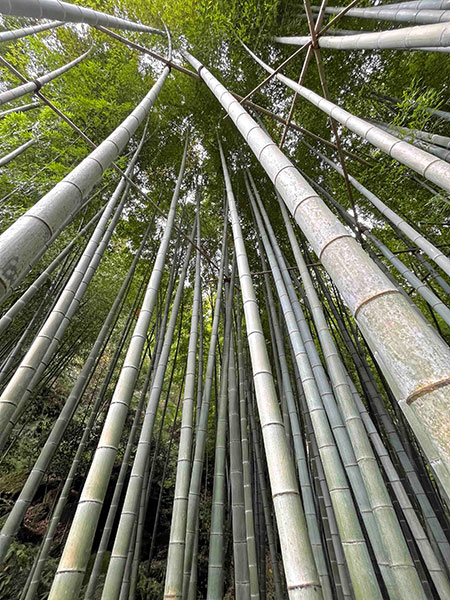
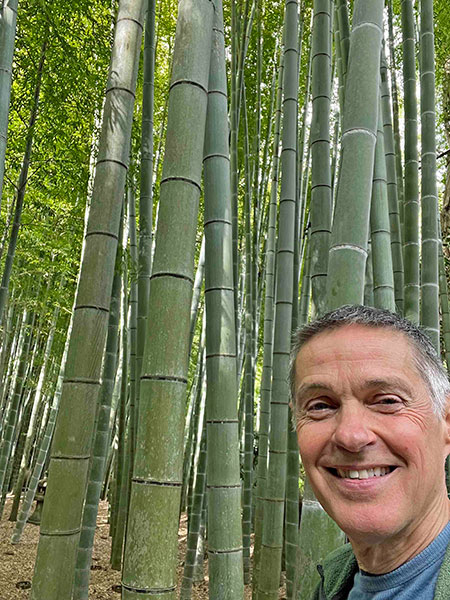
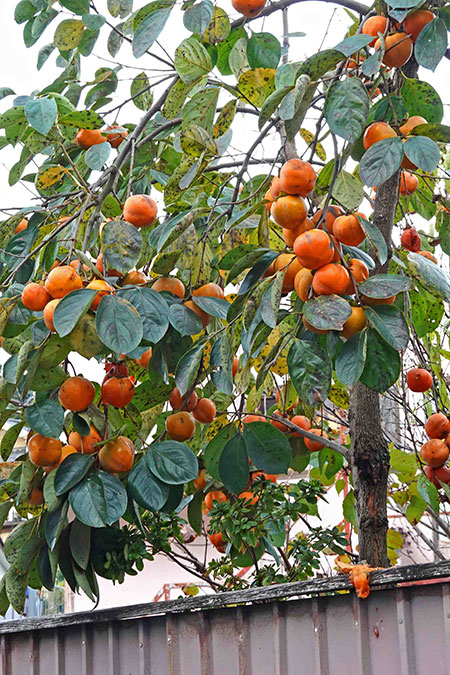
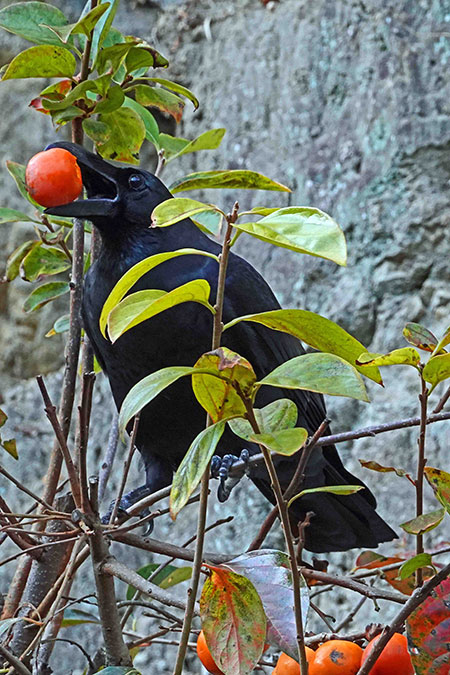
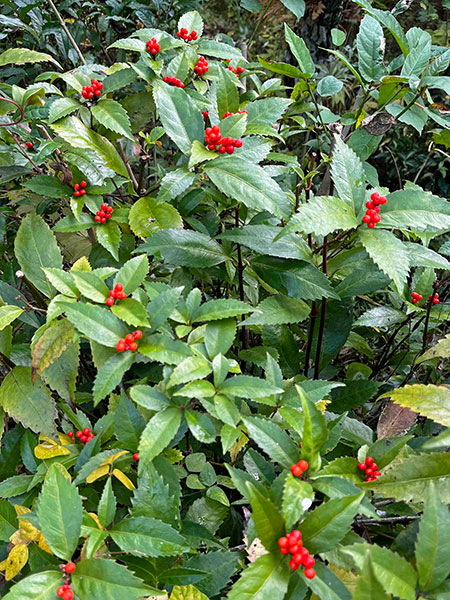
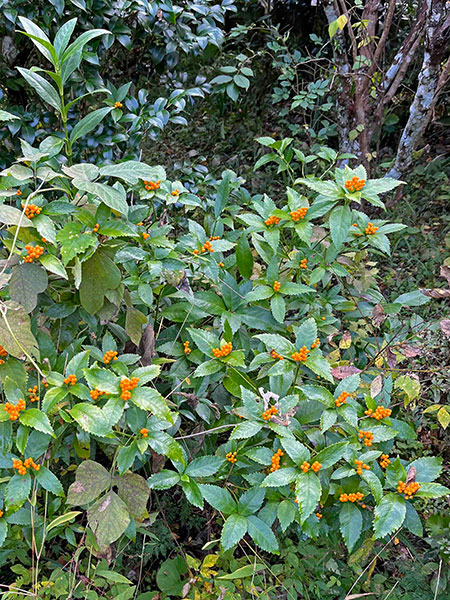
On the woodier side of wonder was an awe-inspiring grove of seven ancient and wizened Juniperus chinensis trees (supposedly planted at the temple’s founding in 1253) at Kenchō-ji, the reassuring clickety-clack made by towering troops of giant timber bamboo (Phyllostachys edulis) in Hasedera and Hōkoku-ji, followed by orange orbs of fruit (loved by clever Japanese jungle crows) dangling from persimmon trees (Diospyros kaki)3 at Jōchi-ji. Add to the list a shrub hitherto unknown to me although present in all the temple gardens I visited: the gleaming and shade-loving evergreen shrubby groundcover Sarcandra glabra, whose clusters of shiny red berries persist all winter —at Engaku-ji I marveled at a golden-orange cultivar.
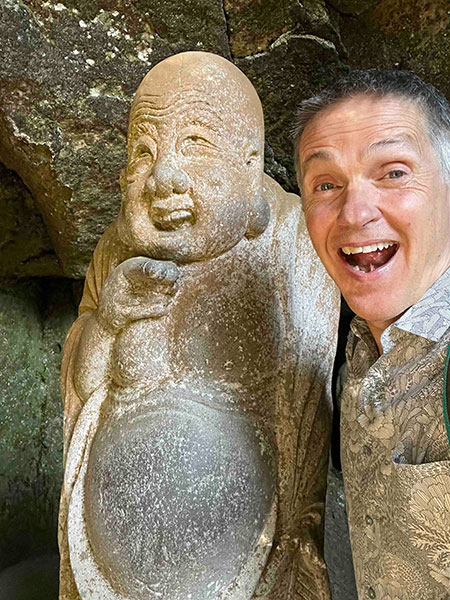
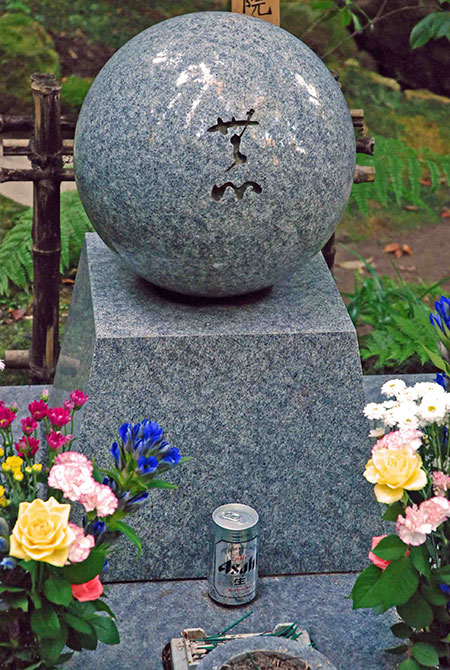
Immersed (lost?) in contemplation as I ruminated on the vivid counterexamples these gardens posit to the usual inadequacy (folly?) of human efforts to contain or curate nature, I stumbled headlong into the guffawing face of a life-size statue of Hotei4, whose stony finger pointed straight at me as if to say, “Don’t take yourself so seriously, Friend! Live a little!” A little embarrassed and a little relieved, I began to register facets of humor and casual practicality in the very gardens I’d come to admire for their elevated wabi-sabi sensibility: Tombstone altars that in addition to elegant yet restrained floral displays sometimes prominently featured cans of beer or bottles of sake, vending machines selling soft drinks inside temple precincts, rows of plastic flower pots and containers.
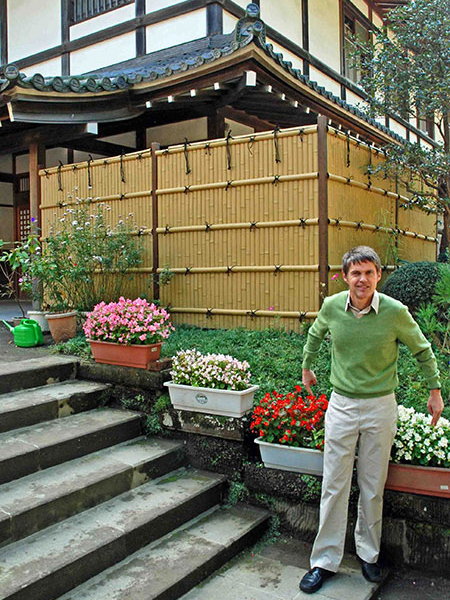
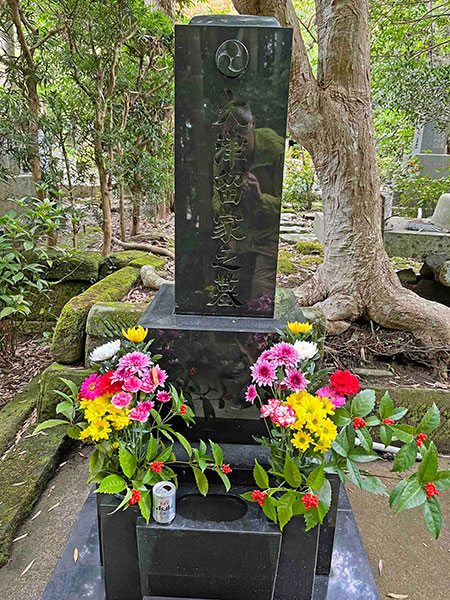
On that note I returned home determined to take the long view, sally on toward the sunrise and greet another day. Next month we’ll boogie through those begonias after all.
Horticulturally yours,
Daniel
- Helen Craig McCullough’s translation (Stanford University Press, 1988) from the opening paragraph of Heike Monogatari, the 13th century epic that according to Encyclopaedia Britannica “is to the Japanese what the Iliad is to the Western world”.
- Kamakura lies at 35oN latitude (like Albuquerque and Memphis), much further south than Seattle. It’s also a lot rainier, with twice our average annual precipitation in opposite seasons from the PNW. Summer is hot and damp, with a sopping early autumn. Wettest months are September and October, winter is mild and relatively dry.
- Botanical Latin tidbits of the day: Here are two welcome (and unusual) examples of specific epithets (species names) taken directly from non-Western local names for a particular plant. Camellia sasanqua derives from the Japanese term, “sazanka”, for the autumn-blooming beauties, while “kaki” is the Japanese word for persimmon.
- Also known as Budai, Hotei was a 10th century Chinese monk. He is considered one of the Seven Lucky Gods of Japan and is often erroneously called “Laughing Buddha” in the West.