
Begonias for Beginners (Part I)
December 2024

Fergus and I have a passion for begonias.
—Christopher Lloyd1
If we were reduced to growing only one genus,
that would be it.
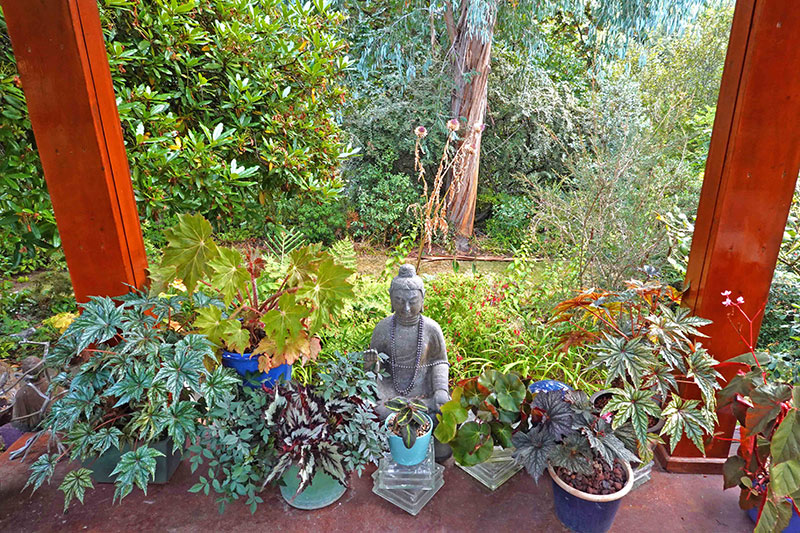
Bedeviled by how to title this column, I’ve been dancing around the possibilities (“A Beguine2 for Begonias”?) but settled on the present one after begrudgingly accepting that indeed I am a rank amateur on the topic. Sigh. An abashed beginner am I, if not also bewitched and bothered3. Even though I have sung the praises of my most beguiling and beloved begonias in several lecture presentations, I haven’t fashioned a Horticulturally Yours feature on this botanical superstar. How could this be? Perhaps I was daunted (bewildered?) by how to embrace the amplitude of the issue: There are upwards of 2000 Begonia species, not to mention the bazillions of hybrids and cultivars derived from this prolific and profligate genus4 over the last 200 years.
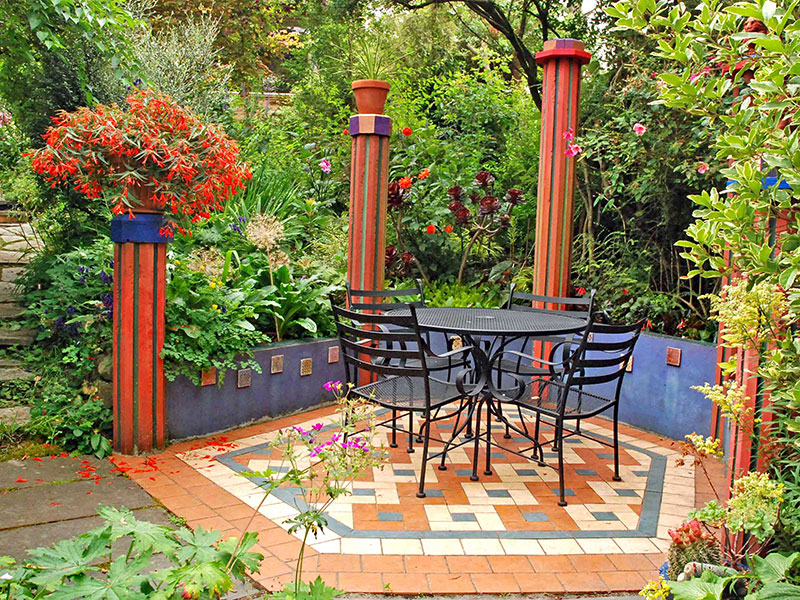
Native to the humid tropics and subtropics of Central and South America across to sub-Saharan Africa, Southeast Asia and northward into China (curiously, none emerged in the rainforests of northeastern Australia), begonias assume an astonishing array of forms including cane types (as in “angel wing” varieties), shrublike, rhizomatous, tuberous, fibrous (as in the ubiquitous Semperflorens types) and the ornately-foliaged “king” of them all, the eponymous Rex Cultorum group. (Click here for the American Begonia Society’s “Types of Begonias” page.) Although no begonia is native to the USA, they grow exceptionally well in Hawaii and have even naturalized there. However, we should note that Hawaii is the endemic home of the exceptionally rare Hillebrandia sandwicensis, the only species in the botanical family Begoniaceae that is not in the genus Begonia.

As with most neophyte gardeners, my first encounter with begonias came with the woefully overexposed, waxy, color-bomb Semperflorens hybrids employed en masse the world over as diminutive bedding annuals. I was also familiar with, but not (yet) particularly drawn to the eclectic array of begonias grown as house plants. Gradually it dawned on me that the domain was vastly broader than this and was in fact an ever-expanding constellation: Thanks to groundbreaking plant purveyors such as the late, lamented triad of Heronswood, Minter’s and Steamboat Island nurseries, in the mid-to-late 1990s I began to grow species such as the hardy Begonia grandis and a handful of half-hardies that shine resplendent in all but the coldest months. We’ll dig into these below, but first, please indulge a brief focus on my frustrations.
About 20 years ago Dan Hinkley and other intrepid and erudite hortheads began introducing fancy-leaved selections collected in high-altitude cloud forests in southern and eastern Asia. As Hinkley wrote in the 2004 Heronswood catalog, “How fascinating that we have come to realize, at long last, how many species of Begonia are actually hardy. […] For many years, I bypassed their charms in the wilds, believing that I would simply be wasting my time and their progeny by collecting their seed; this is no longer the case! So impressed we have been with the staggering diversity in foliage and flower as well as undeniable hardiness, that Begonias have become one of my “target” genera while in the field. […] I believe these, in addition to our recent Begonia collections from China, Taiwan and Nepal, will find the woodland gardens of the Pacific Northwest and sultry climates of the southeast to their liking. Stay tuned as we continue to introduce a bevy of exciting new species; hopefully you will become as ecstatic about the possibilities as we have.”
I swallowed the bait, ponied up my pennies and purchased more than a score of these allegedly hardy pretty things, planting them as instructed in light shade with well-draining, compost-enriched soil and regular moisture.
Long story short: The dandy (dastardly?) darlings didn’t do it for me. Over the last three decades I’ve attempted to cultivate 99 distinct taxa of Begonia, but I am an inept nurturer. Time and again I have tried and failed to grow gobs of the frilly and flashy, supposedly hardy varieties, then cried and flailed as they withered away, melting into mush or decaying into dust. As my tears have dried, prudence and practicality have prevailed. From this catharsis I’ve learned a couple of lessons: 1) Some tropical species and hybrids are more reliable, viable and versatile than “hardy” ones. 2) Container culture provides the most promising path to begonia bliss. Let’s explore some of my more successful endeavors (balanced with a few fabulous flops), beginning with four species this go-round before considering three others along with several hybrids and cultivars next month.
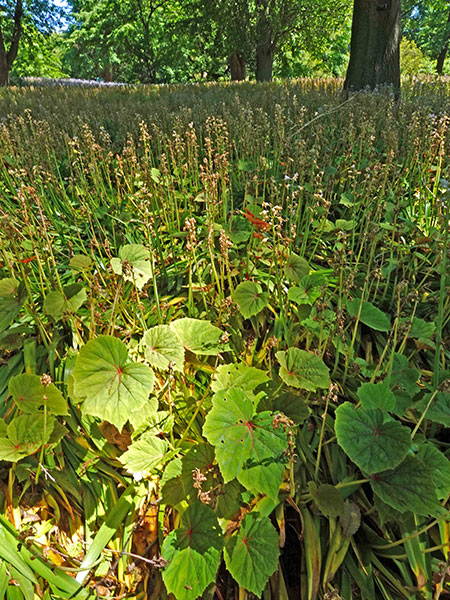
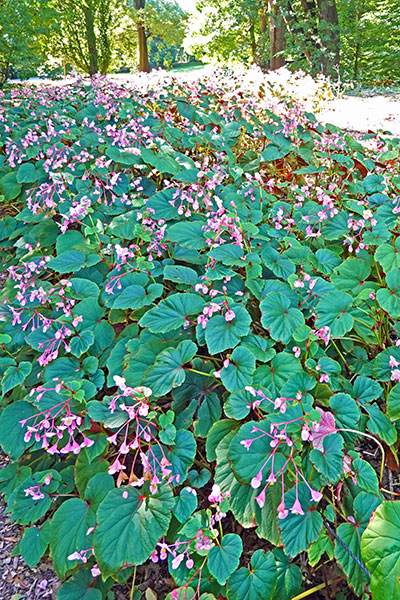
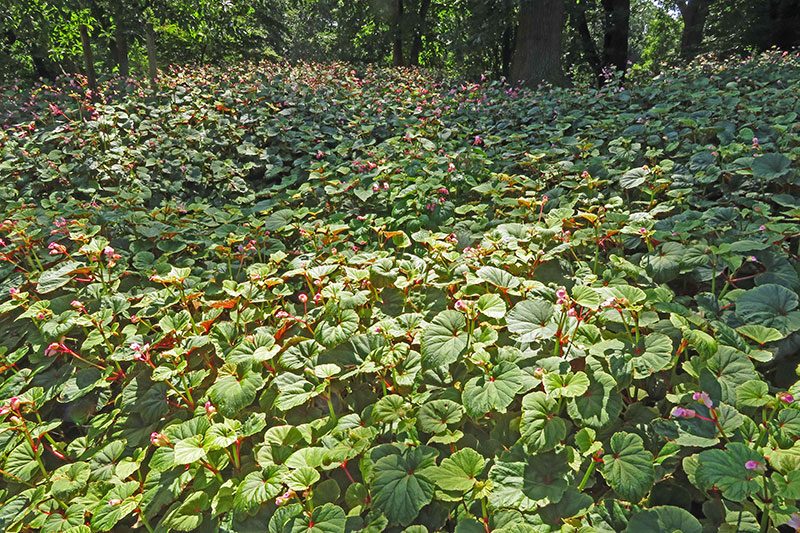
Begonia grandis—This Chinese native, although truly winter hardy (it’s the most northerly occurring of all begonia species), has not performed well for me since I first acquired it in 1996. It thrives, however, in the heat and humidity of the eastern U.S., where I’ve seen it put to fabulous use in the Brooklyn Botanic Garden: In a sprawling, shaded bed, a swath of it alternates with spring-blooming Spanish bluebells. Its red-veined, asymmetrical leaves emerging in May as the bluebells go dormant, B. grandis hits peak (pink!) bloom in September.
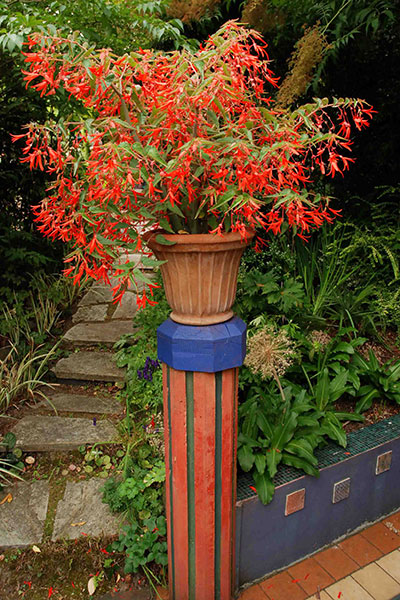
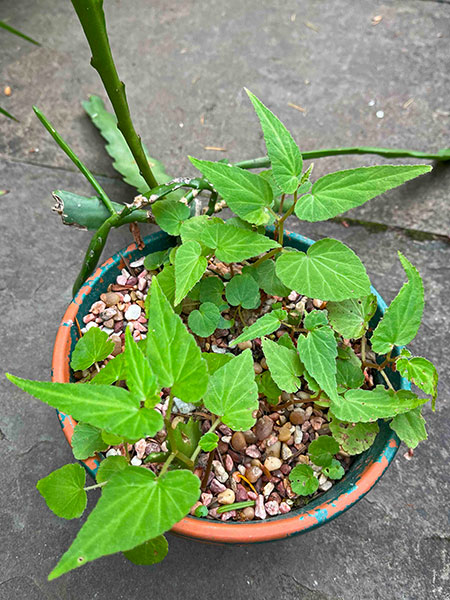
B. boliviensis—One of the most important of all ornamentals, as it’s a parent of hundreds of cultivars in the B. ×tuberhybrida group. I’ve grown this foolproof and flamboyant orange bruiser in unglazed clay pots for a quarter century. Native to the eastern slopes of the Andes from Peru to Argentina, this begonia prefers mild summers and dry winters. When top growth dies back or falls off in mid-autumn, store container in a cool, dry spot until new growth emerges in late spring. If happy, B. boliviensis will produce lots of powdery seeds that are sure to startle you when they germinate in neighboring pots. Among the plethora of named cultivars, one of the best is ‘Bossa Nova Red’.
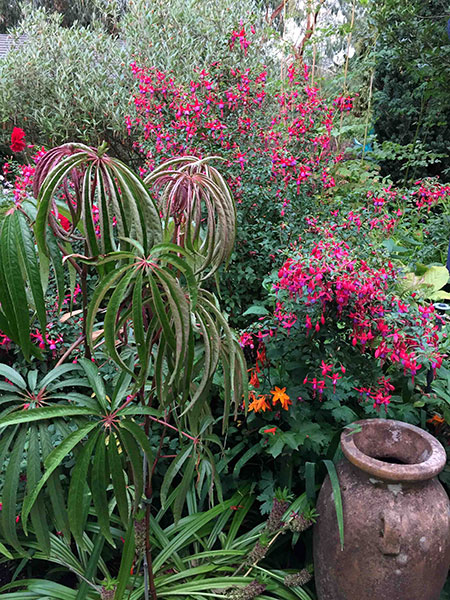
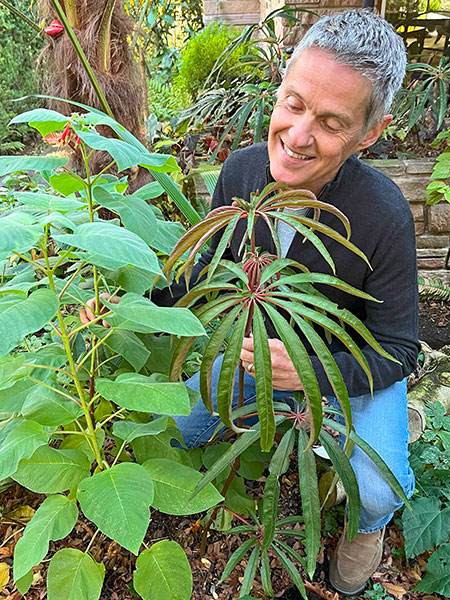
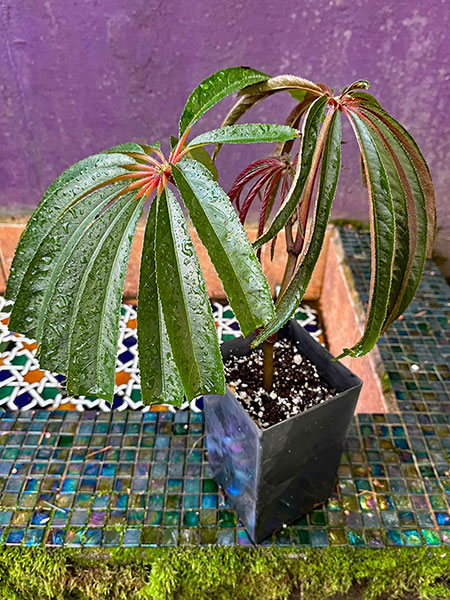
B. luxurians—To my mind the handsomest devil of all, this evergreen, lusciously palmate and mop-headed southeastern Brazilian native captured my heart 22 years ago when Paul Farrington showed me his massive stash of rooted cuttings in a production greenhouse at Minter’s Nursery in Renton. All my current specimens —and I’ve got a lot— stem from the single cutting I bought that day. Although usually grown in containers, palm-leaf begonia thrives (and looks smashing) when integrated into beds and borders. It can be astonishingly hardy: Two starts I neglected to lift last winter emerged this summer, their underground nodes having survived January’s prolonged deep freeze. The aptly named “luxurious” species shakes off light frosts with scarcely a shiver. I’m baffled as to why it’s not more widely grown. “Christo” would agree: He wrote1 it was his favorite among the begonias he grew at Great Dixter.

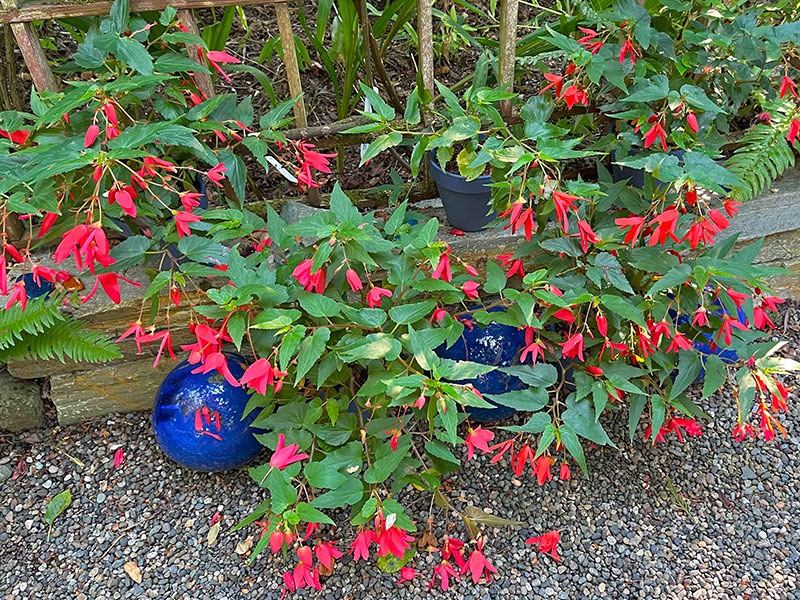
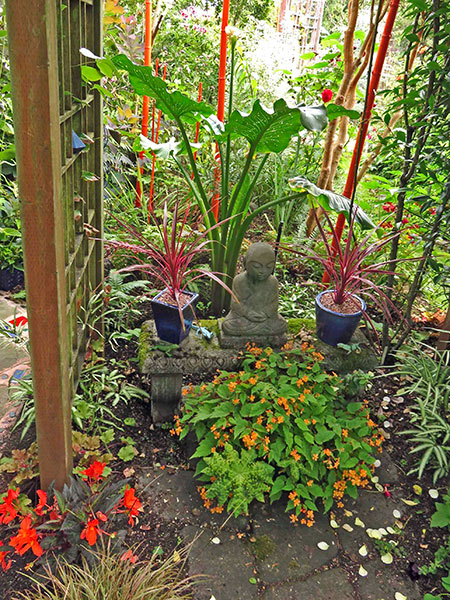
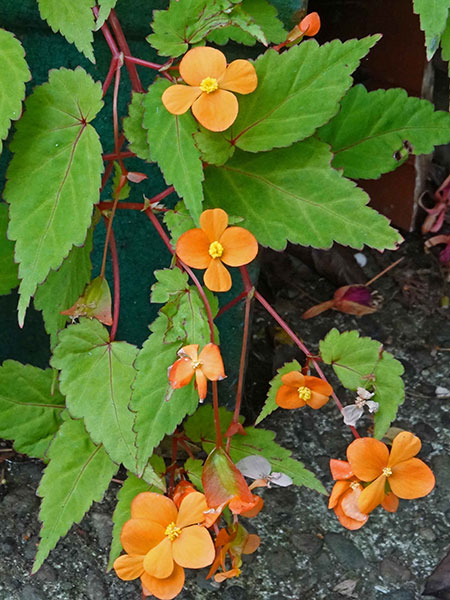
B. sutherlandii—Resilient and persistent, this little-begonia-that-could is dear to my heart for many reasons, most poignantly because I bought it in 2002 from the late, great Laine McLaughlin at her sorely missed Steamboat Island Nursery near Olympia. Winter dormant, this South African native bursts forth in mid-May from tiny tubers to produce trailing, reddish stems with lovely, lance-shaped leaves. Clusters of dainty, soft-orange, self-cleaning flowers bloom nonstop through September, when my clumps tend to contract serious cases of powdery mildew. When it gets unsightly, I cut the canes to the base; the plants seem no worse for wear when spring rolls around. Keep it on the dry side in winter.
That concludes the first four verses of this wintry aria to begonias. We’ll belt out the second act after a monthlong intermission, once the new year dawns and sunlight is on the ascendant.
Horticulturally yours,
Daniel
- From Page 68 of Exotic Planting for Adventurous Gardeners by Christopher Lloyd and friends. (Portland, OR: Timber Press, 2007). The Miller Library at the UW’s Center for Urban Horticulture has a lending copy.
- The first verse of Cole Porter’s 1935 song “Begin the Beguine” seems particularly apt for begonia lovers: “When they begin the beguine / It brings back the sound of music so tender / It brings back a night of tropical splendor / It brings back a memory evergreen.”
- The show tune “Bewitched (Bothered and Bewildered)” premiered in 1940 in the musical Pal Joey. Music by Richard Rodgers, lyrics by Lorenz Hart.
- My favorite resource is the masterful book Begonias: Cultivation, Identification and Natural History, by Mark C. Tebbitt (Portland, OR: Timber Press, 2005). Published in association with Brooklyn Botanic Garden. The Miller Library has a copy.