
Prague's Plucky Pragmatism
February 2024
Through the box-trees of evergreen cupolas
—Jaroslav Seifert1
the foolish emperor tiptoes away
into the magic gardens of his alembics
Few cities have weathered oppressive occupation by aggressive empires (in Prague’s case, Austria-Hungary, Nazi Germany, and the Soviet Union) only to emerge as resilient, self-assured, lustrous and sought after by avid tourists as the Czech capital. While most visitors focus on the indisputable allure of Prague’s fabled architecture or its storied, world-class beer, savvy hort-heads will find plenty to savor in the city’s public gardens. In today’s column we’ll review a trio of them and in the process pay homage to the city’s quirky humor, a winning blend of gritty realism and whimsical reinvention.
Most phoenix-like are the Čelakovský Gardens2 adjoining the regal National Museum on Wenceslas Square in the city’s epicenter. Installed in Prague’s oldest city park, these gardens were disrupted, disrespected, and degraded over the last century by construction of bomb shelters, subway lines, and a freeway, only to be taken hostage in the 1990s by “drug addicts [and] encroaching criminal elements,” according to an on-site plaque that heralds the garden’s award-winning 2022 rebirth as a charming and welcoming space for all to enjoy. This complete restoration included sleek, user-friendly infrastructure and installation of 100,000 plants.
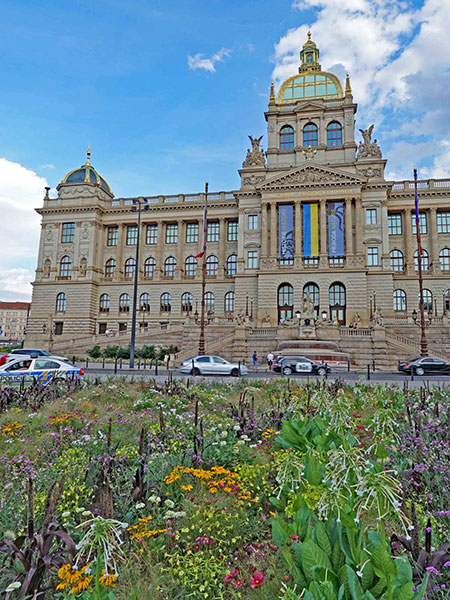
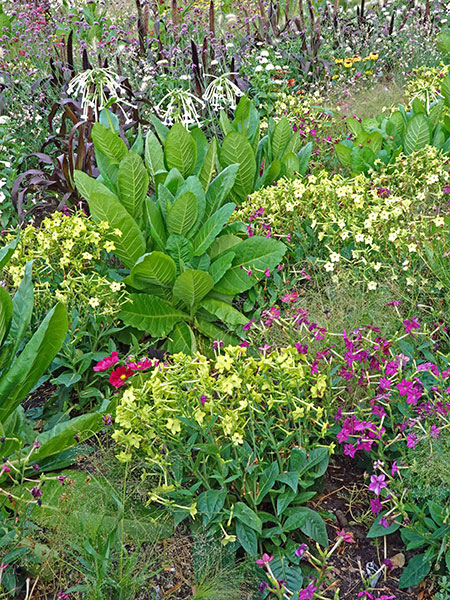
Although some of the new garden beds are protected by fencing topped with a subtle strand of barbed wire, most rely on gentle prodding of instructive signage to discourage bad behavior. Due to Prague’s status as magnet for international visitors, these signs are bilingual. The English text is identical on all: a bland “Give plants a chance”. However, translation reveals the main message in Czech as varied and pointed, as in “Don’t destroy me. I bloom for everyone.” Another admonishes would-be litterers, “Bad habits can be cured. See that trash basket?”, while a third taps into eternity with “When we die, we become flowers. Remember this.”
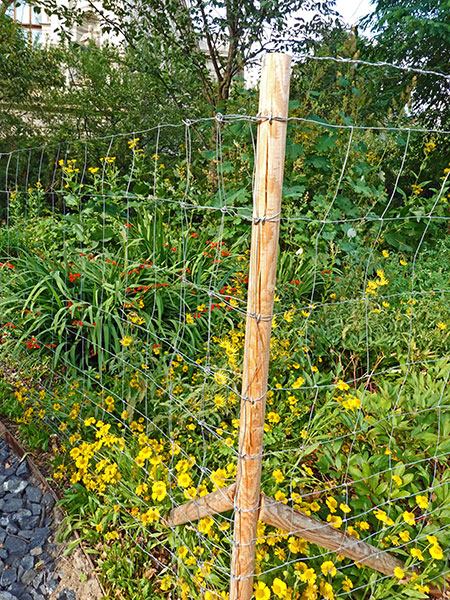

As to the garden’s floral stars, springtime stalwarts are local Central European natives that are also mainstays of our PNW gardens: primrose, lungwort, buttercup, foxglove and Solomon’s seal. When I visited in midsummer the palette was more eclectic, with graceful drifts of nicotiana, sorghum, verbena, cosmos, salvia, monarda, echinacea, inula and eucomis.
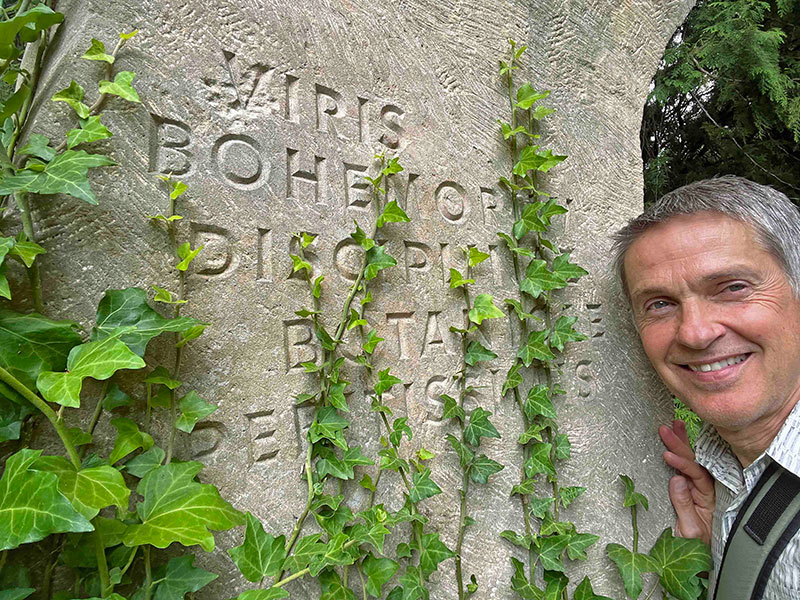
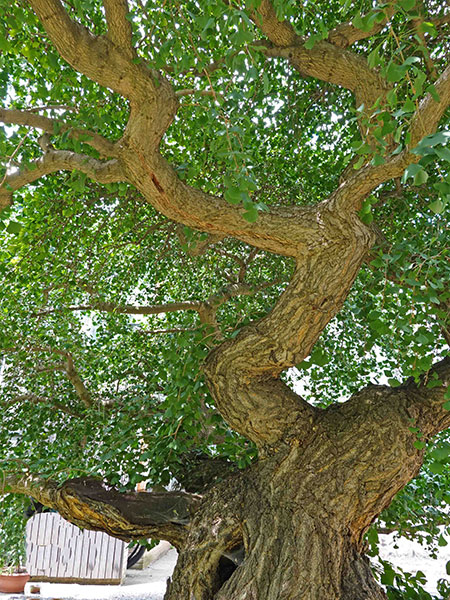
A 15-minute stroll away is the Botanical Garden of the Faculty of Science of Charles University. Founded in 1775, this prestigious academic garden inherited its present 8.5-acre plot in 1898 from a royal estate. Surely its most famous resident is a majestic and mysterious, hobbit-friendly, horizontal-growing Ginkgo biloba ‘Praga’3estimated at 130-150 years old. As the tree predates the arrival of the university’s faculty to the site, its origins are murky, but it is believed to be a random seedling that was grown bonsai-like in a wooden barrel for several decades.

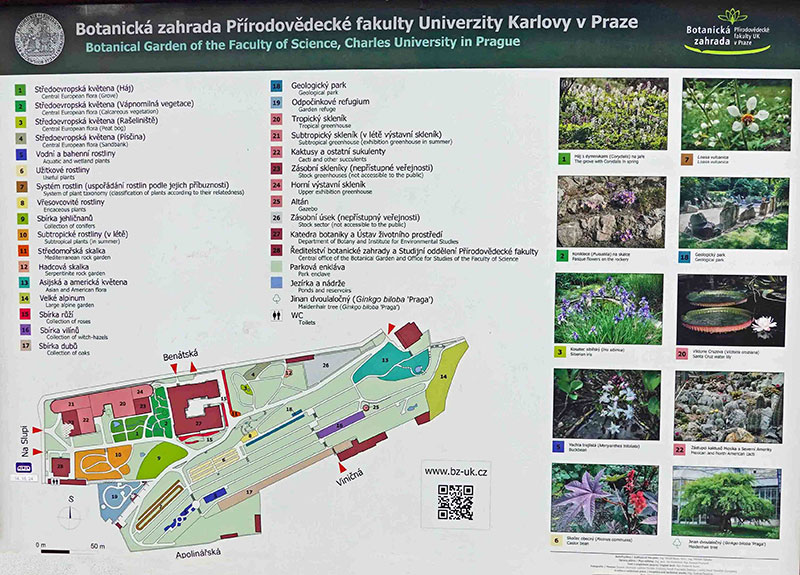
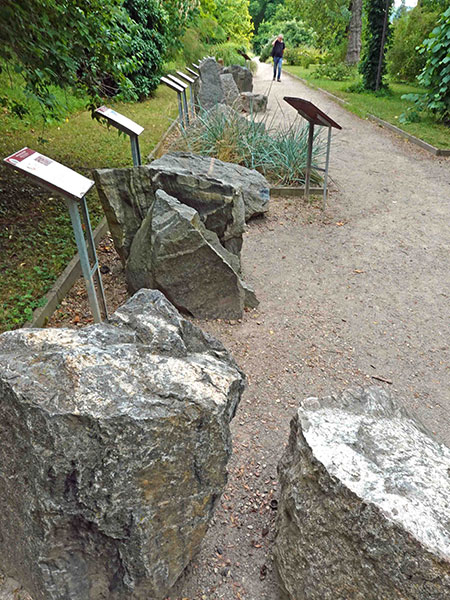
Befitting its official role within one of Central Europe’s oldest (est. 1347) and most prestigious universities, the garden boasts crystal-clear organization and layout with remarkably informative signage in Czech and English. This is particularly helpful in the garden’s most established and consequential area, Central European flora, which is divided into four zones for rare, endemic plants found in or near sand banks, peat bogs, calcareous soils and woodlands. Another of the garden’s distinctive features is its incorporation of a geological park that showcases 54 large samples of igneous, sedimentary and metamorphic rocks found in Czech territory along with plants associated with them.

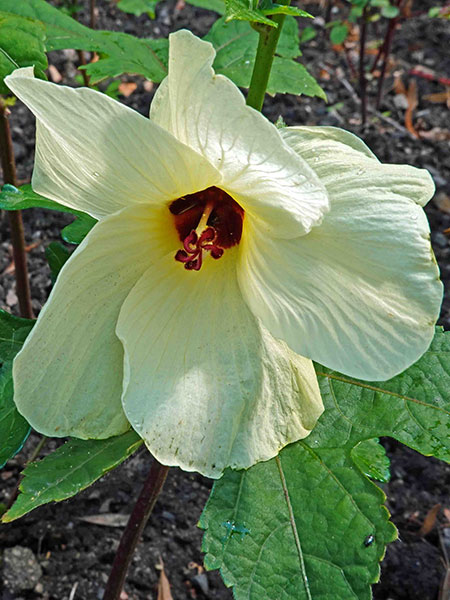
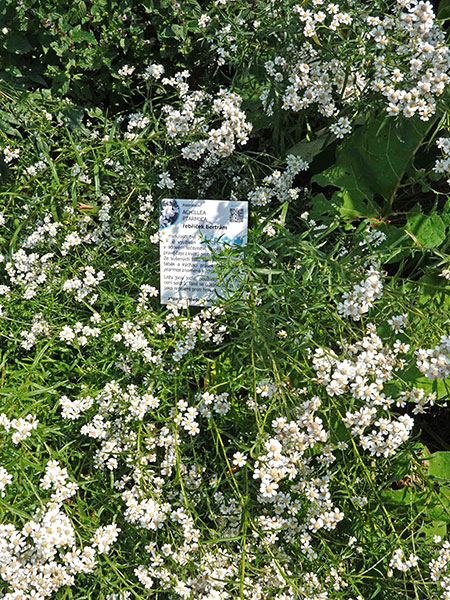
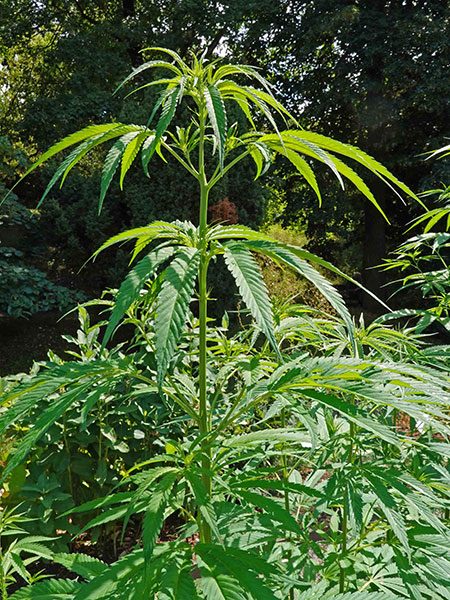
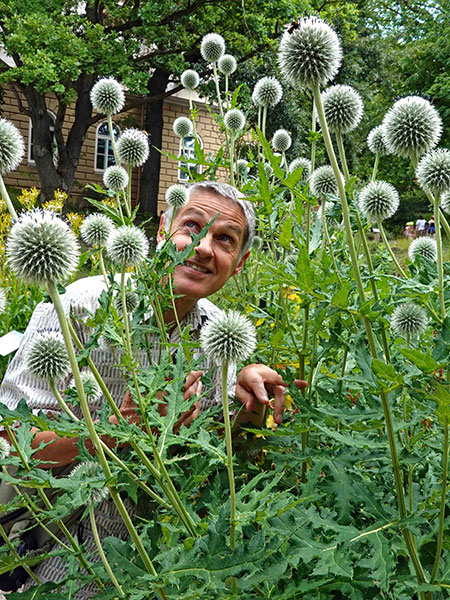
Among the garden’s most photogenic spots in midsummer is its “Useful Plants” zone, which includes several unexpected curiosities, such as an intentional bed of the noxious Geranium robertianum (the stinking, ugly-as-sin invasive herb-Robert). Among other standouts during my visit were (in alphabetical order) Abelmoschus esculentus (whose voluptuous hibiscus blossom produces the vegetable okra), Achillea ptarmica (the aptly named sneezewort), Cannabis sativa (ostensibly included for its use in textiles as hemp), and a striking clump of towering, ivory-hued Echinops exaltatus (giant globe thistle).
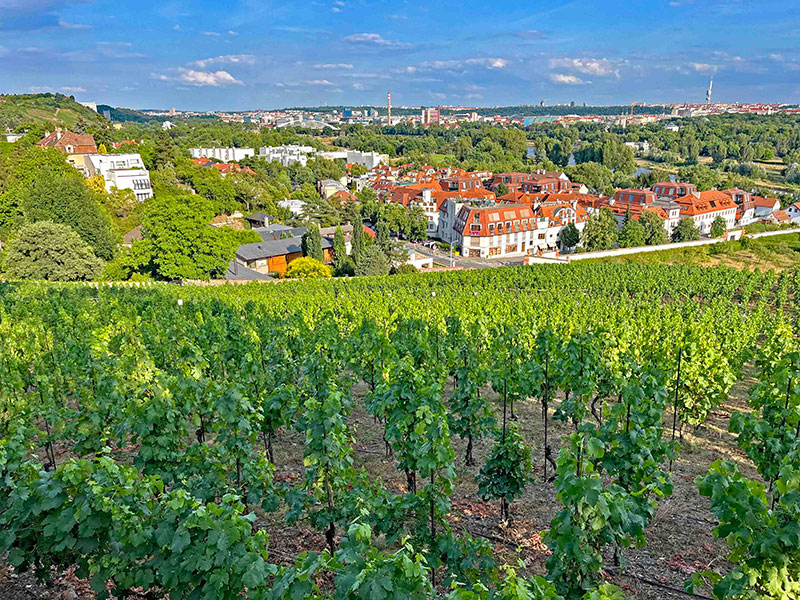
Half an hour by public transit northwest of city center, the young Botanická Zahrada Praha (City of Prague Botanical Garden) sprawls across 75 acres of a sun-kissed, south-facing slope in the leafy Troja district. Still a work in progress, the garden offers a nascent peony meadow, North American prairie, Japanese garden, rosarium, pinetum and summer ornamental beds. But its two crowning glories —fully formed, ready for prime time and able to compete with any world-class garden I have experienced— are its Fata Morgana Greenhouse (opened in 2004) and St. Claire’s Vineyard (established in the 13th century and restored in the 1970s).

Curved like a gargantuan silkworm, the silvery skin of Fata Morgana stretches 425 feet along the hillside’s rocky slope, which forms its back wall. From the moment I entered this magical space I felt the sense of enchantment and joyful disorientation the name suggests4. Its 730 feet of pathways meander through three distinct climate zones: xeric flora of Australia, Mexico, Madagascar and South Africa; humid tropical lowland forests of Central and South America, Africa, southeast Asia and the Pacific; and cool cloud forests of the Andes and the Himalayas. Water flows through the central zone in the form of rivulets, pools, a 14-foot-deep pond and a 20-foot waterfall. In one of the pools a diminutive and adorable freshwater stingray (Potamotrygon motoro) entranced visitors. The flora, of course, seems out of this world.
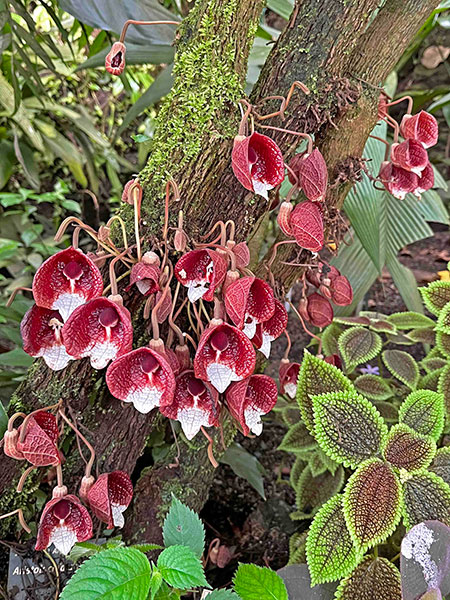
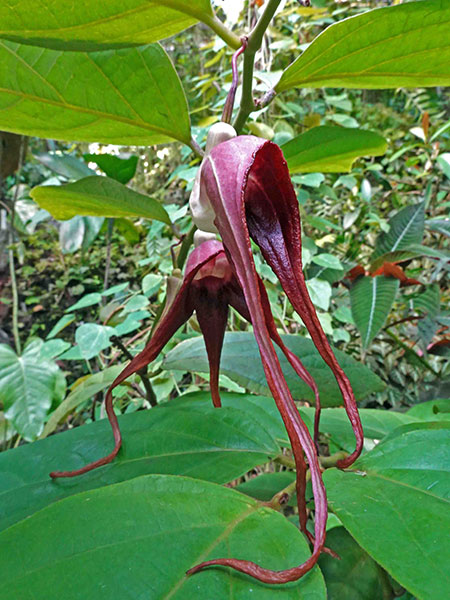
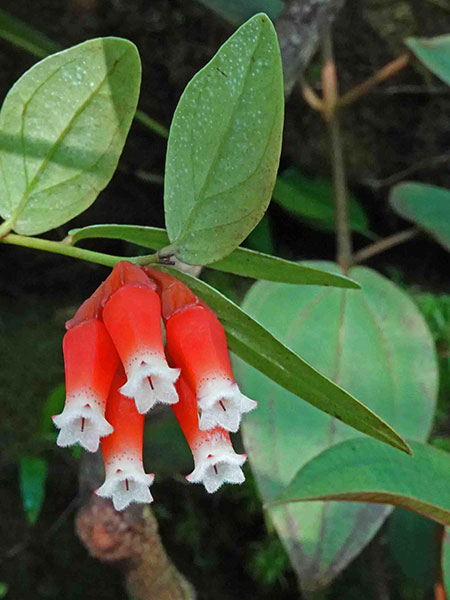

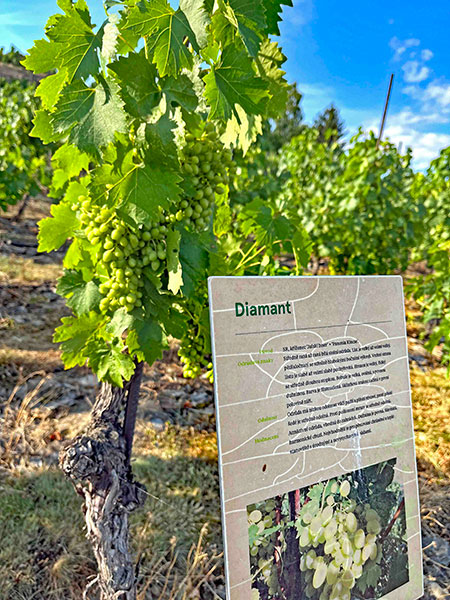
The 800-year-old St. Claire’s Vineyard, with its 18th century vineyard house and 17th century chapel was absorbed by the botanical garden in 1995 and opened to the public in 2004. Demonstration vines of 40 or so named grape varietals spill down the terrain. Several of these are used to produce high-quality wines that can be sampled and purchased on the premises.

Raising a glass to the ever-lengthening daylight hours, I’ll see you again on the Ides of March.
Horticulturally yours,
Daniel
- From the 1929 poem “Prague”, included in the anthology The Poetry of Jaroslav Seifert, (North Haven, CT: Catbird Press, 1998). Translated from the Czech by Ewald Osers. Seifert (1901-1986) was awarded the Nobel Prize in Literature for 1984.
- Named for prominent Czech botanist Ladislav Čelakovský (1834-1902).
- The original cultivar name ‘Pragensis’ was revised to ‘Praga’ in 1996. Cutting-grown clones of this remarkable tree are marketed by an Oregon nursery.
- Fata Morgana = a complex mirage, named after the legendary medieval sorceress Morgan le Fay, sister of King Arthur