
October's Paradoxical Opulence
October 2023
Above the cold, receptive earth
—Louise Glück1
the trees bend. Beyond,
the lake shines, placid, giving back
the established blue of heaven.
Opalescent and voluptuous, the October garden shimmers on misty mornings as fog shrouds the drowsy foliage in softness before dissipating and yielding to piercingly azure afternoons, when the low angle of the waning sun burnishes beds and borders, bathing them in orange glow. Can you recall a sweeter start to autumn? To my mind the first fortnight of this month has been like Goldilocks’ porridge, quite unlike the preternaturally toasty October of last year, when five daily high temperature records were set and acrid smoke from nearby forest fires poisoned the air for days, or the dismayingly early chill induced in 2021, when the average low temperature for the first half of the month was 44oF (as opposed to this year’s average low of 52o).
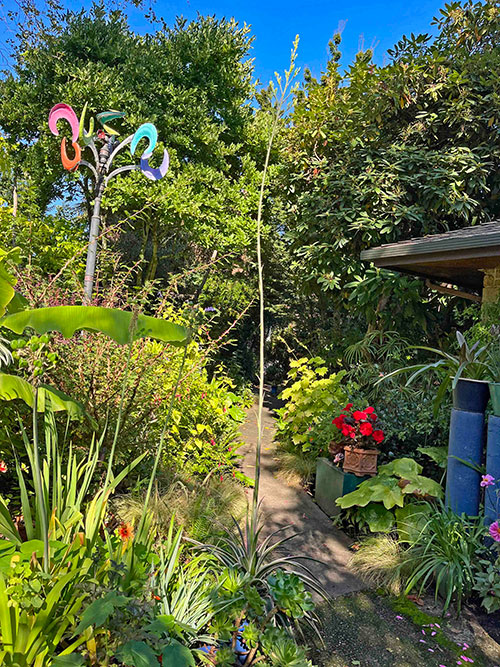

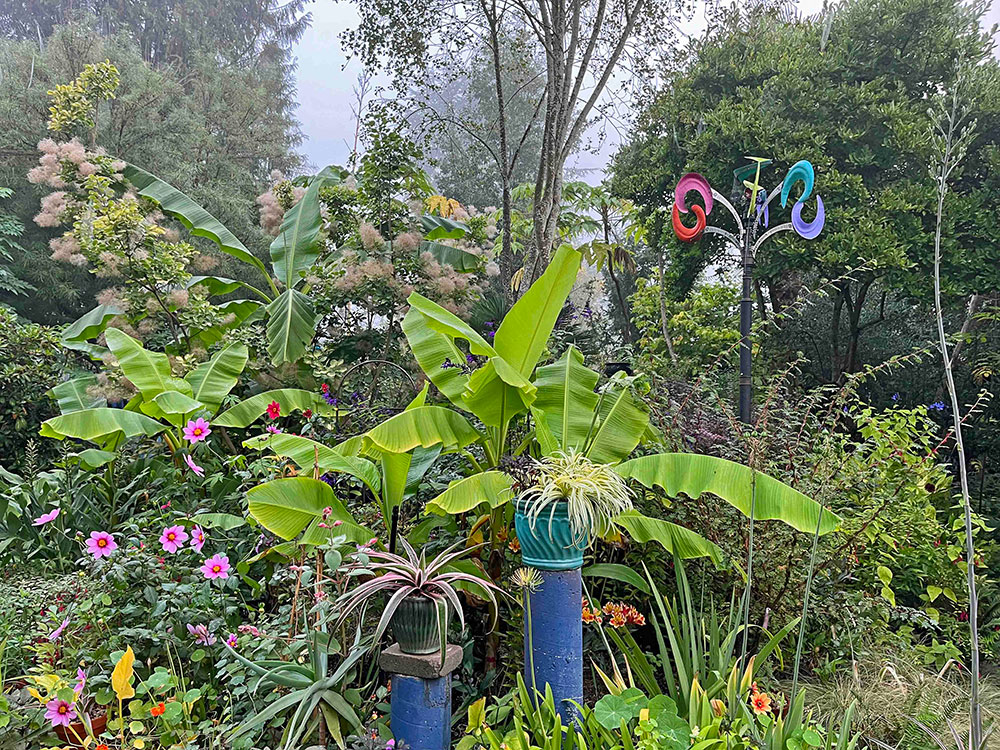
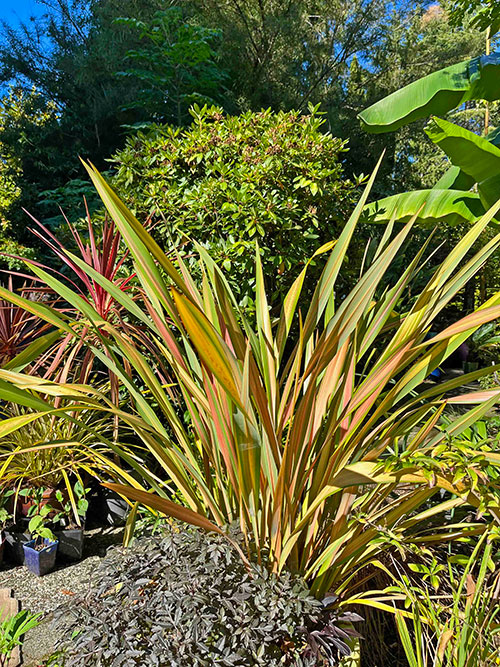
As much of the world burns, both literally and figuratively, our gardens offer reprieve and shelter, if not solace. The season itself represents an analogous dichotomy: Fall’s angel of decay spreads its widening wings just as many elements of the garden are hitting their stride. Recent restorative rains of the last few weeks have plumped up plants parched by the preceding months of drought even as deciduous trees are on the verge of flaming out and herbaceous perennials are about to enter dormancy. Foliage of Musa and Melianthus, Phormium and Cordyline is in full flush. After two harsh La Niña winters and another unusually dry summer, the hardy bananas are punier than in previous years, but the late September soakings have prompted a late-season growth spurt.

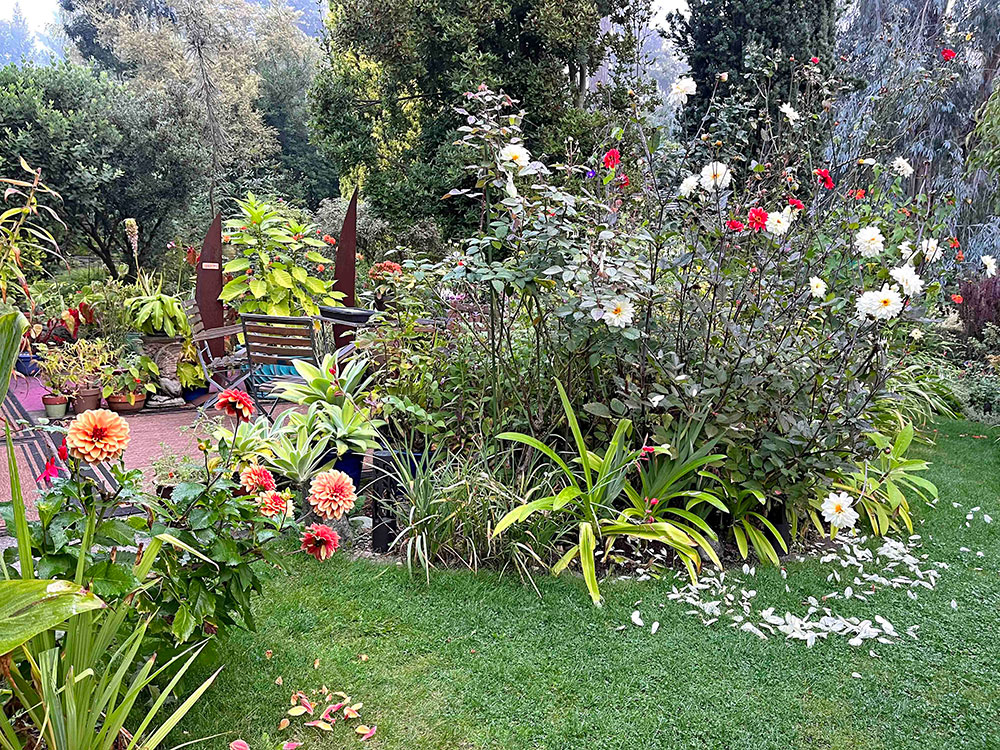
Dahlias, fuchsias and abutilons are flowering their little hearts out, as are salvias such as ‘Amistad’ and alstroemerias like ‘Indian Summer’2. I’m particularly enthralled this year with big, blowsy single-petaled and free-standing dahlias such as ‘Classic Swanlake’ and ‘Northwest Cosmos’, both of which will bloom into November, their pollen-rich stamens providing ample fodder for busy, buzzing pollinators. As for fruit, figs, rose hips, and the metallic lavender clusters of beautyberry, Callicarpa bodinieri ‘Profusion’, adorn the edges of my garden, while in the center, puffy seedheads of Cotinus coggygria ‘Golden Spirit’ still thrust their smoky selves skyward. A pair of Canary Island natives are still chirping brightly: Aeoniums —after breaking summer dormancy— have resumed growth even as last season’s seeds are germinating with wild abandon. A couple dozen spotted and prickly seedlings of Echium pininana (aptly called “tower of jewels”) that I potted up in September have recovered from transplant shock and are growing like gangbusters.


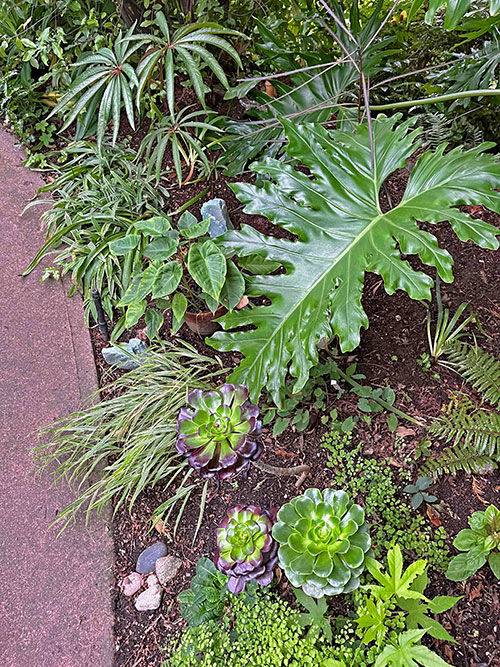
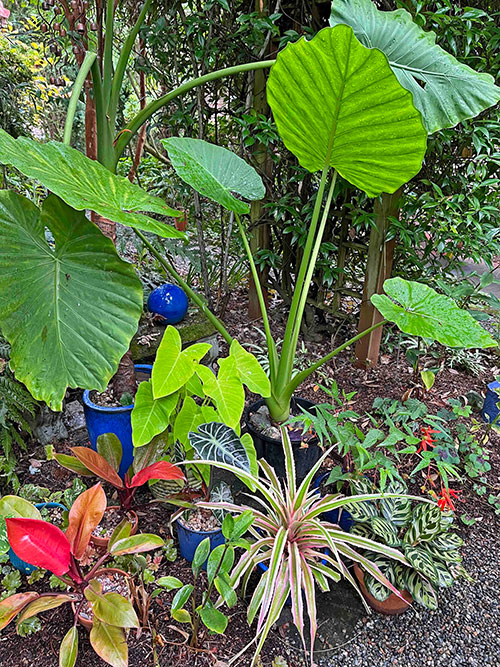
These mild nights have kept the tropicals happy: Potted “houseplants” such as Alocasia, Asplenium, Philodendron and Maranta have thrived on their extended summer holiday out of doors. In the pond, giant colocasias (“elephant ears”) are at their peak, and the surprisingly robust and resilient subtropical, Thaumatophyllum bipinnatifidum ‘Hope’3 is looking lusher than ever. Other subtropicals bear equally plush foliage. Let’s take note of the velvety stalks, stems and leaves of Roldana petasitis (formerly known as Senecio cristobalensis), and the similarly downy leaves and pink buds of Tibouchina urvilleana (recently reclassified as Pleroma urvilleanum) with its large, deep purple flowers. These two are gratifyingly easy to propagate by cuttings.


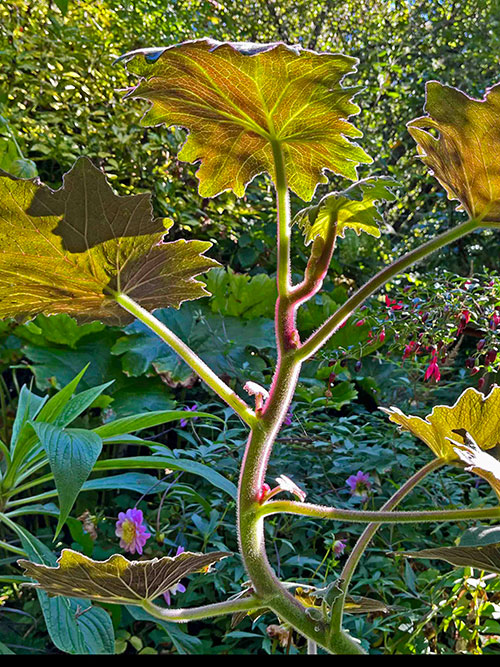
Roldana, sometimes commonly called velvet groundsel, merits a closer look. This Central American native is almost hardy in my garden: If planted deeply so that lower, latent growth buds are below the soil’s surface4, specimens left in the ground should re-emerge the following year —albeit slowly and not until early summer. However, taking cuttings right about now is the optimal method to grow it on from year to year. It’s also easy to lift and pot up a larger clump to overwinter in a cool shelter; this method usually results in an early spring bloom of clustered and ligulate yellow daisy-like flowers atop 5-foot stems. But the inflorescence is not the main attraction. It’s the luscious leaves and stems that make me swoon. Viewed from above, this roldana’s soft and downy foliage looks a bit like a garden fairy’s bedspread, yet the real party’s going on down below. Particularly when backlit by the afternoon sun, pink stems and petioles illuminate the ruddy underside of the leaves. If grown in full sun, leaf bottoms will often sport a uniform purple-maroon hue.

As the Big Dark barrels down the pike while summer fades in the rearview mirror, I’m aiming to embrace fully the paradoxical opulence of autumn. Thus concludes the inaugural episode of this fourth season of missives and ruminations surrounding cultivation of the life-enhancing plants that give us joy. In the coming weeks and months, look for topics such as the many-faceted mysteries of mangaves or the challenge of growing gesneriads in PNW gardens. We’ll travel to cool-temperate botanical refuges in Berlin, Prague and Vienna, visit formal gardens and trek a few nature trails in the Canary Islands as well as subtropical Taiwan and humid-tropical Singapore. Stay tuned!
Horticulturally yours,
Daniel
- Excerpted from “Autumnal” in the collection Poems: 1962-2012, page 131. (New York: Farrar, Strauss & Giroux, 2012). Glück was awarded the 2020 Nobel Prize in Literature.
- Formal name is Alstroemeria ‘Tesronto Imp.’ U.S. Plant Patent 24,540.
- The genus of this giant-leaved wonder, commonly called split-leaf philodendron, bears an unusually apt botanical name: “θαυματ-” (“thaumato-”, miracle) and “φύλλον” (“phyllum”, leaf).
- Also benefiting from deep planting are half-hardy subshrubs such as abutilons, fuchsias & salvias.