

The Essence of Spring in Sevilla
April, 2022
Mientras el aire en su regazo lleve perfumes y armonías;
Mientras haya en el mundo primavera, ¡Habrá poesía! 1(As long as air is imbued with fragrance and harmony,
—Gustavo Adolfo Bécquer
As long as there is springtime, there will be poetry.) 2
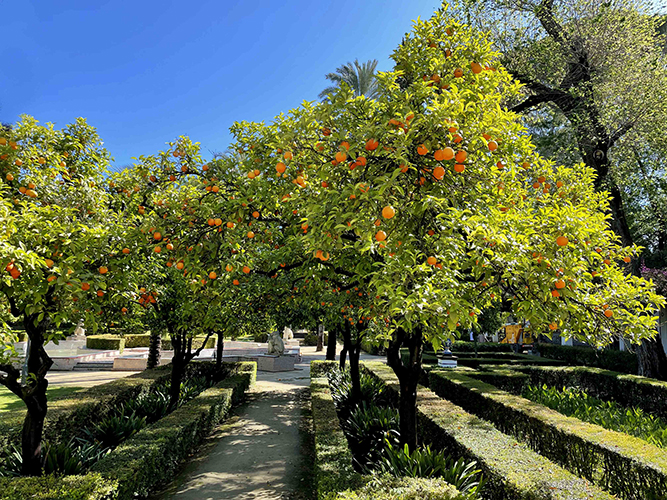
Among the intoxicating aromas that inspired the poet’s verse, surely the most prominent in Bécquer’s birthplace, Sevilla, was the enduring redolence produced by the unassuming, ivory flowers of Citrus × aurantium, the bitter orange, a tree so deeply associated with the Andalusian capital that it is widely (if incorrectly) known as the Seville orange. With a bloom season beginning in late February, peaking in March, and extending well into April, Sevilla’s estimated 40,000 ornamental orange trees —said to be the most of any city in the world— flank scores of streets and adorn a plethora of parks and plazas. A native of East Asia, the bitter orange was most likely brought to Andalusia more than 1000 years ago by its Arab rulers. In fact, the lyrical Spanish word for orange blossom, azahar, is derived from Classical Arabic zahr (for “flowers”).
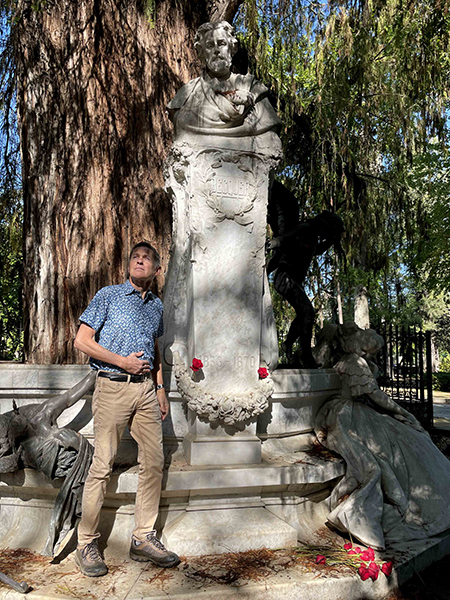
Apropos lyricism, Bécquer is to Sevilla as Lorca is to Granada. Born in 1836 (exactly 100 years before Lorca’s death), the Romanticist writer Gustavo Adolfo Bécquer, like Lorca, died early, at age 34, but of natural causes —in his case, the affliction that felled many 19th century artists: tuberculosis. Bécquer’s legacy remains vibrant today, and the elaborate marble shrine to him in the city’s largest and most breathtakingly beautiful greenspace, the Parque de María Luisa, is among the city’s cultural monuments most visited by locals. Built around a majestic specimen of Taxodium distichum, a North American bald cypress planted in 1850 3, the Glorieta de Bécquer was erected about 110 years ago. Rarely is its statuary seen without fresh flowers left by admirers: Long-stemmed red roses are the most frequent tribute.
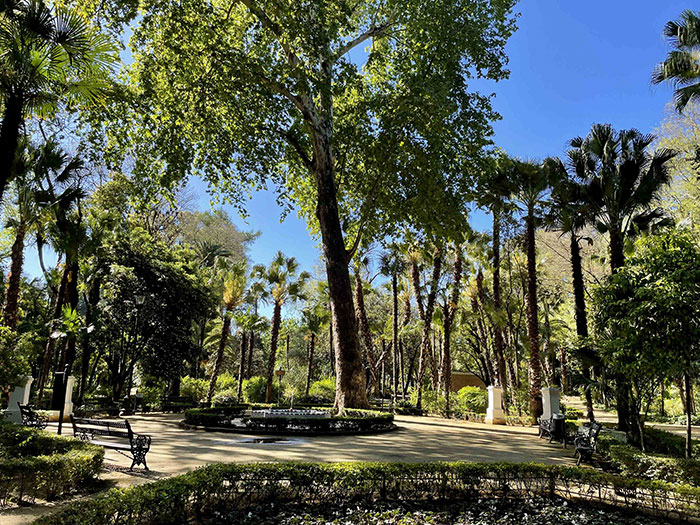
The park itself merits a full day’s exploration. Established as a private royal reserve attached to the San Telmo Palace (now the seat of Andalusia’s government), the 100-acre tract was delivered to the public by Princess María Luisa, younger sister of Queen Isabella II, in 1893. In the early decades of the last century it was converted into a formal garden park, with dozens of monuments, pavilions, plazas, ponds, fountains, arbors, pergolas, and two large museums connected by an intricate network of pathways, mostly under the protective canopy of thousands of mature trees drawn from warm temperate and subtropical climates across the globe. In addition to serving as the lungs of the city, the park’s cooling shade provides a needed respite from the brutal summer sun of Europe’s hottest urban climate. Meticulously maintained, the park is open daily, 8 a.m. to 10 p.m. Admission is free.
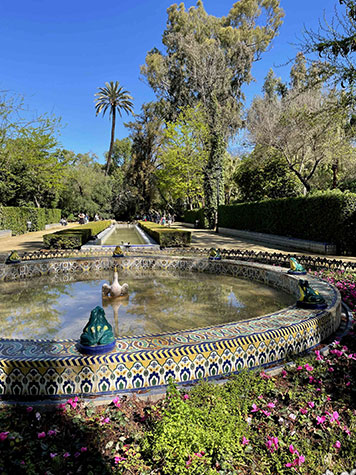
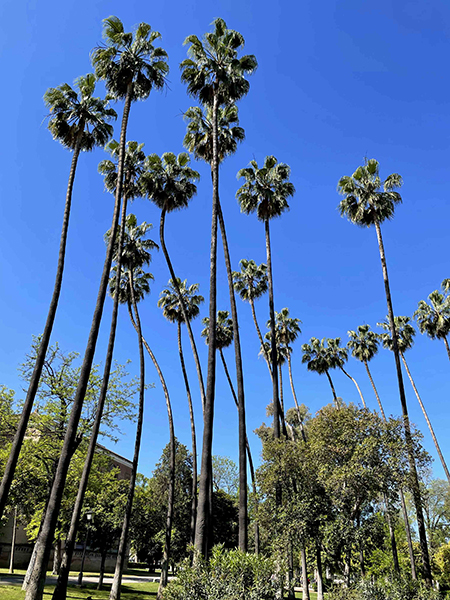
In addition to the Citrus and Taxodium already noted, the Parque de María Luisa is home to hundreds of soaring palms, the most impressive of which are Phoenix canariensis (Canary Island date palm) and both Washingtonia species, W. robusta and W. filifera, native to southernmost California and northwestern Mexico. I also marveled at astonishingly tall colonies of Pittosporum tobira in full, fragrant flower in mid-April.
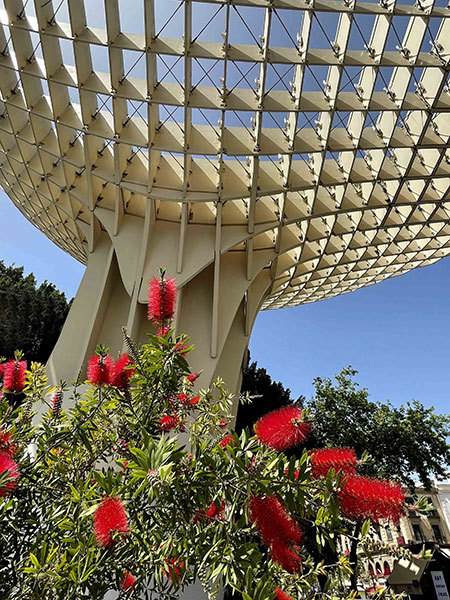
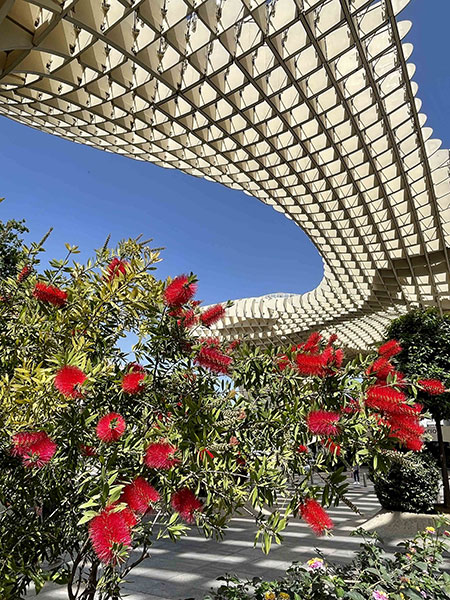
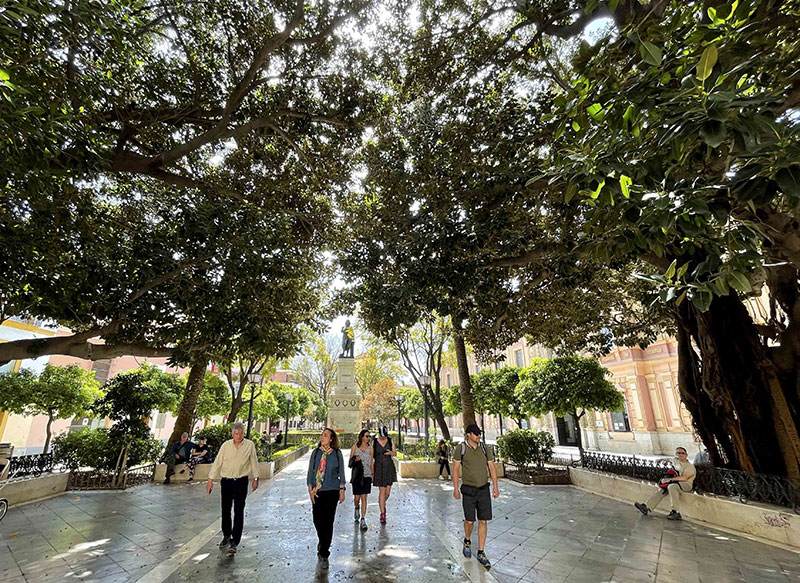
All around the 2000-year old town, a host of public spaces boast elaborate displays of woody plants, from an ever-expanding pair of massive, shade-bestowing Ficus macrophylla (Australian banyan) that guard the jewel-box plaza next to the baroque-era Museo de Bellas Artes (Museum of Fine Arts), to a bevy of flamboyant, screaming-red bottlebrush blossoms of Callistemon citrinus underneath the ominous latticework of the unabashedly 21st century Metropol Parasol, which Guardian architecture critic Rowan Moore describes as a 100-foot-tall mash-up of “cloud, mushrooms, parasols and waffle”.
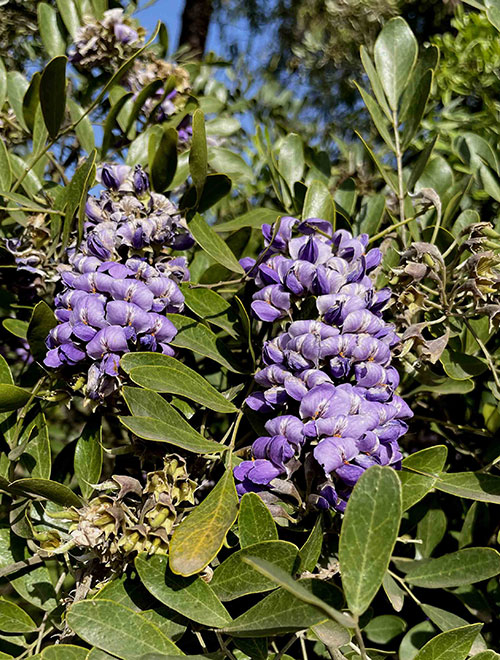
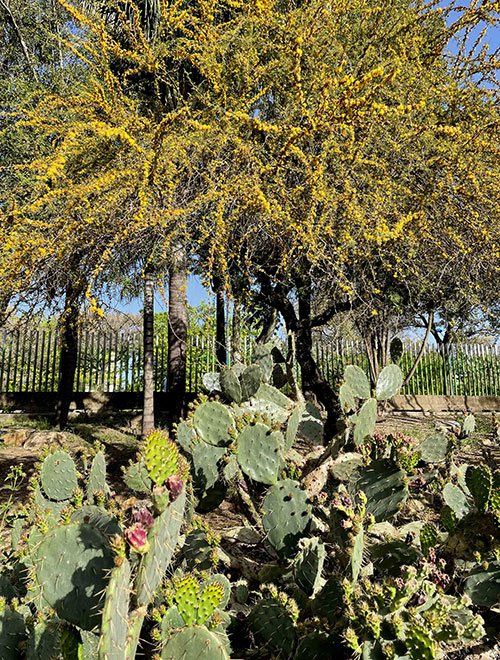
Sadly, the sprawling, linear Jardín Americano, built to showcase New World flora for the 1992 world’s fair along the banks of the Guadalquivir River opposite the city, has been nearly abandoned since my previous visit 10 years ago. That said, my recent inspection was instructive: Fending for themselves and looking surprisingly dapper were several large Tecoma stans, with their bold bursts of yellow trumpet flowers and foot-long, glossy seed pods; umbrella-shaped paloverde trees (Parkinsonia florida) in dusty golden bloom above hefty clumps of plump prickly-pears (Opuntia sp.); and a couple of curious, violet-blue pea-flowered Dermatophyllum secundiflorum (formerly included in the genus Sophora), evergreen shrubs sometimes called Texas mountain laurel. Might these heat-loving beauties figure in our future?
In recognition of April as National Poetry Month, let’s close with another of Bécquer’s verses, excerpted from “Rima XII”:
El verde es gala y ornato del bosque en la primavera.
Entre sus siete colores brillante el iris lo ostenta.
(Green is the finery and ornament of the forest in spring;
the rainbow flaunts it among its seven shining colors.) 4
Horticulturally yours,
Daniel
- From “Rima IV”, the fourth in Bécquer’s set of 76 lyric poems —published posthumously in 1871— that reflect on identity, love, memory, dreams, death and the fleeting nature of time.
- My translation.
- At age 170, it’s still a youngster, as Taxodium can live thousands of years.
- Translation by Howard A. Landman.