

Dreaming Green in Granada
April, 2022
Verde que te quiero verde.
Verde viento. Verdes ramas.
(Green, how I want you green.
Green wind. Green branches.)
—Federico García Lorca
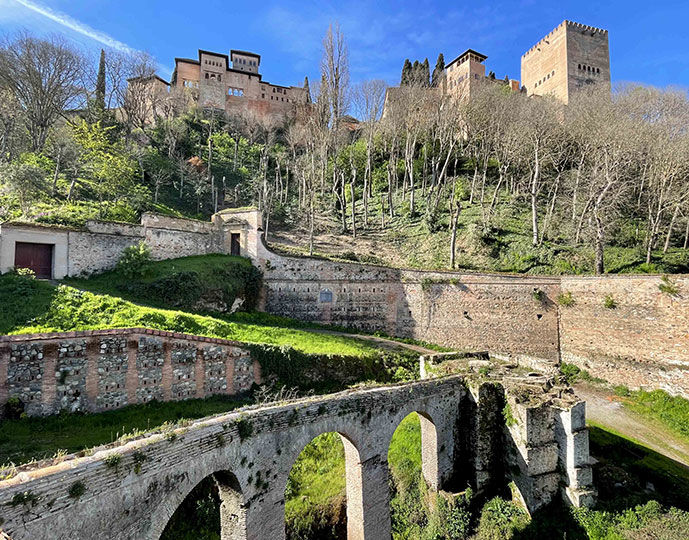
So begins the iconic, surrealistic poem “Romance sonámbulo” (“Ballad of the Sleepwalker”) penned nearly a century ago by the enigmatic and enthralling Spanish city of Granada’s most cherished figure, the equally enigmatic and enthralling literary supernova Federico García Lorca, whose senseless execution by fascist forces at the beginning of Spain’s Civil War in 1936 shocked the consciousness of the world. Even though Lorca’s repeated evocation of the verdant hue in this poem defies definitive analysis, we’ll be standing on solid ground embracing some essential dualities surrounding his use of “green”: life and death, fertility and decay, desire and despair. All these aspects resonate clearly with us committed gardeners, as they did with Lorca, who refers specifically and frequently in his poetry and prose to Granada’s horticultural bounty even as he acknowledges the transience of existence.
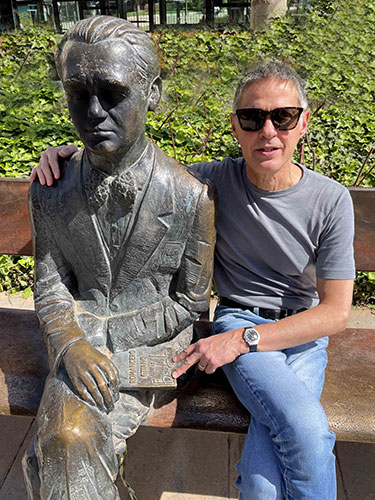
“¡Abril divino, que vienes cargado de sol y esencias, llena con nidos de oro las floridas calaveras!” 1
(Divine April, you who come laden with sun and essences, fill with nests of gold the florid skulls!)
Last week I returned to Granada exactly 25 years after my first visit and was smitten once again by its emerald oasis-like appearance in April, surely its greenest month. Watered by four rivers that flow from the shimmering snowy range of the aptly named Sierra Nevada, Granada maintains its verdure from the softness of spring through summer’s withering heat and drought due to human intervention. The Arab and Berber cultures that founded and ruled the city for 700 years until their defeat and exile in the fateful year 1492 designed, built, and maintained an intricate system of irrigation that prompted not only a bountiful and astonishingly diverse agriculture but also enabled the creation of some of the world’s most breathtaking gardens around the royal hilltop domains of the Alhambra and Generalife that tower still above the city proper.
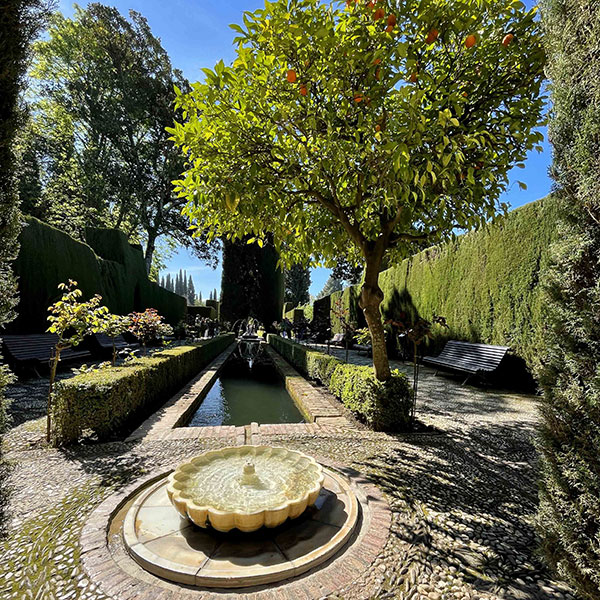
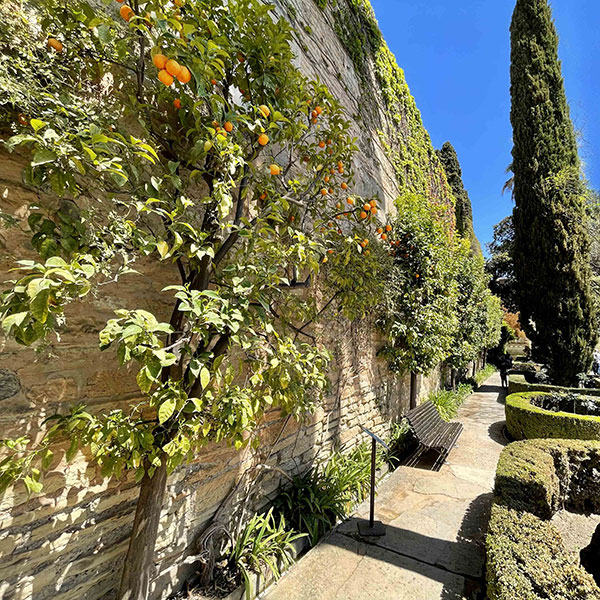
Unlike the meticulously restored architectural treasures of the Alhambra complex, built of durable stone and brick, the elaborate original gardens —inevitably— succumbed centuries ago to the dualisms of fertility and decay. As reimagined today2 they are stunningly gorgeous to visitors, but would be largely unrecognizable to their creators3. The latter would, however, be keenly familiar with the structural plantings that still comprise the backbone of many portions of the garden: Mediterranean cypress (Cupressus sempervirens), which can live 1000 years; true myrtle (Myrtus communis), long treasured for its medicinal qualities; bitter orange (Citrus × ariantum) an East-Asian citrus known to the ancients but disseminated widely across Andalusia (southern Spain) by the conquering Arabs beginning in the 8th Century CE. Finally, we’d be remiss not to note the emblematic pomegranate (Punica granatum) found in public gardens all over the city. As the Spanish name for this fruit, quite coincidentally, is granada (derived from Latin granatus) the city (whose name derives from the unrelated Arabic Ġarnāta) has used the pomegranate as its official symbol for half a millennium.
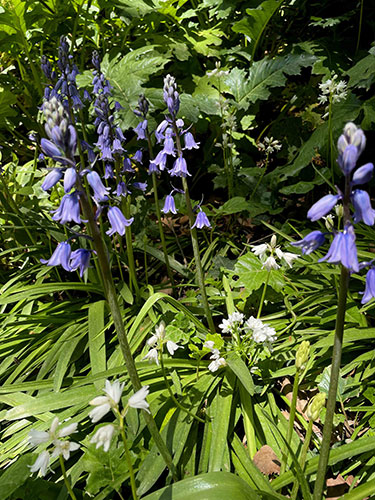
Lorca wrote at length about the inward-looking nature of granadinos (natives of Granada) and their penchant for crafting and treasuring small things. The well-watered, mainly deciduous forests that flank the slopes linking the city below and the Alhambra above provide fertile opportunities to savor hosts of humble but handsome native spring beauties that grace the ground beneath a canopy of poplar, buckeye, elderberry, plane, hazel, and maple. Shining spontaneously for me last Saturday morning were cunning combinations of white narcissus, Borago officinalis (borage), Symphytum officinale (comfrey), Ornithogalum umbellatum (star-of-Bethlehem), Hyacinthoides hispanica (Spanish bluebells), Vinca major, and in countless glossy drifts, Acanthus mollis.
An oft quoted saying in Spain, “Quien no ha visto Granada, no ha visto nada” (If you haven’t seen Granada, you haven’t seen anything), has long resonated with American visitors, from Washington Irving to Michelle Obama. However, Granada’s older and larger cousin, the Andalusian capital of Seville, answers this adage rather haughtily with “Quien no ha visto Sevilla, no ha visto maravilla” (If you haven’t seen Seville, you haven’t seen a wonder). In our next session we’ll investigate this assertion. See you in Seville!
Horticulturally yours,
Daniel
- From “Canción primaveral” (Song of Springtime), written by Lorca in 1919 and published in Libro de poemas, 1921.
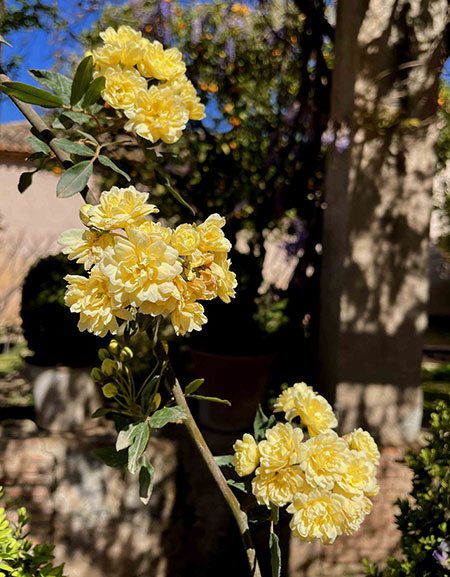
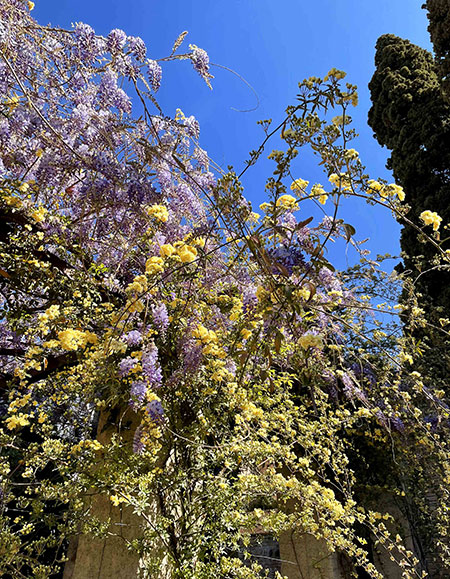
- Chief among April’s attractions in the gardens of the Alhambra and Generalife are countless mature Rosa banksiae f. lutea (yellow Lady Banks rose) and Wisteria sinensis that adorn hundreds of archways, columns, pillars, and pergolas.
- The green spaces of the historical complex today include more than 700 species, of which about one-third were grown in the gardens during the Arab era.