
Echoes of Echiums: Down the Rabbit Hole We Go
May 2026
When logic and proportion have fallen sloppy dead
—Grace Slick’s “White Rabbit”1
and the White Knight is talking backwards
and the Red Queen’s off with her head
remember what the dormouse said
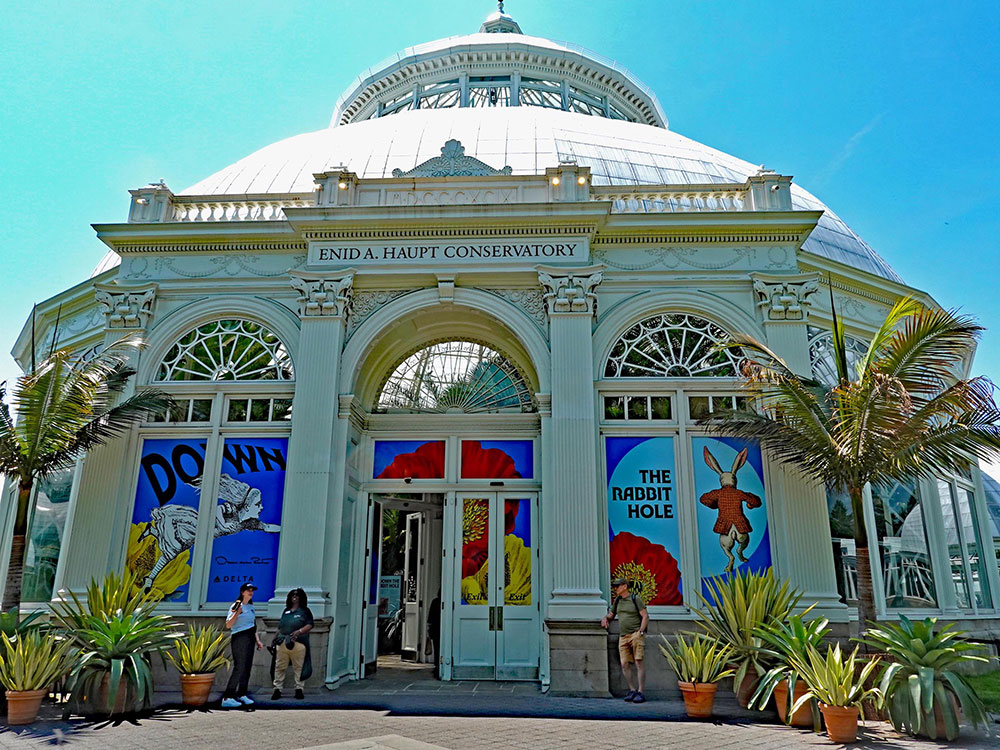
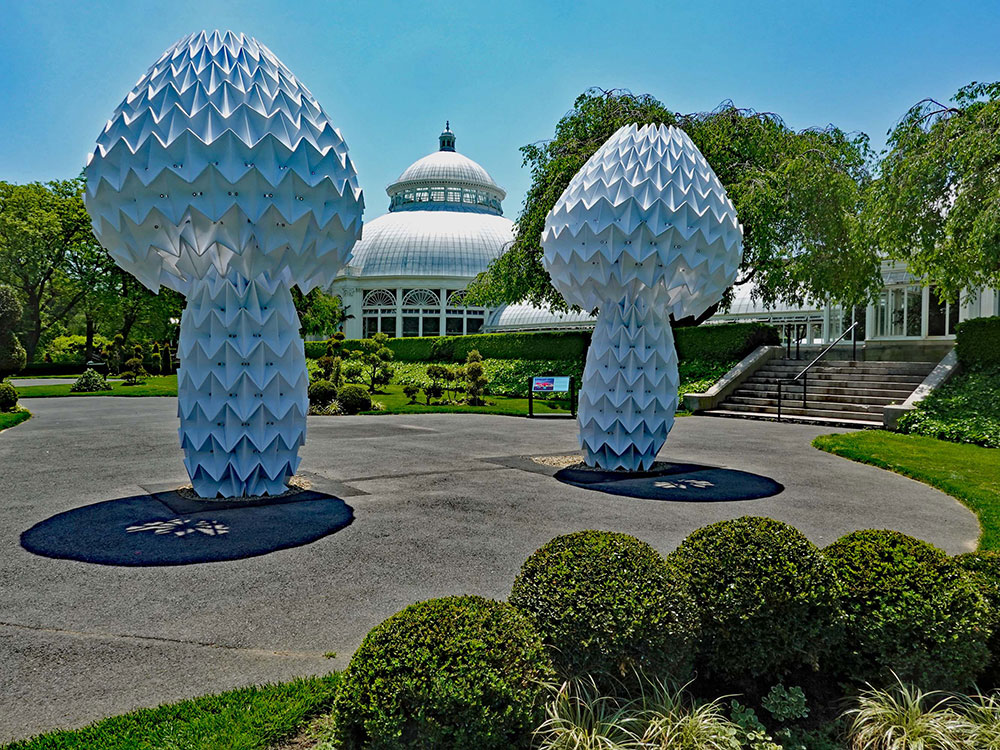
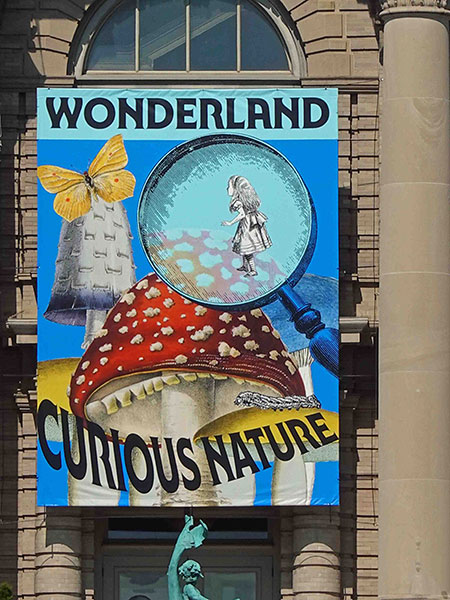
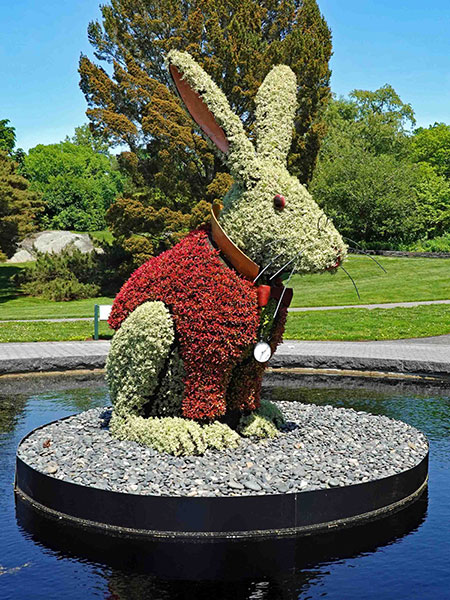
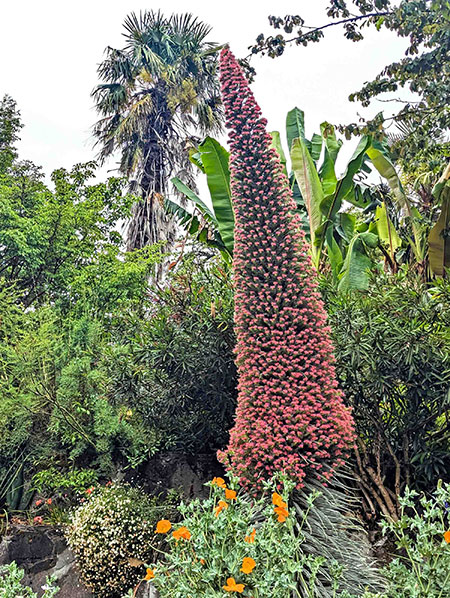
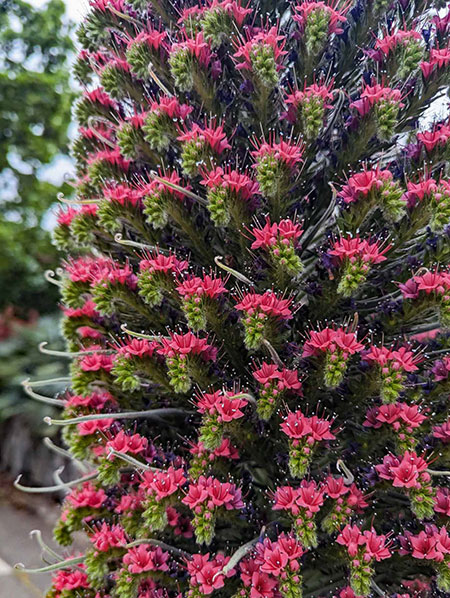
Ardent garden geeks and hort-heads alike share the sensation of itchy exhilaration prompted by a penchant or passion for peculiar plants. Many a time I’ve plunged down a metaphorical rabbit hole in pursuit of a particular botanical obsession, but only once have I been explicitly invited to do so, and by one of the world’s most prestigious horticultural institutions: the New York Botanical Garden. Alice’s adventures, as constructed by Lewis Carroll, were the source of inspiration for Wonderland: Curious Nature, a special exhibition that ran rampant and merry from May through October 2024 all across the NYBG’s 250-acre grounds2. Among the more compelling elements was a floral coterie holding court in the soaring, palatial expanse of the Haupt Conservatory, the NYBG’s centerpiece pavilion. To my eye the most alluring of all the denizens in the elaborate Victorian displays were dozens of plush pink inflorescent cones of Echium wildpretii. It wasn’t just the echiums’ thousands of massed miniscule flowers that appealed: The velvety soft, glaucous foliage seemed to whisper, “Caress me!” to visitors. Even the tendril-like, lanceolate leaf tips, recurved at the end, invited admirers to come closer.

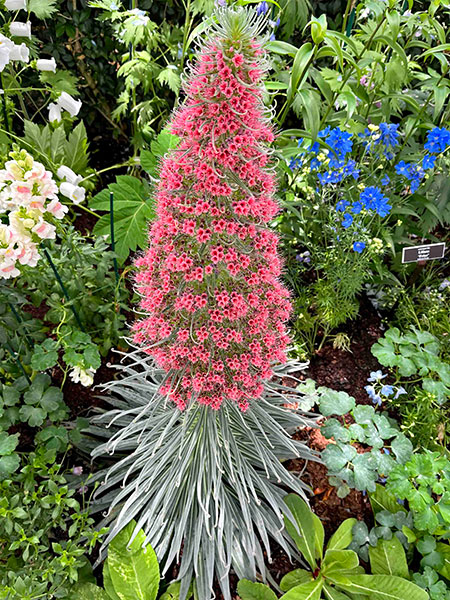
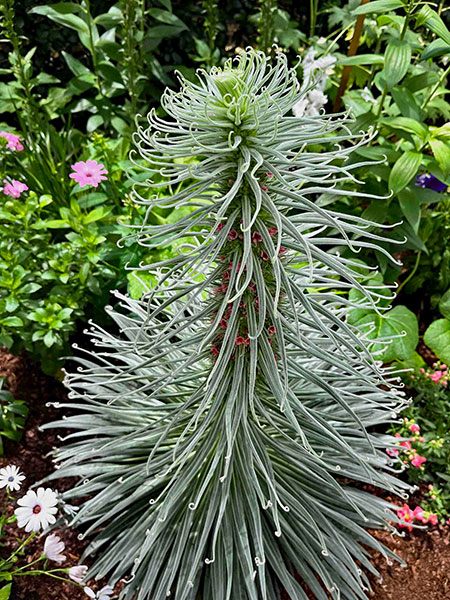
I’ve tried growing this seductive, monocarpic biennial-to-triennial a trio of times (alfresco) in my garden. In each case at the end of winter I was left with an unsightly pile of mush in the wake of prolonged freezes. Portlanders tend to have better luck than Seattleites with these plants, especially this year. A few days ago I asked the Danger Garden’s Loree Bohl, a close friend of NHS, about her experience with E. wildpretii. She reports: “I’ve had a few of them bloom over the years. It takes the luck of planting them before a mild winter (or two, I’ve had them take three years to bloom). If you do protect them during a cold spell, I’ve found the trick to success is to uncover them during the day when it warms above freezing. Leaving them covered day and night is no good. … I know two people who have them blooming right now.” Last week I reached one of Loree’s sources, Zeah Lessley, who kindly sent me photographs of her prime specimen, now in glorious splendor in her southeast Portland “hellstrip”, having achieved a maximum height of nine feet.
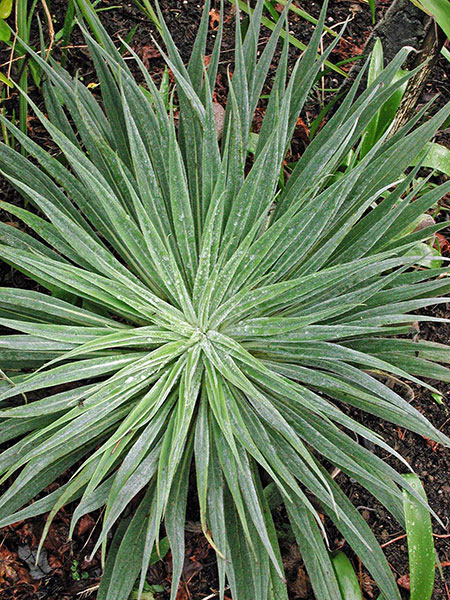
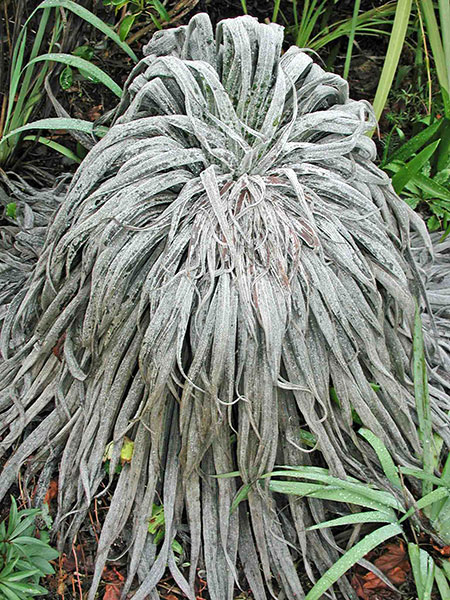
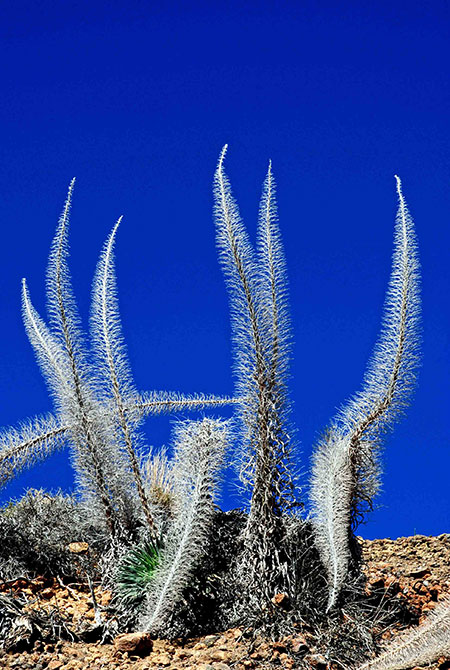
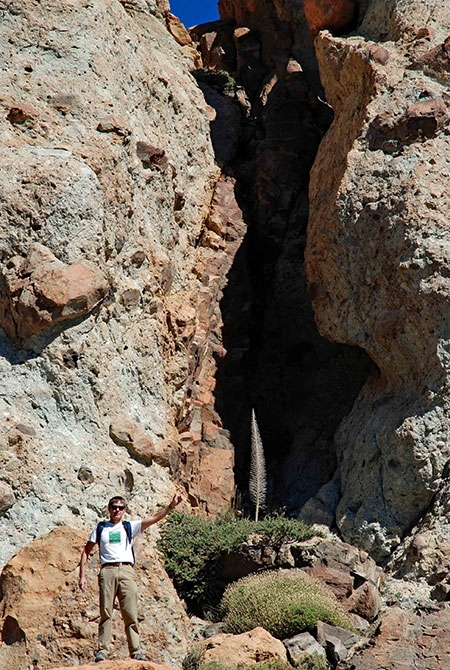
On three occasions I’ve endeavored to find E. wildpretii 3 in its sere and austere native habitat, a gigantic ancient volcanic caldera adjacent to the snowcapped, 12,200-foot Mount Teide (Spain’s highest peak) on Tenerife in the Canary Islands . My first two forays in 2007 and 2020 were in February, so what I found were either feathery, sleek skeletons of the previous year’s bloom or the compact rosettes of youngsters. Although I had higher hopes for my most recent trip at the beginning of this month, May 2026, I was obliged to swallow a pill of mild disappointment: Due to an unusually cool spring in the Canaries, bloom time was delayed. I was able to ogle dozens of specimens in the initial stages of their floral cycle. Spires were shooting skyward, but buds weren’t yet open, with the sole exception of an isolated, precocious stalwart in a particularly warm, sundrenched spot that was just beginning to reveal its incarnadine petals.
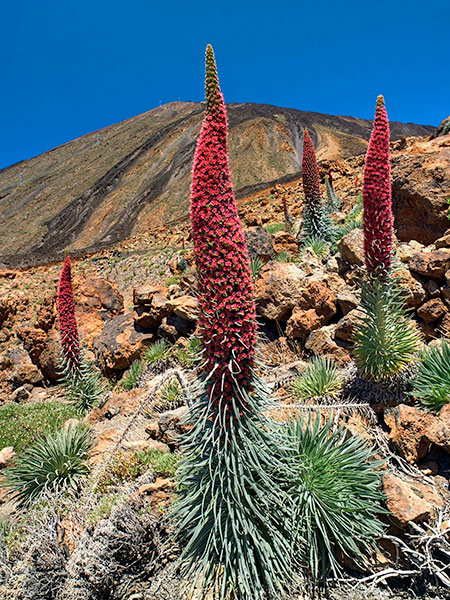
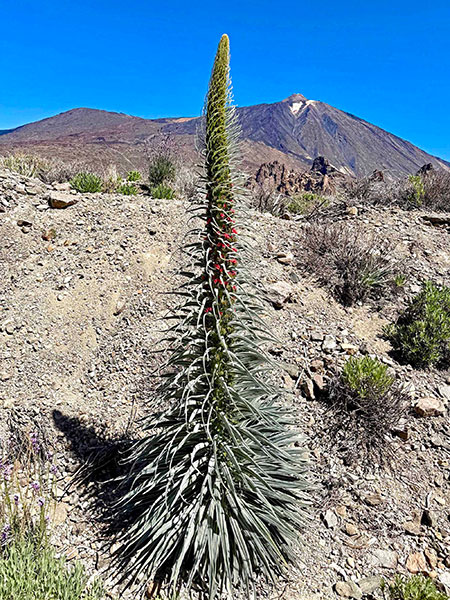
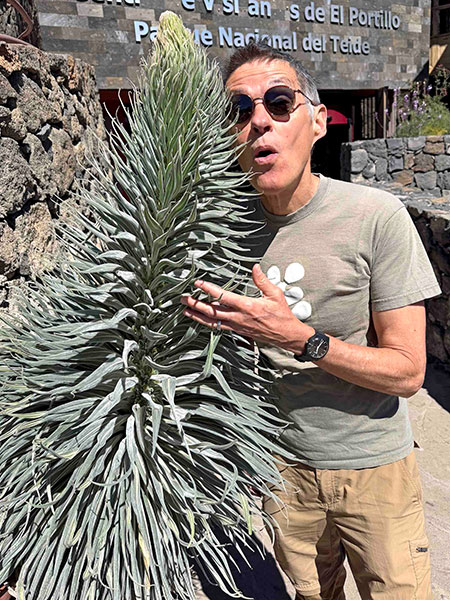
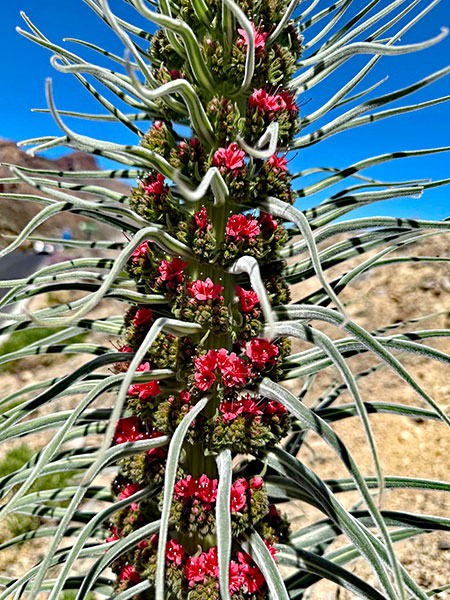
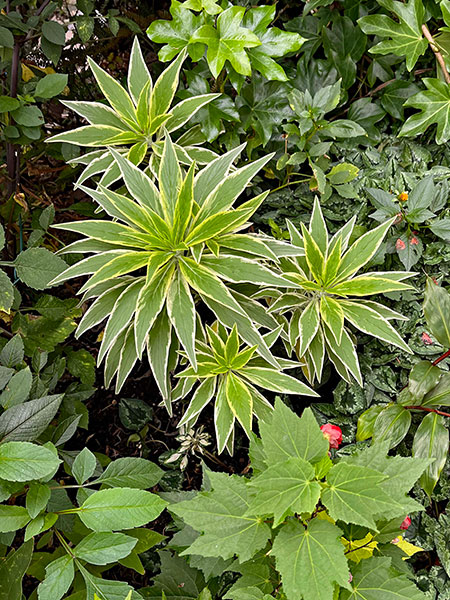
The genus Echium comprises 68 species native to the Old World, from northern Africa through all of Europe and into western and central Asia, although it reaches maximum diversity in the 29 species of the Macaronesian archipelago (mainly in Spain’s Canaries and Portugal’s Madeira). Echium is in the borage family (Boraginaceae), along with tried-and-true garden favorites such as comfrey (Symphytum), forget-me-not (Myosotis), lungwort (Pulmonaria) and Siberian bugloss (Brunnera). Like other members of this family, echiums have been widely used in traditional medicine and are currently being studied for their antioxidant and anti-inflammatory properties. Some species, however, have bristly leaves and stems that can cause skin irritation. This is especially true of the so-called pine echium, E. pininana, which is much easier to grow to maturity than the daintier E. wildpretii. At the moment I count more than a half dozen of these brash bad boys abloom in my garden.

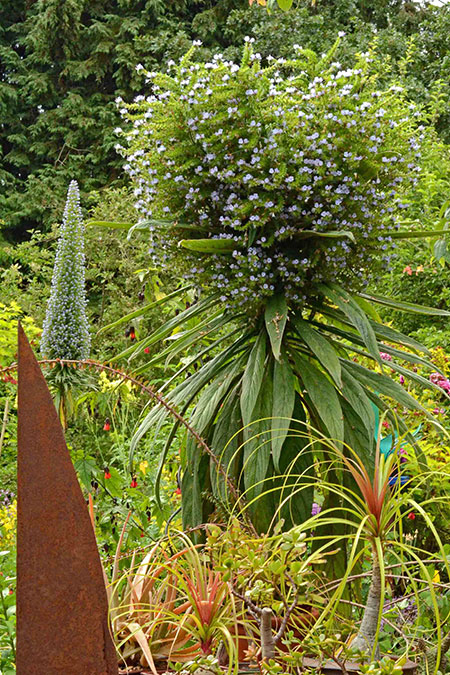
This boisterous species—also called “tower of jewels” (like E. wildpretii), “tree echium” or the truly scary “giant viper’s bugloss”—blasts off with blue to lilac hued rocketlike spires in the spring of its second or third year. These usually top out at 8 to 12 feet but can exceed 20 feet in favorable conditions. My reigning champion, which bloomed back in 2003, easily exceeded that mark. Extended, deep freezes will kill E. pininana, especially when temperatures stay below 26oF for a day or so. On occasion freezing weather maims a plant that manages to survive, albeit it an altered state. I’ve had some emerge with a truncated bouffant bloom; others have coped by developing multiple stubby flowering points.
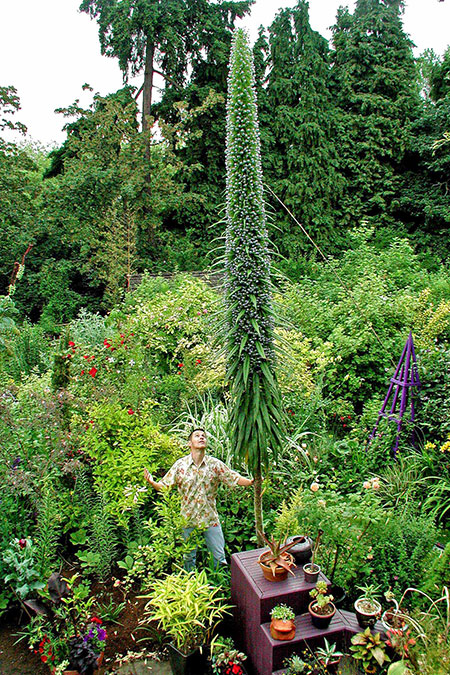
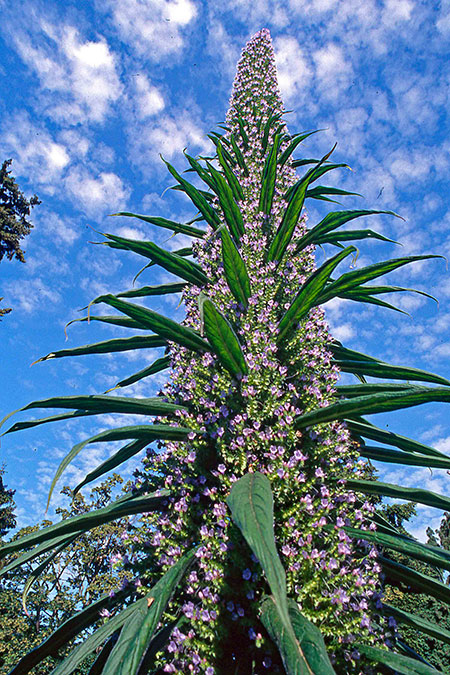
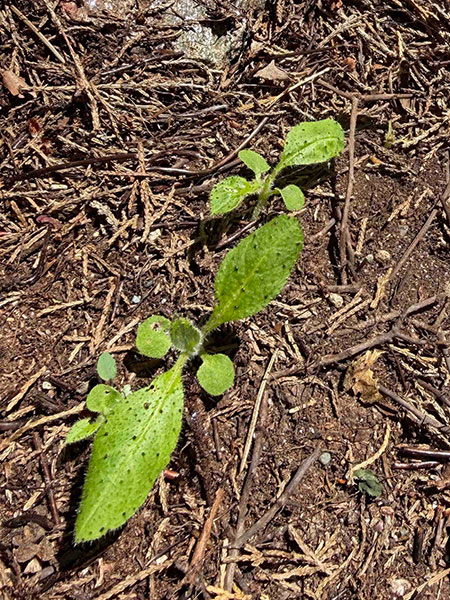
There’s another downside to E. pininana in addition to the worrisome bristles: A mature specimen makes thousands of seeds that remain viable for more than a decade and germinate in disturbed earth once the soil warms up in late spring or early summer. Seedlings are easily identified: Emerging leaves sport tiny reddish black spots and prominent bristles. Its prodigious seed production has rendered it a pest in coastal fringes of central California and southern Oregon, where it is crowding out native vegetation. In fact, the species has been declared a Class B noxious weed by the Oregon Department of Agriculture. (A cold-hardy Eurasian relative, E. vulgare, aka blueweed, is a Class B noxious weed in Washington State.)
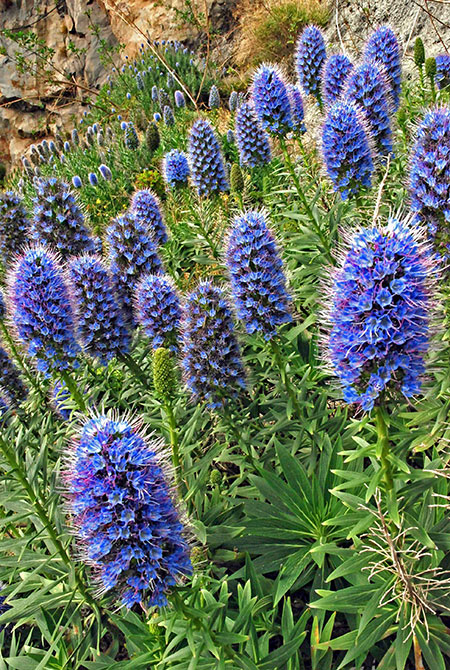
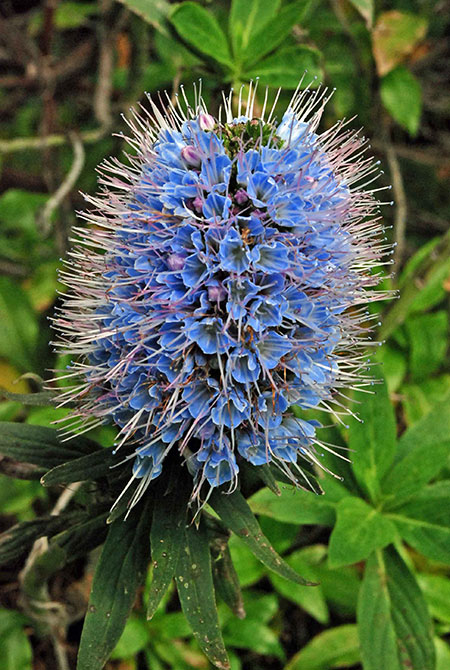
California Bay Area gardens are often adorned by a third swoon-inducing echium species, E. candicans, sometimes called “pride-of-Madeira”. Ever the optimist, I’ve tried (and killed) this lovely thing about once a decade since the mid-90s. Unlike the pair previously pondered today, this one is a perennial, hydra-headed subshrub that sports a regal multitude of cylindrical panicles bearing royal blue florets with prominent stamens. But as with E. pininana, E. candicans shows signs of invasiveness in coastal California and is probably best enjoyed by paying a visit to its native habitat on Madeira or in the Canaries. Sigh.
Assuming I manage to liberate my cranium from the bristly embrace of Echium and emerge from the rabbit hole, next month we’ll pay homage to more of the impressive botanical endowment of the Canary Islands. Ah! If you’re still scratching your noggin trying to remember what the dormouse said, Lewis Carroll was silent on the subject, but according to Grace Slick it was “Feed your head”, which I interpret as tracing the labyrinth of truth through proper nutrition, which includes reading and thinking for yourself. So put that in your (proverbial) pipe and smoke it. We’ll meet again at the summer solstice.
Horticulturally yours,
Daniel
- From the final verse of “White Rabbit”, a song inspired by Lewis Carroll’s books Alice’s Adventures in Wonderland and Through the Looking Glass. Words and music by Grace Slick, recorded by Jefferson Airplane and released by RCA Victor in 1967 on the aptly named album Surrealistic Pillow.
- The NYBG has a special summer theme every year. For 2026 it’s this: “Channel the spirit of the ’60s at Flower Power, a joyous celebration of the enduring symbolism of flowers as icons of peace and love.” Click here for details.
- Sometimes called “tower of jewels”, “red bugloss”, or “Tenerife bugloss”. Its local Spanish name is “tajinaste rojo”. Echium derives from the Greek “echis” for viper, as the seeds of some species resemble the shape of a snake’s head. The species name, wildpretii, honors Swiss botanist Hermann Wildpret (1834-1908).
Credits—All images are photographs by Daniel Sparler, except for those (marked with the ^ symbol) of the blooming specimen of Echium wildpretii in Portland, Oregon, which were made by Zeah Lessley on 14 May 2026, and the photograph (marked with the *) of blooming spires of the same species in Teide National Park, Spain, made by Jörg Hempel (via flickr.com) on 27 May 2009.