
July 2025
You are talking of Heaven when you talk of the West.
—Al Jolson 1
As a sample of Heaven, California is best.
For most of the century since the charismatic but controversial crooner Al Jolson equated California with Paradise, the Golden State seemed to be just that: An irresistible magnet drawing tens of millions to its palm-lined shores by promising —however unrealistically— endless summers and boundless opportunities for personal advancement. But in recent years it seems that California can’t get a break. When not beset by cataclysm in the form of earthquakes, floods and fires, it appears besieged by belligerent segments of the country’s increasingly polarized political, economic and social spheres. Rather than pile on from our (only slightly) less precarious perch in the Evergreen State, let’s cut California some slack and pay homage to its bounteous botanical endowment, which vagaries of a rapidly warming planet will most likely induce us to embrace in ever-increasing allotments.
The California floristic province2 (a botanical designation that divides the world into areas with relatively uniform composition of plant species) is one of the world’s 36 designated biodiversity hotspots, boasting many thousands of species3 (sources vary widely), more than 1/3 of which are endemic, growing naturally nowhere else. Many of these are now in danger of extinction, due both to habitat destruction at the hands of humans and to climate change. As relatively close neighbors whose modified Mediterranean climate bears key similarities to California’s, we in the Pacific Northwest have successfully grown cohorts of California native plants for decades. Following are a rough dozen of my personal favorites, beginning with the tiny and culminating with the titanic.
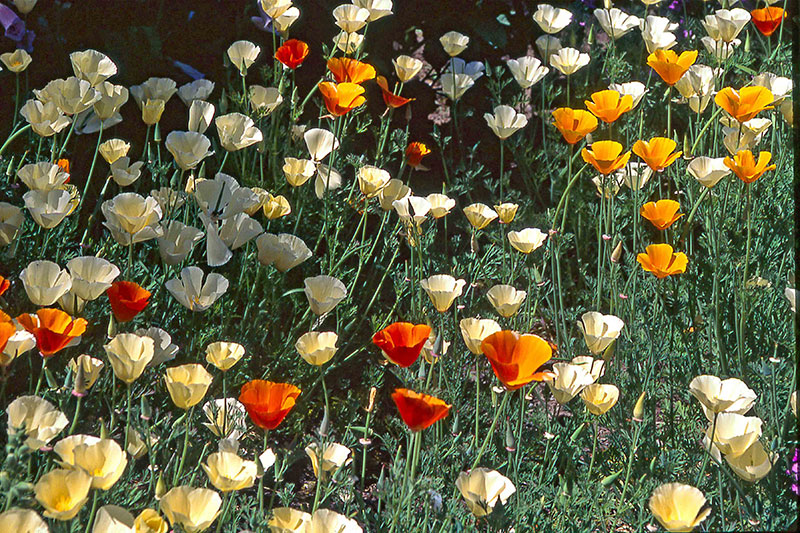
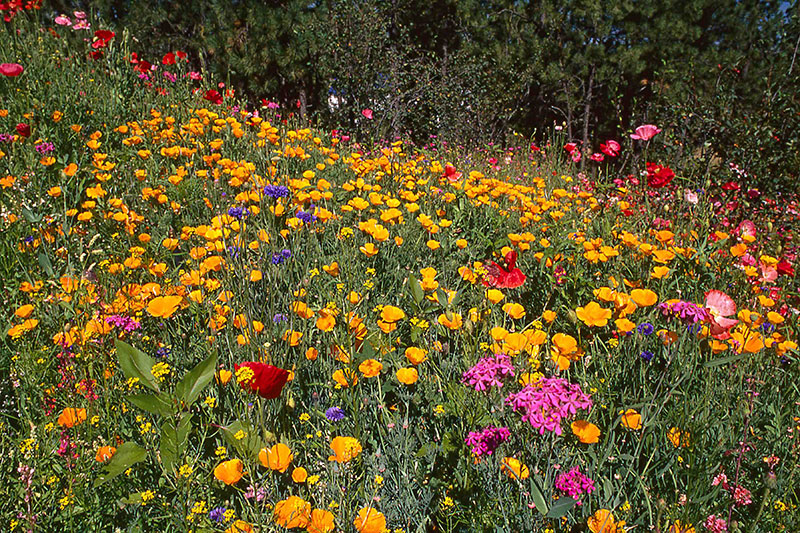
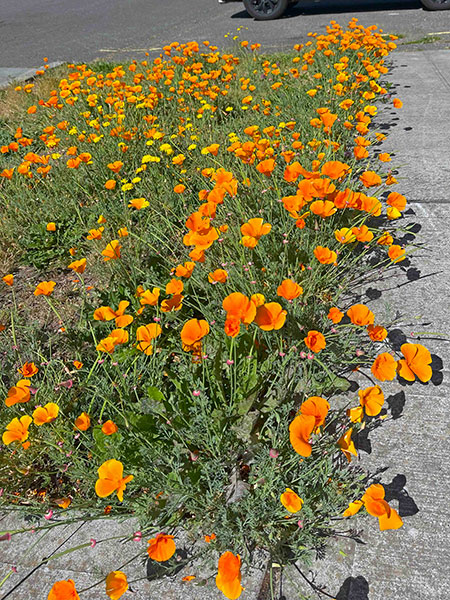
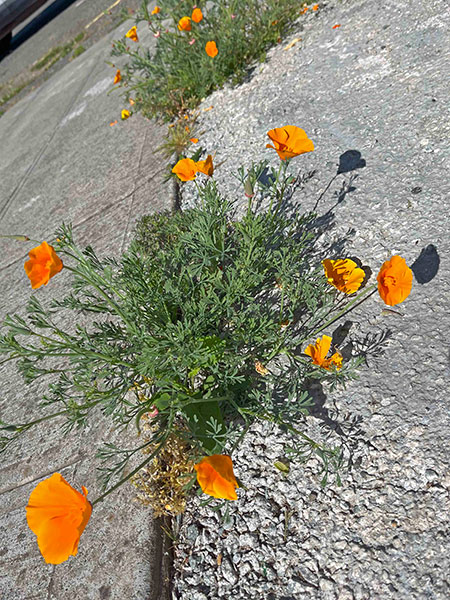
Eschscholzia californica—The sun-drenched orange of the California poppy, quintessential floral ensign and official flower of its namesake state, ranges far beyond the Golden State’s border, naturally growing as far north as the Columbia Gorge. Having escaped cultivation, it brightens dry slopes up to the San Juan Islands and southern portions of Vancouver Island. I have a particularly soft spot for it and its many color selections as I sowed its seed liberally in my very first garden in Spokane in 1989 and repeated the process in the 90s in the first years of my Garden of Exuberant Refuge in Seattle’s Seward Park neighborhood. In May and June this short lived, tap-rooted perennial not only illuminates garden beds, but also roadsides, abandoned lots and even cracks in desolate sidewalks all over town. What’s not to love?
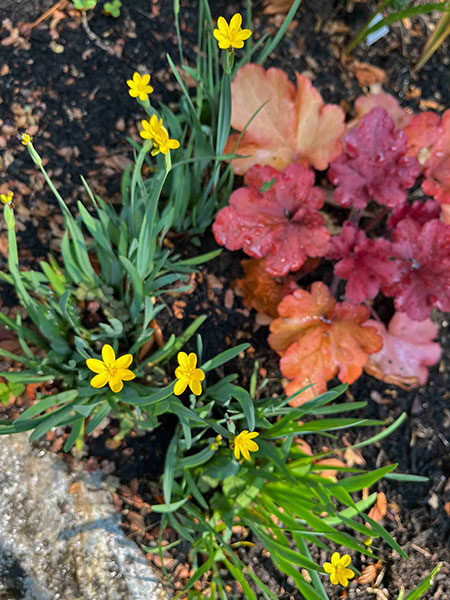
Sisyrinchium californicum—Like its equally humble but hardy poppy compatriot, golden-eyed-grass ranges naturally as far north as British Columbia despite its species name. Sporting diminutive six-pointed stars atop 10-inch blades, this demure member of the iris family, much more sedate than the flamboyant poppy, looks best with regular summer water. Individual plants come and go, but this Sisyrinchium politely self-sows and will persist for decades, popping up here and there (when the spirit moves it) to lift the spirits of the weary gardener.
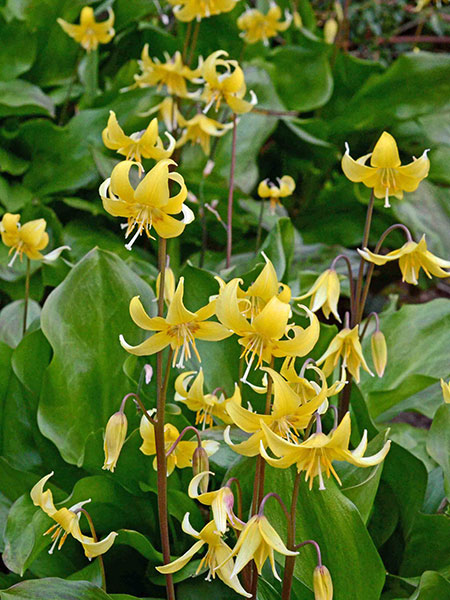
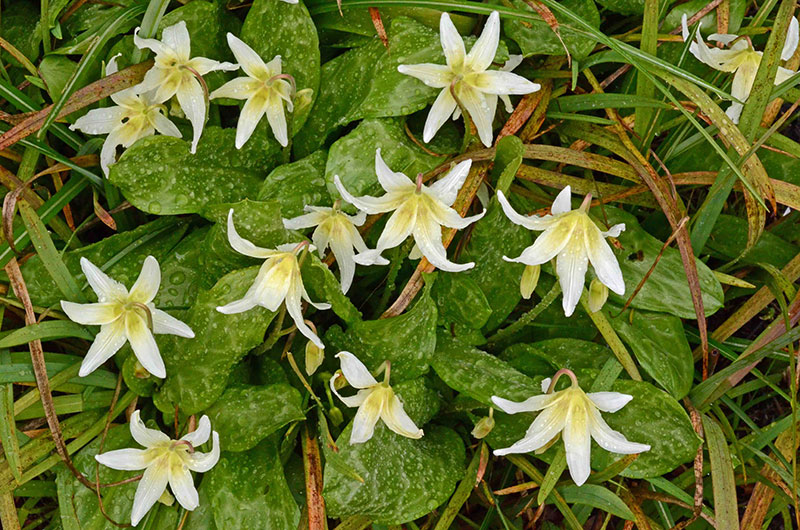
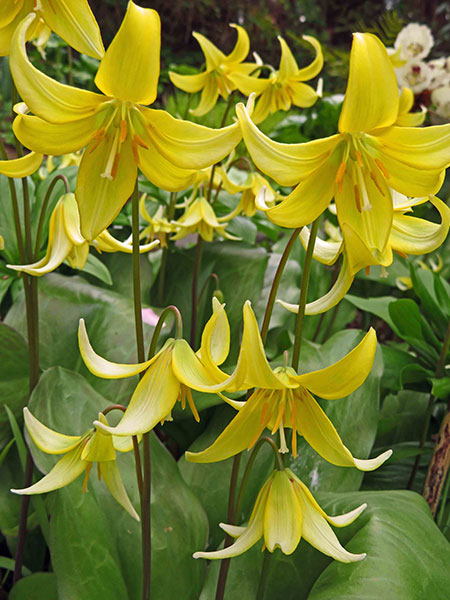
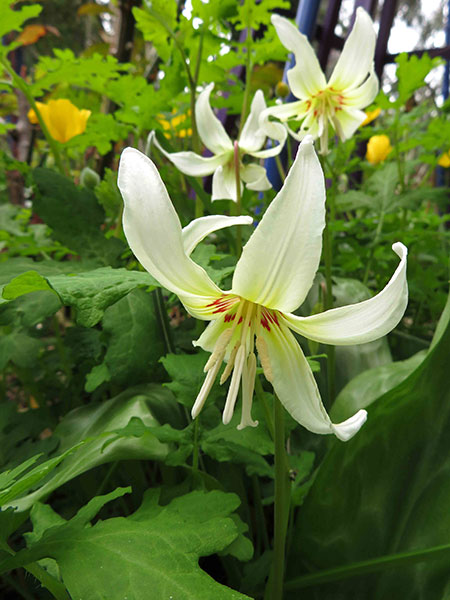
Erythronium—Although several species of Erythronium (common names include avalanche lily, fawn lily, trout lily and dog-tooth violet) grace alpine areas of Washington and Oregon, the two most garden worthy in my estimation are the vigorous, bright yellow E. ‘Pagoda’ (a hybrid of two California species, E. tuolumnense and E. californicum) and the aptly named E. ‘White Beauty’, a selection either of E. californicum or of E. revolutum. The elegant, nodding blossoms boast six reflexed petals held atop attractively mottled, wavy, tongue-shaped leaves. Spring ephemerals, their desiccated flowers and foliage disappear by late May. To view an 11-second video of ‘Pagoda’ dancing in the April breeze in my garden, click here.
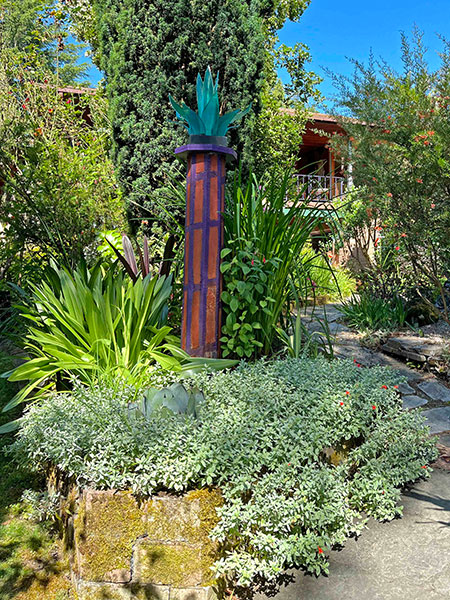
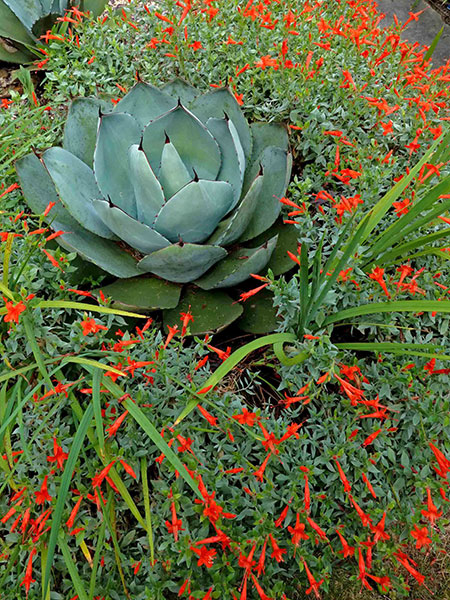
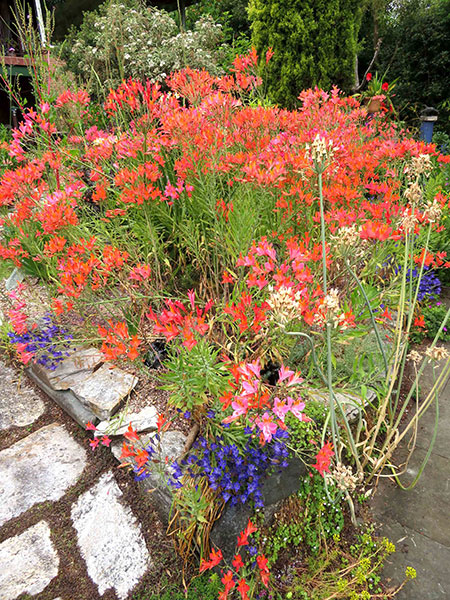
Epilobium septentrionale ‘Select Mattole’—The so-called California fuchsia consists of two species and many named cultivars formerly placed in the now obsolete genus Zauschneria, even though they are usually still marketed as such. This drought-tolerant, mat-forming, long-lived perennial does double duty, displaying a velvety soft blanket of silvery foliage from late spring onward, topped by eye-popping orange 2-inch-tubular flowers (much beloved of hummingbirds) from late summer through autumn. The woody base is best cut back hard in late winter.
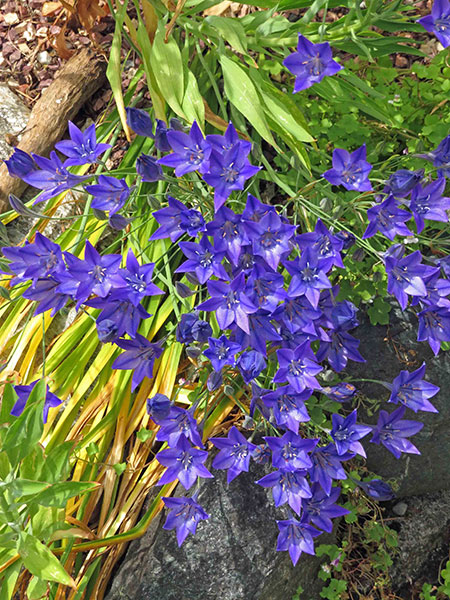
Triteleia laxa—Usually marketed as Brodiaea laxa, the absolutely fabulous and carefree cultivar ‘Queen Fabiola’ lives up to its regal name4. In June sprays of one-inch tubular stars open in a blueish purple crownlike array atop thin, bare, foot-tall stems. The closely related Dichelostemma ida-maia, commonly called firecracker flower, is quite the conversation piece, but is not as reliably perennial, their populations (in my experience) dwindling away within a couple of years after initial planting. The culprit is their intolerance of summer water, although if grown in an unirrigated plot they should thrive and multiply. On the other hand, ‘Queen Fabiola’ accepts irrigation with grace and fortitude. Click here to see a two-minute video overview of ‘Queen Fabiola’ that includes a trio of hummingbirds jousting over a nearby patch of Dichelostemma firecracker flowers in my garden.
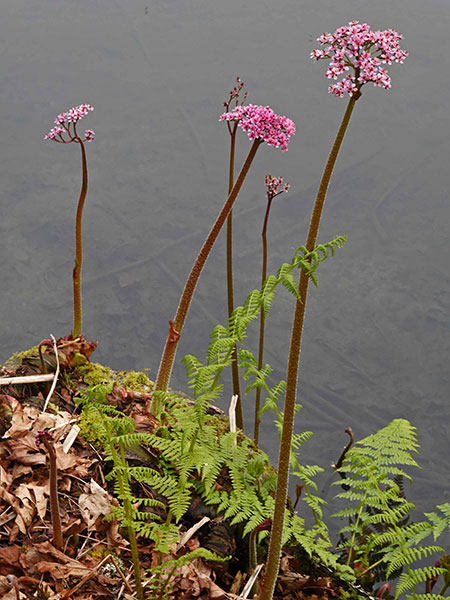
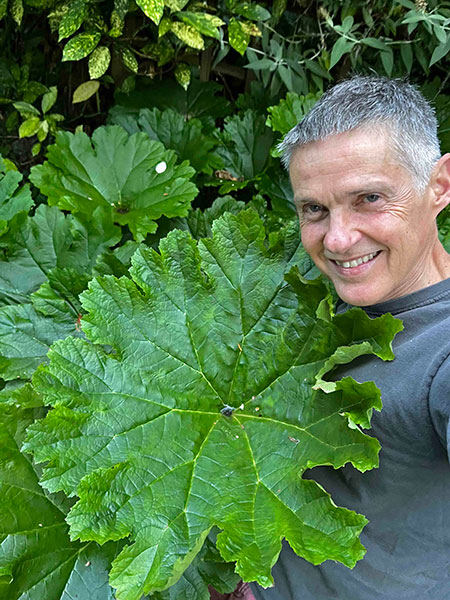
Darmera peltata—If you’ve got a moist, partially shaded corner in your garden, this bold perennial native of bogs in the Siskiyou Range that straddles the California-Oregon border will lend it a tropical air with glossy, shield-shaped leaves atop 5-foot stalks. Commonly called umbrella plant or Indian rhubarb, this member of the saxifrage family goes through three distinct annual phases. In winter it’s reduced to an oddly attractive, ground-hugging robust rhizome. In early spring, spheres of pink flowers arise atop bare, 3-to-6-foot stems before the peltate leaves emerge. For a short video introduction to Darmera as it grows in my garden, click here.
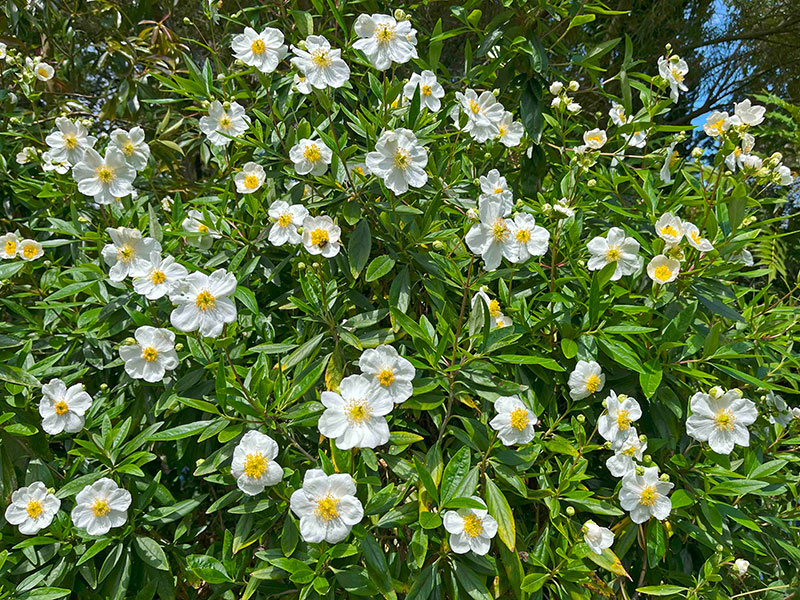
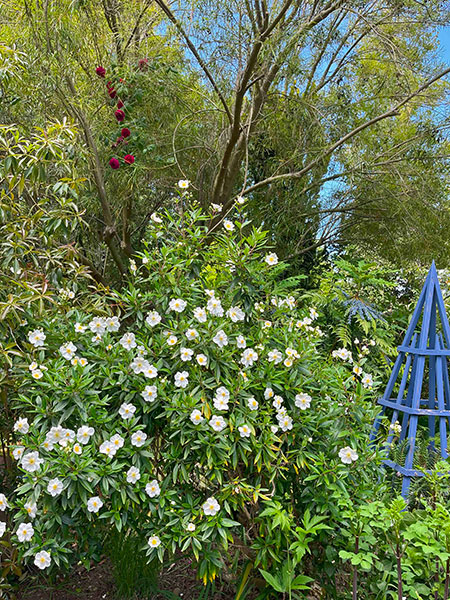
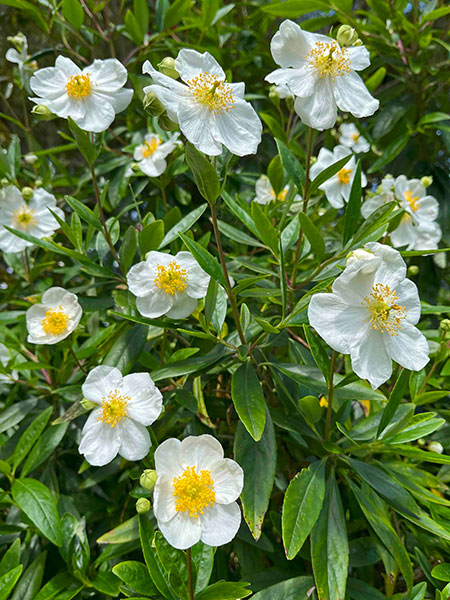
Carpenteria californica—This fetching evergreen shrub (sometimes called bush anemone) is in the hydrangea family, but its golden-stamened white blossoms call to mind stewartias or single camellias. I grow the cultivar ‘Elizabeth’ (named for venerated California botanist Elizabeth McClintock): Its flowers, borne from May into early June, are a bit smaller than the straight species, but there are many more of them. To keep the shrub compact and its blossoms at eye level and below, I find it best to coppice Carpenteria every couple of years just after flowering.
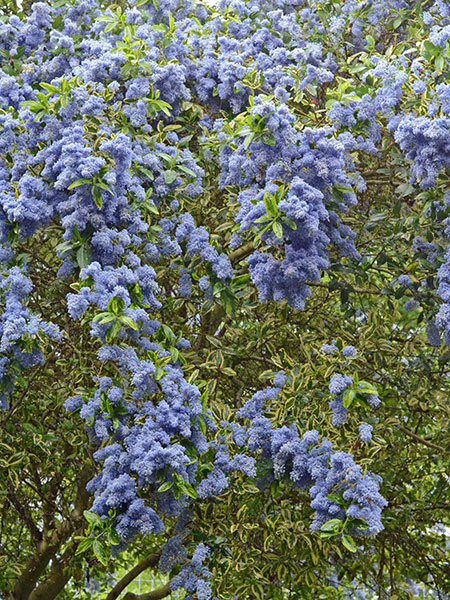
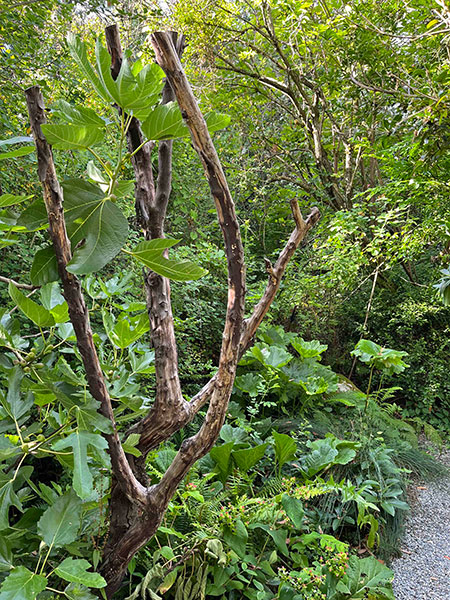
Ceanothus thyrsiflorus ‘El Dorado’—While the genus Ceanothus comprises more than 50 species hailing from across North America, the showiest are the sumptuously scented, blue-flowering California natives, often called California lilac. Over the last third of a century, I’ve grown at least 10 species and cultivars, but my favorite is ‘El Dorado’, each lustrous leaf edged in gold. It quickly grows into a muscularly branched small tree. Most sources claim it tops out at around 8 feet, but my three specimens easily exceeded 20 feet before two of them succumbed to old age. They are short lived at best; if you get more than 10 years out of one, you’re lucky. Want a silver lining? They leave behind sturdy, long-lasting skeletons that add a dashing silhouette to the landscape.
Unlike the entries above, which I’ve personally nurtured for decades, the trio that follows I have not successfully grown, which means either I’m afraid of them or else I’ve inadvertently killed a few. At present I’m content enjoying them in the gardens of friends and neighbors.
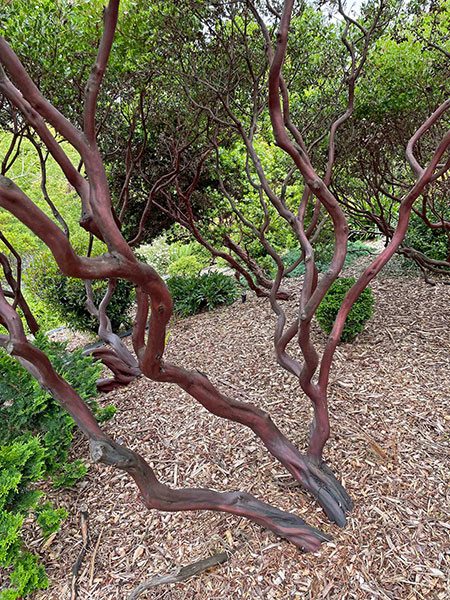
Arctostaphylos ‘Howard McMinn’—Among the most emblematic and attractive denizens of the chaparral biome of western North America, a large majority of manzanitas are California natives. My friend and NHS colleague Barbara Lycett’s garden in Seattle’s Blue Ridge neighborhood overlooking Puget Sound boasts the most magnificent grove (now 20 years old) of these sinuous and smooth, mahogany barked shrubs I have seen in these parts. Her favorite is ‘Howard McMinn’, a complex hybrid of somewhat mysterious origin, once thought to be a selection of the Sonoma County native A. densiflora. Unlike many manzanitas, handsome ‘Howard’ is not only dependable and adaptable, thriving in a wide variety of sun exposures and soil types, but is also tolerant of summer watering.
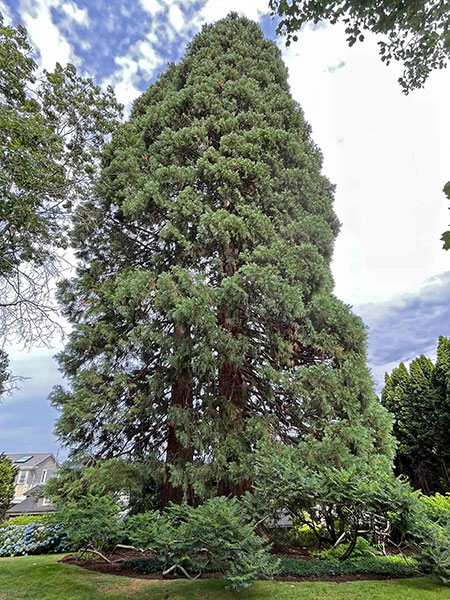
Now for the big kids on the block: the closely-related majestic behemoths Sequoiadendron giganteum or giant sequoia, and Sequoia sempervirens, the California redwood. Superlatives abound with this dynamic duo. The former has been assessed as the largest thing (in terms of total mass) ever to live on Planet Earth, while the latter is the world’s tallest tree species. Both have a lifespan that measures more than 1000 years, but when “young” (as in up to around 100 years of age) they make gorgeous statements in parks and larger home gardens. Giant sequoia seems the more optimal of the two for gardens, as its dense foliage is bushier and neater than that of the redwood, and it’s also better adapted to cold winters. If you’d like to read commentary on their suitability for Western Washington, click here for redwood and here for giant sequoia.
As the calendar edges away from the solstice towards the equinox and fall planting season, consider adding a California native or two to your wish list. The climate seems right, doesn’t it? As I’ll be on the road for much of August, we’ll meet again in September. Cheers!
Horticulturally yours,
Daniel
- From the song “Golden Gate”, recorded by Al Jolson in 1928. Lyrics and music by Al Jolson, Dave Dreyer, Joseph Meyer and Billy Rose.
- Includes California except for the desert portions and extends northward into southwestern Oregon and southward into portions of Baja California in Mexico.
- California boasts more plant species than any other state. Washington ranks 15th.
- This beauty is called by a bewildering assortment of common names, including Ithuriel’s spear, grassnut, triplet lily, fool’s onion, pretty face, star flower, wild hyacinth and wally basket.