
With a Little Help From My Friends (Part I)
February 2023
Diversity holds the key to how we should garden in the future, because diversity lies at the heart of the healthiest plant communities.
—Arit Anderson 1
Groundhog Day has come and gone. We can now count 10 hours between sunrise and sunset, a joyful tally that grows by three minutes a day. Spring is still weeks away, but the mid-February garden affords delights such as Hamamelis and Edgeworthia in full, frost-be-damned floral splendor. Already headstrong hortheads are chomping at the bit, impatiently hoofing the ground as the first Crocus crunches through the frosty grass and Puschkinia pokes its wee blue and ivory faces above the gravel. Eager as I am to get down in the dirt with them, I’ve learned ever so slowly that an essential gardening best practice is one of mindfulness, of looking before —and after— leaping, and most importantly, of gardening within a community.
And what better group is there to commune with in late winter than my congenial colleagues on the NHS board of directors? I’ve asked eight of them to reflect on last year’s triumphs and losses, and maybe share a plan or goal they’ve proposed for themselves for 2023. We’ll hear from four today (their bios are here), with the remainder to shine for us in the Feb. 23 segment.
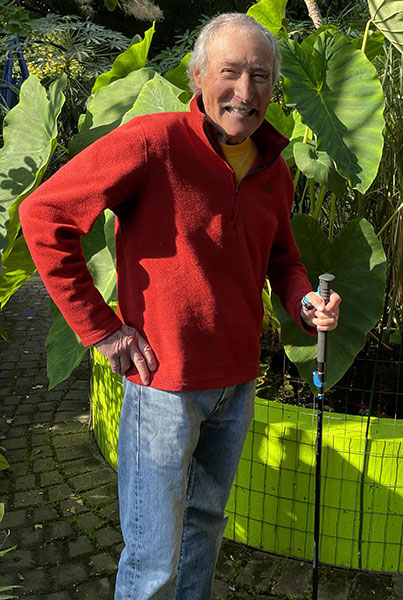
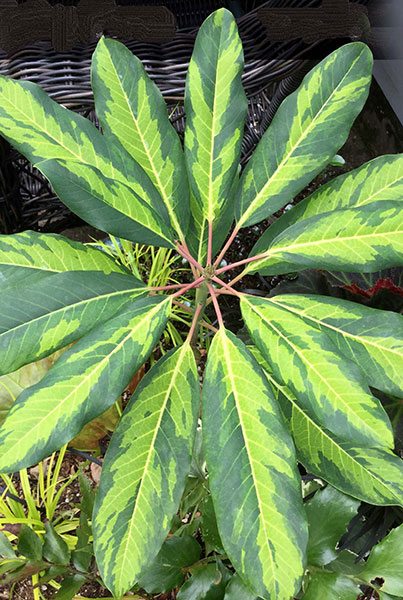
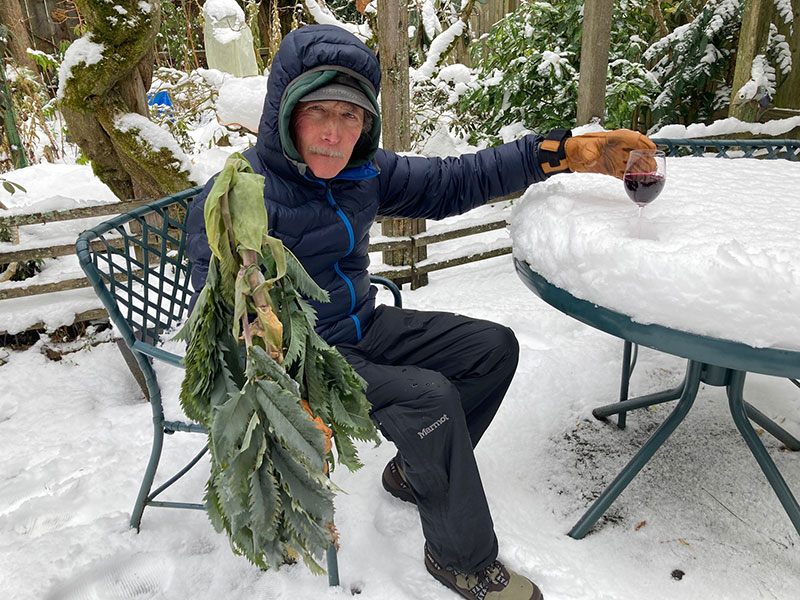
1. Ciscoe Morris (aka Maestro “Oh, La La!”)— A couple of years ago I scored the spectacularly beautiful and extremely rare Daphniphyllum macropodum ‘Variegatum’. It was love at first sight, but I had doubts it would survive in my surprisingly chilly Northeast Seattle garden. When freezing weather arrived its first winter, the foliage drooped and hung down like a bunch of limp pancakes, but it sprung back to life when the temperatures moderated. It’s now a centerpiece of my back garden. Sadly, the same cannot be said for my beloved Watsonia aletroides. The three-foot-tall, nectar-rich, watermelon-colored flowers of this South African bulb are so attractive to hummingbirds you have to wear a hard hat to work around the plant. Although drought tolerant, its Achilles’ heel is cold. Despite heavy mulching the plant failed to flower last summer and with this season’s extreme cold, I suspect I’ve seen the last of this one-season wonder. I have no big plans for my garden this year, but that doesn’t mean that there won’t be dramatic changes in 2023. That’s because I’m a total rare plant addict. My goal in life is to have one of every plant on earth and I suspect I’m about three away now.
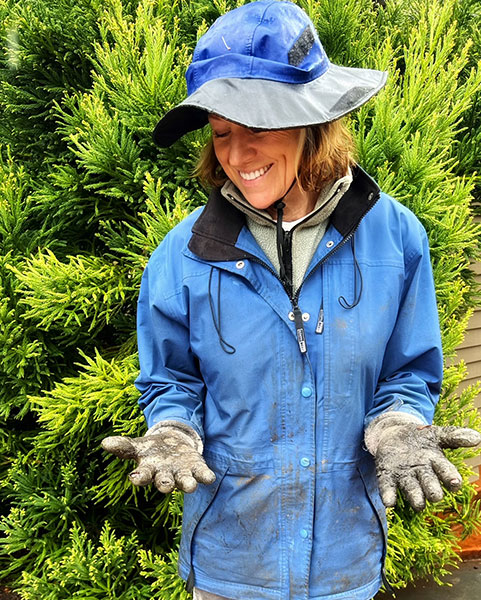

2. Camille Paulsen (aka tahomaflora)— In the success category (yay!), I had always wanted a more exciting agapanthus than the blah medium blue standards, so when I read the description for Agapanthus ‘Quink Drops’ at Heronswood, I bought one on the spot. Odd name2, stunning plant, great decision! Last winter’s deep freeze did quite a number on my newly planted Callistemon ‘Slim’, even though it was in a protected spot. The vivid red blooms are now a distant memory. Sigh. But a nearby Grevillea expired as well, so the bottlebrush had excellent company on its way to plant heaven. As to plans for 2023, my “Island of Misfit Plants” has morphed into a veritable archipelago that can no longer be hidden in the shrubbery when people come to visit. I aim to finally get these strays in the ground, even if said ground belongs to one of my neighbors. Another goal is to add several raised beds near my greenhouse. Of course, I’ll ask my husband to do all the work to build them. I love my idea of teamwork.
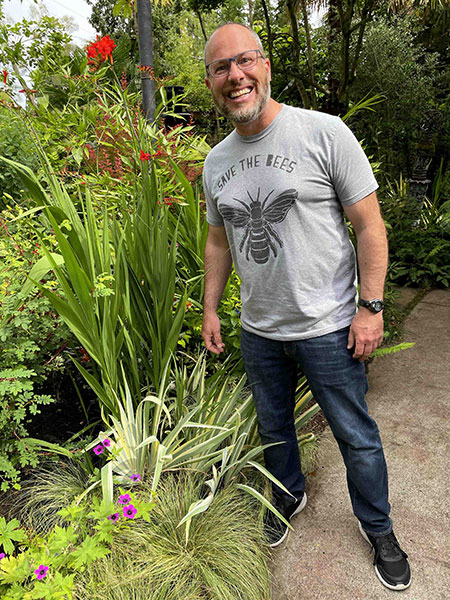

3. Bryon Jones (Horticulturalist at Tacoma’s Point Defiance Zoo & Aquarium)— Our many Cycas panzhihuaensis continue to tease us when they rebound each summer in a flush of luxurious growth only to fade out again come winter. But like any worthwhile relationship, our love for them remains unconditional…for now. Glossy leaved Magnolia grandiflora ‘Bracken’s Brown Beauty’ abounds around the zoo’s Red Wolf Woods exhibit. However, their brittleness and tendency for limb damage during snow or ice storms requires a tenacious mindset of reshaping and guiding their growth. This winter killed our many seedlings of Echium pininana and E. wildpretii, but such damage is expected to some extent. The key to a beautiful, enduring landscape is to balance between trying risky plants that may not look their best following a tough winter with plenty of steadfast, reliable ones. My main resolution for 2023 is to continue transitioning away from thirsty plants to landscapes loaded with drought-tolerant perennials, shrubs, and trees. Also, I’d sure like to build a huge crevice garden, so stay tuned!


4. Cynthia Welte (writer and public garden administrator)— The hardy terrestrial orchids in our home garden (on Seattle’s Beacon Hill) had a really strong year. Dactylorhiza fuchsii, the Eurasian spotted orchid, sports such intricate detail, and it grows well alongside the East Asian native orchid Bletilla striata. In contrast, 2022 was a tough year for our Italian prune tree (Prunus domestica subsp. domestica). We only got about 10 fruits from a tree that regularly has us giving extras to neighbors. Crossing fingers for the 2023 crop! As to 2023, I have some hard choices to make: My dwarf fir (Abies balsamea ‘Nana’) and a beloved Rhododendron williamsianum are both fading fast in our front garden and need to be removed. It’s sad, but it makes room for new friends. I’ve just started brainstorming, so no firm plans yet, though I’d like another conifer. I’ll just have to go to a bunch of plant sales this spring… Aw, darn!
* When we return Feb. 23, horticultural heavyweights Lorene Edwards Forkner, Ray Larson, Barbara Lycett and Delaney Brummet will weigh in with their takes on 2022 and 2023.
Horticulturally yours,
Daniel
- From “Harnessing the Power of Plants,” a podcast in Arit Anderson’s Growing Greener series on the BBC’s Gardeners’ World Magazine website. Join Arit’s talk for NHS on Feb. 16 at CUH.
- Dan Hinkley notes: “Agapanthus ‘Quink Drops’. Selected by Graham Gough of Marchant Plants in the UK and named for the deep violet blue of a popular cough drop, this is one of the finest that we grow at Windcliff.”