

Vienna's Vital Verdure
January 2024
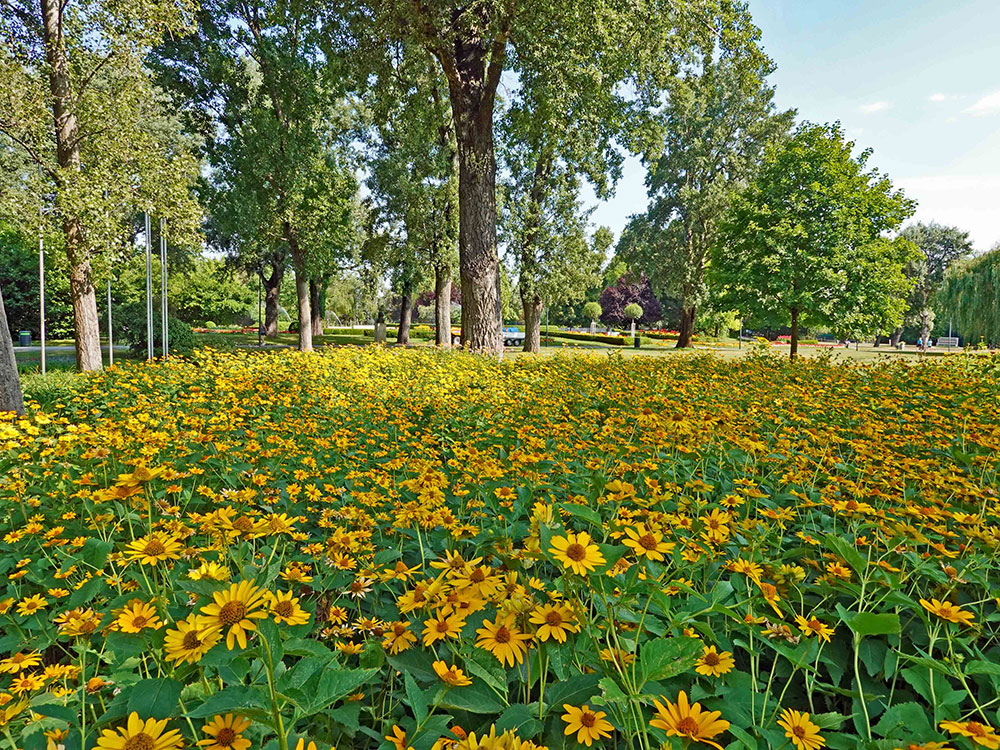
O Trees of Life, speak, when do things turn wintry?
—Rainer Maria Rilke1
If the current frigid forecast for the Pacific Northwest pans out, I should be crafting eulogies for a host of my garden’s tender botanical treasures. But rather than fret in impotence while facing January’s jangles, I find it more rewarding to conjure the jollity of July while recalling a trip through Central Europe last summer that concluded in what’s often acclaimed as the world’s most livable city.
Vienna sits just north of the 48th parallel, close to Seattle’s latitude and nearly identical to that of Port Angeles on the Olympic Peninsula. Despite this situational similarity, there are key differences in climate: Vienna’s is decidedly more continental, with warmer, wetter summers and cooler, drier winters than our Salish Sea abode. There is another key commonality, one central to today’s topic: Seattle’s “Emerald City” nickname could just as easily be applied to Vienna, in that half its municipal area is green space. This adds up to about 200 square kilometers or 77 square miles.
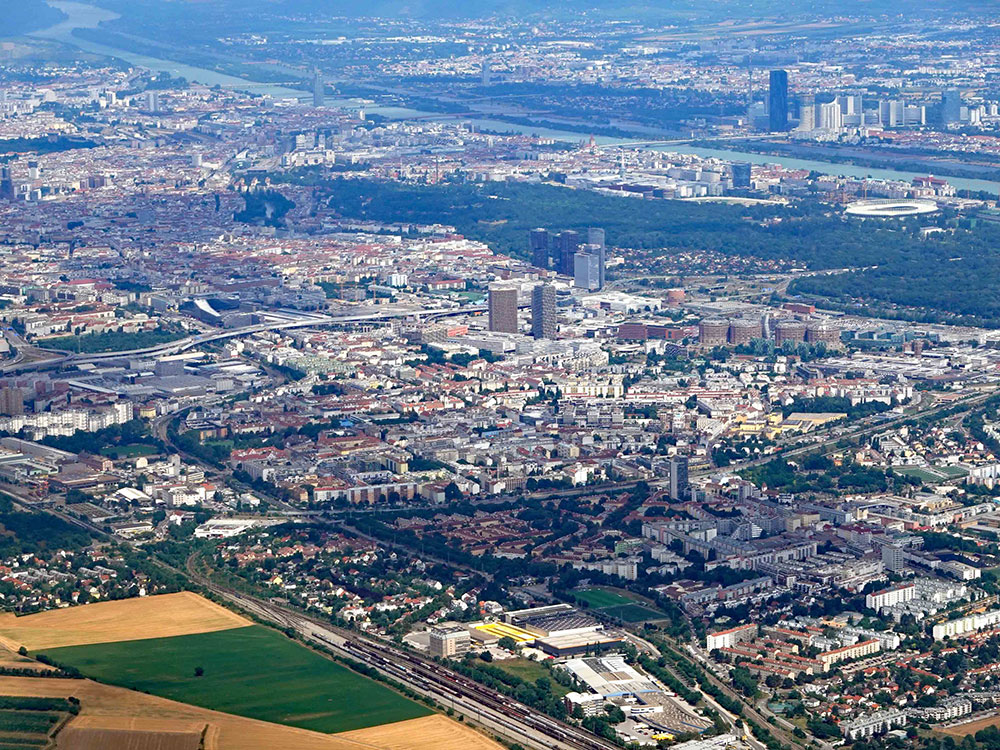
Arcing around and beyond the city’s western portions, the Vienna Woods (Wienerwald) are the easternmost extension of the Alps’ foothills. Designated a UNESCO Biosphere Reserve in 2005, the legally protected “green lungs” of the capital region encompass nearly 400 square miles of beech, oak and pine forests, along with pastures, orchards and vineyards that are home to 2000 species of plants and 150 of birds. About 10% of this space (25,000 acres) lies inside the city limits, with the bulk in the surrounding federal state of Lower Austria.

Golden Calf: Technology as Apocalypse
Austria’s capital has twice hosted international horticultural expos, most notably in 1964 as the city was reinventing itself in the wake of World War II’s devastation. The Vienna International Garden Show2 drew 2 million visitors from April to October of that year to a 250 acre-site that turned a serious problem area (think reeking landfill, notorious Nazi-era shooting range and squatter settlement) into one of Vienna’s largest greenspaces, on an island between the old and new channels of the Danube River and little more than a stone’s throw from the city center. Now known as the Donaupark, the park’s current footprint covers 156 acres of meadows, woods, wetlands, playfields, formal and informal floral displays and themed gardens.
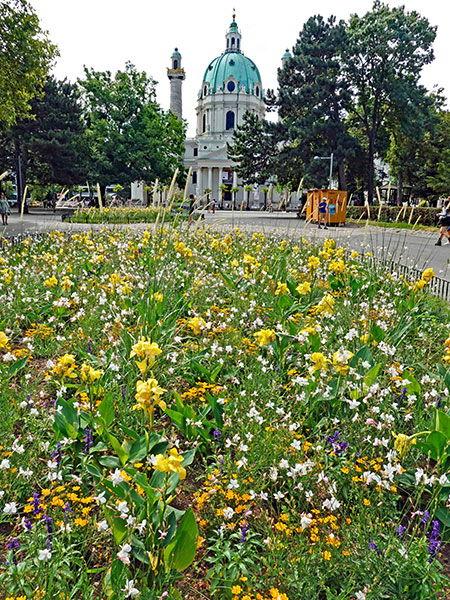
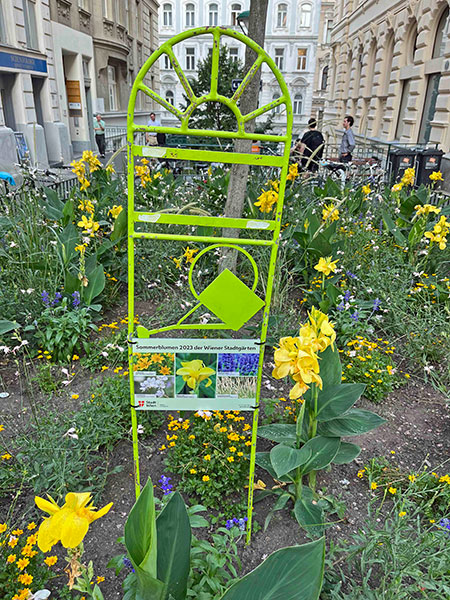
The municipality confects a planting scheme each year to offer a unified but informal vibe in public parks, from postage-stamp plots at odd-shaped street intersections to sprawling beds near the city’s grandest monuments. Last summer’s display featured a winsome quintet of gold, buff and white, accented with dabs of indigo. And here they are, the 2023 Summer Flowers of Vienna City Gardens (with the German common names in parenthesis): Bidens ferulifolia ‘Golden Empire’ (Goldmarie), Canna indica ‘Cannova Yellow’ (Blumenrohr), Gaura lindheimeri ‘Geyser White’ (Prachtkerze), Pennisetum macrourum ‘White Lancer’ (Lampenputzergras) and Salvia farinacea ‘Farina Violet’ (Mehliger Salbei).
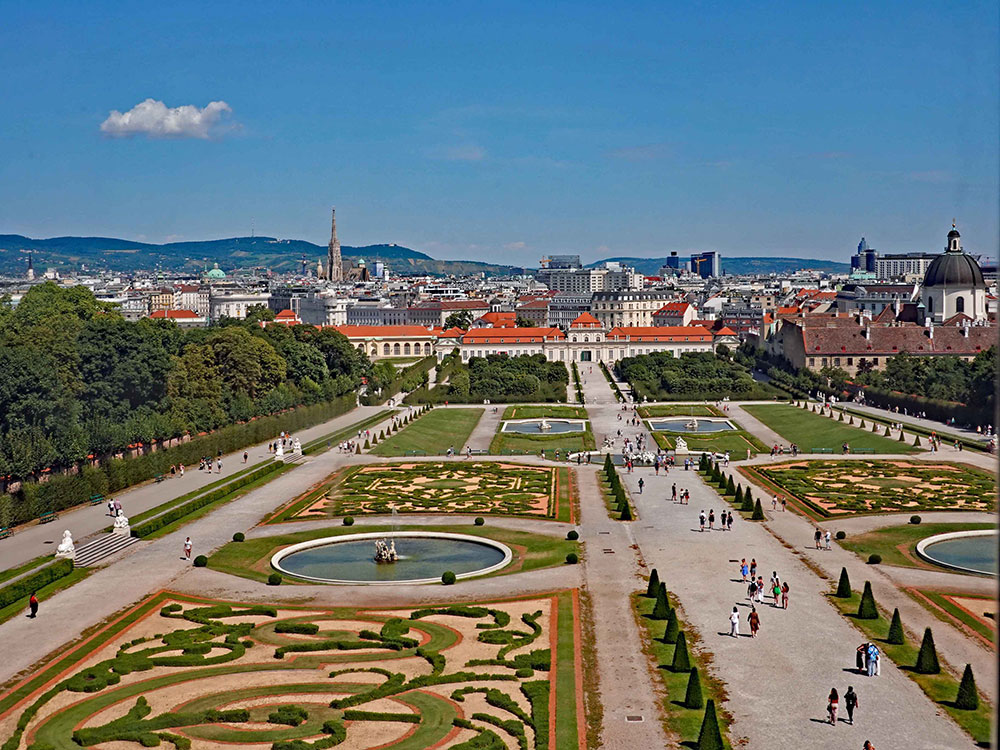
Although the vast Belvedere Gardens are usually swamped with tourists, these baroque-era grounds in the formal French style —a phantasmagoria of low, clipped hedges and bedding annuals amidst mythologically-inspired statuary, gravel paths and water features surrounding a set of sprawling palaces— offer little to the devoted plant lover. However, practically appended to the palace’s eastern edge shines something immensely more alluring to the savvy horthead: An academic garden containing the country’s most meritorious collection of flora.
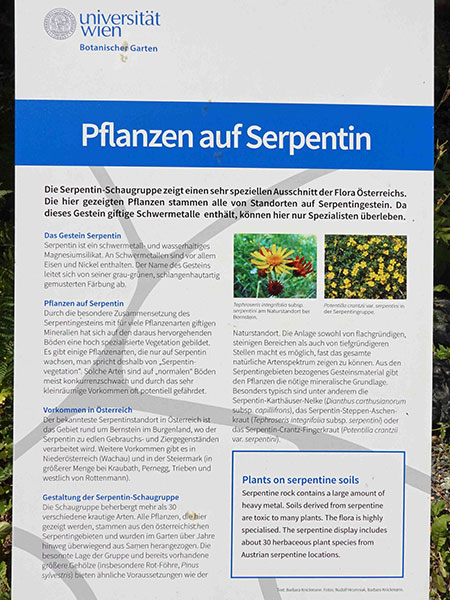
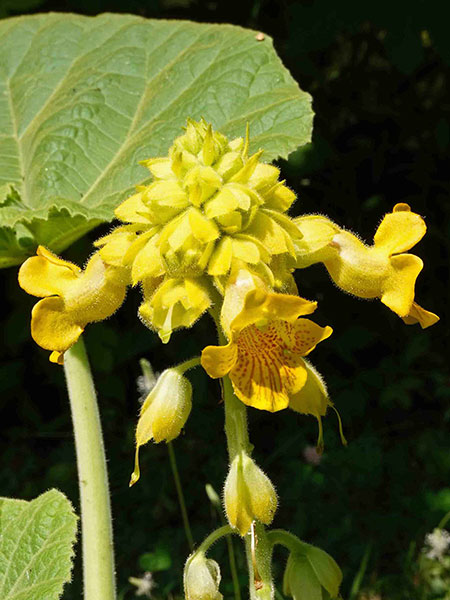
The Botanical Garden of the University of Vienna, founded in 1754 as the Latin-named Hortus Botanicus Vindobonensis, is laid out in three contiguous rectangular plots that total 20 acres, housing more than 11,500 species of plants in 54 well-organized zones. About half these areas are allotted fairly equally to conifers, broad-leaved trees and flora of Austria (with an unrelated, unexpectedly large, 140-year-old bamboo grove in one corner). Most of the remaining space is dedicated to an 18-stage Systematic Grouping that arranges flowering plant families by evolutionary hierarchy, beginning with basal angiosperms (such as the family Amborellaceae that emerged 140 million years ago) through to the enormous asterid clade that encompasses almost 1/3 of all flowering plant species, including much of what we grow in our gardens and stuff in our mouths. Now that’s food for thought!
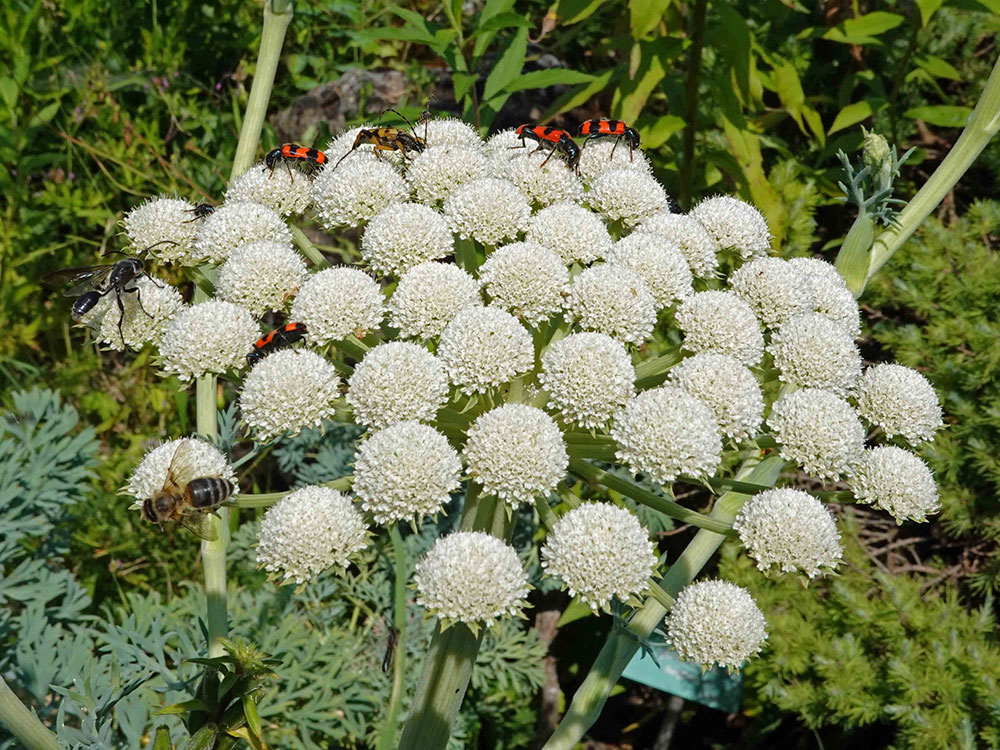
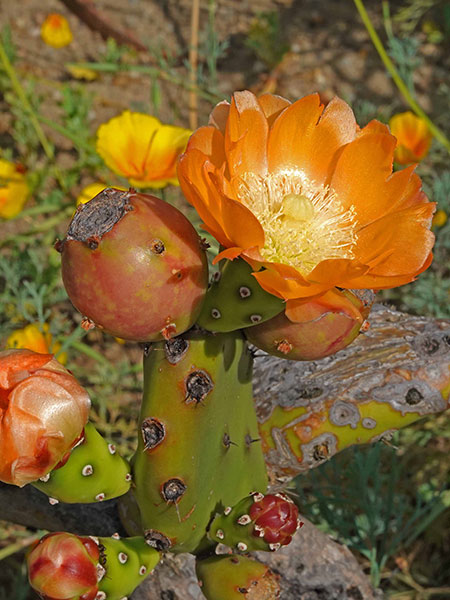
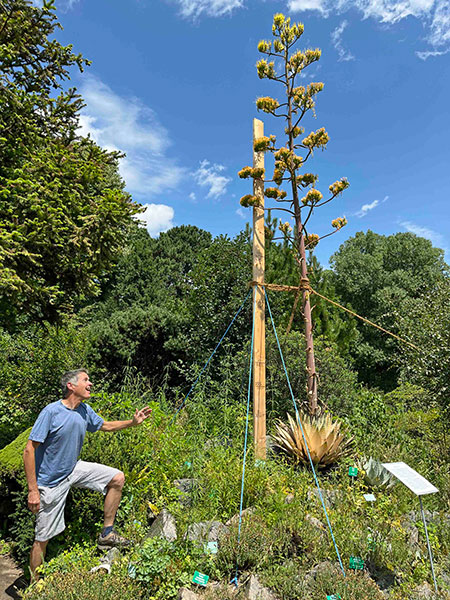
The northernmost section of the garden is devoted to an astonishingly ample collection of cacti and other xeriscape plants painstakingly bedded out in summer and stored in nearby glasshouses in winter. Adjacent to the southern end of the botanical garden (but administered separately from it) is the Alpengarten of the Austrian Federal Gardens project, Europe’s oldest alpine garden. Of particular interest during my visit last July were a towering Agave parryi in glorious full bloom; clouds of creamy and dreamy inflorescences of Seseli gummiferum (sometimes called moon carrot) practically covered in frantic swarms of delirious pollinators; and hundreds of labeled, regimented trial seedlings of Sempervivum cultivars.

Brevity dictates we omit the remaining worthy botanical magnets Vienna has to offer, most notably the Schönbrunn Gardens and its magisterial Palmenhaus, one of the world’s largest conservatories that covers a whopping 27,000 square feet. We will, however, hail one of Vienna’s most endearing human-scale constructions, the sui generis Hundertwasserhaus, a hobbit-high-rise of a residential complex home to plenty of plants (more than 200 trees and shrubs atop, within and hanging from its exterior walls) as well as people.


Starting with this episode we’ll be shifting to a monthly missive that will continue throughout the year, replacing the October through June fortnightly pattern of the last three years. See you mid-February as we revel in lengthening daylight hours!
Horticulturally yours,
Daniel
- Opening line of “The Fourth Elegy” by Austrian poet and novelist Rainer Maria Rilke (1875-1926), published in Duino Elegies, translated from the German by Alfred Corn (New York: W.W. Norton & Co., 2021).
- The next international horticultural expo is planned for 2027 in Yokohama, Japan.
