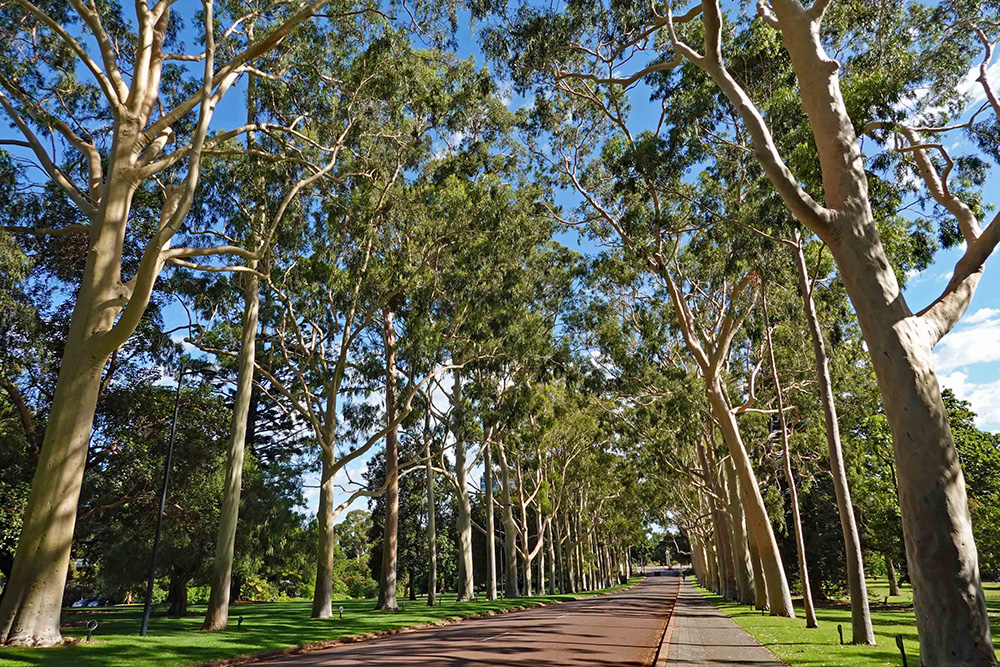

Perth's Planty Pearls: Gems of the W.A. Botanic Garden
March 2026
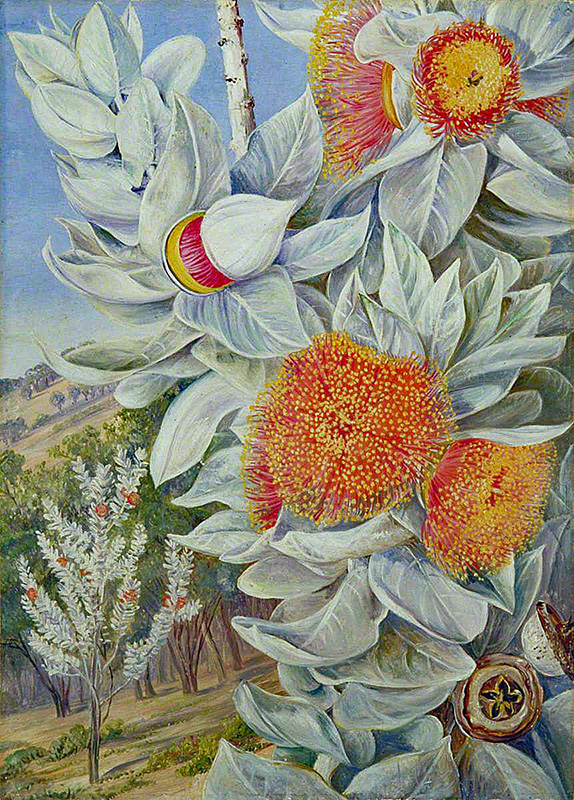
“[Marianne North’s] paintings of W.A. vegetation
are grand. I particularly admired your father’s
Euc. macrocarpa; you probably have this species
at Kew, as I sent seeds repeatedly.”
—Ferdinand Mueller, 1881 1
On my first visit to Western Australia 22 years ago I was eager to ogle new and distinctive species of acacia, banksia, grevillea, eucalyptus and other antipodal treasures after having met their east-coast cousins in Sydney, Canberra and Melbourne on previous forays Down Under. So although addled by the arduous steps required to get to Perth, on my first full day, a deliciously cool, overcast morning in late winter, I made a beeline for regal Kings Park and its spectacular array of native plants. Of all the weird and wonderful botanical jewels I encountered there, none captured my attention more than Eucalyptus macrocarpa2, a short shrub curiously cloaked with surreally silver foliage and adorned by enormous ruby-red flowers.
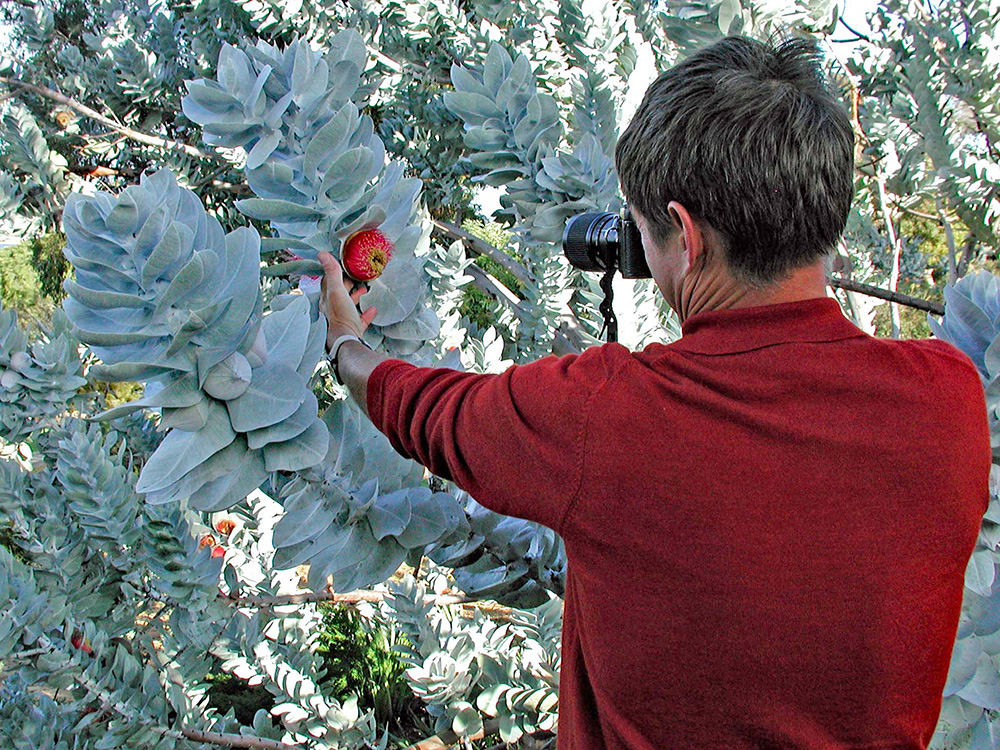
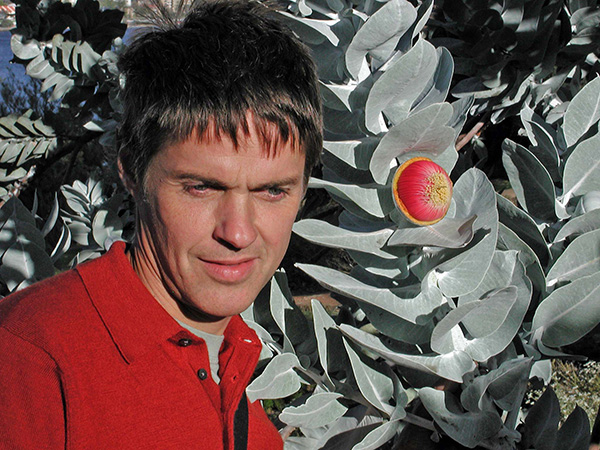
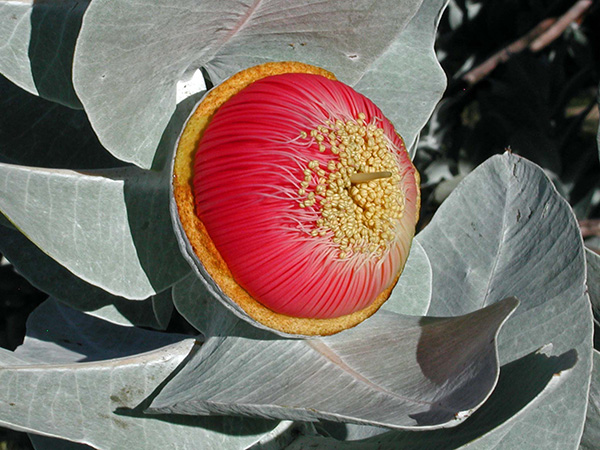
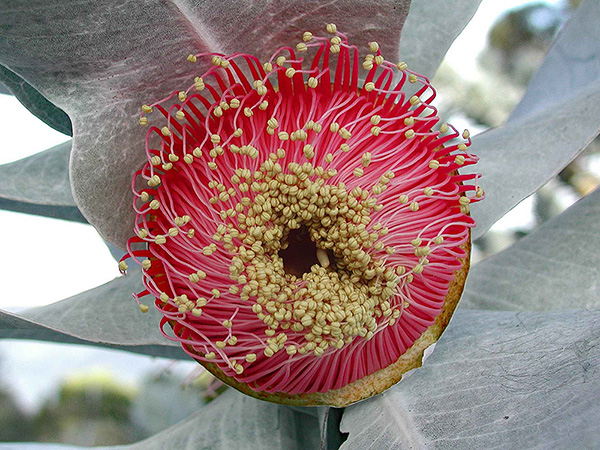
Enthralled by such unexpected flamboyance in a eucalypt, I took my sweet time studying the felty, orbicular, menthol-scented leaves before losing myself in amazement at the brilliant blossoms (up to 4 inches wide, the largest flowers in the entire, sprawling genus of 715 species), which after shucking their pointy, white-domed bud caps kick off the show looking for all the world like miniature raspberry pies until the scarlet stamens stretch out and unfurl. That’s when the golden anthers steal the scene, shimmying like sea anemones awhirl at the Folies Bergère. Even the persistent gumnuts (seed pods) are attractive.
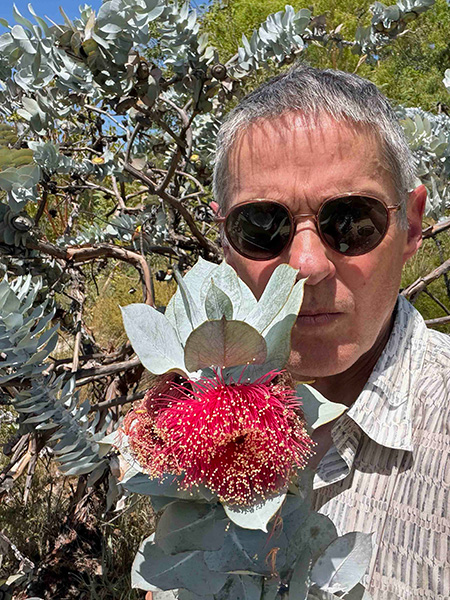
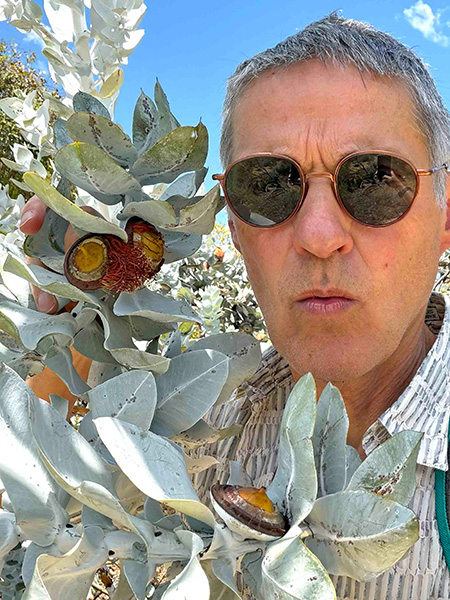
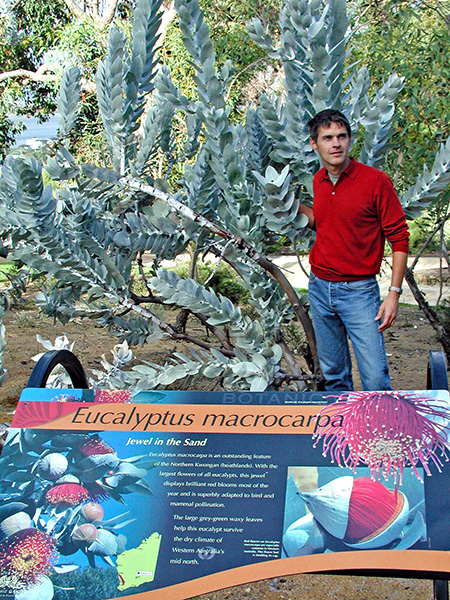
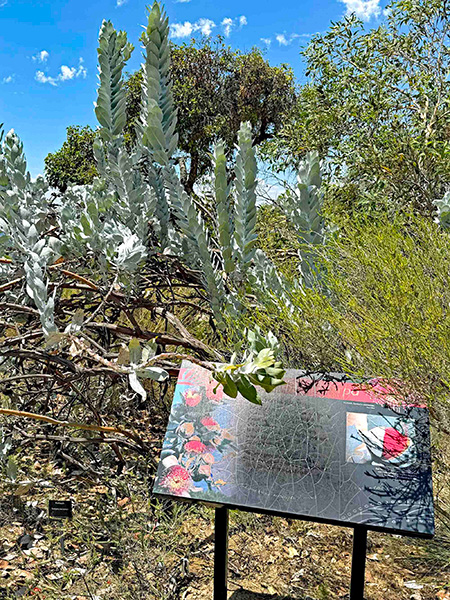
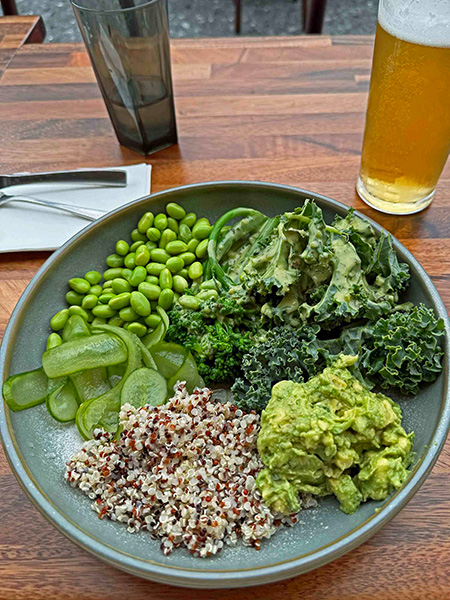
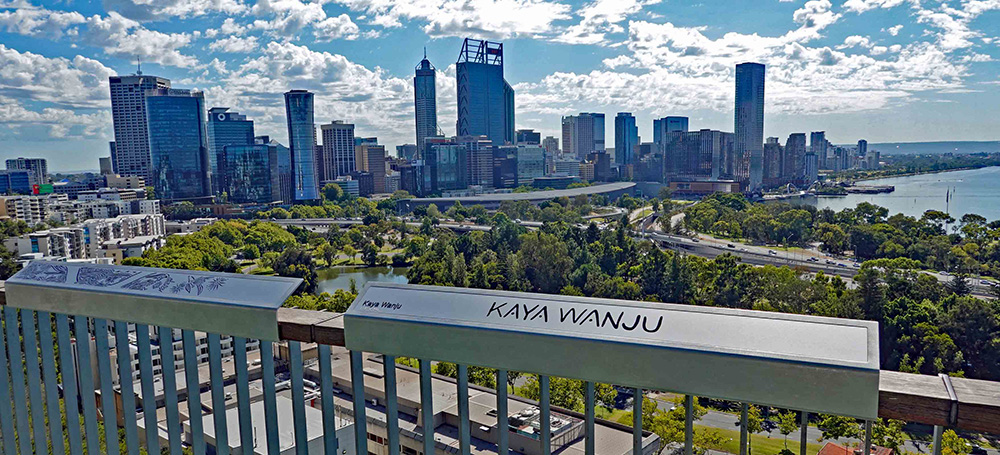
When I returned to Perth a few weeks ago, more than two decades after my first visit and at the height of a searingly hot Australian summer, I couldn’t wait to track down the tiny dancers. But two questions bedeviled me: Could I make my way to the proper spot before succumbing to heat stroke? And given the infernal temperature, would there be much to see once I found it, i.e., would it be worth the effort? I’m happy to report that both points were answered in the affirmative. Although a bit bedraggled, the squat but sprawling eucalypt (such low-growing species are called mallee in Australia) held its own throughout the incendiary summer and even sported a few fresh but slightly disheveled flowers. The accompanying informational sign, however, had succumbed to a severe case of sunburn. As I was afraid of meeting a similar fate to the plaque, I retired to the shade and enjoyed a plant-based lunch and cool drink in the Botanical Café, the garden’s leafy, open-air eatery that overlooks the Perth skyline.
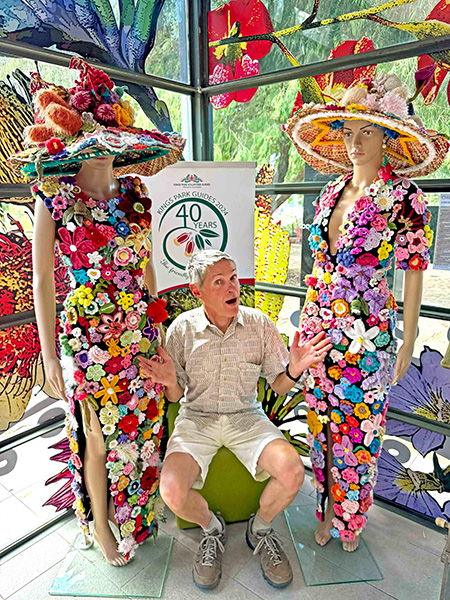
North American hortheads who make it to Western Australia’s glistening capital have earned their stripes, or green thumbs as the case may be. Of all major cities on Planet Earth, Perth is among the farthest from Seattle. Straight-line distance between the two is just under 15,000 km, or 9250 miles, and the fastest flying time between the pair (via Singapore) requires a minimum of 23 hours in the air, not counting the connection. In fact, Perth is by some measures the most isolated large city on the planet and is closer to Jakarta, Indonesia, than to the eastern Australian metropolis of Sydney.
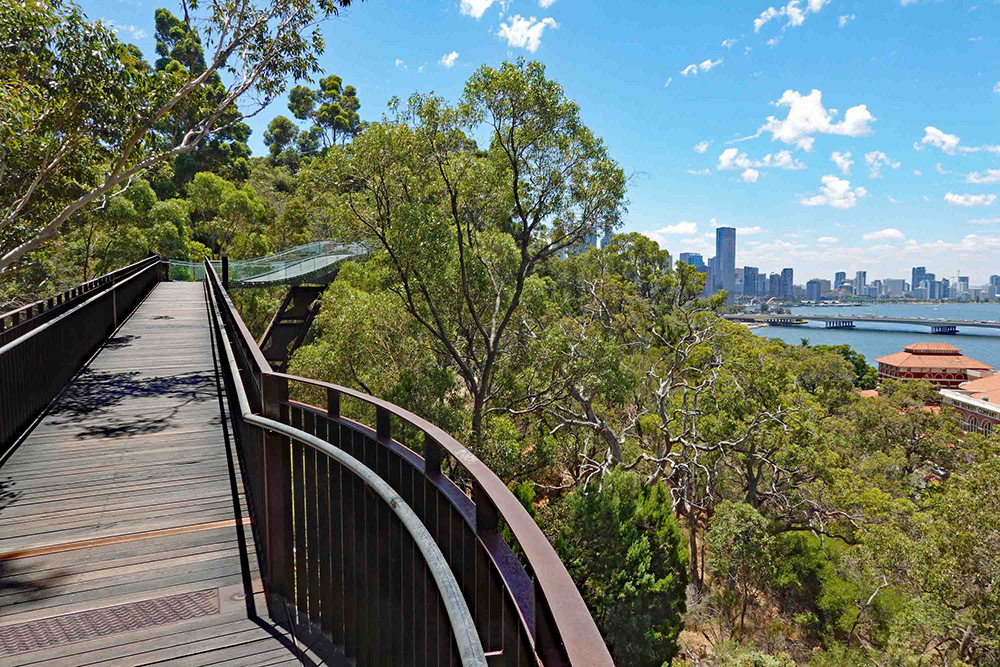
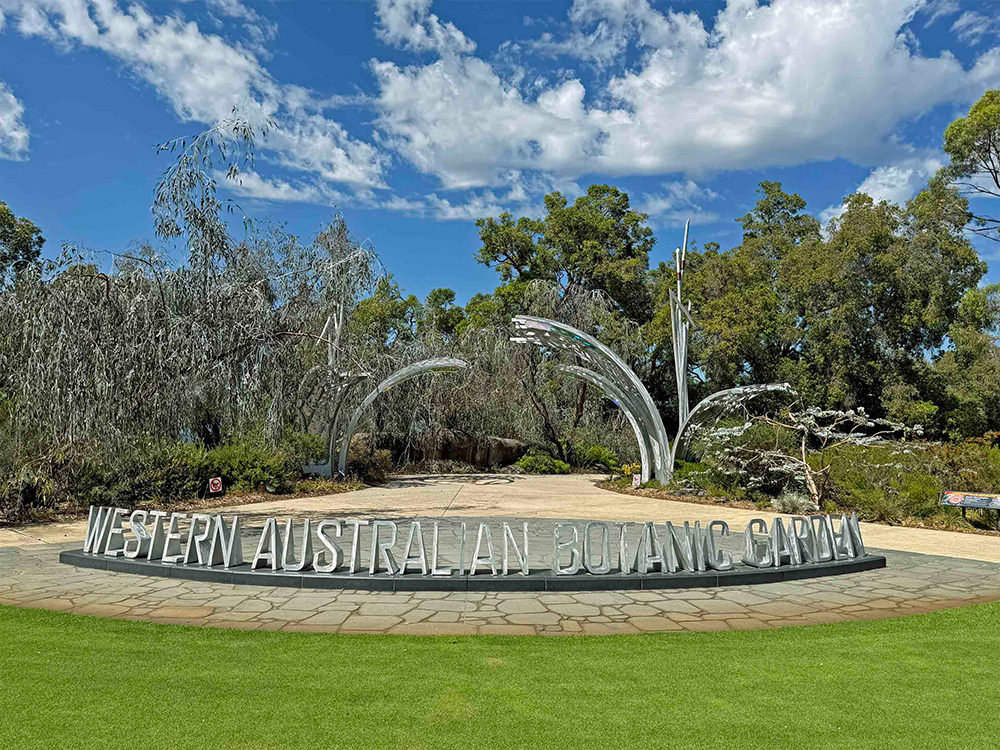
Perth (unlike Sydney and Melbourne, but similar to Seattle) has a Mediterranean climate with wet winters and dry summers. The relatively well-watered southwest corner of the sprawling state of Western Australia is an official global biodiversity hotspot, with around half of Australia’s 25,000 plant species endemic to this small sliver of the continent. More than 3000 of these (including the Eucalyptus macrocarpa described here) have a home in the 44-acre splendor of the Western Australian Botanic Garden, perched on Mount Eliza and overlooking both the city center and a wide, graceful bend of the Swan River. The garden is nestled within the 1000-acre Kings Park—one of the world’s largest inner-city parks and an important heritage site for the aboriginal Noongar people, whose culture is consulted and evoked at many points and places in the garden.
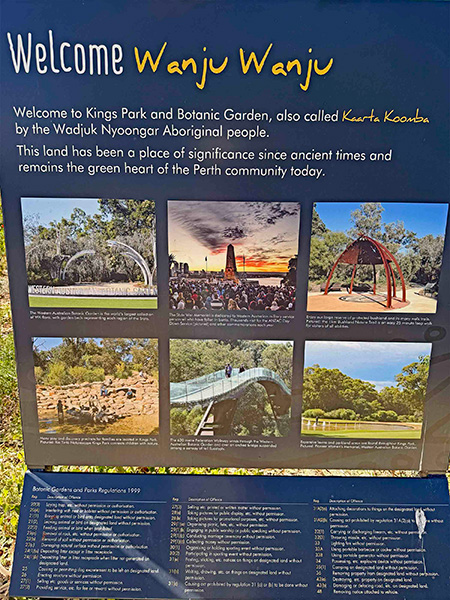

Western Australia’s native flora is at its most voluptuous from July to November during their winter and spring. Despite the scorching temperatures Perth endured on my recent late-January visit, there was an abundance of beauty in the botanic garden to write home about. I’ll sort it into three categories, as follows.
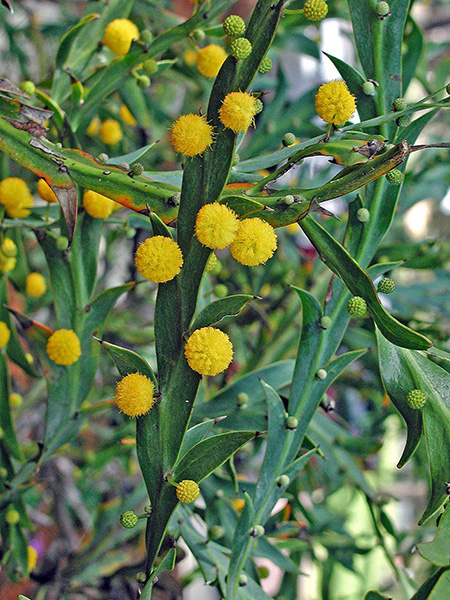
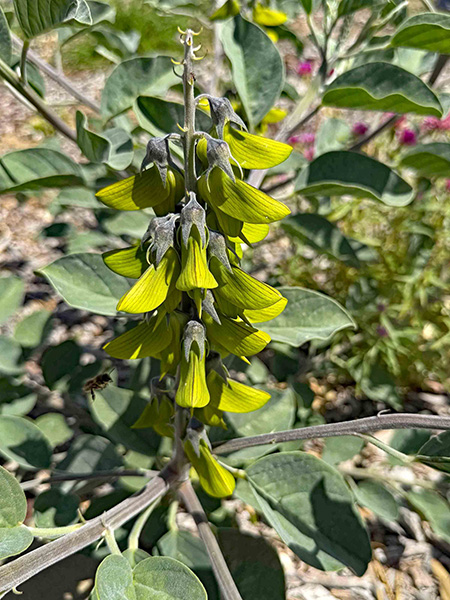
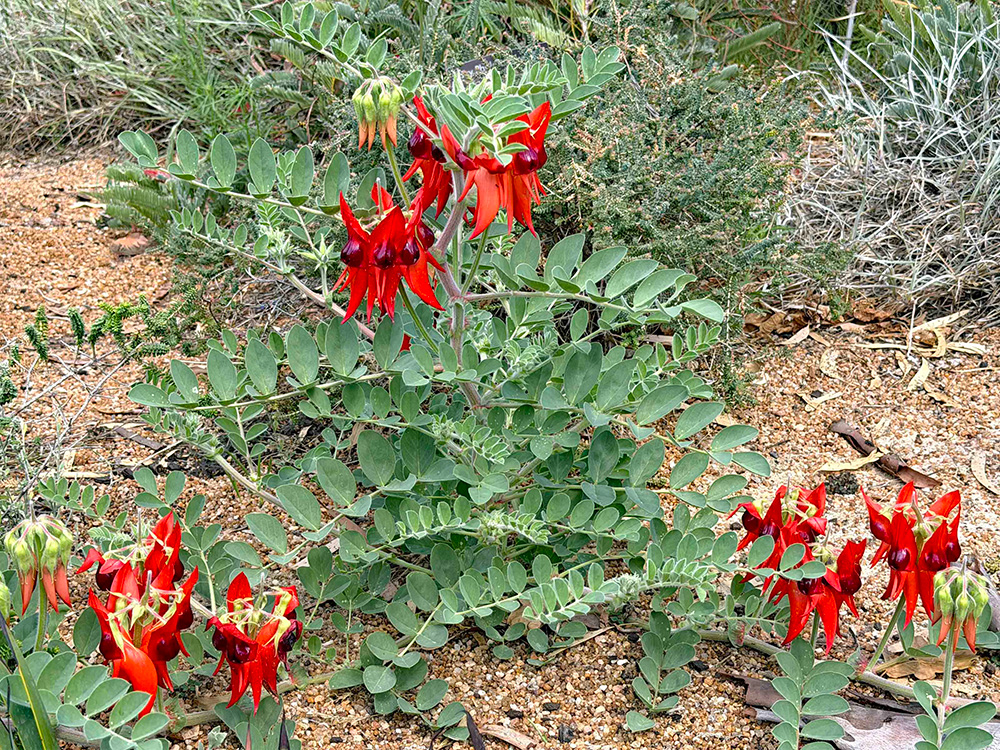
1. Pass the peas, please!—There are fistfuls of fabulous Fabaceae (pea family) plants in this spot on the globe. Pictured are the winter-blooming Acacia glaucoptera (photo taken on my 2004 trip), and a couple of perennial herbs: the heat-loving chartreuse wonder, Crotalaria cunninghamii and the swoon-inducing Swainsona formosa, commonly called Sturt’s desert pea.
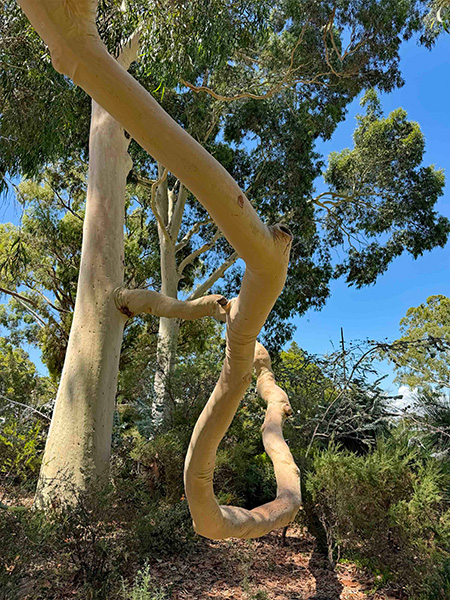
2. More marvelous myrtles—Eucalyptus may be king of the hill in the Myrtaceae (myrtle family), but there are plenty of others worthy of tribute. Pictured here are a stunning, variegated Agonis flexuosa, commonly called peppermint tree; winter-blooming Darwinia meeboldii (photo taken on my 2004 trip); the 6-foot shrub Beaufortia aestiva, sometimes called summer flame; and the large, regal shrub Verticordia grandis, or scarlet featherflower, at the tail end of its long bloom season on my recent visit.
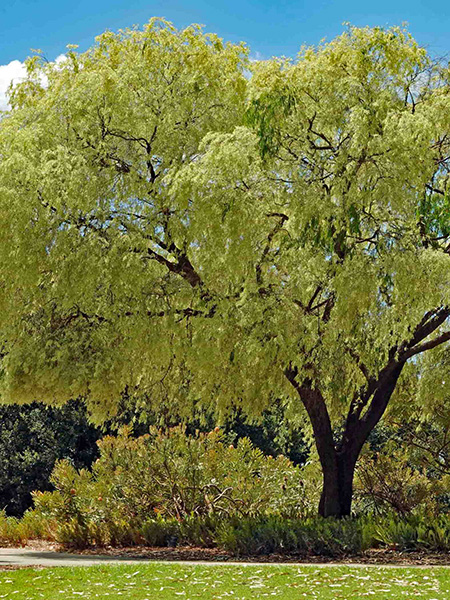
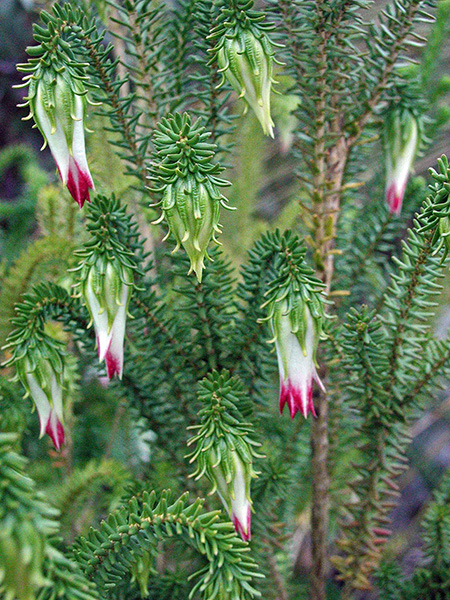
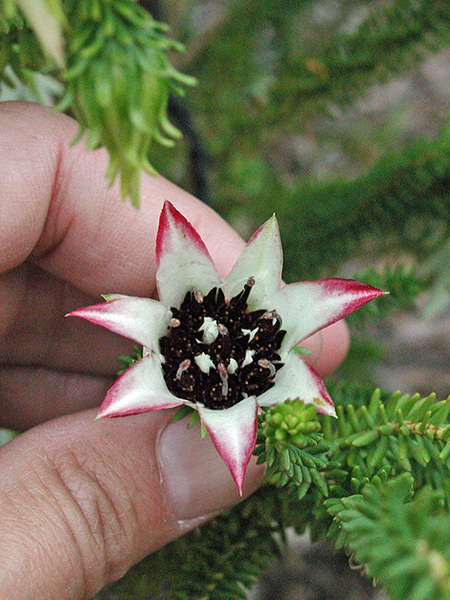
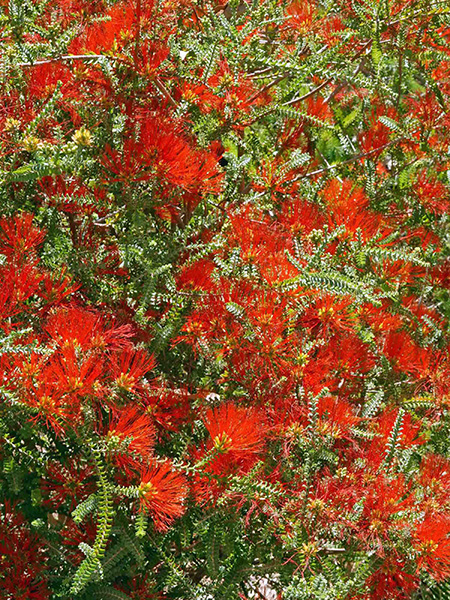
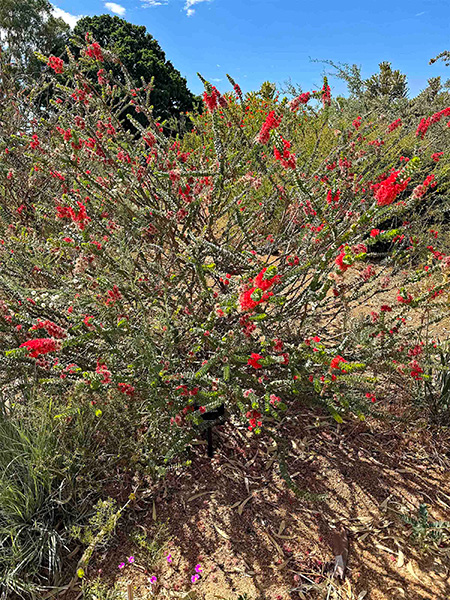
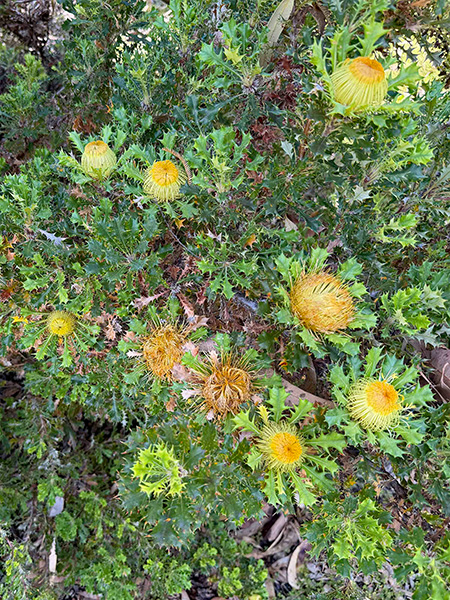
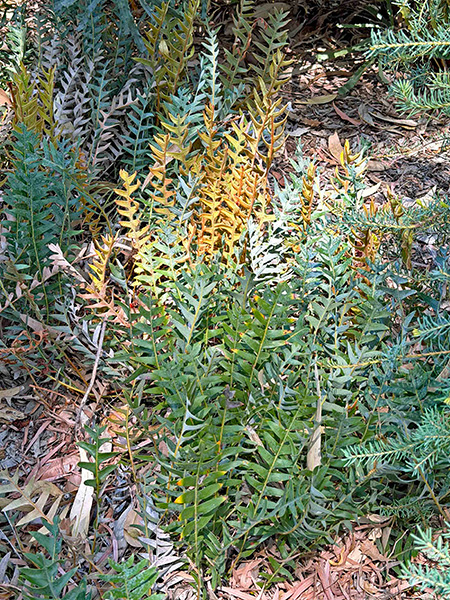
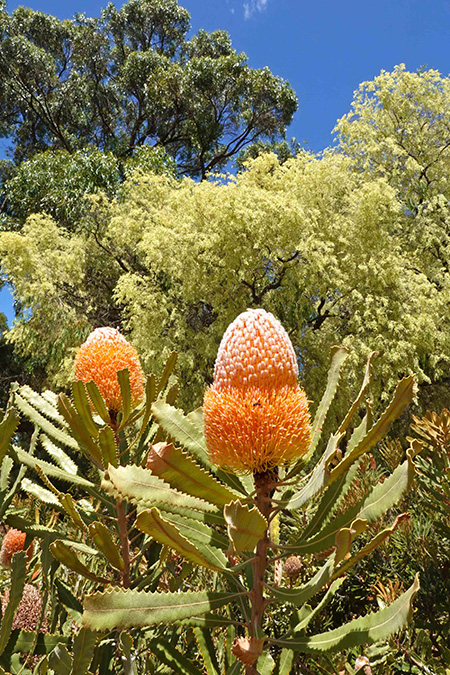
3. Bodacious & proteaceous—Australia’s most emblematic woody garden plants are surely the dynamic duo of Banksia and Grevillea in the Proteaceae (protea family). More than 60 banksia species are endemic to Western Australia, making the state the primary center of biodiversity for the genus. The W.A. Botanic Garden devotes an entire section of the garden to the genus. Who knew there were banksia groundcovers? Here I saw three species of the low-growing rascals: Banksia blechnifolia, B. petiolaris and B. repens. As for the robust, upright varieties, my favorite (at least for the moment) is the orange and cream B. burdettii. Grevilleas were not at their peak during my recent visit, although the other-worldly, tennis-ball-sized spherical blooms of Grevillea gordoniana were some of the wackiest wonders I encountered this time around.
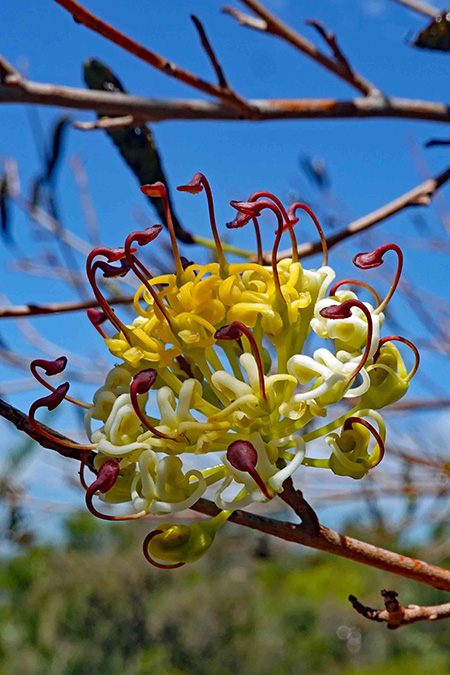
I’ve reached the end of my tether. We’ll reconvene in late April to contemplate two contrasting biomes of Western Australia, the arid Kalbarri region north of Perth, and the magnificent forests of Margaret River and the Great Southern in the opposite direction.
Horticulturally yours,
Daniel
- Letter from Mueller to Joseph Hooker, 15 Jan. 1881. Hooker’s father William formally described E. macrocarpa. Marianne North (1830-1890), a self-taught botanist and artist, traveled the world from the Canary Islands, North and South America, South Africa, and many parts of Asia to New Zealand and Australia, producing hundreds of highly esteemed botanical paintings in the process. London’s Kew Gardens houses hundreds of these and displays them in the Marianne North Gallery.
- Readers of Horticulturally Yours may be aware of my ambivalence about growing eucalyptus trees in home gardens of the Pacific Northwest. (See “Gumming Up the Garden” from October 2022). Several California botanical gardens feature Eucalyptus macrocarpa in their collections. Among them are the Ruth Bancroft Garden & Nurseryin Walnut Creek, the Huntington Botanical Gardens in San Marino near Pasadena, and the UCLA Mathias Botanical Garden.
Image credits—Painting of Eucalyptus macrocarpa by Marianne North: The Board of Trustees of the Royal Botanic Gardens, Kew. All other images are photographs by Daniel Sparler and Jeff Schouten.