

In the Winter of Our Discontent
January, 2022
Scarcely a month has transpired since our previous session, but my rose-colored perspective of early December has acquired an ashen tinge in the wake of two weeks of meteorological mayhem that followed hot on the heels of the winter solstice. Shakespeare and Steinbeck 1 most likely didn’t have gardens in mind when they related the season of darkness with its corresponding mental mood, but today the linkage certainly seems apt to most horticultural hounds of my acquaintance. This recent, protracted patch of subfreezing temperatures (which descended exactly six months after June’s incinerating heat dome) is certain to reshape adventurous Pacific Northwest gardens –if not the gardeners themselves– in ways we are only beginning to fathom.
In the 30 years my husband Jeff and I have tended our patch of paradise in Seattle’s Seward Park neighborhood, our garden has endured about a dozen extreme winter events: a few fatally frigid Fraser River outflows, a shrub-mauling snow dump here, an evergreen-maiming ice storm there, with a peppering of tree-lacerating wind gusts and dahlia-drowning deluges. But unlike earlier events, which tended to be one-off wonders, the most recent lunar cycle seemed to bring all these bad actors and poor players on stage in rapid succession.
Curiously, although imminent, wintry climate-caused crises of past years would render me frenzied, practically wailing and gnashing my teeth in anguish, I met the recent fateful convergence of weather woes with a strange calmness. Whether this unexpected equanimity of spirit arose from wisdom gained through experience, world-weary resignation, simple exhaustion, or –most likely– a combination of all three, I cannot say. This is not to imply that I didn’t go all-in to protect hundreds of my more vulnerable botanical darlings, but I did so more methodically and sustainably than in years past, and I must add, with a plan of triage in mind.
Following are a set of case studies of varied methods I employed this time on a trio of treasured plants I have grown and propagated for more than 20 years. The first two I featured in Horticulturally Yours segments last year.
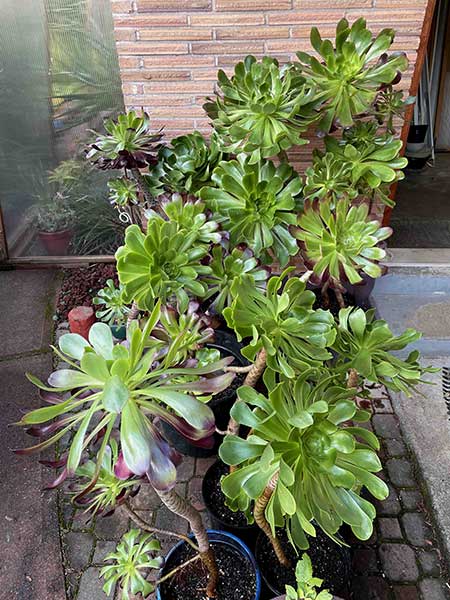
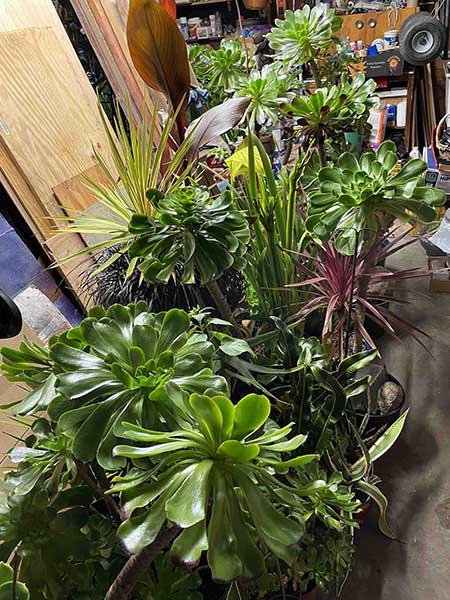
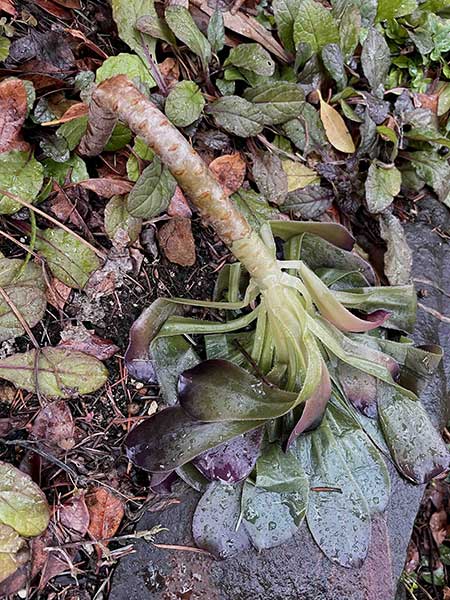
Aeonium arboreum— These oversized Canary Island succulents are tolerant of all sorts of abuse and neglect, including light frost, but they won’t survive a deep freeze. The solution is simple: Pop them out of the ground (their root balls are surprisingly compact) and plop them in any handy container with a bit of potting soil; water them in and replant in spring. Survival rate has been 100%. In years past I’ve left small ones (under a foot tall) in the ground, smothered them in burlap and bubble wrap and hoped for the best. They’ve always come through. This time, I took the precaution of digging up nearly all 50 or so specimens and storing them in a cool garage under plant-friendly fluorescent lights. I left a couple of sacrificial victims in the ground to test their resistance; quite predictably, they turned to mush.
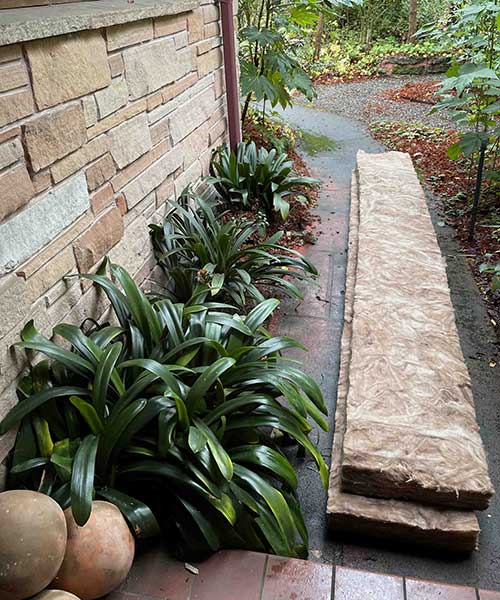
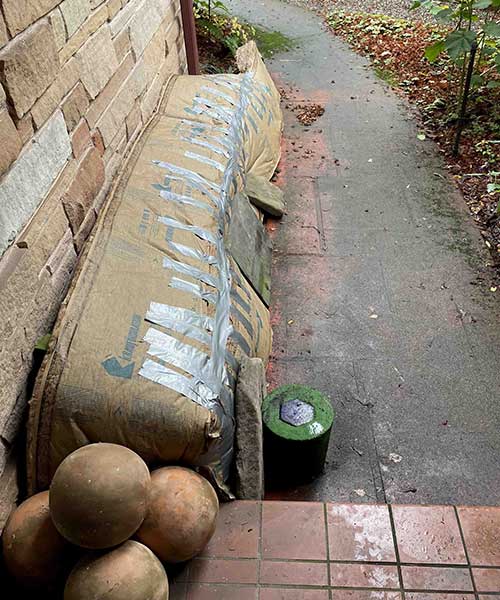
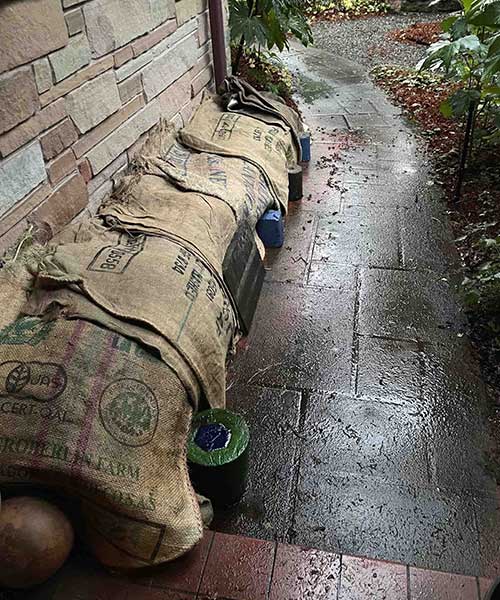
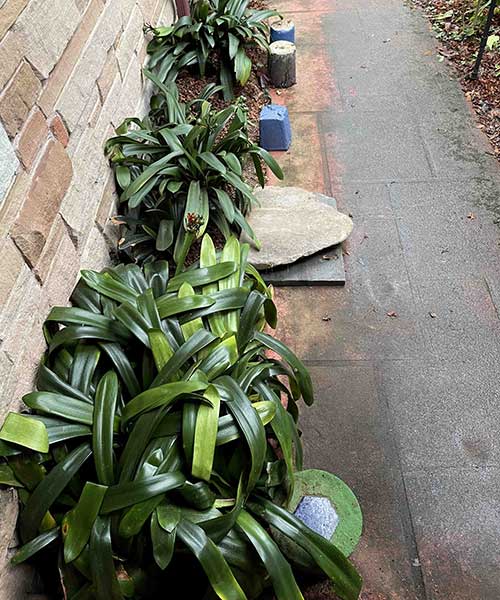
Clivia miniata— My principal bed of these citrus-colored, spring-blooming, evergreen South African amaryllids is an easy-to-protect rectangle under wide eaves next to our front door. Just prior to the predicted deep freeze, I bought a 32-foot long “Eco-roll” of 3½ inch-thick fiberglass housing insulation, cut it in half lengthwise, duct-taped the two strips together, lay this blanket over the top of the clivias, swaddled it all under burlap gunnysacks procured from a local coffee roaster and held everything in place with a hodgepodge of paving stones and concrete adornments. It did the trick. See photos below.
Musa basjoo— Wanting to preserve the tropical-looking stalks (pseudostems) of our hardy fiber bananas, the first few years we grew these giants, we went to great lengths, in autumn surrounding each pseudostem with wire fencing and stuffing the resulting cage with straw. As the clump expanded in all dimensions this method became at first impractical and then imprudent. It’s good to let them die to the ground periodically. The underground rhizome will rapidly push up new shoots come spring. Lately we’ve taken the approach of wu wei, the seemingly paradoxical Taoist concept of actionless action or doing without doing. Freeze happens, pseudostems die, life is renewed. After the snow melted last week, Jeff sawed down the lifeless “trunks”. Looks a bit like a clear-cut now, but this too shall pass.
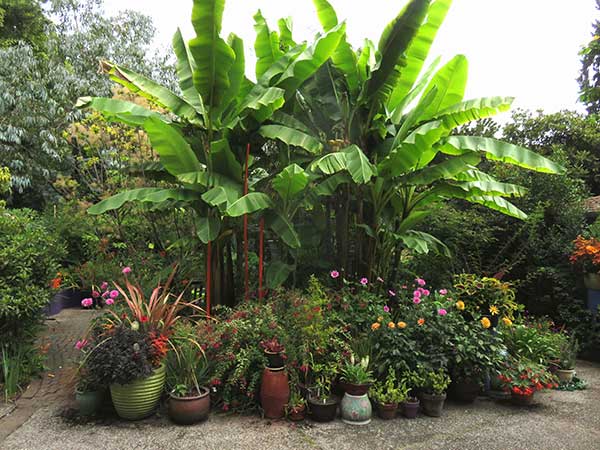
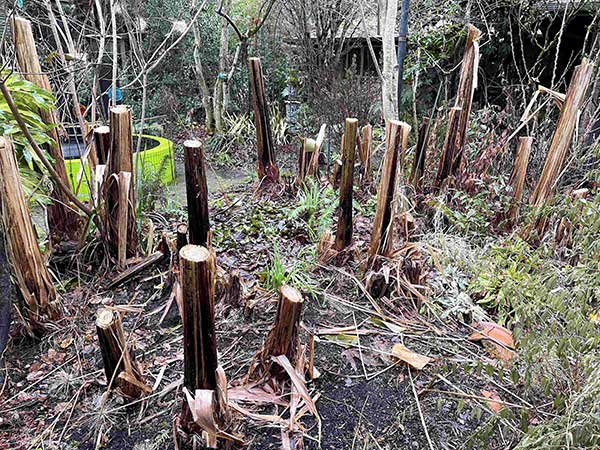
But what of myriad other borderline and half-hardy lovelies we’ve been nurturing? What will become of our fuchsias, salvias, hedychiums, grevilleas, phormiums and pittosporums? Time will tell regarding their status. Before we commence counting corpses, however, we should take solace in the assurance that some of our apparently moribund treasures will resuscitate themselves come spring. On the other hand, we must also face the likelihood that apparent survivors may succumb to unseen damage and collapse when warm weather gets juices flowing again in March and April. In embrace of inevitable transformation, we’d best adapt to our situation the French phrasal template “Le roi est mort, vive le roi!”: The (old) garden is dead… Long live the (renewed) garden!
Horticulturally yours,
Daniel
- “Now is the winter of our discontent” is the opening line of William Shakespeare’s tragedy, Richard III. John Steinbeck borrowed this phrase in 1961 for the title of his final novel, The Winter of Our Discontent.