
Fuchs, L'Obel & Magnol: A Triad of Pre-Linnaean Luminaries
February 2026
Linnaeus recognized more clearly than anyone else
—Anna Pavord 1
before him that all a [plant] name had to do was
designate. It did not have to describe.
Last time around we basked in the glow of a few 18th and 19th century worthies whose names were conferred upon several of the most emblematic perennials, shrubs and trees native to our slice of the Pacific Rim. Today we’ll step back a few centuries and consider the contributions of a trio of groundbreaking botanists whose names we invoke, mostly unwittingly, whenever we speak of fuchsias, lobelias or magnolias. Each of these garden-variety names owes its origin to the taxonomical “god” Carolus Linnaeus, who immortalized several of his botanically prescient predecessors by employing their surnames in the system of binomial nomenclature (genus and species) formalized with the publication in 1753 of his magnum opus, Species plantarum.
First, a bit of background: In the wake of Portuguese and Spanish exploration, a frenzied flow of plants hitherto unknown to Europeans flooded into the continent beginning around the year 1500, not only to herbariums and apothecaries, but also into the broader public’s gardens and markets. This made even more urgent the pressure to sort, describe and organize these introductions using a rational system of taxonomy. Writing in 1658, 100 years before the publication of Linnaeus’ foundational tome, British polymath Thomas Browne recognized that “a large field is yet left unto sharper discerners to enlarge upon this order, to search out the figured draughts of nature and moderating the study of names and mere nomenclature of plants, to erect generalities, disclose unobserved proprieties […] affording delightful Truths confirmable by sense and observation, which seems to me the surest path, to trace the Labyrinth of Truth2”.

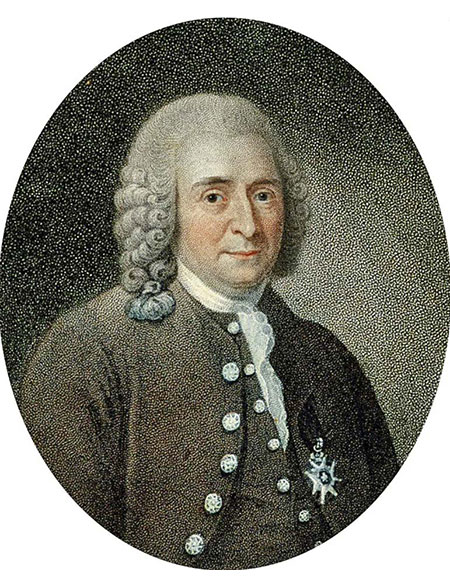
Although Linnaeus positioned himself as perhaps the sharpest of the discerners predicted by Browne, he honored the legacy and achievements of his consequential antecedents by naming whole genera of plants native to the Americas after them. Let’s take a look at the careers of three of the most distinguished of the lot (in addition to their work in botany, each was also a practicing medical doctor), along with their namesake plants that adorn nearly all of our gardens today. These are 1. the German Leonhart Fuchs (1501-66), 2. the Flemish Matthias de l’Obel (1538-1616) and 3. the French Pierre Magnol (1638-1715).
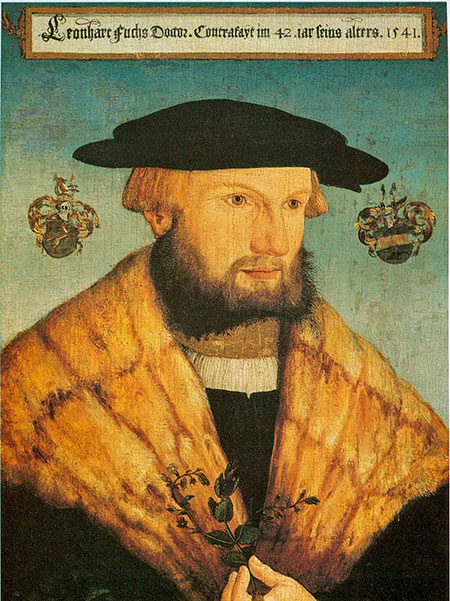
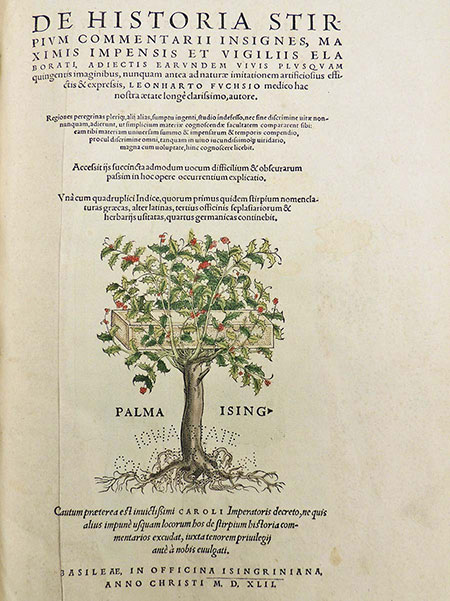
1. British garden scholar and writer Anna Pavord devotes a whole chapter to Fuchs in her indispensable book, The Naming of Names: The Search for Order in the World of Plants (see Footnote 1). Tellingly, she titles it “The Irascible Fuchs”. Known to his contemporaries as Fuchsius (the Latin form of his name), Dr. Fuchs took great pleasure in exposing and publishing the “errors” of his predecessors and contemporaries in the field of botany. Among his many accomplishments, the greatest was the publication in 1542 of De historia stirpium commentarii insignes (Notable Commentaries on the History of Plants). With its more than 500 stunning illustrations of plants (most by the artist Albrecht Meyer) and first-ever glossary of 132 botanical terms, the book was a bombshell of a success. And Fuchs wouldn’t let anyone forget it. As Pavord puts it, “Vain, dogmatic, opinionated, strutting around his book like a turkeycock, Fuchs leaves no one in any doubt that he thinks his Historia a very good piece of work indeed.”3 Fun fact: Dr. Fuchs’ Historia described and pictured for the first time several “new” American plants, including marigold, pumpkin, chili peppers, maize (corn), potato and tobacco.
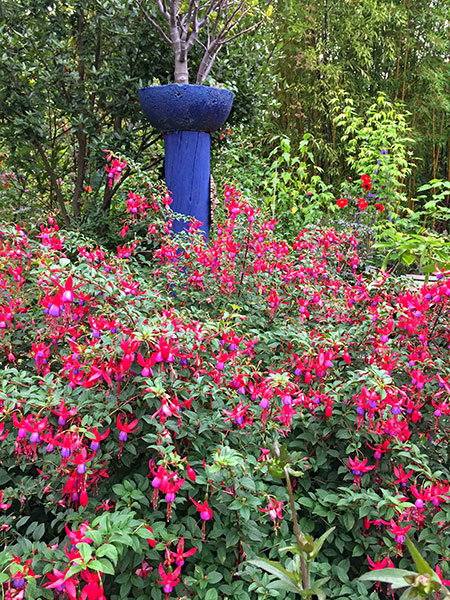
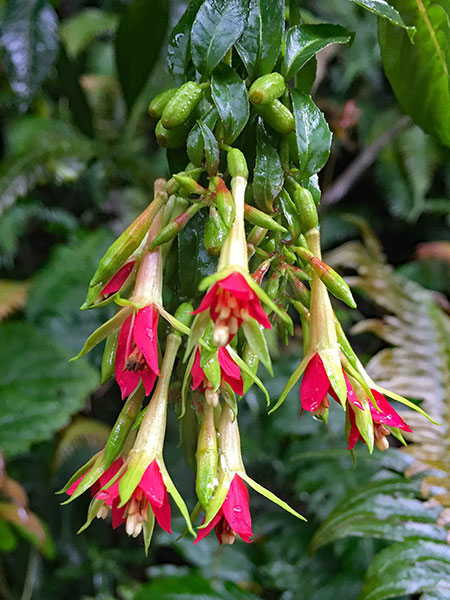
FUCHSIA: Even though Dr. Fuchs died more than 100 years before the first plant now bearing his name was described by a European, it seems fitting that this profusely and prodigiously decorative flowering shrub bears his name. Although the vast majority of the circa 100 species and perhaps 1000 named cultivars and hybrids are natives of the Americas, from the Caribbean south to Patagonia, the extremes of the genus, size-wise, are both native to New Zealand: the gigantic F. excorticata, a tree that can reach heights of 50 feet, and the diminutive F. procumbens, a prostrate ground-hugger. I just tallied up the distinct, named cultivars, hybrids and species fuchsias I have attempted since 1992 in my Seattle garden. The total came to 142, more than that of any other genus I have grown.
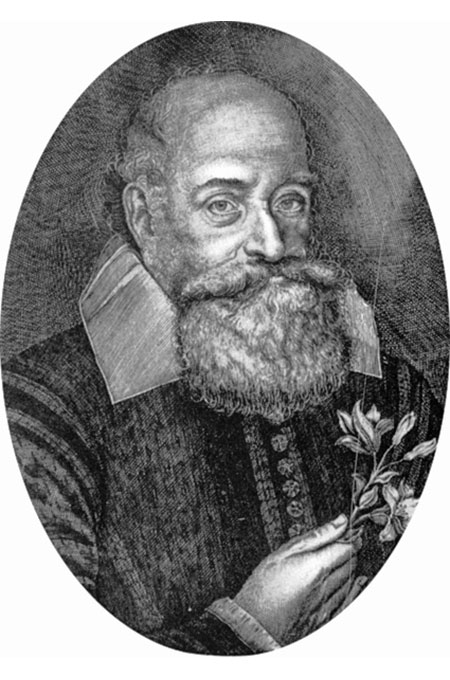
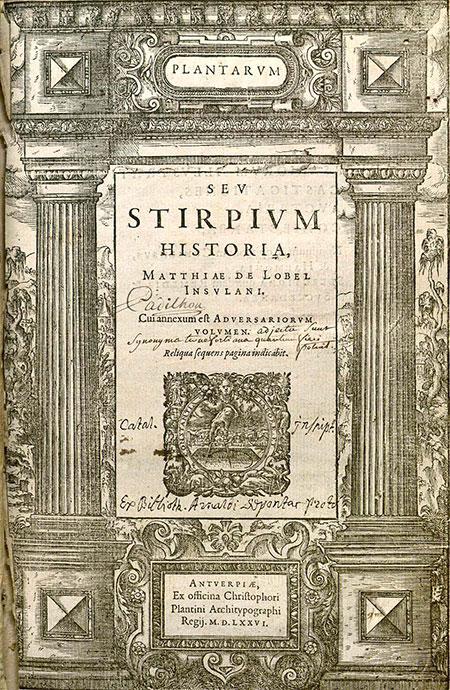
2. Born in Lille, France, when it was part of the Spanish Netherlands, Lobelius, as he was known professionally, began his career in the south of France at the University of Montpellier, noted for its preeminent school of medicine and its formidable botanical garden. He subsequently worked in Flanders, Holland, France, Italy and finally England, where he lived off and on for more than 30 years, serving both as personal physician and Botanist Royal to King James I. Lobelius was the first botanist to describe and explain the difference between monocots and dicots. Among his many pioneering publications, perhaps the most noteworthy was Plantarum seu stirpium historia (A Systematic Description of Vegetation) of 1576.
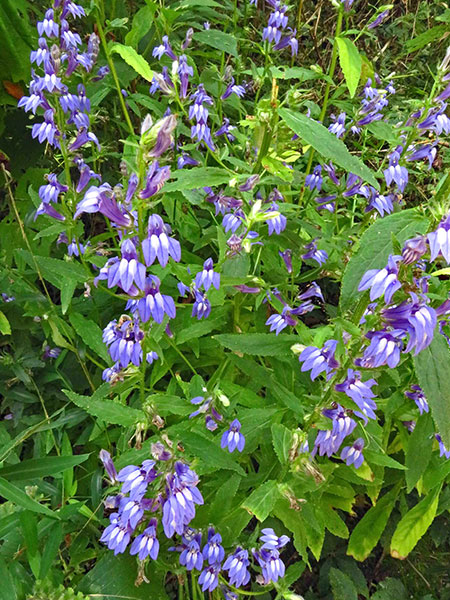
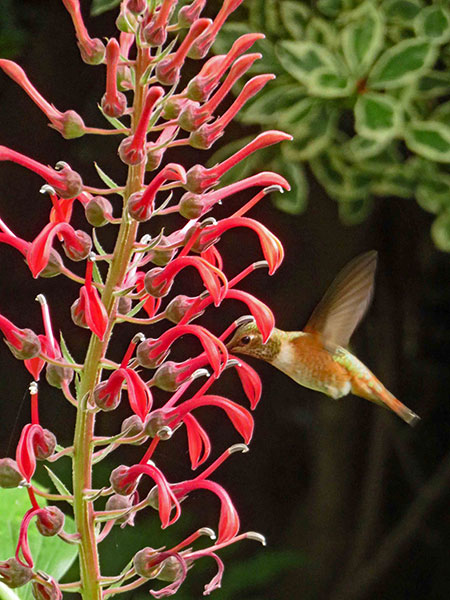
LOBELIA: Boasting more than 400 species, this genus is truly cosmopolitan, found naturally in all inhabited parts of the world except for a wide swath from the Atlantic Sahara in Africa eastward through central Asia to northcentral Siberia. However, two of the most commonly grown species are native to North America, and to my home state of Arkansas: the incarnadine, water-loving Lobelia cardinalis, and the cerulean L. siphilitica (once considered a cure for its namesake venereal disease). Also of considerable garden merit is the towering and vigorous Chilean native, L. tupa, sometimes called “devil’s tobacco” in that its large, felty leaves have been smoked at times due to their alleged hallucinogenic properties.
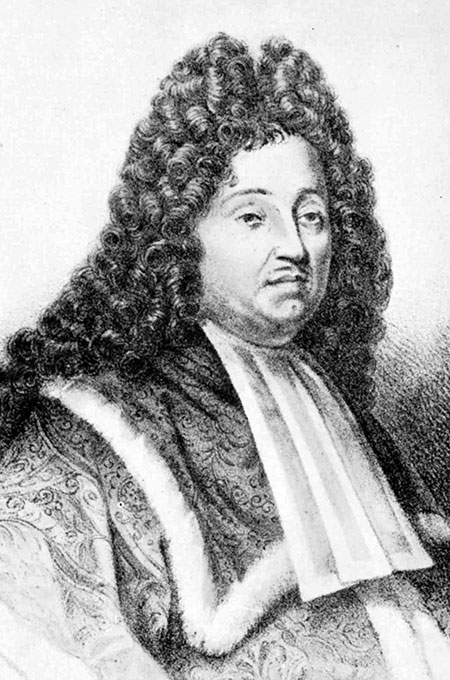
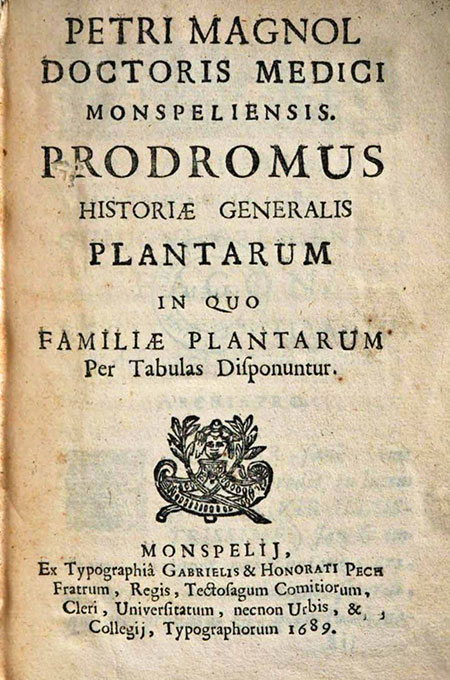
3. Like Lobelius 100 years before him, Magnol worked as professor of medicine at the renowned University of Montpellier, the city of his birth. Passionate about plants from a young age, he also served as director of the Jardin des Plantes de Montpellier, the oldest botanical garden in France. Considered today among the pantheon of the most accomplished botanists, Magnol created the modern concept of plant families, that is, that certain closely related species share characteristics that distinguish them from other groupings. In 1689 he published Prodromus historiae generalis plantarum (Precursor to a General History of Plants), in which he described these relationships. Fittingly, the genus that was named for him is a member of the family that also bears his name, Magnoliaceae.
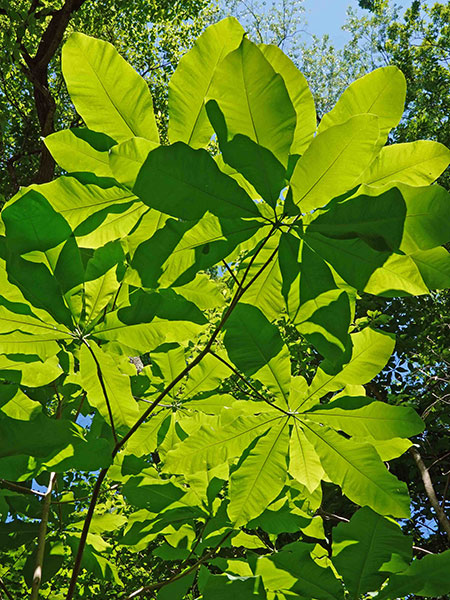
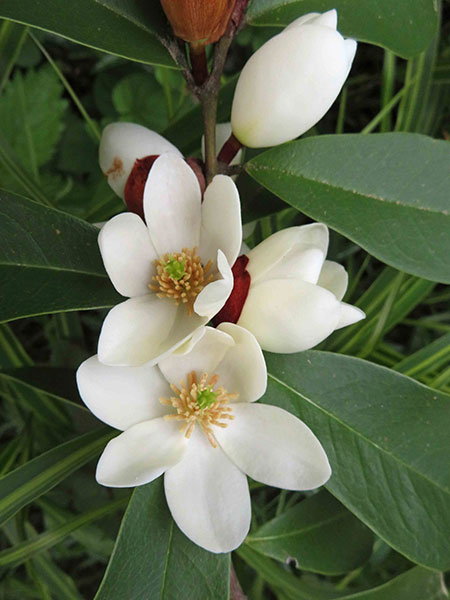
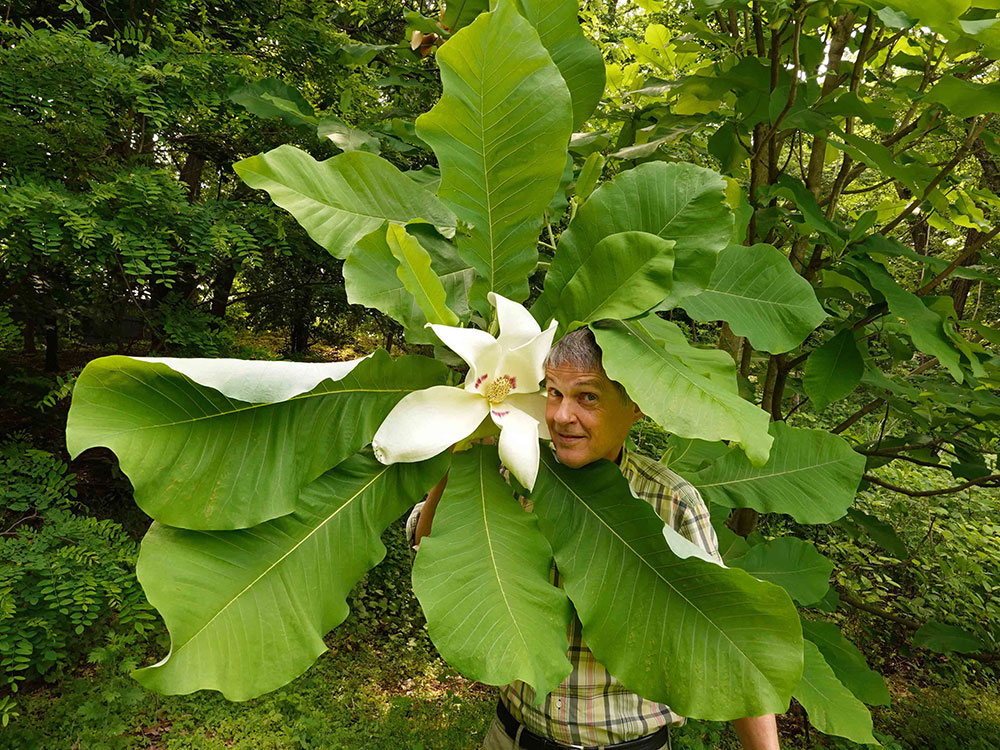
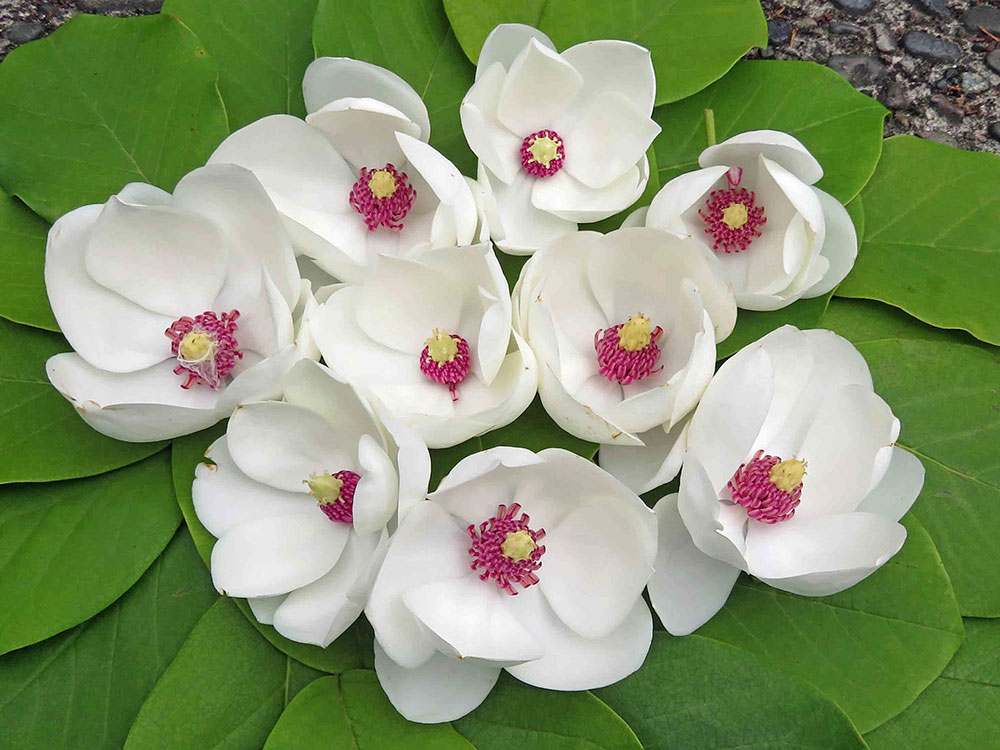
MAGNOLIA: Few flowering trees are more magnificent in scope than this sprawling genus of more than 350 species with two disjunct, widely separated centers: one in the East (southern and eastern Asia), the other in the West (from eastern North America to the northern half of South America). I grew up in eastern Arkansas with the truly grand Magnolia grandiflora or Southern magnolia, whose regal evergreen bearing and enormous, intensely perfumed blossoms command attention. Nearby in the Ozarks was the realm of the shier and much more sedate M. tripetala and M. macrophylla, whose leaves, although deciduous, boggle the mind with their size, which measure up to 30 inches long. Two exotic favorites in my Seattle garden are the astonishingly elegant East Asian native M. sieboldii and its smaller but equally lovely sibling M. figo var. crassipes.
As I write these lines in the lengthening days of late winter, buds on my Magnolia stellata are swelling, many of my hardy fuchsias (having not gone fully dormant) are chomping at the bit to resume growth, and the glossy crowns of lobelias are plump and glistening with tight, fresh foliage ready to unfurl. When they launch their spring frolic, I’ll make it a point to whisper my gratitude to the botanists whose faces are reflected in each.
We’ll meet again at the vernal equinox.
Horticulturally yours,
Daniel
- From page 396 of Anna Pavord’s book The Naming of Names: The Search for Order in the World of Plants (New York: Bloomsbury, 2005). The Miller Library at Seattle’s Center for Urban Horticulture has a lending copy, as does the Bellevue branch of King County Library System.
- Quoted by Mark Griffiths in the opening essay (page ix) of his comprehensive Index of Garden Plants (Portland OR: Timber Press, 1994). Copies are available for on-site reference at Seattle’s Central Library and at the Miller Library.
- Pavord, pages 191-3.
Image credits—Portrait of Browne: National Portrait Gallery (UK). Engraving of Linnaeus: Britannica.com. Portrait of Fuchs: LandesMuseum Württemberg. Fuchs’ book De Historia: Iowa State U. Engraving of Lobelius: National Gallery of Art. Lobelius’ book Plantarum: Biodiversity Heritage Library. Engraving of Magnol: Wikimedia Commons. Magnol’s book Prodromus: Google Books. All other images are photographs by Daniel Sparler.