

From Sugar to Spice on the Hāmākua Coast
February, 2022
“Exotic… To me it means something beautiful, colourful, curious, full of mystery, an alien world that we walk into and are transported to peculiar and unfamiliar surroundings. It gives us the excuse to do something outlandish, to splash out, and be freer than ever.”
—Christopher Lloyd 1
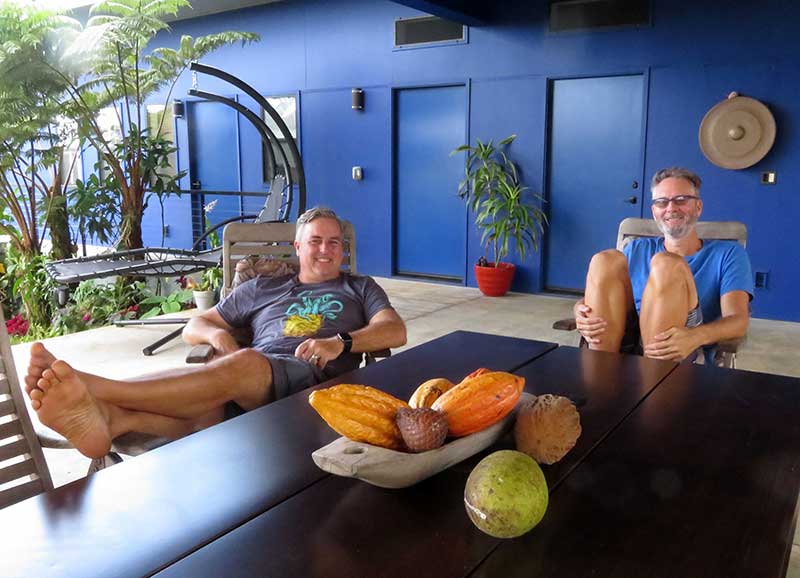
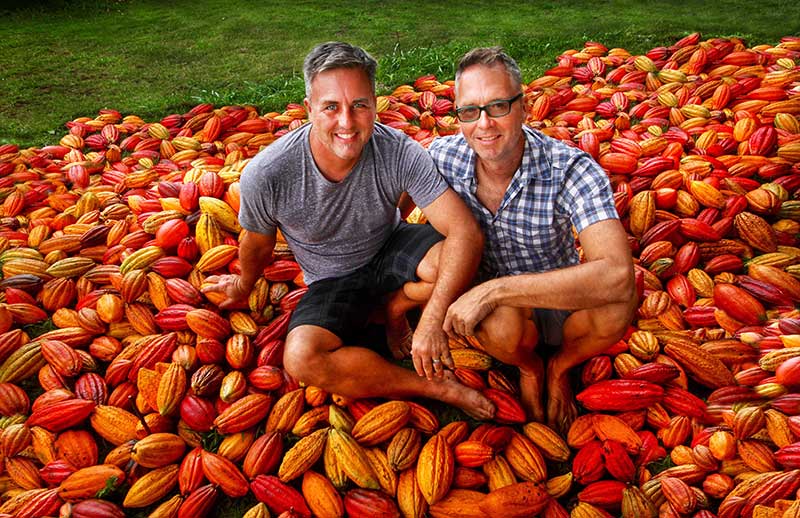
Five years ago renowned gardeners Dan Corson 2 and Berndt Stugger—widely celebrated in the Pacific Northwest for their award-winning, “primordial” Jurassic-themed urban wonderland—pulled up stakes in Seattle to plant themselves permanently in Papaikou on the ruggedly beautiful Hāmākua Coast north of Hilo on the Big Island of Hawaiʻi. “We came for the lush landscape and to be able to [nurture] the tropicals that we lusted to grow without having to wrap or lift,” Dan recounted to me in a recent conversation. Their definitive move came after a decade of preparation, having purchased in 2006 a 6.5-acre plot of fertile, sloping agricultural land that for decades had been devoted to the monoculture of sugarcane.
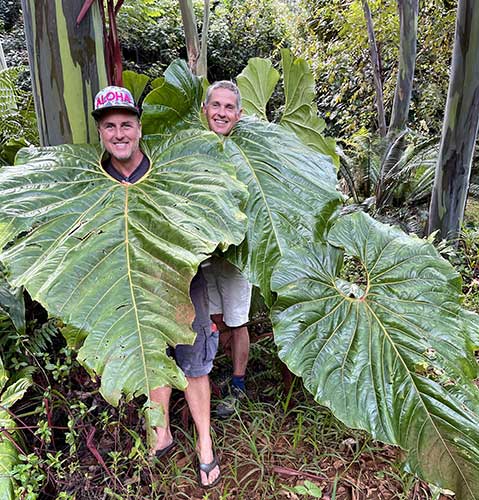
Their original intent to establish a tropical botanical garden of edible as well as ornamental plants took a slight course correction when they learned the land was optimal for cultivation of Theobroma cacao. Within a few years and despite a couple of disheartening setbacks 3, their 650 trees were producing pods in abundance, and Dan and Berndt launched the Hāmākua Chocolate Farm to charm residents and travelers alike as well as enhance their agricultural literacy. The chocolate treats they now confect are complemented by a panoply of botanical edibles incorporating flowers, leaves, nuts, seeds, fruit and essential oils that they grow and produce on site.
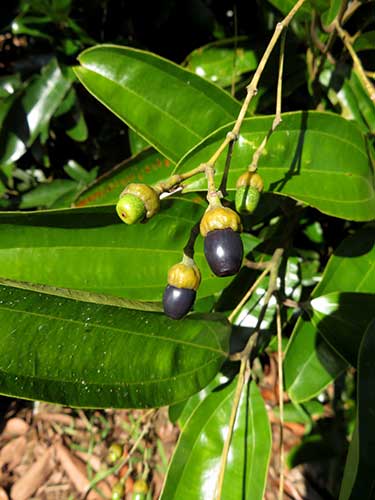
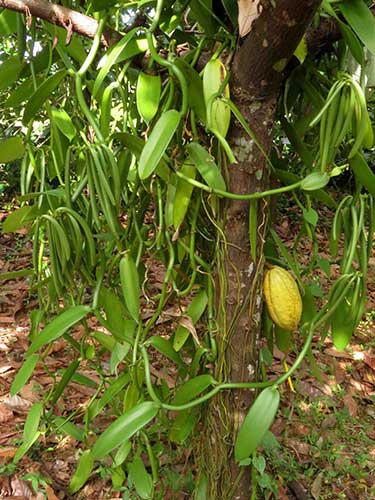
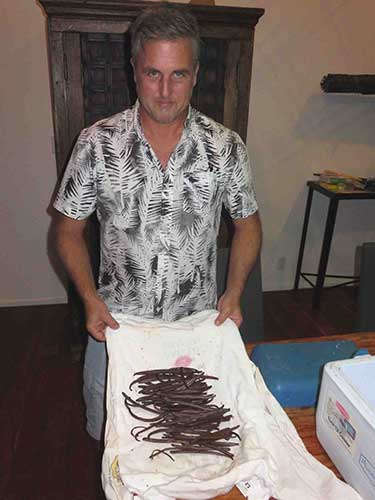
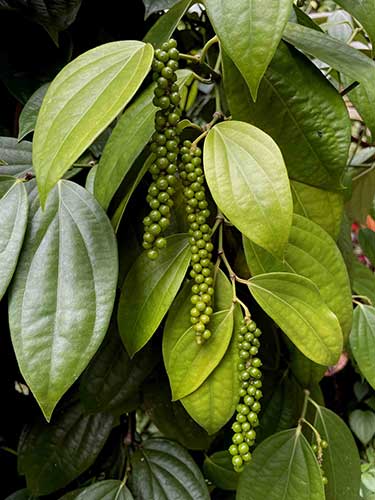
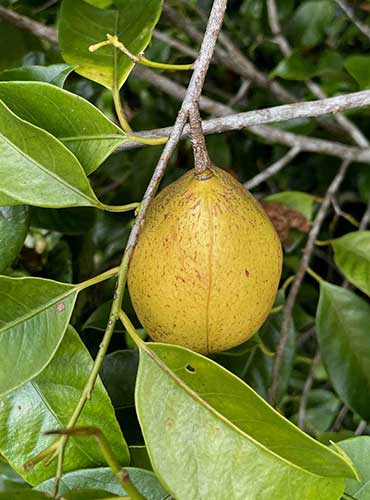
As education is a key aim of this column as well, we’ll use a sliver of Dan and Berndt’s plant palette (they grow more than 1000 taxa) to spice up a brief and easy lesson in botanical nomenclature. Many edible and medicinal plants sport refreshingly recognizable Latin binomials. Isn’t it satisfying to suss out so easily Cinnamomum verum, Vanilla planifolia and Piper nigrum as “true” cinnamon, “flat-leaf” vanilla and black pepper? A bit more mysterious are Myristica fragrans (nutmeg) and the somewhat less scrutable Syzygium aromaticum (cloves), although the species names of both advertise that something’s smelling mighty sweet.
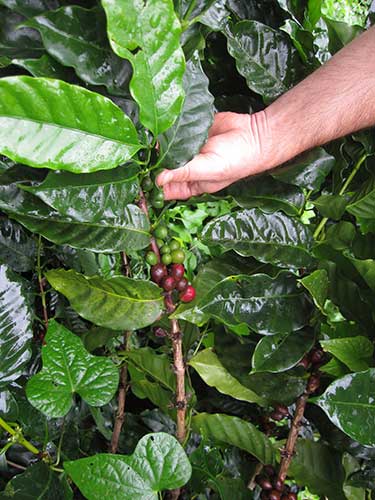
In the mood for a different type of zest? Reach for a cup of Coffea arabica, which you might enjoy with half a Carica papaya adorned with a squeeze or two of Citrus × limon. Discerning readers may recognize “carica” as the specific epithet of the Mediterranean-climate figs that we grow, Ficus carica. (Linnaeus coined the botanical names for both plants, selecting the Latin word for fig for the genus, and adapted the Greek karike –also meaning fig– for the species. When the papaya was brought to Europe from its home in the Caribbean basin, Linnaeus chose “carica” as the genus due to its fig-shaped leaf, and embraced the indigenous Taino/Arawak name “papaia” for the species.)
To close the circle, let’s return to a pair of the Aloha State’s signature symbols: the world’s best-known and most commercially valuable palm, the coconut, Cocos nucifera 4 and the emblematic, embattled sugarcane, Saccharum officinarum. Both entered the scientific lexicon via Linnaeus, nucifera meaning “nut-bearing” in Latin, with officinarum indicating a medicinal plant prepared in an “officīna,” the building in medieval monasteries where medicines were produced. The intrepid Polynesian voyagers who first settled Hawaiʻi more than 1500 years ago brought both with them and cultivated them throughout the islands. In the Hawaiian language they are known as “niu” (coconut) and “kō” (sugarcane), and are among the two dozen “canoe plants” that sustained life then and continue to do so today.
- From Exotic Planting for Adventurous Gardeners by Christopher Lloyd and friends. Portland: Timber Press, 2007.
- Dan Corson, who served a term on the board of NHS about 10 years ago, presented a webinar last October for NHS on his transition from “pseudo-tropical” planting to “the real McCoy.”
- An infestation of Chinese rose beetles (Adoretus sinicus) destroyed their first planting; feral pigs (Sus scrofa) did the same with their second effort.
- The etymology of “coco (-nut)” according to the Oxford English Dictionary probably derives from the Portuguese “coco” for “head”, due to the face-like appearance of the coconut shell, with its three holes. Saccharum is simply the Latin word for “sugar”.