
Carolina On My Mind
June 2024
Plan—and plant for a better world.
—J.C. Raulston1
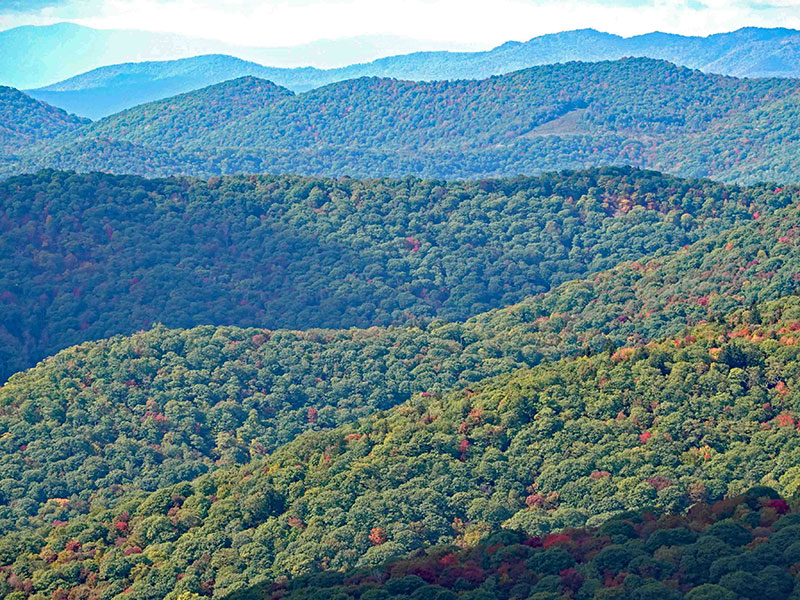
Although the peerless jazz artist Ray Charles had Georgia on his mind —perfectly peachy with me— at present I find myself more attuned to James Taylor’s ode to his beloved North Carolina. Over several visits to the Tarheel State the last few years, I’ve become enamored of its native flora as well as its appealing and varied botanical gardens. Of the state’s three broad geographic divisions (from east to west the Atlantic Coastal Plain, the central Piedmont Plateau, and the Appalachian Mountains), my favorite is the latter, which encompasses the Great Smoky Mountains and the Blue Ridge, home to 6684-foot-tall Mt. Mitchell, the highest point in eastern North America. Guiding me across the region’s peaks and valleys has been my old friend David Ellis, an Atlanta-based garden designer and plantsman par excellence.
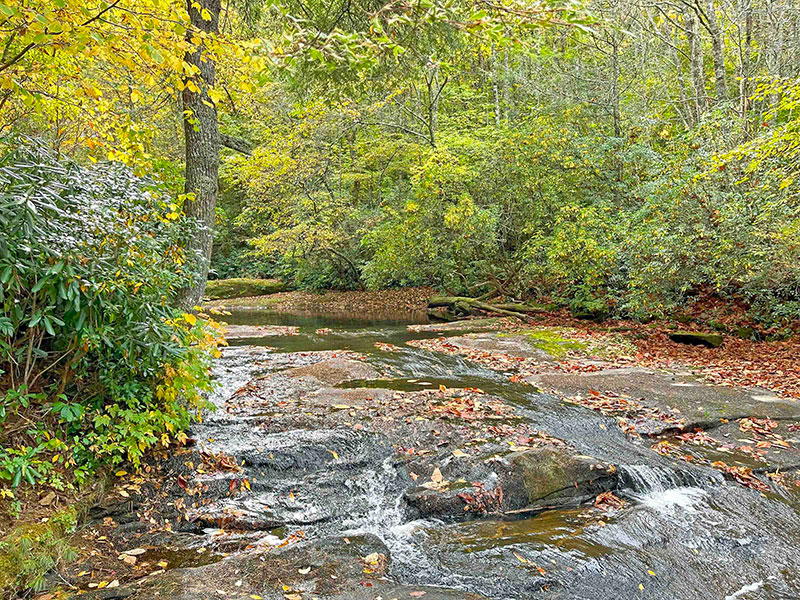
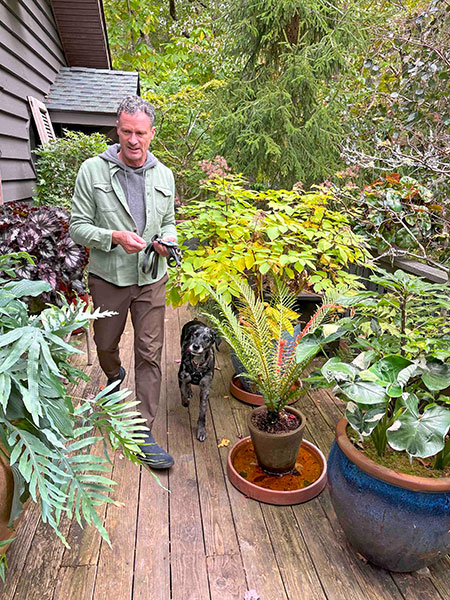
Born and bred in North Carolina, David graduated with a degree in landscape horticulture from NC State University in Raleigh, where he was a student of the late, great botanical demigod J.C. Raulston2. For more than 30 years David has maintained a high-altitude second home and garden perched above roaring and rock-lined Cedar Creek near the small town of Cashiers, NC. When we manage to tear ourselves away from the cultivated beauty he nurtures on the ample decks that surround his mountain aerie, David leads his guests along garden paths and nearby forest trails to spotlight his favorites among the local flora. Let’s meet and greet a few of them, shall we?
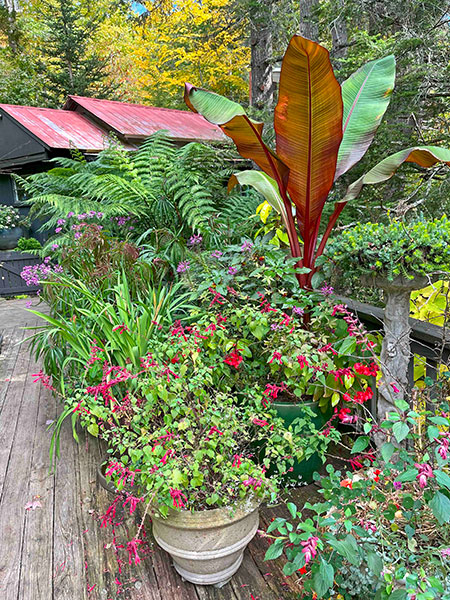
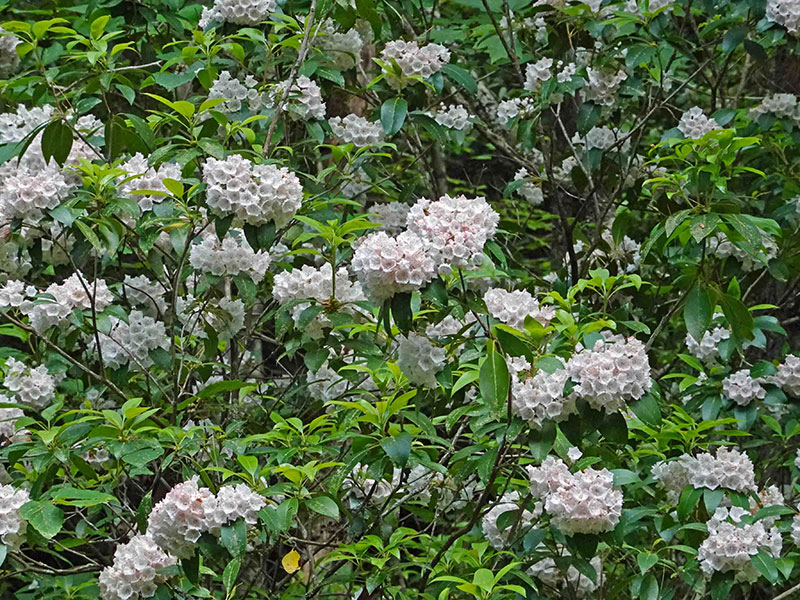
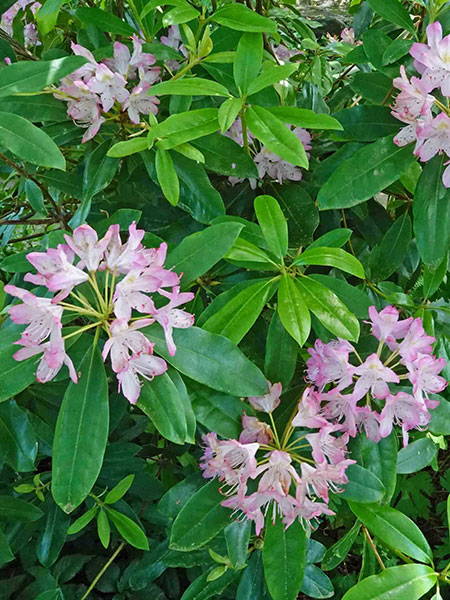
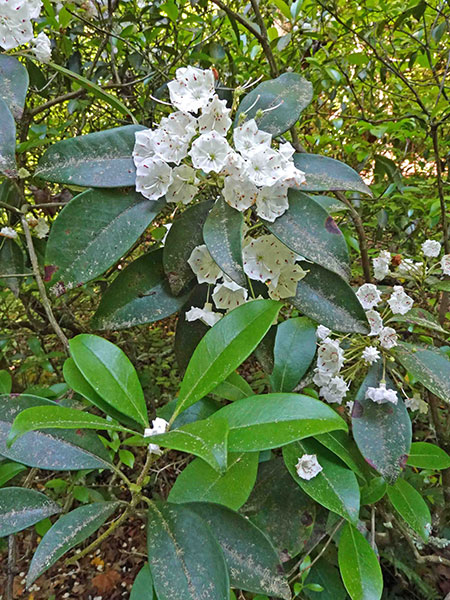
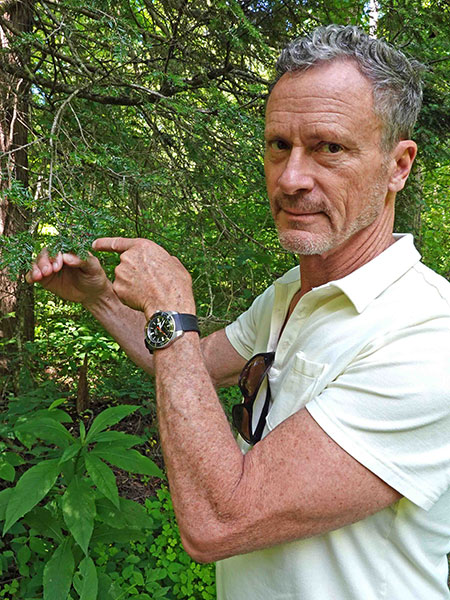
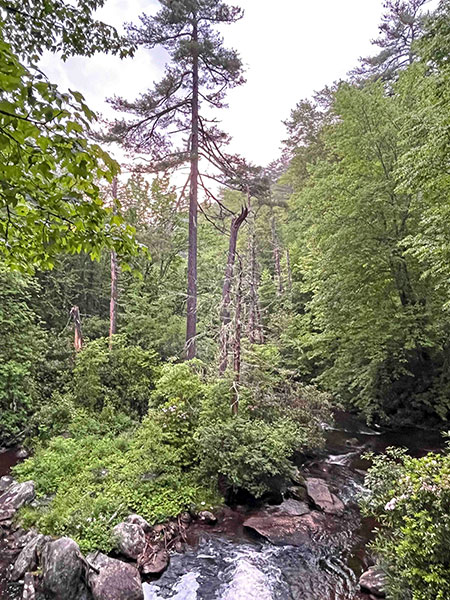
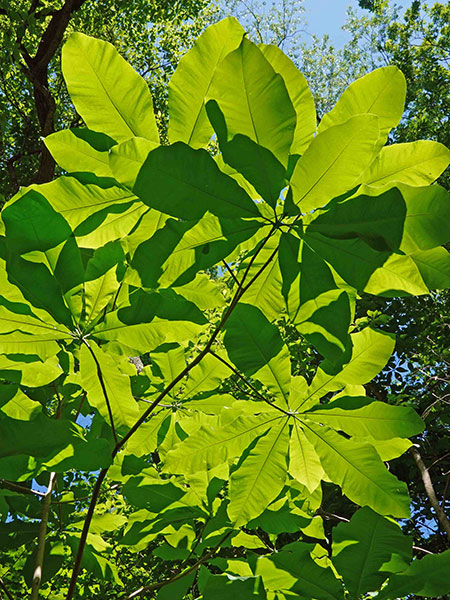
Lining the steep banks and hillsides surrounding David’s house is a mixed deciduous forest of serviceberry (Amelanchier sp.) and birch (Betula sp.), peppered here and there with rhododendrons and the closely related mountain laurel (Kalmia latifolia), in full bloom during my most recent visit in late May. David laments the decimating and disheartening loss of the mightiest native evergreens, the once dominant hemlocks (Tsuga canadensis and T. caroliniana), to the scourge of the woolly adelgid insect, but he’s delighted to note that doomed hemlocks are being replaced naturally in many spots by the nimble native Magnolia tripetala, whose whorled and huge deciduous leaves shimmy in the breeze like a gaggle of twirling verdant parasols.
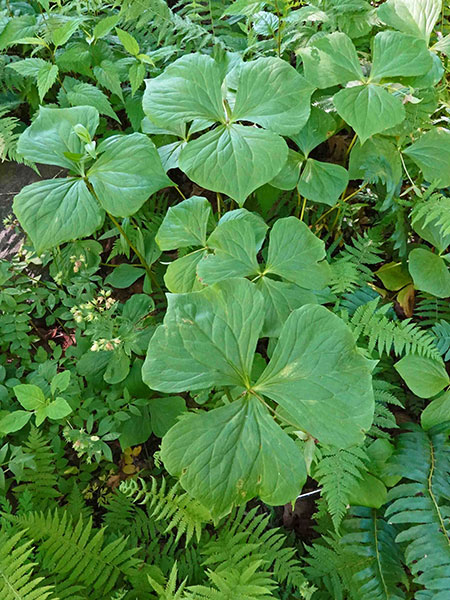
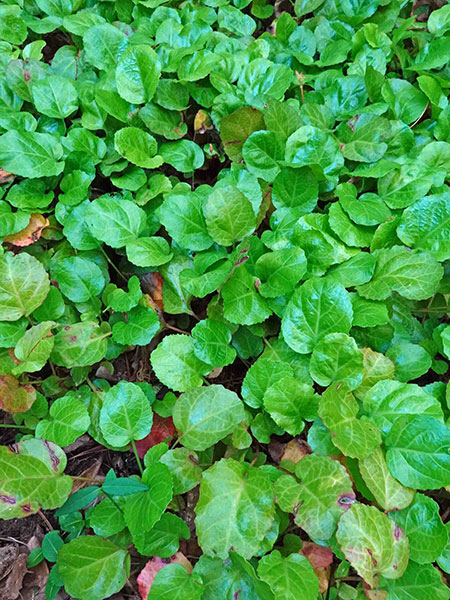
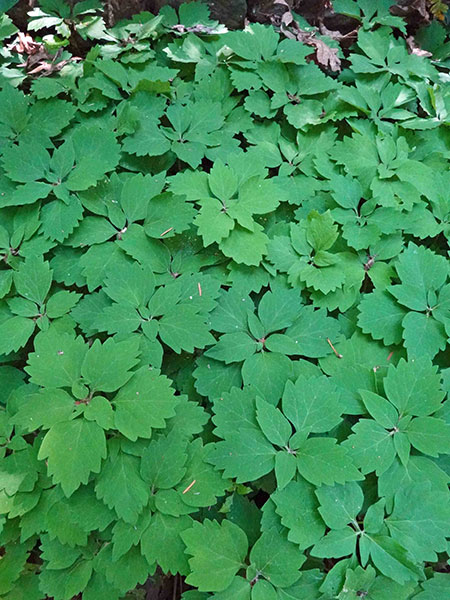
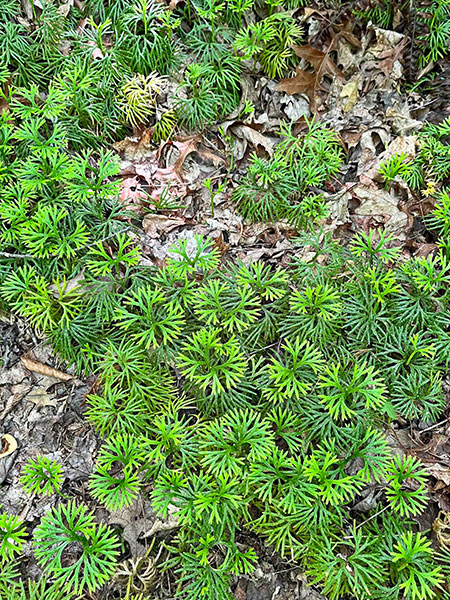
Closer to ground level are a bevy of shade-loving spring bloomers such as trilliums (both the maroon T. erectum and the ivory T. grandiflorum), the bewitching groundcover Shortia galacifolia and its near-namesake kissing cousin, Galax urceolata, whose elegant shiny leaves turn bronze when autumn rolls around. Also cheerfully carpeting the earth are the handsomely dentate leaves of Pachysandra procumbens (which I find vastly preferable to the clichéd and somewhat industrial-looking P. terminalis). A cute coda for this section comprises the weird and wonderful filigreed fronds of “running cedar” fan clubmoss, Diphasiastrum (aka Lycopodium) digitatum, which took center stage on the few occasions we found it in full frolic.
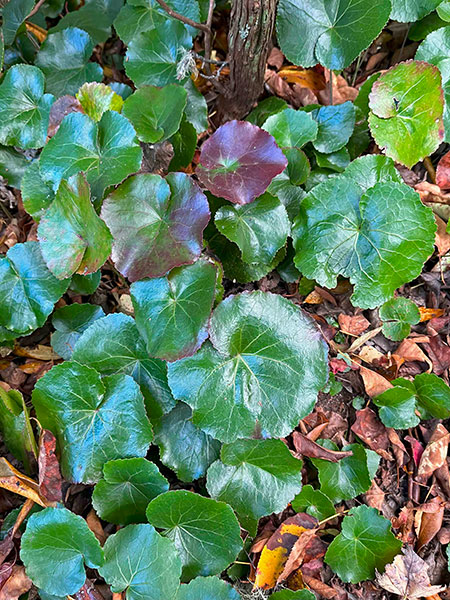
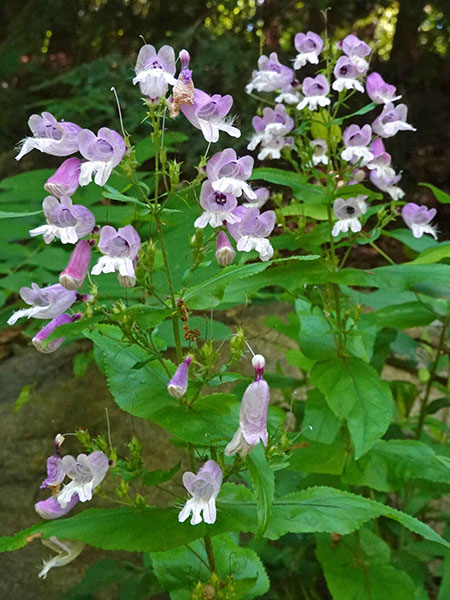
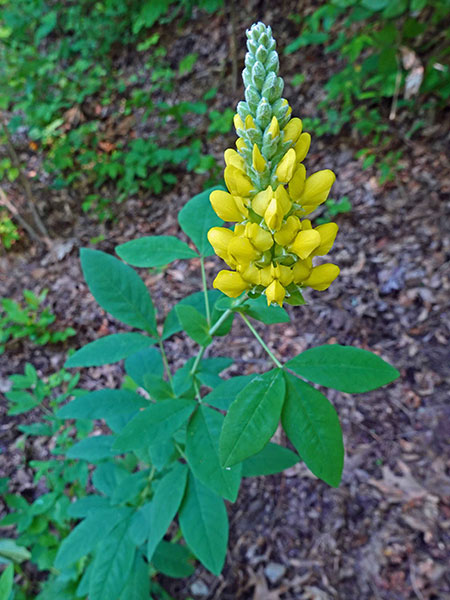
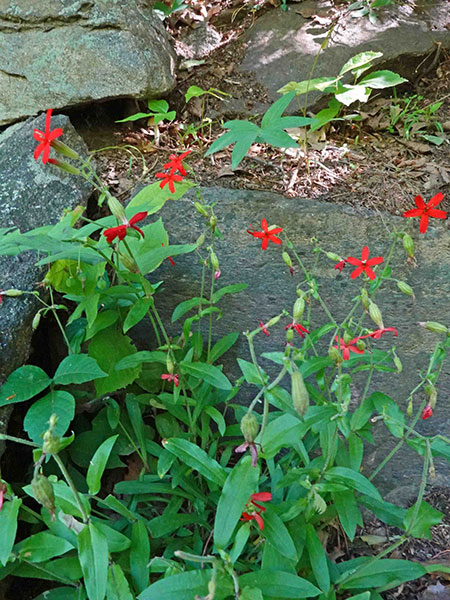
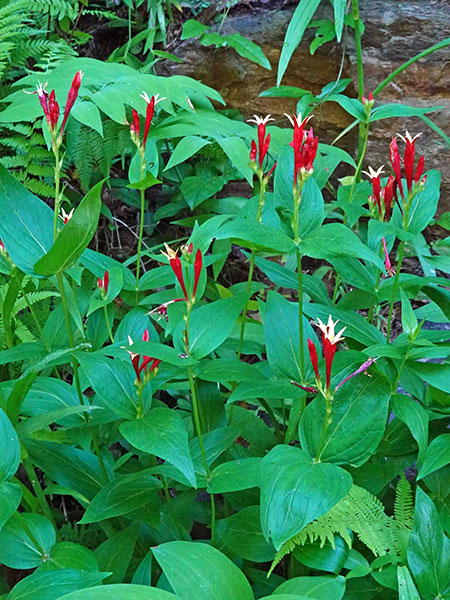
We arrived too late in the season to find any of the fetching flowers of the plants noted above, but their fine foliage more than compensates. However, we were right on time to catch a sextet of perennials in full-blown splendor: four in late May, the two others last October. Lovely and lively were the unexpectedly floriferous, almost dainty nodding lavender tubes of Penstemon smallii (named NC Wildflower of the Year a while back) and the luscious yellow lupine-like wedges of Thermopsis villosa. Also meritorious were the more familiar starry, notched red blossoms of Silene virginica (another NC Wildflower of the Year) and the flamboyantly flared upright tubes of Spigelia marilandica, which I have sadly tried and failed to nurture on several occasions in my own garden.
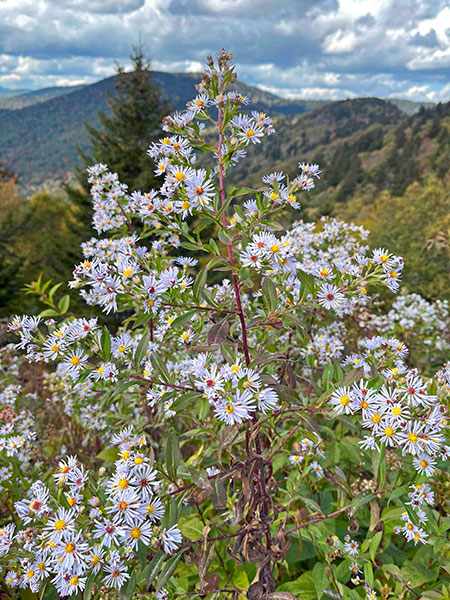
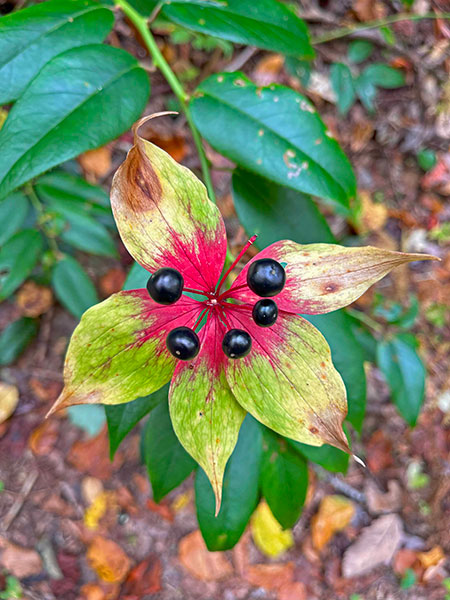
Stretching in the waning sun last fall were pale lavender stalks of asters (probably Symphyotrichum novi-belgii) at the 6000-foot level along the Blue Ridge Parkway. Most dazzling of all, and the literal showstopper as I stumbled upon it moments before descending the mountains en route to the Atlanta airport, was Medeola virginiana, sometimes called “cucumber root”. As the common name suggests, this alien-looking beauty produces an edible and reportedly tasty tuber, but it’s the (inedible) huckleberry-like seeds hovering above chartreuse lanceolate leaves whose crimson lower parts do an impressive impression of a poinsettia that had my heart aquiver.
All the species noted here are hiding in plain sight near the Blue Ridge Parkway or in the two gorgeous public gardens of Asheville, the winsome and welcoming, creative and crunchy mini-metropolis nestled at the edge of the mountains. The North Carolina Arboretum commands pride of place on 434 acres of forest and formal gardens just south of town, while the compact Asheville Botanical Garden displays around 500 species native to the Southern Appalachians in its idyllic 10-acre wooded niche on the campus of the U of NC at Asheville.
Wishing you all a serene summer solstice, we’ll meet again in the jubilance of July.
Horticulturally yours,
Daniel
- James Chester Raulston (1940-1996) headed the Department of Horticultural Science at North Carolina State University. The UW’s Elisabeth Miller Library has a lending copy of Chlorophyll in His Veins, Bobby J. Ward’s biography of Raulston.
- Raleigh’s J.C. Raulston Arboretum, the botanical garden of NCSU, will be the subject of a future segment of Horticulturally Yours.