

Madrid's Expanding Arboreal Mantle
May, 2022
Sancho se quedó dormido al pie de un alcornoque, y don Quijote dormitando al de una robusta encina.
(Sancho fell asleep at the base of a cork oak, and Don Quixote was snoozing against a robust holm oak.)
—Miguel de Cervantes1
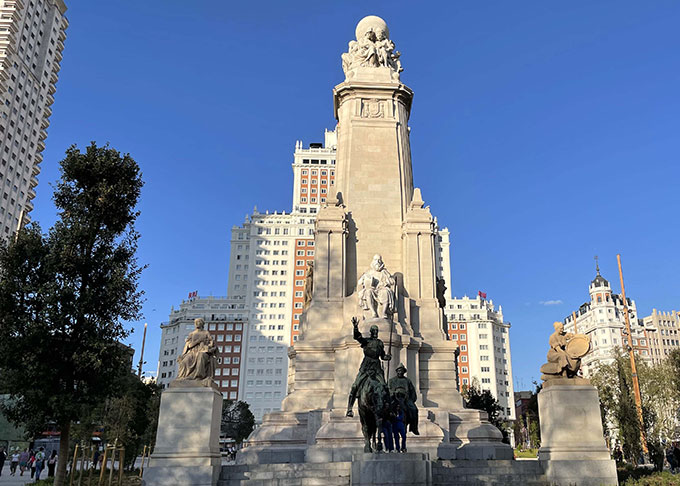
Since the early 1600s the idealistic but delusional would-be knight Don Quixote de la Mancha and his loyal, long-suffering, pragmatic squire, Sancho Panza, have stimulated readers around the world. For the last century, flanked not by oaks but olives, bronze statues of the duo have enjoyed pride of place in the center of the Plaza de España, one of the Spanish capital’s signature public spaces. The plaza recently had a grand reopening after remodeling that greatly extended its green space, adding more than 1000 trees, removing most nearby motor traffic and establishing the square as the nexus of a green octopus whose outstretched tentacles now link eight parks. This project, while monumental in scope, is actually the most modest of a trio of recent eco-initiatives of the city of Madrid.
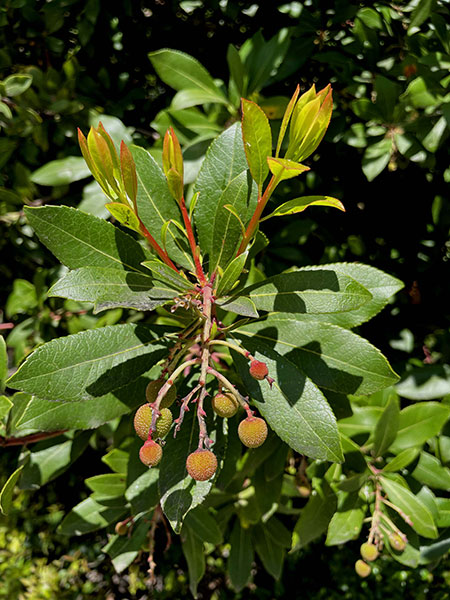
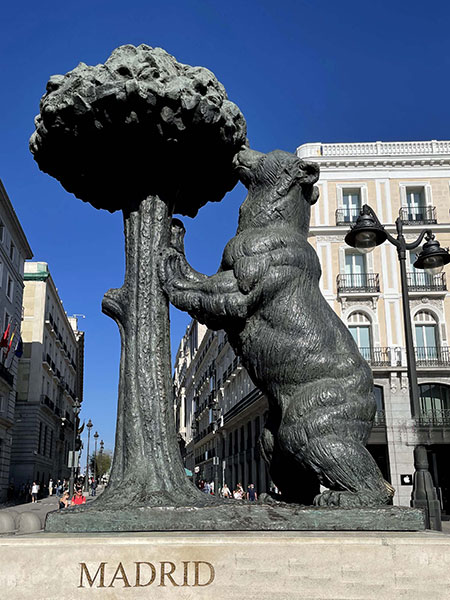
As sunny Madrid is tied with Athens for European capital with the lowest annual rainfall2, it may seem counterintuitive that it’s also one of the greenest. However, Madrid has long embraced the arboreal: For 800 years the city coat of arms has portrayed a bear standing erect against a strawberry tree (Arbutus unedo), eating its ripe, red fruit. This is partially a play on words, as the tree in Spanish is “madroño,” but Arbutus unedo is native and is a common feature of the city’s parks. The city’s name gives another clue: “Madrid” is derived from an Arabic term for “place of abundant streams of water”. If you’re scratching your head, here’s the scoop: The precious liquid flows copiously –most of it underground– from snowcapped peaks of the Sierra de Guadarrama that rises just 30 miles north of the city center.
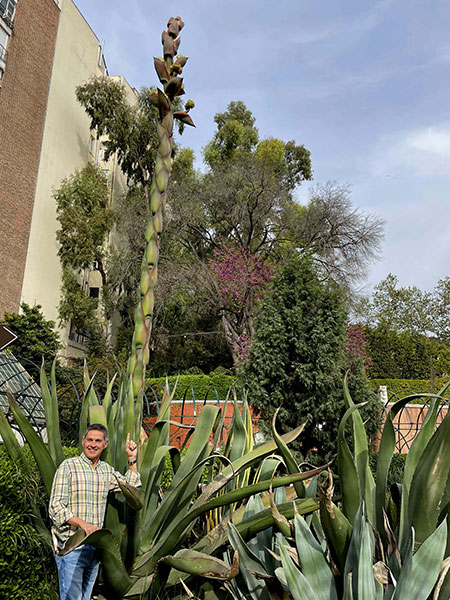
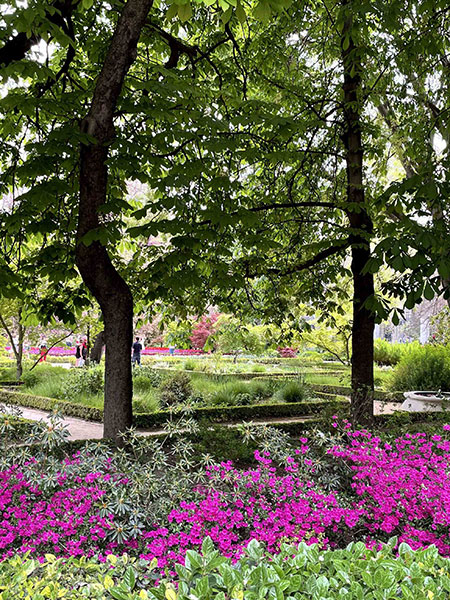
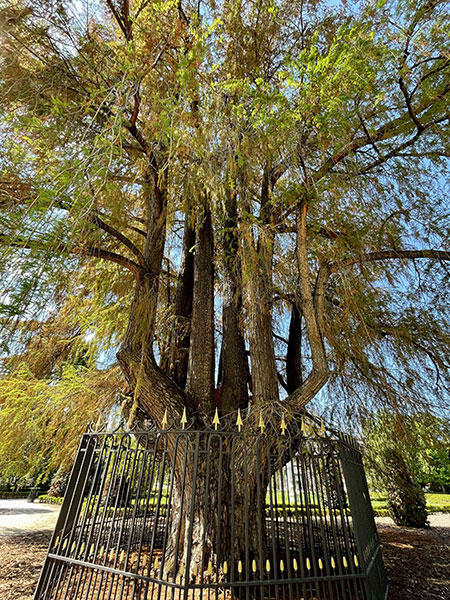
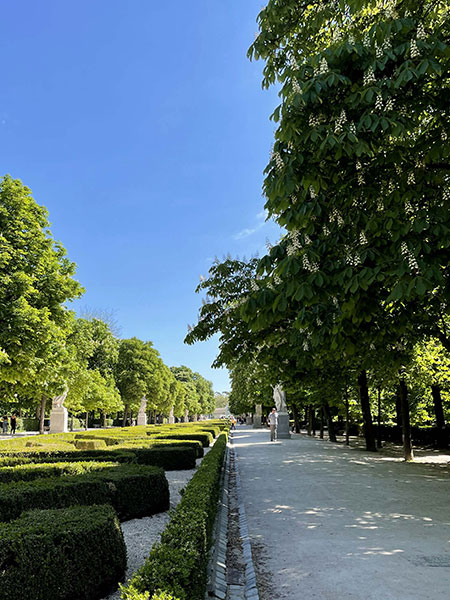
Central Madrid’s two largest greenspaces owe their preservation to the monarchy. The 20-acre Real Jardín Botánico (Royal Botanical Garden), established in 1755 by Fernando VI, today includes more than 6000 taxa from all parts of the globe. It’s in an ideal spot, situated at the happy fulcrum between the world-renowned Prado Museum and the Parque del Buen Retiro3, the center city’s largest arboreal oasis. This 1.4 km2 rectangular tract (350 acres) serves Madrid as Central Park does New York. First developed as a model of Renaissance-era park design by Felipe II in the 16th century, it opened to the public in 1767. Since 1868 it is property of the city of Madrid. The tree population numbers around 15,000 mature specimens representing 80 species, including the oldest documented tree in the city, a gargantuan, multitrunked Taxodium mucronatum 4 (Montezuma cypress) planted in 1633.
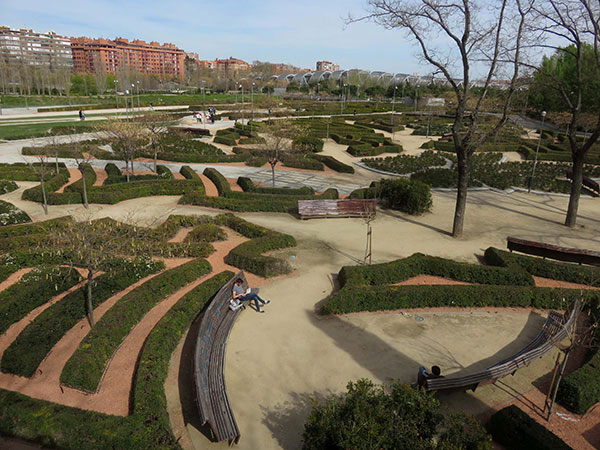
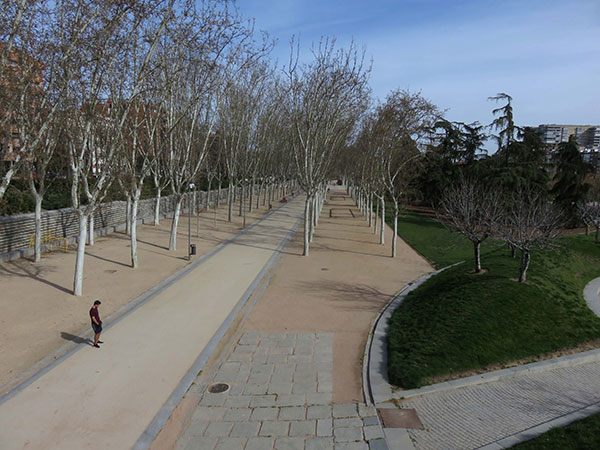
Back to the remaining pair of megaprojects referenced in the intro: 1) Ten years in the making, the astonishingly ambitious Madrid Río Park5, which opened in stages from 2011 to 2015, liberated a 6 km (4 mile) stretch of the Manzanares River from a freeway that had consumed both banks and separated the city from its western flank. The highway was relocated to a tunnel, the river restored, and reclaimed land converted into a 10 km long, 300-acre linear park with 33,623 new trees (of 47 species), 470,844 bushes (of 38 species) and 2 million square feet of meadow, along with 33 sports fields, 17 playgrounds, and 30 km of bike paths, among other amenities. 2) Slated for completion in 2033, the Bosque Metropolitano (Madrid Metropolitan Forest), one of the world’s most ambitious urban reforestation projects, is already 80% complete. Intended to mitigate heat islands, reduce pollution and control erosion, when finished, a greenbelt ring 75 km (47 miles) in length will surround the city, adding more than 5000 acres of forested land to existing greenspace (for a total of 87,500 acres) with the planting of 450,000 native trees, including of 450,000 including Quercus, Pinus, Arbutus, Salix, Populus, Olea, Ceratonia, Fraxinus, and Ulmus, alongside shrubs such as Salvia, Rosmarinus, Crataegus, Nerium, Juniperus, Retama and Cistus.
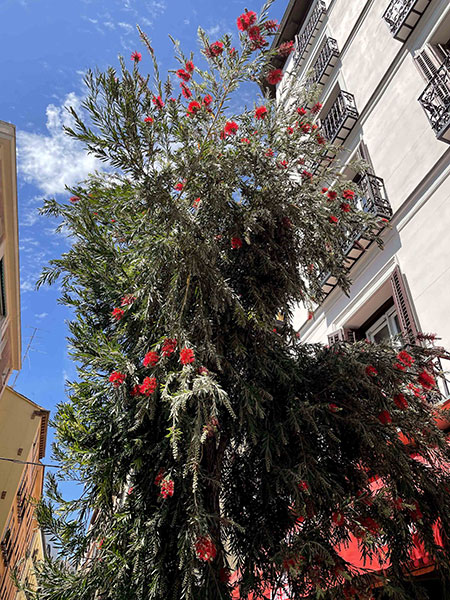
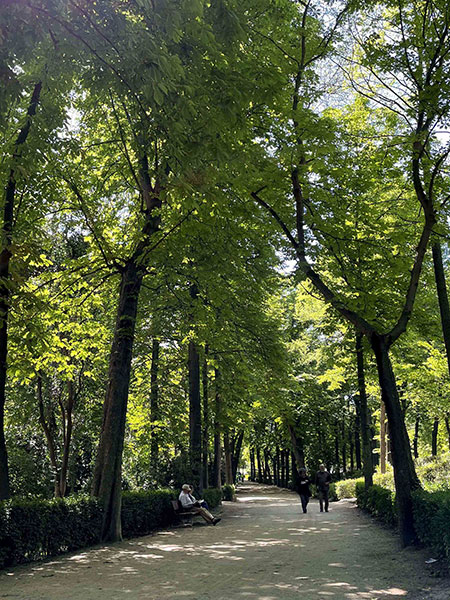
As if this weren’t sufficient, Madrid has been ramping up its street-tree program, already one of the most complete in the world. More than 5000 streets have been planted out by the city, using more than 200 species, including the stunning red bottlebrush, Callistemon viminalis, which lines lanes in the trendy Chueca neighborhood. In all, the city is responsible for planting, monitoring and maintaining 1.7 million trees on streets and in urban parks. There are another 2 million in (wild) forested areas of the city, and nearly 2 million on privately held land. This adds up to 5.7 million trees, of which slightly more than half are of three native species: Pinus pinea (the source of pine nuts), 27.1% of all Madrid’s trees; Quercus rotundifolia (Don Quixote’s slumber tree), 16.7%; and Pinus halepensis (whose sap flavors retsina), 7.2%. Talk about making yourself useful!
That’s it for our Spanish trilogy. See you back home next time around.
Horticulturally yours,
Daniel
- From El ingenioso hidalgo don Quijote de la Mancha, Part II, Chapter 12. My translation.
- Around 17 inches a year, a little less than San Francisco and half that of Seattle.
- The Prado and the Parque del Buen Retiro were declared a joint UNESCO World Heritage Site in July 2021.
- T. mucronatum (called “ahuehuete” in Spanish) is native to Mexico. One specimen (the “Árbol del Tule”) in the state of Oaxaca, estimated to be at least 1600 years old, is considered the world’s stoutest or thickest tree, with a diameter of 31 feet.
- The Madrid Río project won Harvard’s prestigious Veronica Rudge Green Prize in Urban Design in 2015. Awarded biennially, the next prize, in 2017, went to New York’s High Line. Seattle’s Olympic Sculpture Park won in 2007.