

Towers of Power: Australia's Floral Forte
April 2026
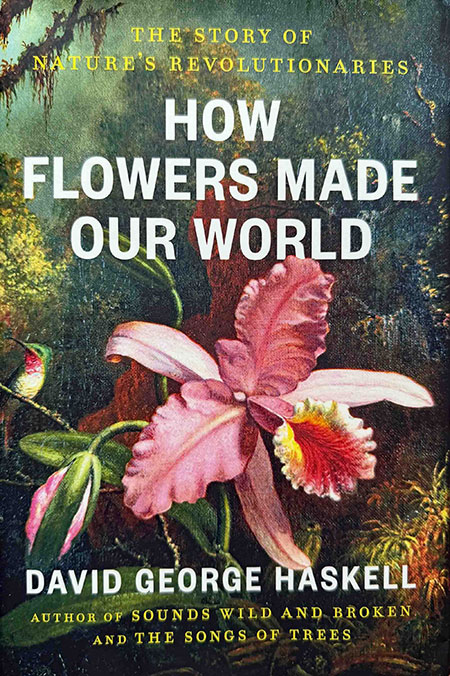
The moment you set foot in Australia, you can hear and see the vitality. … The special qualities of the Australian flora, and the ways that these flowers catalyze animal life, struck me [at once].
—David George Haskell 1
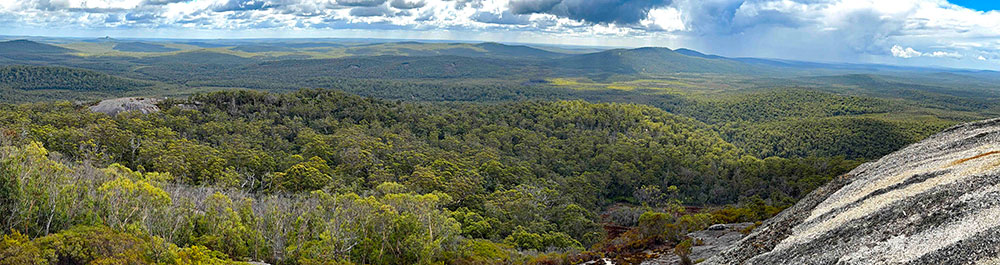
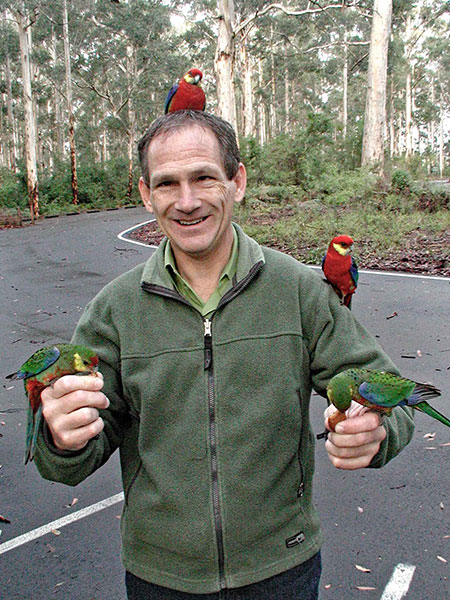
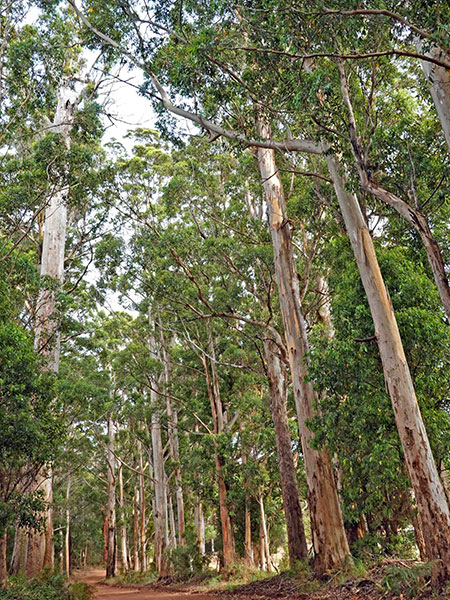
It was a misty late winter morning in August of 2004 when we rolled into Gloucester National Park near the forested hamlet of Pemberton in Western Australia. Barely out of the car, we were swarmed by a surreally magical flock of western rosella parrots (Platycercus icterotis), who—in expectation of treats—landed in a bevy on our hands, arms, and shoulders, even alighting on our heads. These utterly charming, feathered friends are heavily dependent on karri trees, Eucalyptus diversicolor, the native giants that were our reason for visiting the park. Rosellas nest in the hollows of mature or decomposing karris and other eucalypts and feast on their flowers and seeds. When we returned to the same spot on a cool morning in high summer a couple of months ago, there wasn’t a rosella in sight. But the karri trees still loomed overhead, regal and aloof as ever, maintaining their silent stance.
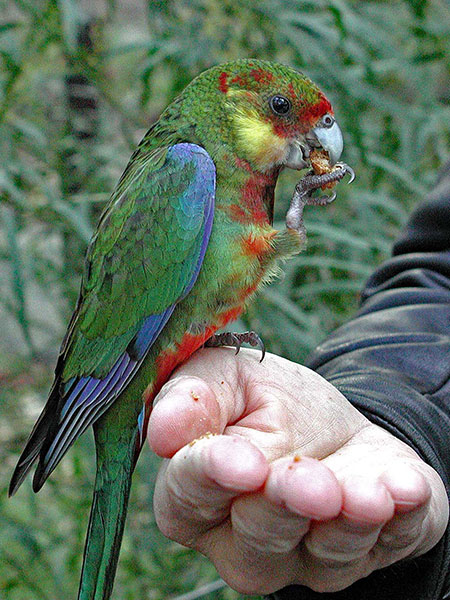
In last month’s HY we focused on Perth’s spectacular repository of native plants, the Western Australian Botanic Garden. Today we’ll explore the flora—the towering as well as the tiny—of the ultra-green southwestern sliver of Western Australia, which Aussies often call “WA” 2. This enormous state, which covers nearly 1 million square miles (more than six times larger than California) and takes up nearly one-third of the national territory, is about 40% desert. Another 40% is arid or semi-arid, leaving a small portion of arable land and even less for the humid forests that are today’s topic. The latter is restricted to an arc of land hugging the Indian and Southern Ocean coasts a few hours south of Perth.
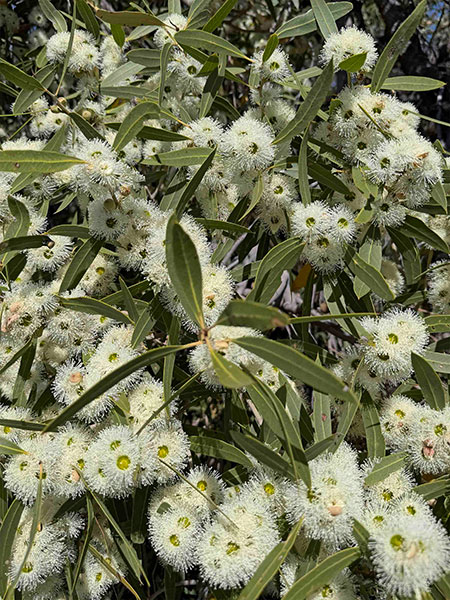
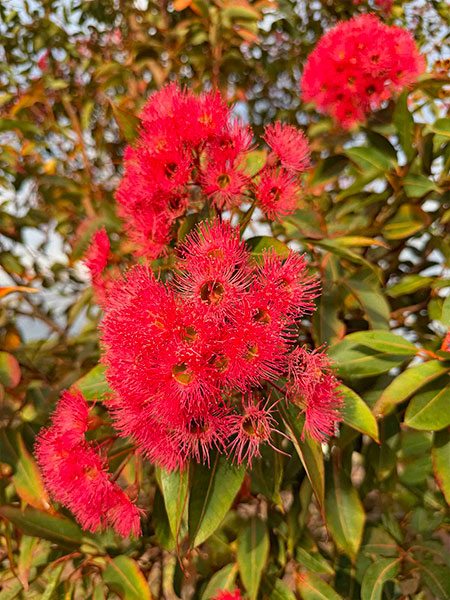
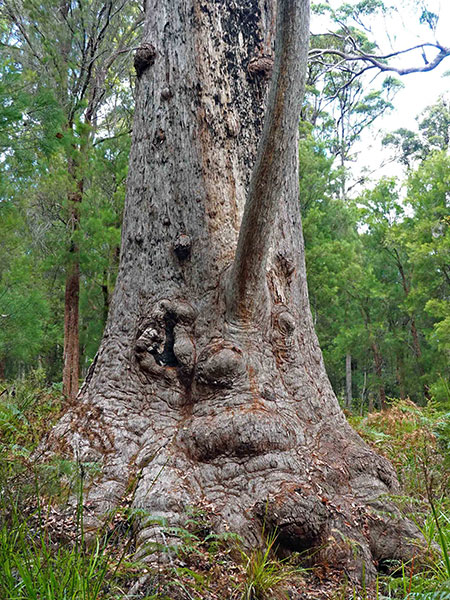
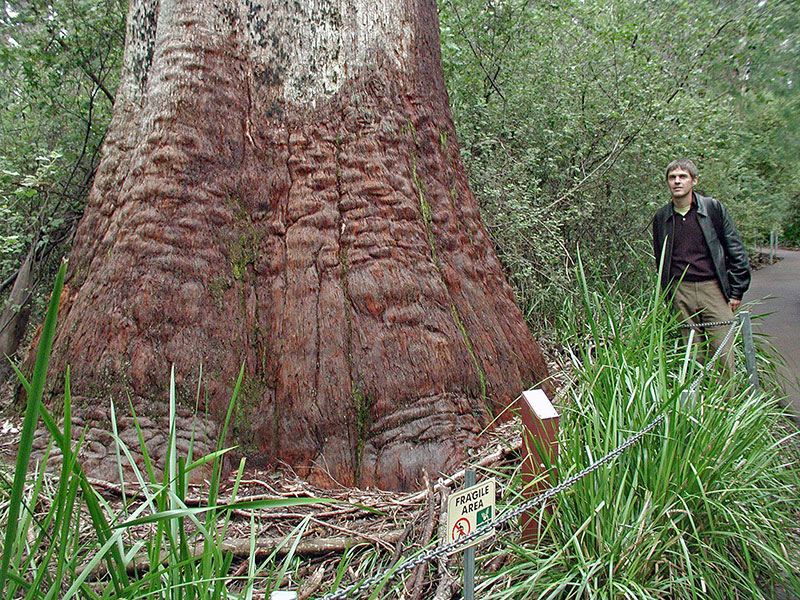
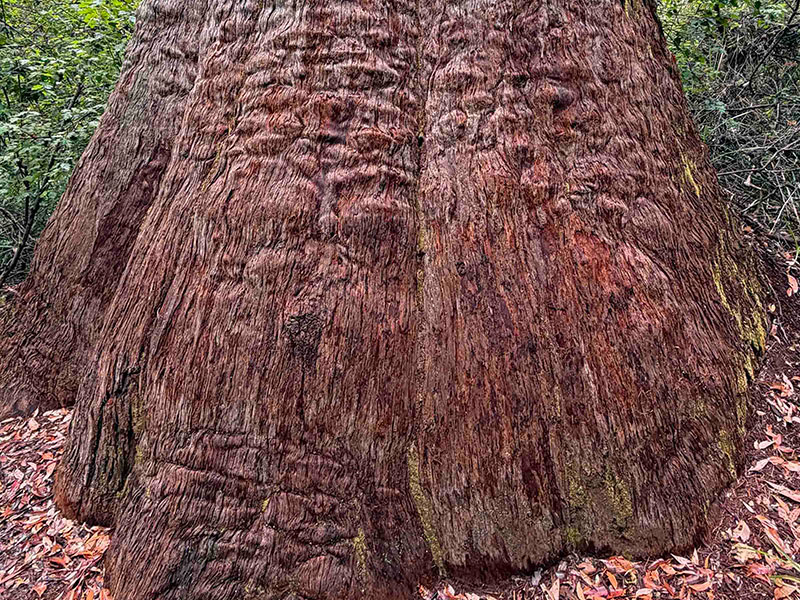
This corner of the Australian WA is similar in some respects to portions of our own Washington State WA: Both are relatively cool and well-watered, with wet winters and dry summers, and both sport trees that are among the most massive on the planet. Today we’ll zoom in on a titanic pair of eucalyptus: the supertall E. diversicolor, locally called karri3, and the supremely massive (by girth and bulk) E. jacksonii, known as red tingle3. This distinction reminds me of a similar relationship to our pair of closely related west coast titans, the towering redwood, Sequoia sempervirens, and the massive giant sequoia, Sequoiadendron giganteum. As a side note, eucalypts are far and away the world’s tallest flowering plants (angiosperms). Although the Tasmanian species E. regnans, or mountain ash, takes the superlative award for height, the two species we’re discussing here aren’t far behind.
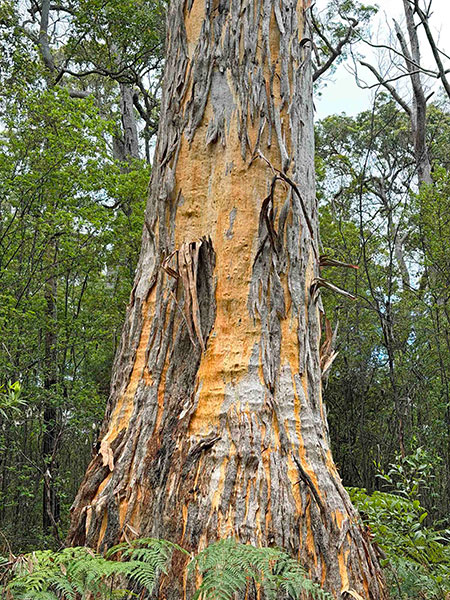
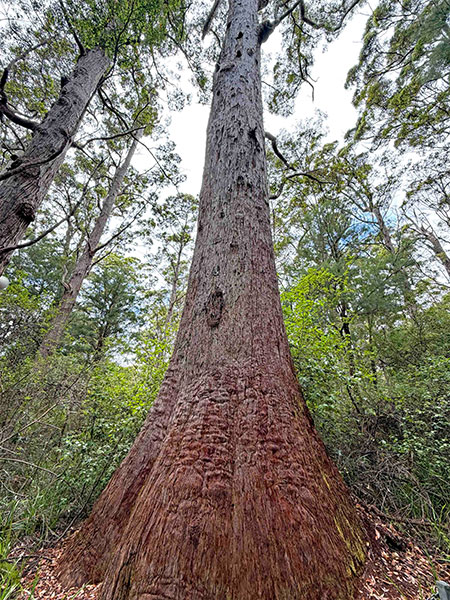
The big-tree portion of Downunder WA differs most distinctly from PNW WA in that it’s closer to the tropics than we are and thus experiences much milder winters. Fittingly, the grandest karri and tingle forests lie at a nearly identical distance from the equator (about 35o of latitude) as California’s Sequoia National Park, home of the General Sherman Tree, the world’s largest single-trunked when measured by volume. Karri grows well in other Mediterranean-climate zones, such as California and Portugal, and in fact a 236-foot-tall karri planted 130 years ago near Coimbra has been certified as Europe’s tallest tree.
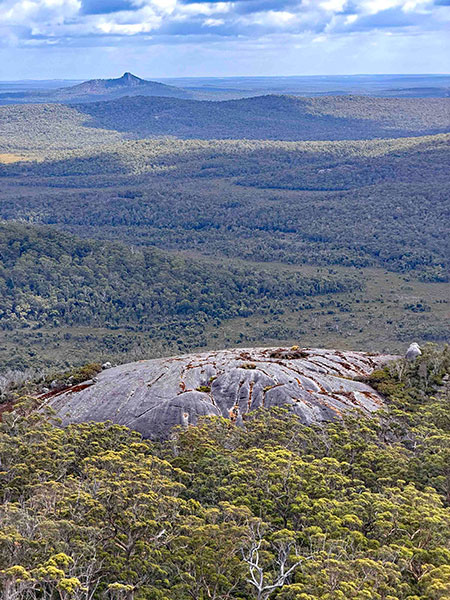
The year of our first WA visit, 2004, saw the creation of the Walpole Wilderness by the Western Australian state government. Its 363,000-hectare area (1400 square miles) links nine national parks and five nature reserves into a grand, integrated forest and marine conservation system that coordinates and manages multiple uses of the land with an eye toward long-term ecological and economic sustainability. Thus far it’s been a smashing success. Two of its top attractions are half an hour’s drive from the eponymous town of Walpole. To the north is the karri-studded (and admission free) Mount Frankland National Park, which offers a pair of gorgeous viewpoint trails. One is fully accessible, the other leads to the apex of the domed granite summit. Both afford breathtaking vistas of the verdant forested carpet stretching to the horizon.
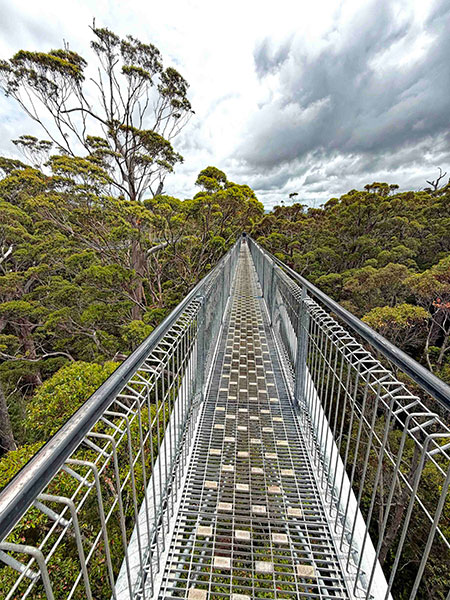
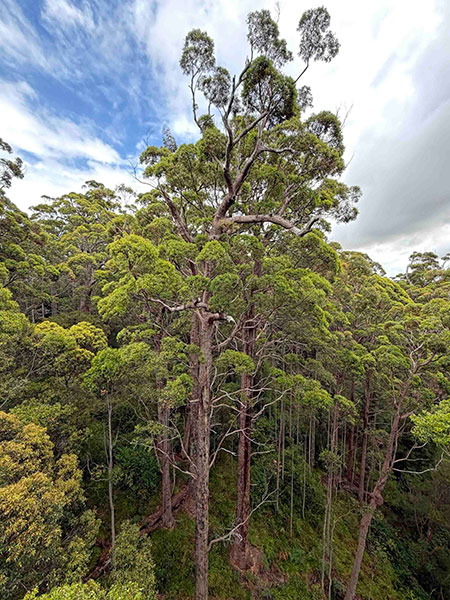
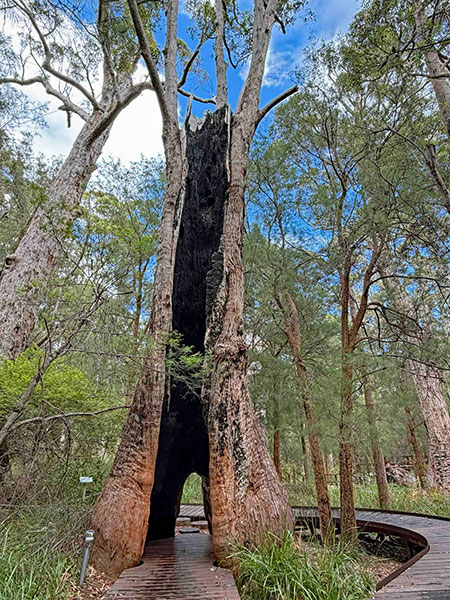
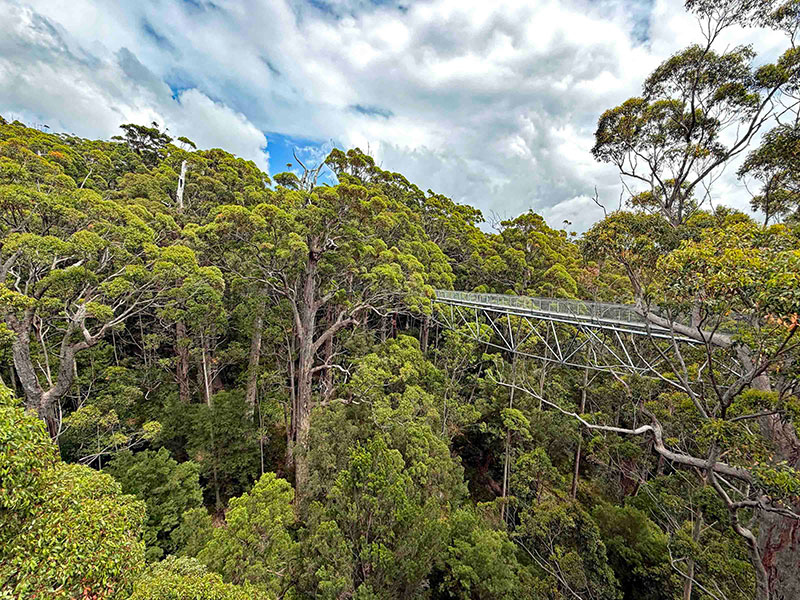
A few minutes to the east of town is the main attraction: Valley of the Giants Tree Top Walk, a 600 meter-long (2000 feet) engineering marvel that reaches a height of 40 meters (130 feet) above the forest floor. Completely accessible and designed with children in mind, the stable and rigid metal pathway is also suitable for wheelchairs. Adjacent to the elevated walkway is a terrestrial trail, the Ancient Empire boardwalk that allows visitors an intimate connection to centuries-old red tingle, many hollowed out by fire but still very much alive, some with a basal circumference of 16 meters (52 feet). However, karri, unlike many eucalypts, is intolerant of fire and does not regenerate from a lignotuber. This bodes ominously for karri’s future, as this usually moist corner of the continent in recent decades has experienced significantly reduced rainfall—and a corresponding increase in destructive wildfires.
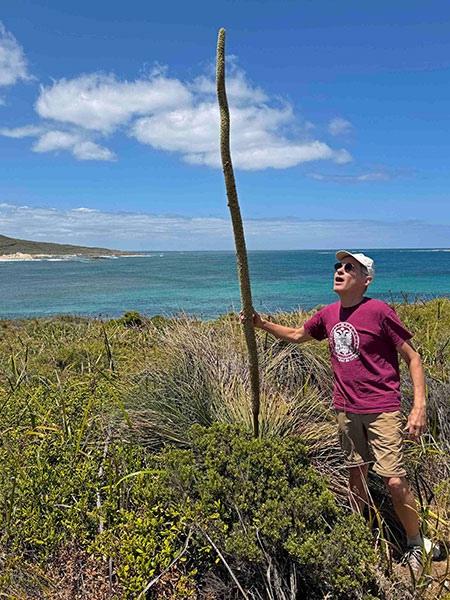
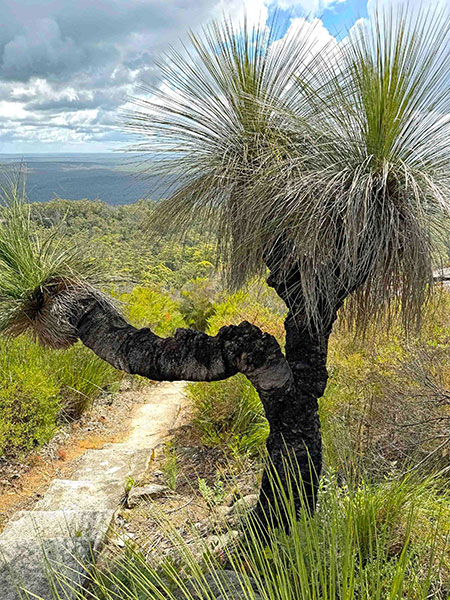
A lesser known but no less fascinating Aussie icon is the sui generis grass tree, Xanthorrhoea, found only in Australia. Of the 28 species accepted by Kew, eight are endemic to WA, where they are often referred to as “balga”, the Noongar aboriginal name. In the wild, older specimens of the slow-growing genus—a 15-foot-tall balga may be hundreds of years old—have blackened trunks that indicate their symbiotic relationship with wildfire. Their bizarre inflorescence is a spike of many thousands of tiny flowers atop a scape that soars skyward (up to 16 feet in some species). Several grow well in southern and coastal parts of California.
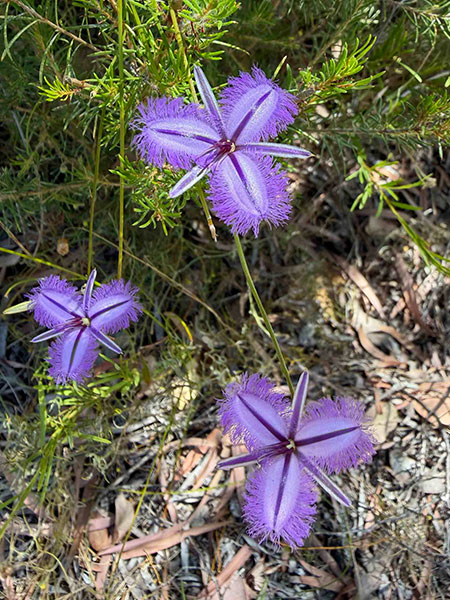
Of course, Western Australia also sports thousands of species of ground-hugging annual and perennial flowers of eye-popping beauty. One of the world’s best displays of wildflowers happens every spring (September is peak month) in the semi-arid country north and east of Perth. On our recent visit we missed that window by a country mile; nevertheless, our high-summer foray found a few beauties in the cool, humid southwest along coastal strands and fringes of forest. Speaking of fringes, my most serendipitous floral discovery of the trip came when I stumbled upon several sumptuous scatterings of Thysanotus sparteus, the leafless fringed lily. Its trio of royal-purple, frilly petals is overlaid with six linear aubergine-hued sepals from which arise a perky sextet of glossy stamens. Back home I did a bit of research and was startled to learn the genus is closely related to Cordyline!
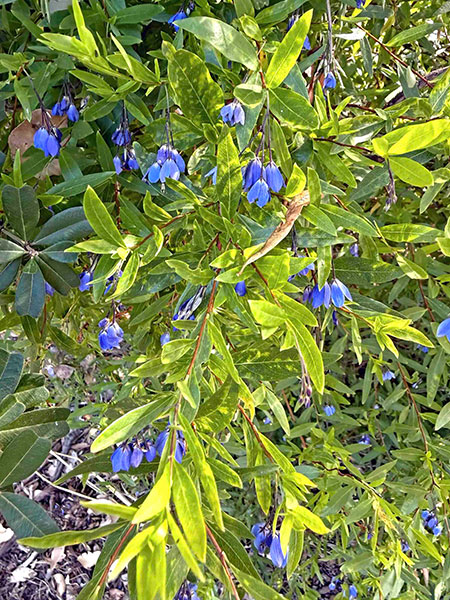
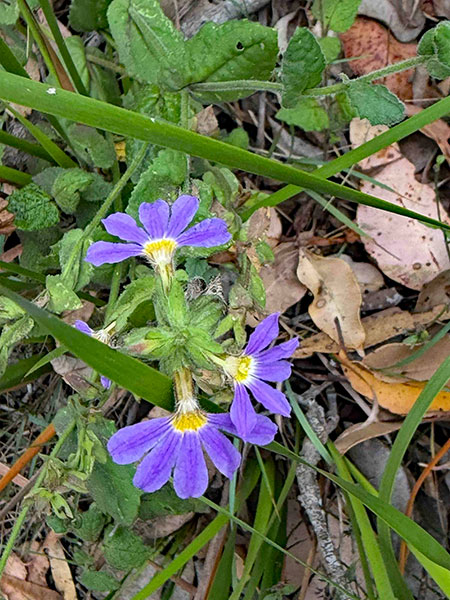
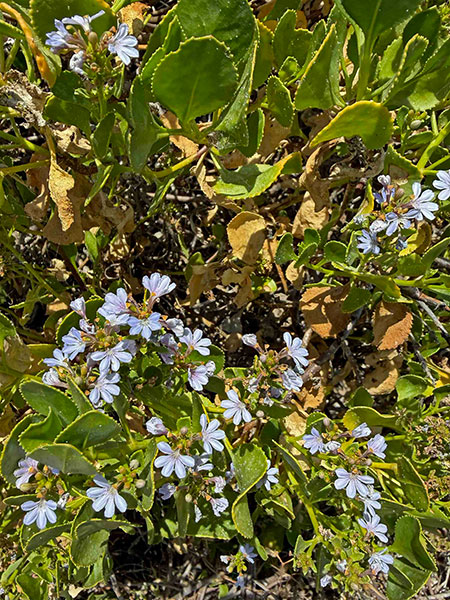
Also of note: Lavender-blue lobelia lookalike Scaevola auriculata, a gangly, straggly herbaceous fan flower that sports lovely five-lobed flowers arising from hairy, stem-clasping leaves. It loves to line sunlight-filtered pathways on its home turf, the sandy loam of woodland edges and gargantuan granite outcroppings of Porongurup National Park. Along several salt-spray studded beaches I found strands of the pale blue, thick-leaved scaevola, S. crassifolia, where I also marveled at the dainty cups of the vining bluebell creeper, Billardiera heterophylla, which is being grown successfully in Oregon.
We’ll close with an observation from David George Haskell’s indispensable new book (see footnote 1). “Flowers made our world, and they will remake a new one when the human frenzy of biotic annihilation is spent.” (Haskell 252). What could be more potent or pertinent? Let’s meet again in late May.
Horticulturally yours,
Daniel
- From pages 243-244 of David George Haskell’s book How Flowers Made Our World: The Story of Nature’s Revolutionaries (New York: Viking, 2026). The Seattle Public Library system has several lending copies.
- Western Australia is saturated (or awash, if you will) with notices that employ its abbreviation (WA), which for us Washington state natives (another WA) was curiously comforting although at times disorienting.
- Tallest specimen of karri is thought to be the Stewart Tree near Pemberton. It reaches more than 83 meters (272 feet). The tallest red tingle tops out at around 50 meters (165 feet).
Credits – All images are photographs by Daniel Sparler.