
Glimmering Galway: Emerald City to Emerald Isle (Part 1)
September 2025
“God bless’d the green island and saw it was good;
—William Drennan 1
The em’rald of Europe, it sparkled and shone,
In the ring of the world the most precious stone.
A softening sun signals summer’s swan song: Autumn’s equinox is waiting in the wings, set to saunter on stage when the celestial curtain rises Monday morning. Loath as I am to relinquish the waning reserve of light-drenched days, I still savor September’s sartorial splendor, when the garden is sumptuously cloaked in foliar and floral abundance. Also appealing is the promise of fall’s nourishing rains returning to the Pacific Northwest after yet another prolonged parched period. Eager for a break from watering duties, in the latter half of arid August my long-suffering husband Jeffrey and I handed over the relentless task of hydrating our Garden of Exuberant Refuge to a young, energetic neighbor and decamped for the moisture-endowed, cooler climes of Ireland, the Emerald Isle.
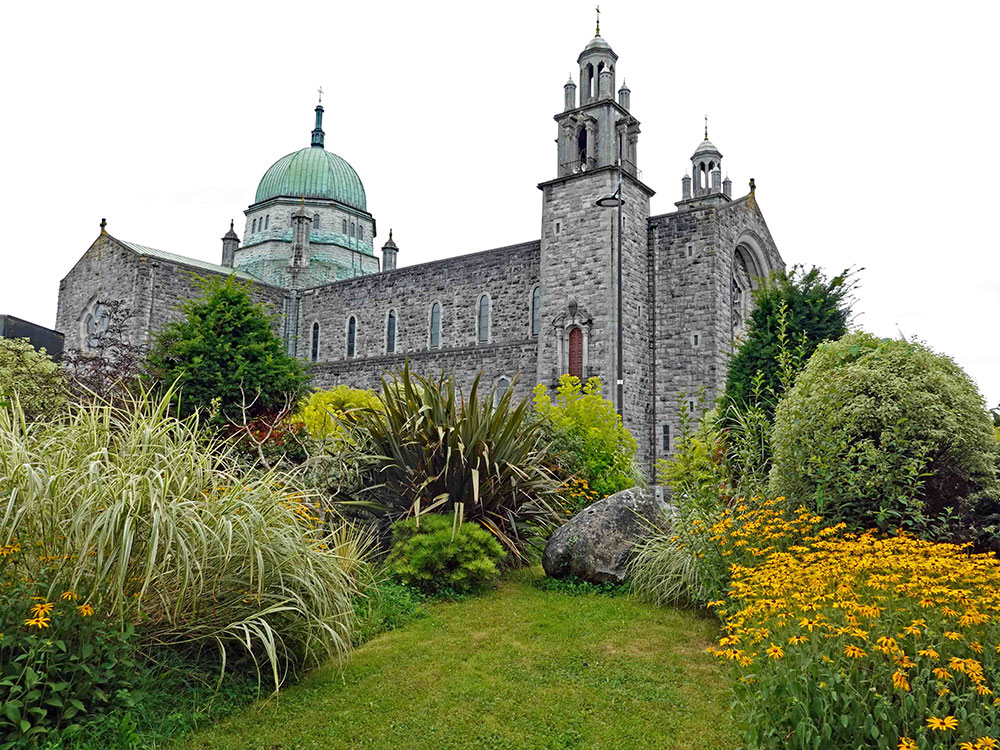
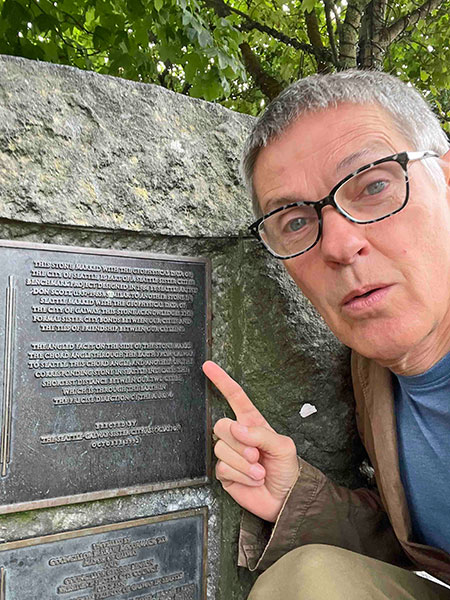
Apropos verdure, although Seattle’s Emerald City moniker seems spot-on for the drizzly-to-sopping months of October through April, it’s much less apt in our increasingly sere summers. Ireland, however —truer to its bejeweled image— sports its shamrock-green glow the year round. Nowhere is this more evident than in Seattle’s Irish sister city, Galway2. Although separated physically by 7200 kilometers (around 4500 miles), the siblings share a host of attributes: As major ports on their respective countries’ northwest shores, Seattle and Galway promote an inclusive international outlook3. Each boasts enviable amounts of artistic, cultural and intellectual expression. They value and nurture myriad forms of diversity. And, of course, their temperate maritime climates4 render both among the world’s primo places for growing a heavenly assortment of flora.
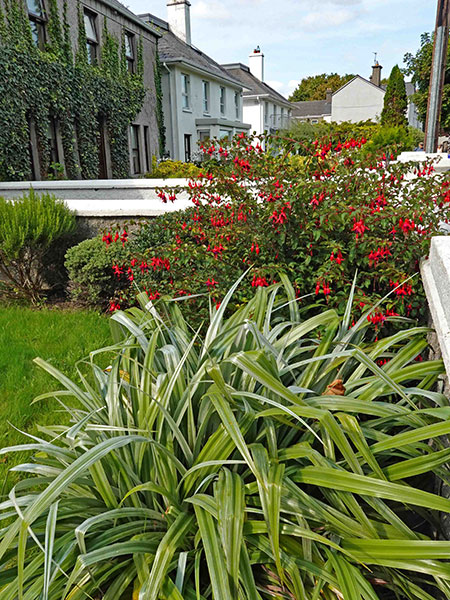
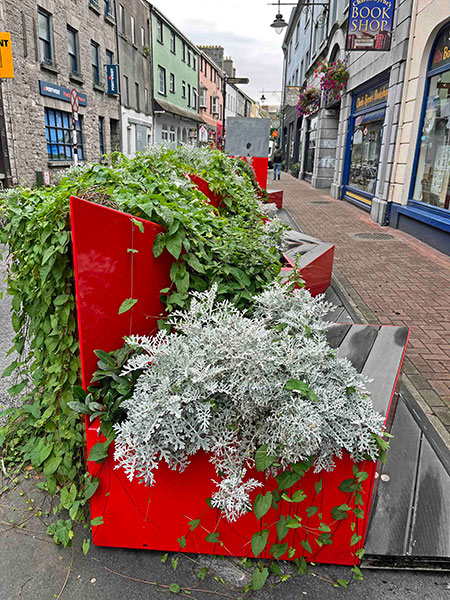
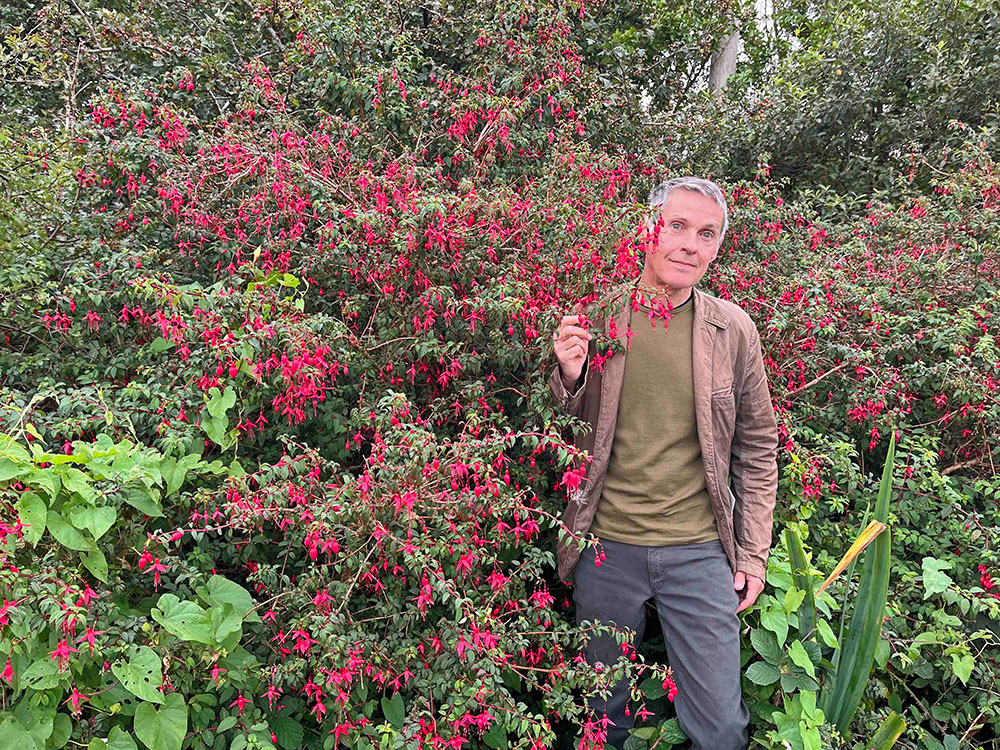
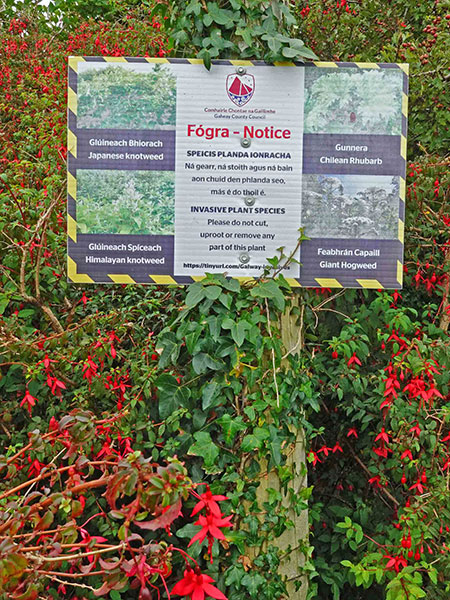
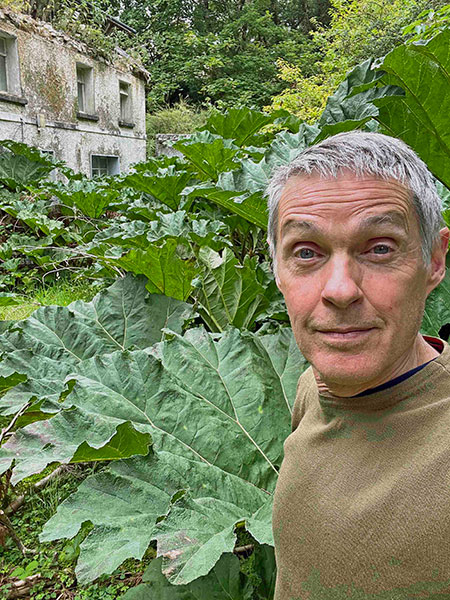
Given Galway’s northerly setting5, plant-savvy visitors may be startled that its city gardens, both residential and municipal, flaunt flourishing displays of southern hemisphere perennials and shrubs: agapanthus, alstroemeria and astelia, cordyline and crinodendron, fuchsia and hebe, phormium and pittosporum, as well as the gigantic, problematic gunnera6. But it’s the Connemara countryside of County Galway –at once rugged and ravishing– that compelled us to search for the rainbow’s end. On a misty Monday a few weeks ago, bumbling and rumbling along glistening byways, we stumbled upon a trinity of horticultural havens: a pair of public gardens that exuded more than a modicum of the mystical spirit that suffuses the Emerald Isle, and a wild and woolly national park that punctuated its greeting with a brief but biting bout of torment, putting the “hell” in “hello”, so to speak. Intrigued? Come along for the ride!
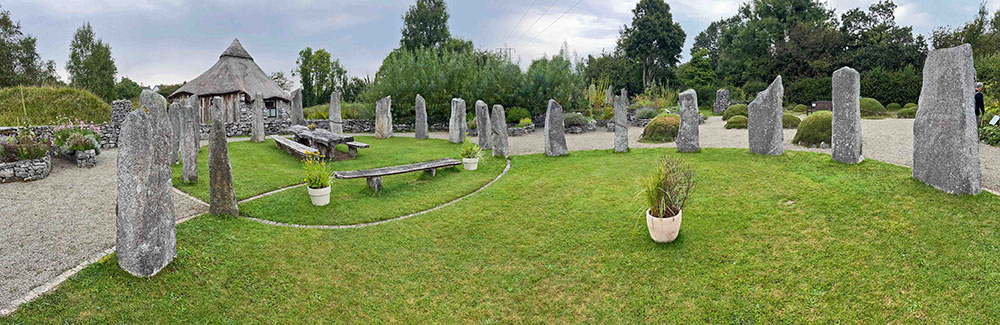
Brigit’s Garden—I’ll cut to the chase: This multitextured, community-run 11-acre space located 20 km (about 12 miles) northwest of Galway city ranks among the most memorable cultivated spaces I’ve encountered in my half century of roaming this woebegone world. Ingratiating, humbling, and deeply centering, Brigit’s Garden achieves majesty not from any conventional aspect of grandeur, but due to its crystal-clear focus, joyful sense of purpose and creative celebration of humanity’s vital and essential connections to nature. A serendipitous “discovery” for me, I was unaware of its existence until a couple of hours prior to my visit.
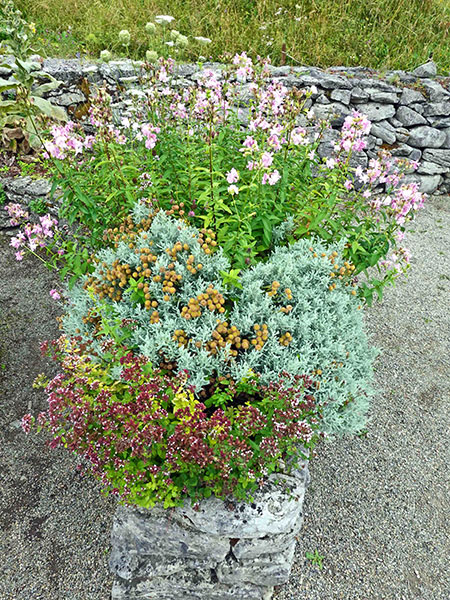
Here’s what I learned: About 30 years ago the Oxford-trained visionary Jenny Beale conceived a garden arranged on Celtic themes where visitors of all ages “could reflect and relax in beautiful surroundings” and engage in environmental education. Why Brigit? In pre-Christian Ireland Brigit was goddess of healing, of poetry and of the forge; she represented the renewal of life. In the Christian era her legend was appropriated by the Church and rebranded as St. Brigit, one of the three patron saints of Ireland.
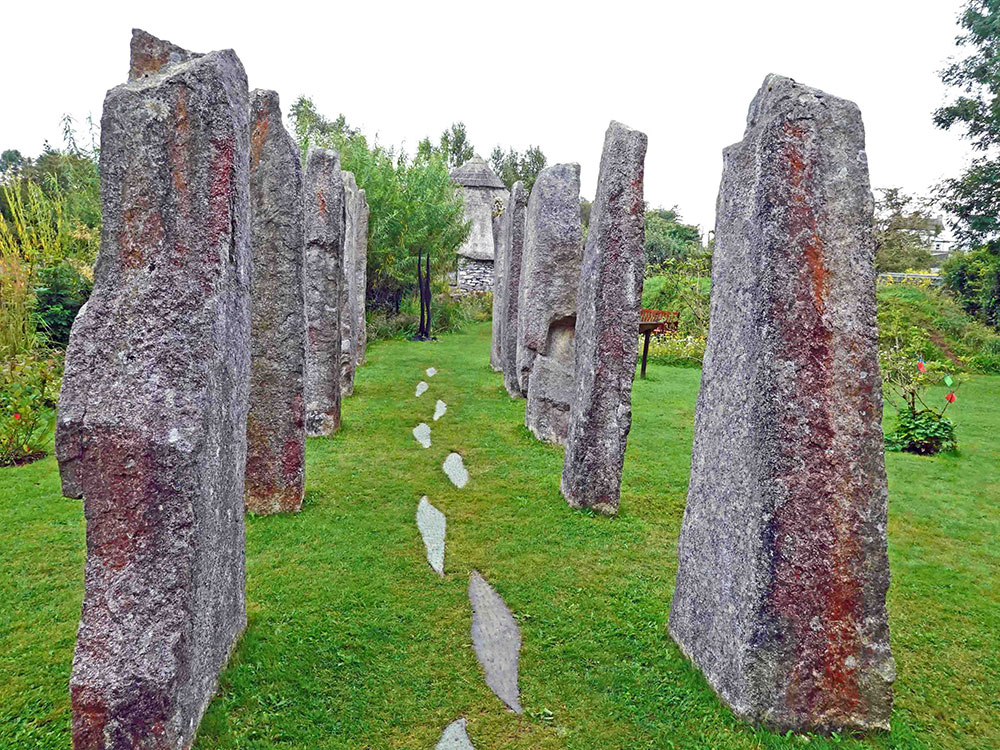
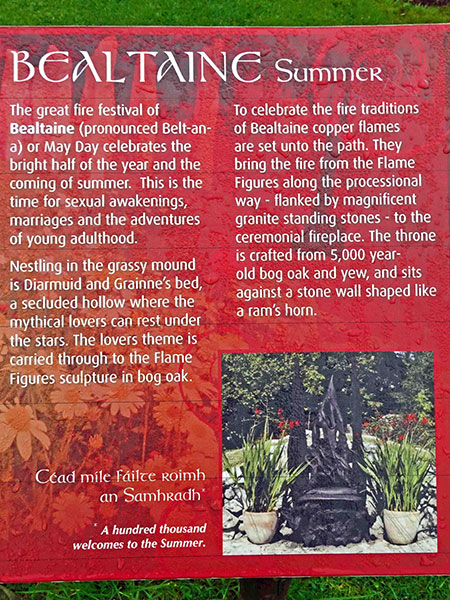
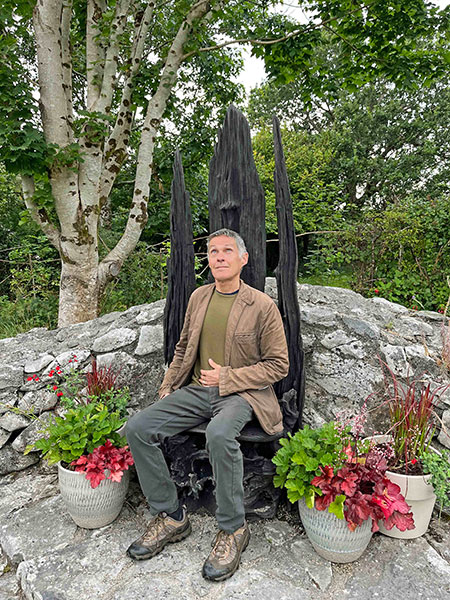
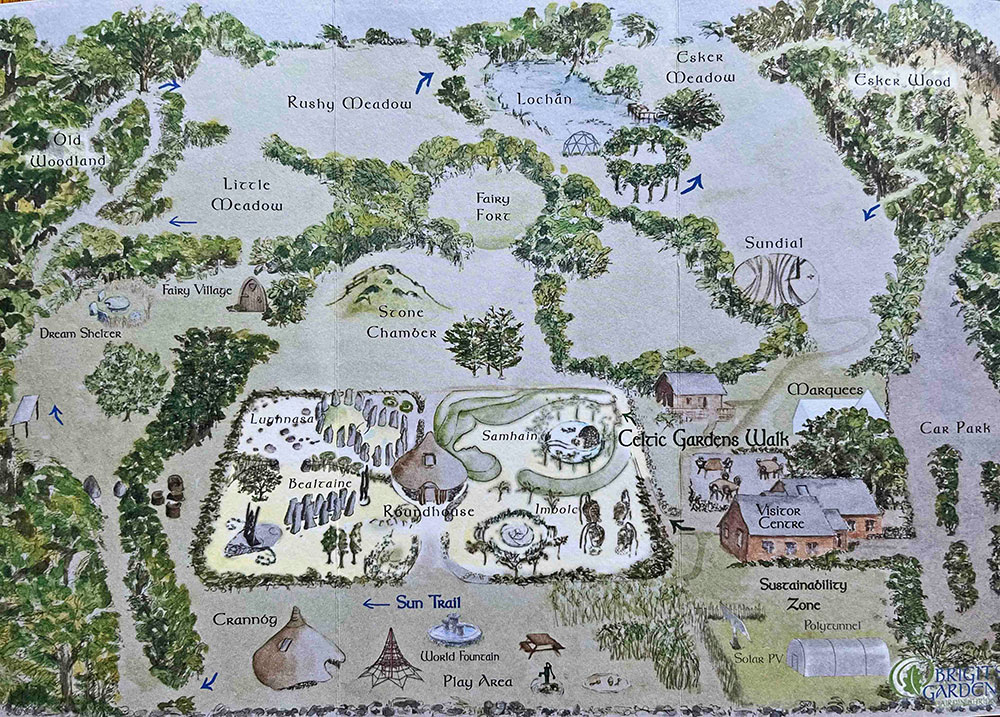
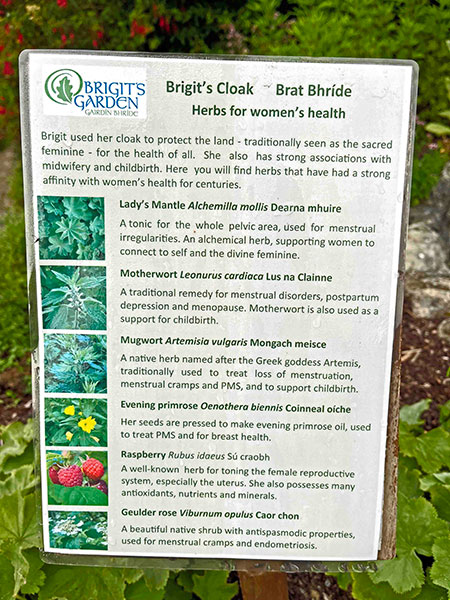
Beale commissioned the self-described “reformed landscape designer” Mary Reynolds7 (the RHS Chelsea Flower Show’s youngest-ever gold-medal winner) to confect the beating heart of the garden, a quartet of interlinked rooms based on the Gaelic seasonal fire festivals of Samhain (Oct. 31), Imbolc (Feb. 1, which is St. Brigit’s Day), Bealtaine (May Day) and Lughnasa (Aug. 1). In an interesting parallel to Japanese gardens, this area employs water and monumental amounts of stone in addition to native medicinal plants. (Click here for a 2-minute video of Beale’s overview of the zone.) The garden’s ample perimeter offers strolls through fern-studded woodland and wildflower meadows, around wetlands and a lake and alongside a fairy fort and village. Other attractions include Ireland’s largest sundial, indoor/outdoor classrooms, a bustling café and a well-stocked shop in the visitor center.
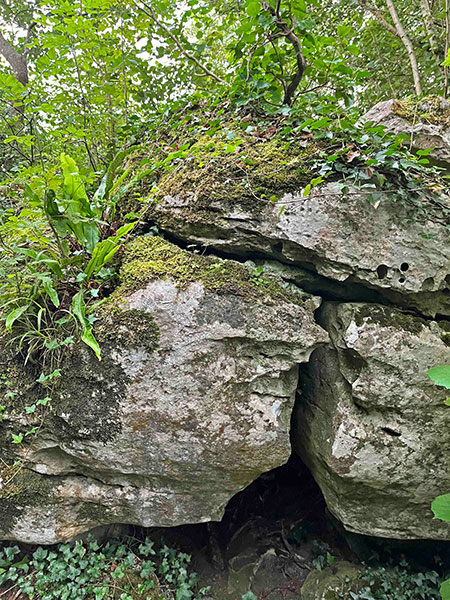
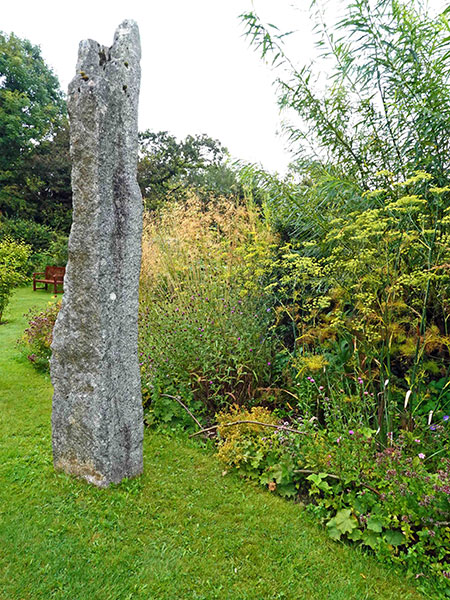
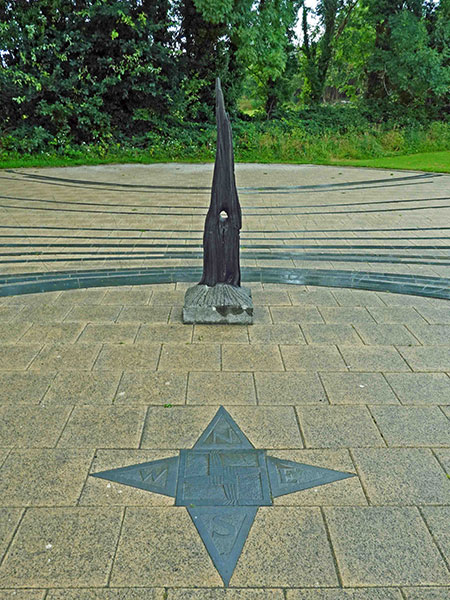
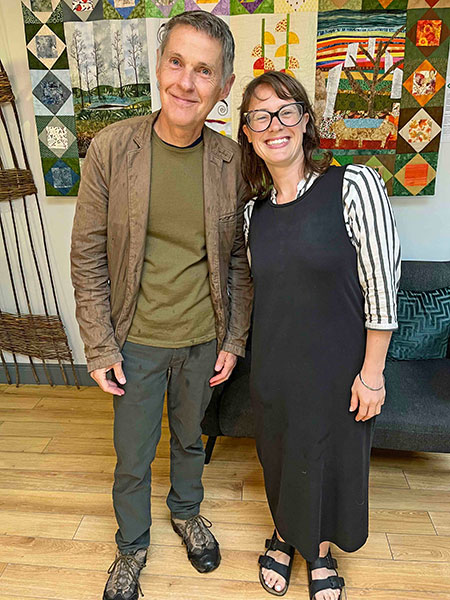
Opened to the public in the summer of 2004, Brigit’s Garden delights around 30,000 visitors a year8. As founder Jenny Beale clarifies, it’s much more than a “harking back to some mythical Celtic dreamland. It is a contemporary garden, designed to speak to the needs of the 21st century.” I was hooked from the first moment when Eilís, the congenial receptionist and ticket seller, asked us where we were from and then beamed with delight to inform us that she was born in Seattle and lived in Ballard as a wee tot. (Her parents were involved with the North Pacific Fishing Fleet based in Fishermen’s Terminal.) Jeffrey and I felt as welcome here as the gentle rain that graced the garden during our visit. For us it was (as sung by Irish supergroup U2) “a sort of homecoming” 9.
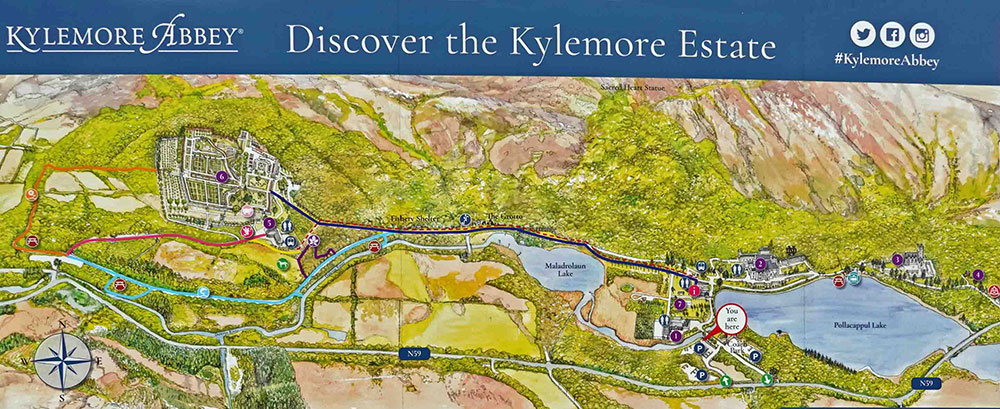
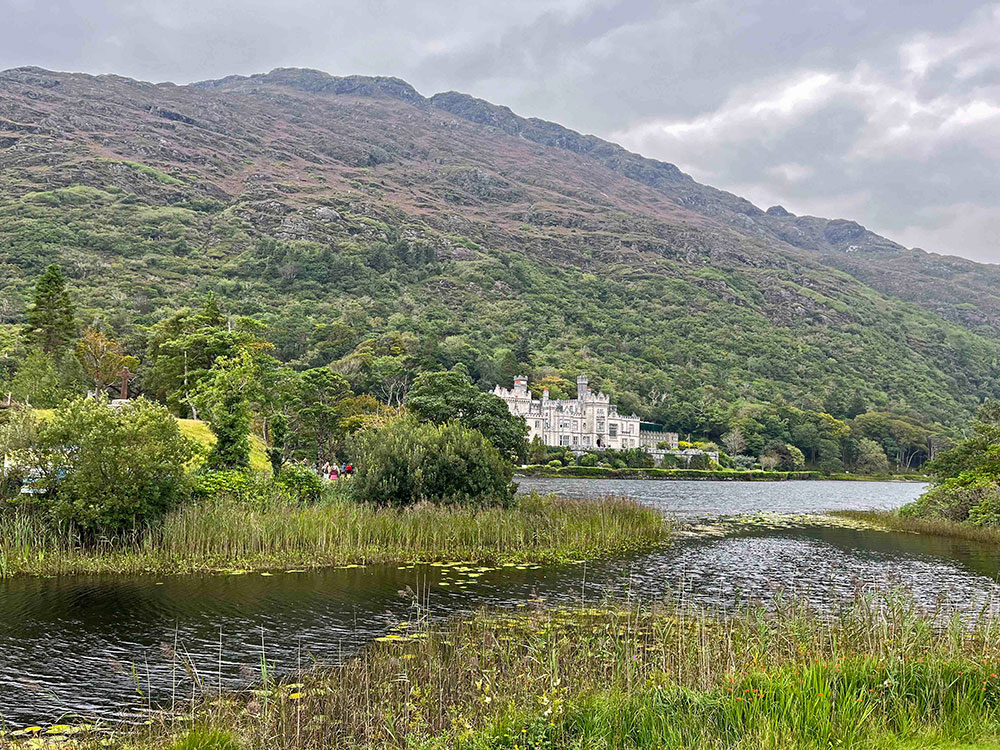
Kylemore Abbey—Only 60 km (about 37 miles) west of Brigit’s radiant space is a spiritual domain of a different dimension. The 1000-acre oasis of woodland and lakes surrounding Kylemore Abbey sprawls for a couple of miles along the base of scrubby, shrubby, quartzite-studded Dúchruach Mountain. The abbey itself (owned and occupied since 1920 by Benedictine nuns) began life as a massive neo-Gothic manor house built in the 1860s by an English financier, Mitchell Henry, and his Irish wife, Margaret. To the west of the residence, which they called Kylemore Castle, they reclaimed sweeping swaths of barren bog, planting tens of thousands of native and exotic trees that are now mature forest.
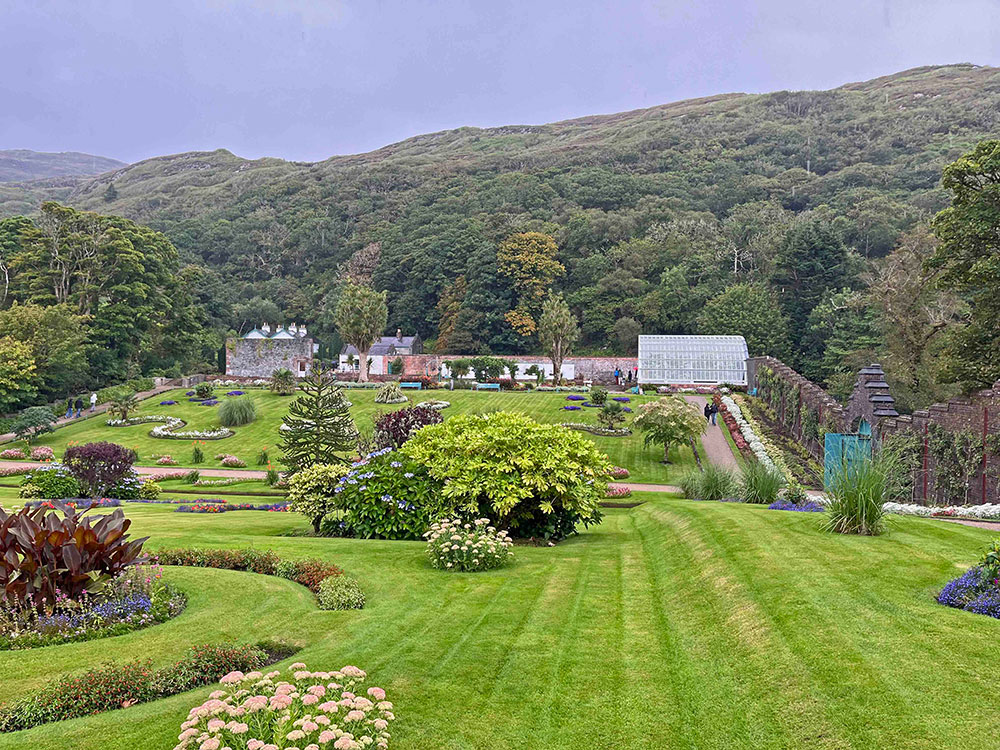
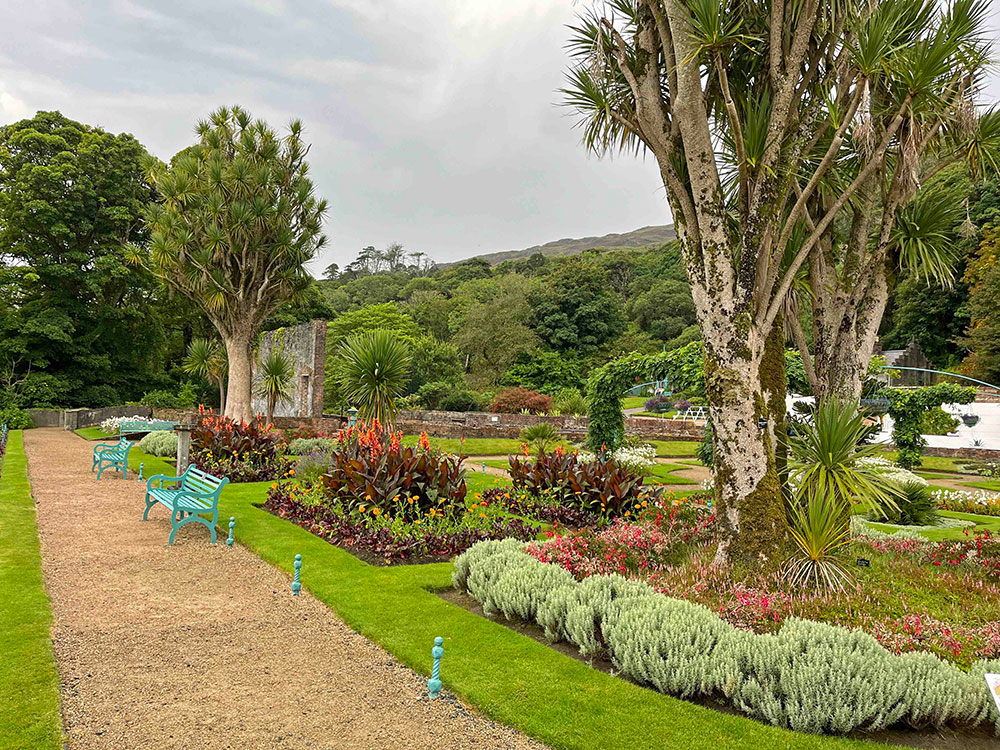
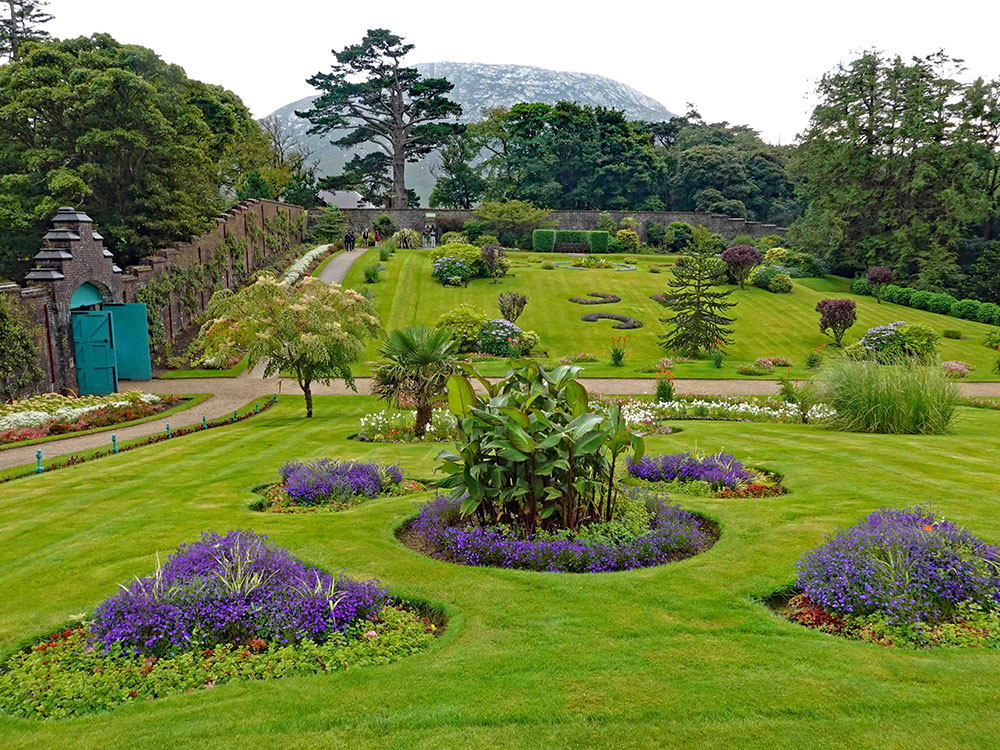
More than a mile from the Castle, on the sloping, sunniest portion of their estate (which was originally an eye-popping 14,000 acres) the Henrys created a sheltered, south-facing six-acre formal garden, enclosing it with a half mile of limestone walls lined with brick. The cultivated area was divided into two domains separated by a stream: one for food production, the other for ornamentals. (This distinction is maintained today.) Within the walls they built a mind-boggling 21 heated glasshouses, including two ferneries and dedicated structures for the likes of bananas, figs, melons, peaches, tomatoes and palms. Although most of these houses have long since vanished, two have been restored and are fully functional.
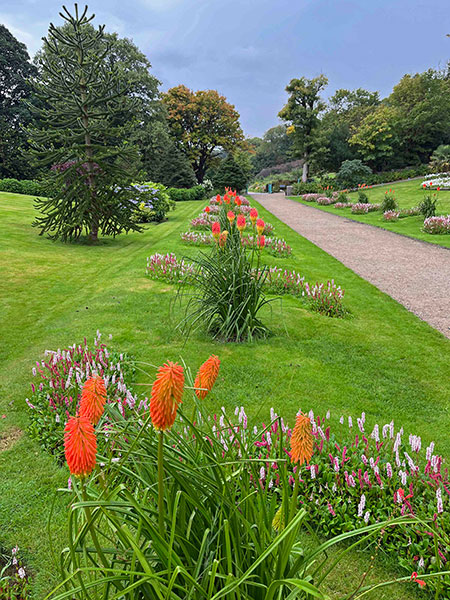
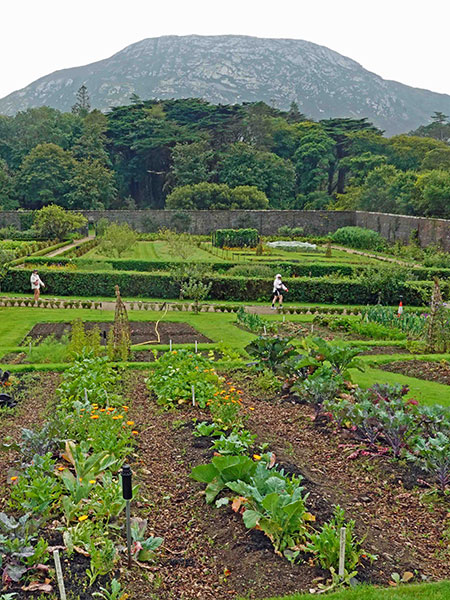
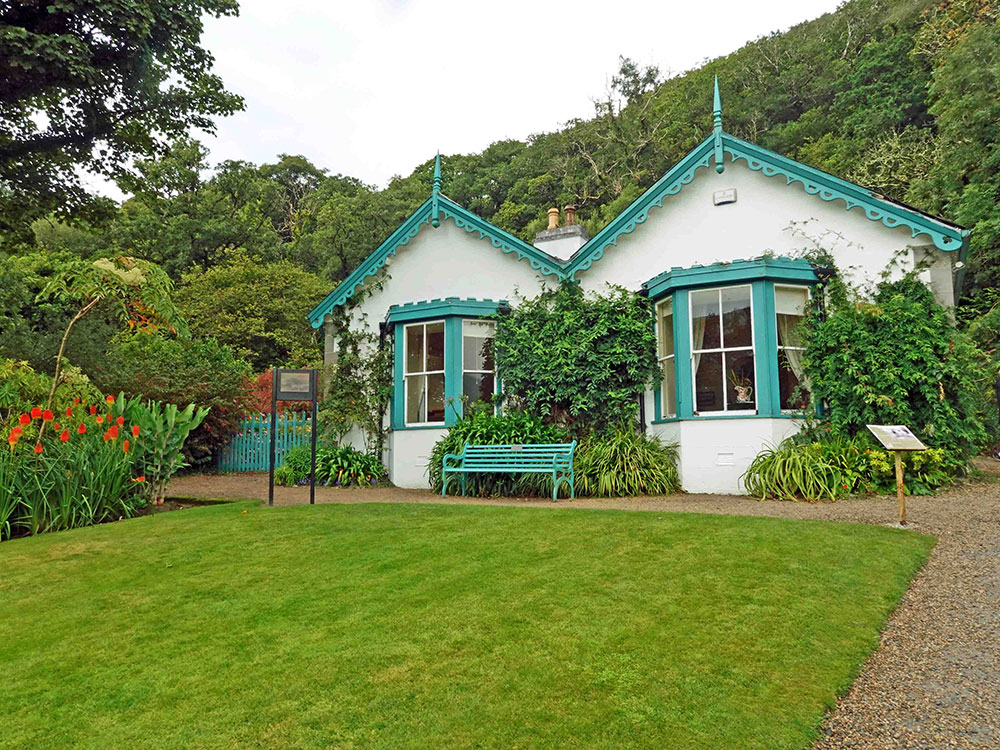
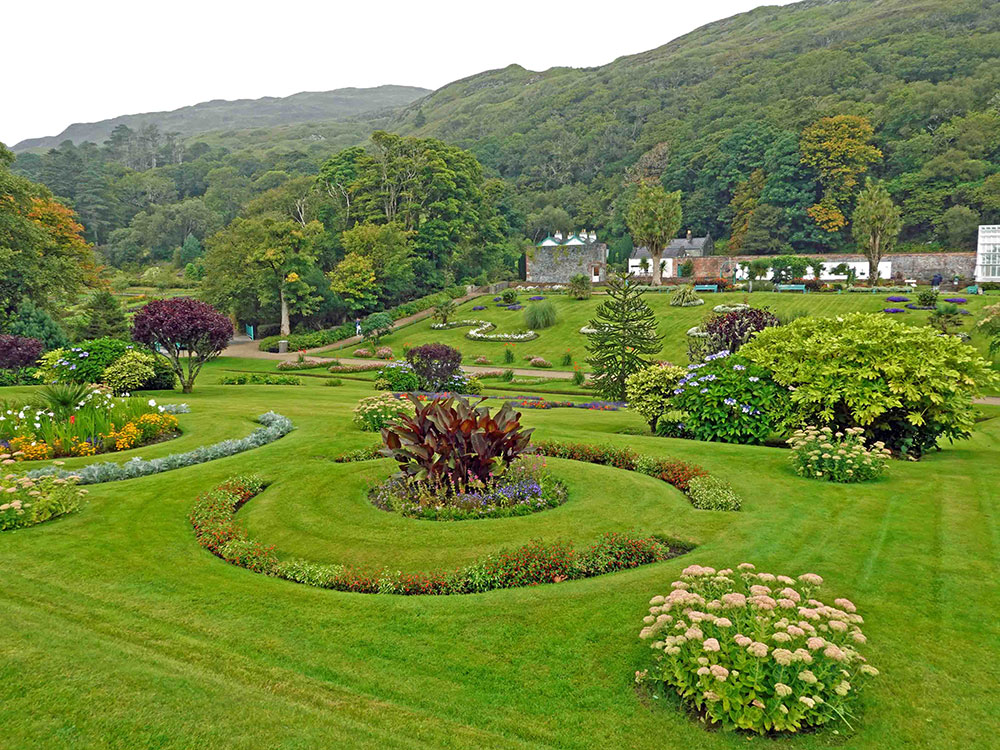
This Victorian Walled Garden, restored by the nuns over the last 30 years to its former glory, is true to its name in that all the flowers and plants employed here were introduced to Ireland before 1901, the year of the eponymous queen’s death. The formal, ornamental portion of the garden features swirls and curlicues of low-growing floral beds renewed annually and changed twice a season. (For a recent plant list, click here.) Lining the inside of the perimeter walls are legions of espaliered and heavily laden pear and apple trees. Students of garden history would be captivated by the amply appointed and fully restored head gardener’s house and the nearby “bothy”, a cramped residence where legions of “garden boys” were lodged just steps away from the boilers they tended at all hours to heat the glasshouses. Visible from the walled garden, just across a narrow valley but apparently out of range of the nuns’ prayers, looms the gleaming mass of Diamond Hill within the neighboring national park, which during our visit was bedeviled by hellish legions of tiny demons alluded to in the beginning of this missive. Read on, if you dare!
Connemara National Park—With high hopes –but woefully unprepared for the dose of distress that awaited us– we pulled up to the visitor’s center of this little gem of a national park that packs a microcosm of austere mountains, mysterious bogs, blooming heaths, graceful grasslands, racing rivulets and even an eclectic woodland into its compact footprint of 20 km2, or less than 8 square miles.
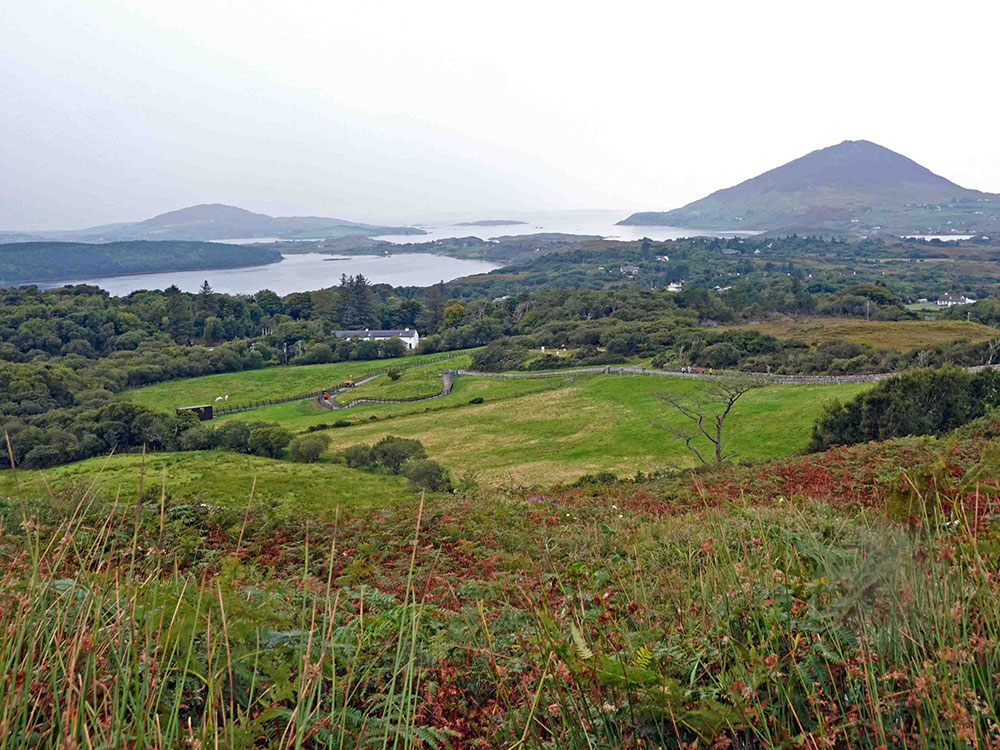
No sooner had Jeffrey stepped out of the car than he shrieked he was under attack by flying insects. Annoyed by his apparent lack of fortitude and intent on tackling the 3 km Lower Diamond Hill Loop Walk, I urged him to buck up and keep moving. And then I got my comeuppance: They came for me, in abundance. Seemingly endless clouds of miniscule, nearly invisible biting bugs were everywhere at once, up the nostrils, in the ears and eyes, and worst of all, inflicting needle-sharp punctures on every square millimeter of exposed flesh. In the moment it seemed like a plague of biblical proportions (Where were the nuns, or the goddess Brigit, when we needed them?), but a bit of research revealed the marauders to be Culicoides impunctatus, the blood-sucking highland midges that afflict northwest Ireland and Scotland on damp, wind-still, cloudy afternoons in summer.
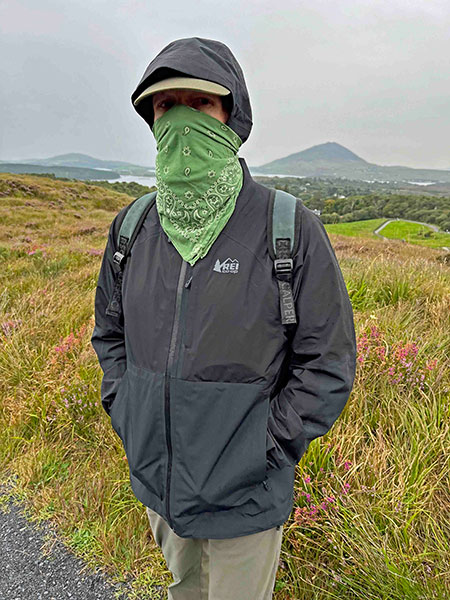
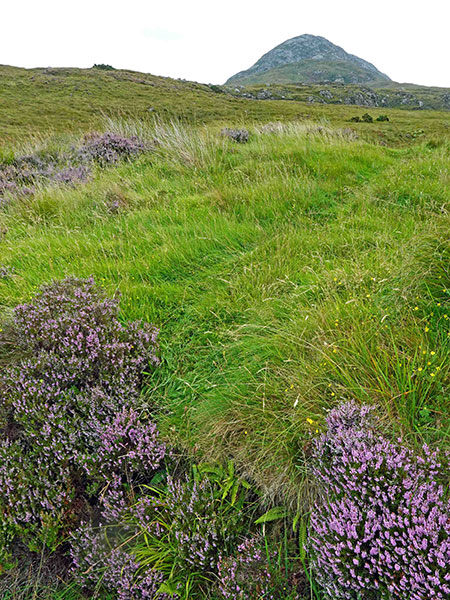
Somehow, we slogged on, determined as I was to soak up the spirit of the Connemara even as the midges were sapping and sipping on mine. Jeffrey improvised a sort of screen with his rain-shell hood and a bandana, but I was defenseless. As my hands were in constant, frantic and futile motion to brush the swarms from my face, I was largely unable to photograph or even admire the flora we were rushing past: plush tapestries of club moss, purple moor-grass (Molinia caerulea), ling heather (Calluna vulgaris) and purple mountain saxifrage (Saxifraga oppositifolia). I abandoned all hope of dialogue with the charming community of bog plants (asphodel, orchids, lichen, bog myrtle and the supposed stars of the show, insectivorous sundews and butterworts that clearly were not up to the task). Halfway around the intended circuit, we cut our losses and took a shortcut back to the relative safety of the car.
At the end of this exhilarating day, I was content with the score: two wins and a loss felt pretty darn good. On further reflection, though, I revised that assessment. The midges were just doing their job; we were intruding on their home turf. And having left a bit of my blood in gorgeous Galway would ensure my return, wouldn’t it? Perhaps that’s the proverbial pot of gold at the end of the rainbow.
On that equitable note we’ll conclude this segment, which ushers in the sixth year of Horticulturally Yours10. Tune in next month for a report from Counties Kerry and Cork in the southwest corner of the Emerald Isle.
Horticulturally yours,
Daniel
- Opening lines of the 1795 poem “When Erin First Rose”, by physician, writer and democratic activist William Drennan (1754-1820). This poem marked the first reference in print of Ireland as the “Emerald Isle”.
- Galway’s 45.5 inches of annual precipitation includes an abundant 7 inches in July and August. Seattle’s annual 39 inches yields a paltry 1.5 inches in the same pair of months.
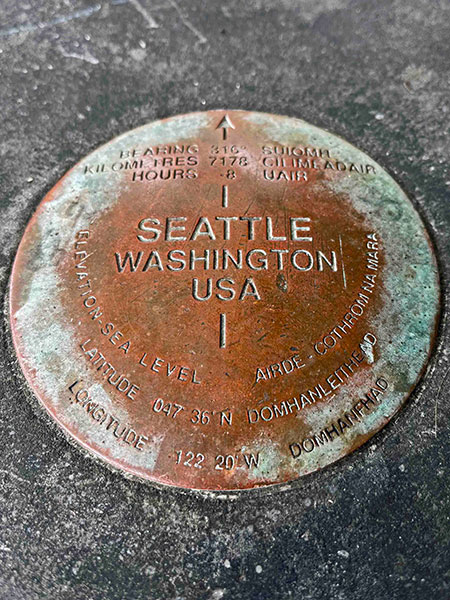
- An elaborate stone monument to Seattle, complete with the city’s geophysical data, was erected in 1992 in the heart of Galway. Seattle’s counterpart honoring Galway is on Alaskan Way, opposite Pier 66 at the foot of Bell Street.
- Galway’s latitude of 53oN (six degrees further north than Seattle) is about the same as that of Edmonton (Canada’s northernmost major city), yet its proximity to warm Gulf Stream waters shields it from outbreaks of Arctic cold that grip Edmonton for months each year and sometimes reach Seattle.
- Galway gardens benefit from coolish summers: July’s average daily high temperature peaks at a brisk 67oF while Seattle’s is 77.5o. Winter temps are more comparable: In January Galway’s average daily high is 47.7oF, with a low of 38.3o. Seattle’s January averages are 48.1o and 37.8o.
- Massive-leaved Gunnera tinctoria, a native of Argentina and Chile, is listed as an invasive species in Ireland and is targeted for eradication. This will be exceptionally difficult, as it has taken over large swaths of countryside in the west of Ireland, particularly in Counties Galway and Mayo.
- Reynolds’ latest book, We are the ARK: Returning Our Gardens to Their True Nature with Acts of Restorative Kindness (Portland: Timber Press, 2022) was reviewed in 2023 by Lorene Edwards Forkner, my colleague on the NHS board. The UW’s Miller Library has a lending copy.
- According to Communications Manager Theresa Tierney, about half the annual visitors to Brigit’s Garden are from Galway, ¼ from elsewhere in Ireland and ¼ from other countries.
- In this song title (which opened U2’s seminal 1984 album The Unforgettable Fire) the band’s lead singer and lyricist Bono was quoting Paul Celan’s line, “poetry is a sort of homecoming.”
- The previous 70 segments of Horticulturally Yours are archived here.